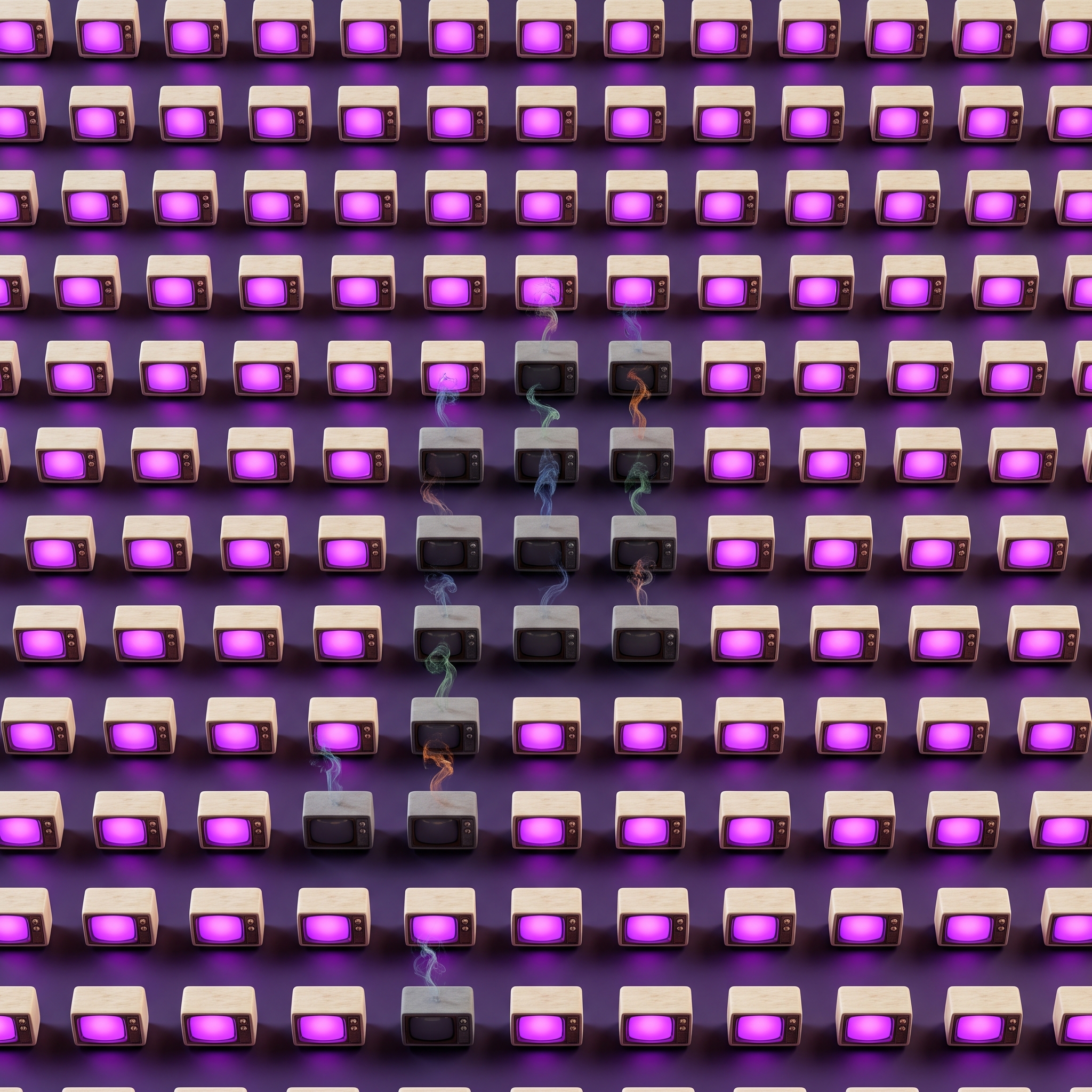
Hope Sterling: Hi — okay, before anything else, I need you to picture something. You're a writer. You just spent months finishing episode eleven of your show. You turn it in. And then one morning the network's schedule just... doesn't have your show on it anymore. No email. No call. You find out the way the audience finds out — by noticing it's gone.
Finn Brooks: Okay that scenario gave me a genuine physical reaction, what is this about?
Hope Sterling: Quiet cancellation. It's a real, documented practice — twenty-five animated shows in one catalog alone — where series were simply removed from the broadcast schedule with zero announcement to cast, crew, or audience. That's the definition. Shows just stop appearing.
Finn Brooks: Twenty-five in one catalog — that's not edge cases, that's a system.
Hope Sterling: It's absolutely a system! And like — Invader Zim is the one everyone knows because Nickelodeon pulling it mid-arc became this whole cultural wound. But the one I cannot stop thinking about is The Oblongs. Angus Oblong's show. The WB did a whole bidding war — three networks — over that pilot, cancelled it after thirteen episodes, and there are five completed episodes that have never aired. They're in a vault somewhere.
Finn Brooks: Five episodes that exist and that nobody can watch — not because they were lost, but because someone chose not to air them and then just never revisited that choice.
Hope Sterling: Which is so much worse than lost, actually? Like lost I can grieve. This is just — Angus Oblong's finished work is sitting there and the answer to 'can we see it' is just... no one's ever really said.
Finn Brooks: And we have receipts on the full scope of this now — someone finally catalogued it — but the erasure has been running for decades.
Hope Sterling: Okay but wait — decades is actually underselling it, because this goes back to like, the literal physical tape. Networks in the sixties and seventies were wiping recorded shows to reuse the reels. The magnetic tape was expensive, so they just — erased it. Gone. Not shelved, not vaulted. Gone.
Finn Brooks: Right, and that's the part that reframes everything — because when we're talking about streaming pulling shows now, we're treating it like some new corporate villain move, but the mechanism is sixty years old. Different reason, same result.
Hope Sterling: Which is — mm, I mean, it's not exactly the same though? Tape erasure was like, a resource problem. Streaming removal is just... a spreadsheet decision.
Finn Brooks: Okay I love that distinction BUT — and here's where I want to pump the brakes slightly — there's also burnoff scheduling, which is the sneaky middle chapter nobody talks about. Networks would air remaining episodes of a cancelled show in like, two a.m. slots with zero promotion. So the show technically aired, but the audience never knew to watch.
Hope Sterling: Ugh, that's so cowardly actually.
Finn Brooks: It's a way of technically not lying while completely hiding what happened. And then — okay, this is my Murder Police moment, I've been sitting on this — Fox commissioned and produced an animated sitcom in 2013. Full show. And cancelled it before a single episode aired. No announcement, nothing public. It's on the Lost Media Wiki now because that's the only place it's documented.
Hope Sterling: Stop. Not one episode? The crew made an entire show and the public never even got to hate it?
Finn Brooks: Not one. And that's — I mean, that's actually the most extreme version of quiet cancellation there is, right? Pre-broadcast. The writers, the animators, they made something real and it has no public existence whatsoever.
Hope Sterling: That's not a cancellation, that's a disappearing act performed on real people's work. Like The Oblongs at least aired eight episodes. Murder Police is just — it existed in a room and then it didn't.
Finn Brooks: And that's — that's the thing that keeps landing on me, because there's no public record for those writers to even point to. Like, 'I worked on Murder Police' means nothing to anyone you meet.
Hope Sterling: Which is — okay, I want to bring this down to like, ground level for a second, because I think the way we talk about quiet cancellation is still too abstract. Picture someone, Saturday morning, they want to show their little sibling Chowder — the Cartoon Network one — they boot up the streaming app, it's just not there. They google 'where can I watch Chowder,' they fall into a Lost Media Wiki rabbit hole, and then they find out the show didn't even get a finale. Like, the last episode they remember watching as a kid was just... the last one by accident. Nobody told them.
Finn Brooks: The finale was just a random Tuesday episode.
Hope Sterling: Right! And that's — I think that's actually the real grief here. It's not Invader Zim the TV program that people are mourning. It's being a kid who loved something and one day it was just gone and nobody owed you an explanation. That powerlessness is so specific.
Finn Brooks: And Angus Oblong is living a professional version of that same thing. His finished episodes — paid for, completed — are in a vault and neither he nor any fan can actually access them.
Hope Sterling: That's what crystallizes it for me. The Oblongs had a bidding war! Three networks wanted it! And the people who made it got — I mean, what did they get? No sendoff, no acknowledgment that their work existed or ended.
Finn Brooks: No like, professional marker that the thing was real.
Hope Sterling: None. And the hot take we started with — even if the history is sixty years old, that does not dilute the cost. It amplifies it, because it happened to every single one of these shows and nobody was counting.
Finn Brooks: Wait — and there's a layer coming that makes this even messier, because fan communities are out here doing what the networks won't, and the fact that Lost Media Wiki and Archive.org have to exist at all is its own indictment — we'll get there.
Hope Sterling: But that's — that framing of 'fans stepping up' is doing something sneaky, because we keep saying it like it's heartwarming? Like, oh, the community rallied. But Lost Media Wiki and Archive.org existing at all means corporations looked at sixty years of their own output and just... didn't.
Finn Brooks: No, that's exactly it — the Toon Jam preservation, Cartoon Network's old video game, fully preserved for the first time on Archive.org by fans and volunteers. And like, that's a real win, right, someone did the work — but also that should have been Cartoon Network's job.
Hope Sterling: Their own game!
Finn Brooks: Their own game, yeah. And there's no regulatory framework that says they had to preserve it. No mandate. So they just... didn't, and volunteers absorbed the cost, out of love, for free.
Hope Sterling: And then there's the orphan works thing, which makes formal recovery almost legally impossible — like, even if you WANT to restore something, if the rightsholder is unreachable or unknown, you're basically blocked from distributing it. So the content can physically exist and still be functionally gone.
Finn Brooks: Which means the Toon Jam preservation is actually the lucky case — the one where nobody sued.
Hope Sterling: And this isn't even retro grief we're doing right now, that's the thing — Luminate tracked animated orders on streaming declining since 2023. Not cable, streaming. So platforms that people assumed meant permanent libraries are contracting right now, pulling finished shows.
Finn Brooks: So the calibrated version is — fan preservation is genuinely extraordinary, the Toon Jam win is real, Lost Media Wiki is doing something that matters. AND the fact that it has to exist is the indictment. Both things are true, corporations defaulted, volunteers absorbed it, and the contraction is accelerating, not ending.
Hope Sterling: That's where I land. It's not a win or a damning indictment — it's proof of default. And that default has a cost nobody officially counted.
Finn Brooks: My detail I cannot shake — Murder Police. Not pulled. Not burned off at two a.m. Cancelled before frame one ever aired. The Lost Media Wiki entry IS the show's entire public existence.
Hope Sterling: Mine is the five Oblongs episodes in a vault. Like — paid for, finished, sitting there. And the answer to 'will streaming platforms designed for permanence quietly remove shows right now with no public acknowledgment' is just... yes, same structural feature, new spreadsheet. We literally learned nothing.
Finn Brooks: And the wildest question to leave with — will the shows getting quietly cancelled right now disappear faster because everybody assumes they're backed up somewhere? Like, the assumption of permanence might actually be the new version of tape being expensive.
Hope Sterling: Oh that's — wait, that's actually bleak. Because at least in 1968 nobody thought the tape was being saved. Now everyone thinks someone else hit archive.
Finn Brooks: And in twenty years some kid is gonna find their Lost Media Wiki entry and go — oh, it just... vanished? In the cloud era? To which I say: start saving now, besties.