Brian Reed: Hey — glad you're here, because I've been sitting with this one.
Eliza Ward: Same. The Winter Garden story.
Brian Reed: A 71-year-old man goes fishing on a Friday afternoon at a public park and doesn't come home. What's confirmed?
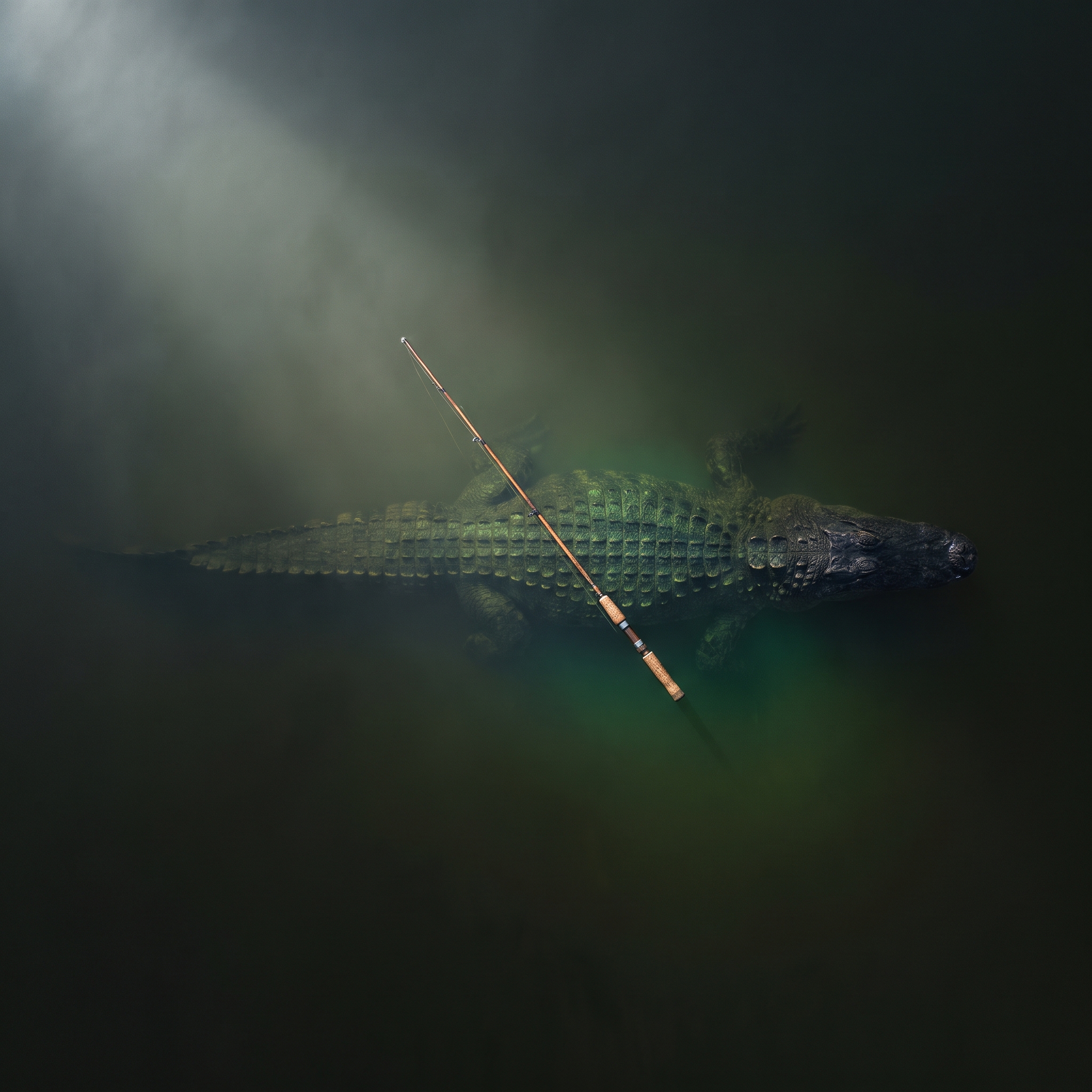
Eliza Ward: What's confirmed is — Steven Hamilton, Winter Garden resident, was at Dr. Bradford Memorial Park on Lake Apopka. October 17th, around 5 p.m. A nearly 12-foot alligator killed him. Winter Garden Police Department announced it.
Brian Reed: Fifteen miles from Orlando.
Eliza Ward: Fifteen miles northwest, yeah. And this is the second fatal alligator attack in Florida in 2026. Not historically rare in isolation — but two in one calendar year is the part that's harder to shrug off.
Brian Reed: Two in one year — okay. So the Florida Fish and Wildlife Conservation Commission, they've been tracking these. What happened after?
Eliza Ward: FWC removed the alligator. But the response during — that's the part I want to get into, because it's not straightforward. The rescue itself ran into problems.
Brian Reed: Two hours. That's the number that won't leave me alone. Hamilton goes into the water around 5 p.m., his body isn't recovered until 7 p.m. — and Fire Chief Jose Gainza confirmed it: there were other active alligators in the water that entire time. That's why rescue couldn't just go in.
Eliza Ward: It's like — okay, if a swimmer drowns at a public pool and lifeguards can't enter because there are other active hazards present, that's not a story about the swimmer. That's a story about the pool.
Brian Reed: That's exactly it. The two-hour gap isn't a footnote — it's the clearest read we have of what the baseline conditions actually were at Lake Apopka.
Eliza Ward: And the park has a feature literally called Gator Bridge.
Brian Reed: Right — so dense alligator presence wasn't hidden from anyone. It was marketed. And then Captain Mason says authorities had received no advance warning about this specific alligator near the shore. Which, I mean — what would that even look like? An alert system for individual twelve-foot animals in a lake with a large alligator population?
Eliza Ward: Wait, that's the thing — Mason's statement isn't saying the warning system failed. It's saying no such system existed. Those are completely different problems.
Brian Reed: So the risk wasn't hidden, it just... wasn't tracked at that level of resolution. Which — I don't know, actually — does FWC's removal of the alligator after the fact change anything about that?
Eliza Ward: FWC described it as removed as a danger to the public. That's reactive, not preventive. The animal that killed Hamilton is gone. The conditions that made rescue dangerous for two hours — those are still there.
Brian Reed: So the headline is 'alligator attack,' but what the scene actually tells you is that a public park had ambient risk high enough to compromise emergency response. That's the thing that was already true before October 17th.
Eliza Ward: But that framing — 'something has changed' — that's the take I want to push on, because it's already circulating and I'm not sure it holds.
Brian Reed: The 'two deaths in one year means a shift' read.
Eliza Ward: Yeah. Brittany Clark in June — 31 years old, swimming in the Econlockhatchee River, killed by a 13-foot alligator in Little Big Econ State Forest. First Florida fatality of 2026. Then Hamilton in October. And the story becomes: alligator behavior is changing, habitat overlap is accelerating, something is different. Wait — is it though?
Brian Reed: The part I keep tripping on is — Clark was swimming in a river, Hamilton was fishing at a public park shore. Those aren't the same risk profile at all. We're grouping them because they happened in the same year.
Eliza Ward: That's the core problem with the clustering narrative. Since 1948, Florida has roughly 34 recorded fatal alligator attacks — Hamilton and Clark are numbers 33 and 34. Fewer than one per year on average. So some years are going to be zero, some years are going to be two. That's just what a rare-event distribution looks like. You cannot call 2026 a signal without knowing the variance.
Brian Reed: So the question isn't whether two deaths happened. It's whether two deaths is... actually surprising given the baseline.
Eliza Ward: Right — and with 1.3 million alligators in Florida, I mean, actually, no — the number I want is incidents per capita over time, not raw fatalities. We have more people in the water than ever. The denominator changed. Whether the rate changed is genuinely unresolved.
Brian Reed: And that's the part nobody's saying plainly. There's a congressional response already moving — we'll get to what Steube's resolution actually does after Clark's death, and whether Hamilton changes that math at all — but I don't think the underlying question about signal versus noise gets answered there.
Eliza Ward: Anyone saying 2026 means the new normal is ahead of the evidence. That's the honest version.
Brian Reed: Which gets us to Steube's resolution — and I want to be careful here, because it sounds like a response but I'm not sure it is one. Greg Steube introduced it after Brittany Clark died. Not after Hamilton. The resolution names the U.S. Department of the Interior, calls for a study of the alligator's federal 'threatened due to similarity of appearance' listing. A study. Not a reclassification, not a removal order — a study.
Eliza Ward: It doesn't touch what FWC can do right now.
Brian Reed: Not directly. And — I mean, let me think about what that actually means on the ground. Someone fishes at Dr. Bradford Memorial Park every Friday. Retired. Same spot for years. Hamilton dies October 17th. Does she walk in the following Monday and see anything new? A sign, a closed section, a ranger posted somewhere?
Eliza Ward: Based on what's confirmed? No. FWC removed the specific animal that killed Hamilton. That's the on-record action. The park's broader conditions — unchanged, as of the reporting.
Brian Reed: So the resolution and the removal are both real things that happened, and neither one changes what she encounters at the gate.
Eliza Ward: Wait — and whether Hamilton's death even reshapes Steube's resolution is genuinely unresolved. That's not me hedging. There's no confirmed next step from FWC beyond the removal. No public statement from Steube updating the resolution's scope after October 17th, not in the reporting.
Brian Reed: That gap is the actual story, I think. The political reaction moved after Clark. Hamilton happens — same year, different river, different activity, different county — and we don't know yet if it accelerates that resolution, stalls it, or actually changes what it's even asking for.
Eliza Ward: Right — and a study resolution targeting Interior doesn't touch Captain Mason's problem. No advance warning about that specific alligator. That's a state-level management question, not a federal listing question. Steube's resolution doesn't reach it.
Brian Reed: So what to watch — actually, the honest signal is pretty narrow. Does Steube amend the resolution post-Hamilton? Does FWC announce anything beyond the single removal? Because until one of those moves, the gap between political reaction and what's true at the park entrance stays exactly where it is.
Eliza Ward: And that's — actually, that's where I land. Florida has 1.3 million alligators and one of the fastest-growing human populations in the country. Those two things are both true, simultaneously, by design. Dr. Bradford Memorial Park exists because Lake Apopka has alligators. 'Gator Bridge' is not a warning — it's a selling point. And Steven Hamilton, 71 years old, goes fishing there on a Friday, which is exactly what the park invites him to do. That's not a gap in his judgment. That's the product working as advertised.
Brian Reed: So if Steube's resolution leads somewhere real — if proactive removal actually gets easier — then what? The next argument isn't about alligators. It's about whether Dr. Bradford Memorial Park stays open on a Friday afternoon.
Eliza Ward: Right. And no one has said that plainly yet.
Brian Reed: Because the three things Florida wants — the waterfront access, the 1.3 million alligators, the low fatality count — I mean, at some point one of them loses. The question is just... which one, and who decides. And I don't see that question on any resolution.
Eliza Ward: Neither do I. That's where we are.