Hope Sterling: Quick question before we do anything else. If a show airs every single one of its episodes and then completely disappears — did it actually run?
Finn Brooks: Philosophically or like, practically?
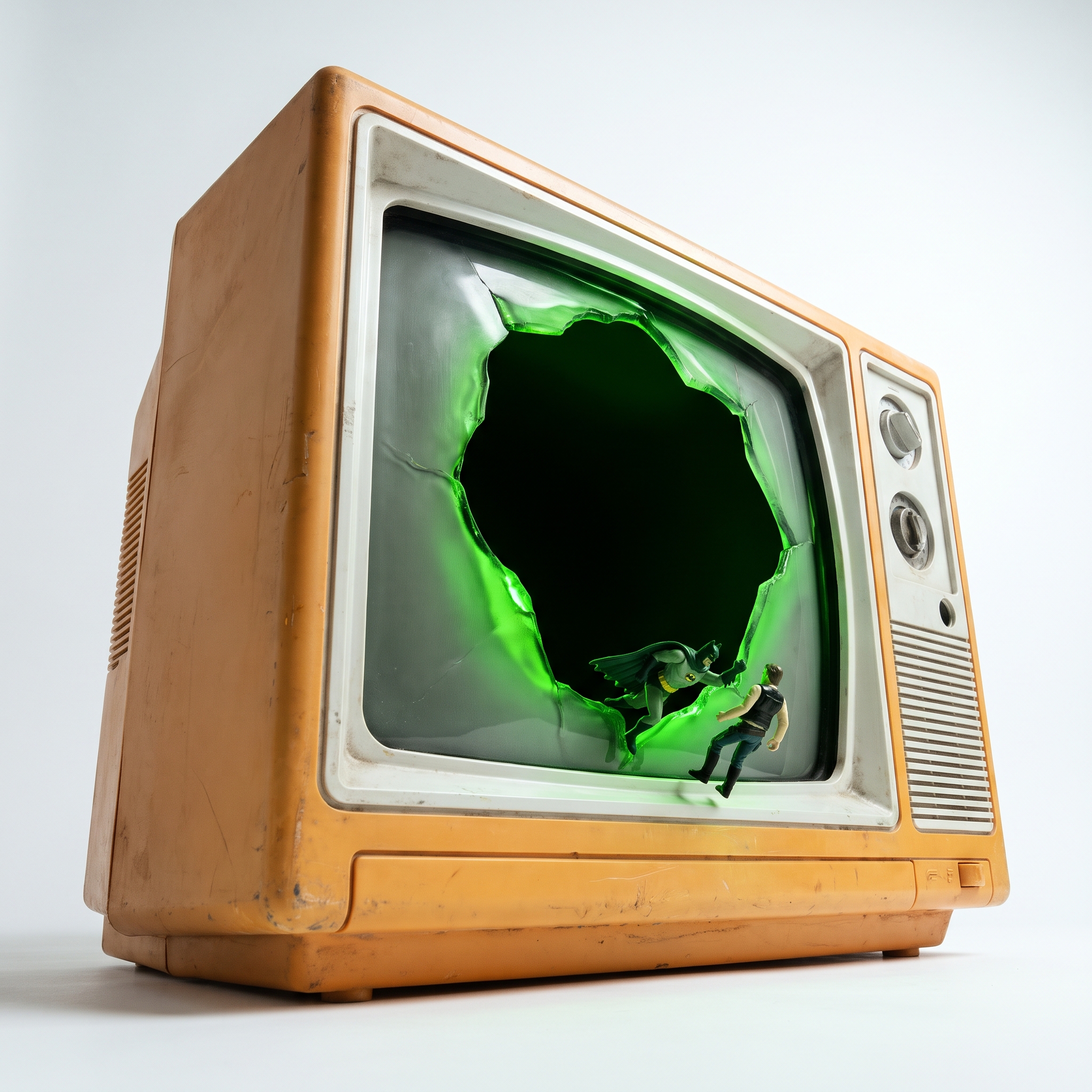
Hope Sterling: Both! Because I'm asking because of Walter Melon, which is — okay — a 1998 Nickelodeon cartoon that completed a full fifty-two episode run, parodied Batman, the Hulk, Han Solo, had this whole hero-for-hire setup with Walter and his assistant Bitterbug, and now has virtually no streaming presence, basically no home video release, and survives through like scattered recordings and episode guides. That's it.
Finn Brooks: Wait — fifty-two episodes and no home video? Not even a DVD compilation?
Hope Sterling: Nothing substantial. And that's the part that — I mean, normally when a show disappears we're like, oh, it got cancelled, makes sense. But Walter Melon didn't get cancelled. It finished. Every episode aired. The production was complete. And it still evaporated like it was never there.
Finn Brooks: So cancellation is actually not the danger. Finishing is no protection either.
Hope Sterling: It's like writing the whole novel and watching the publisher shred every copy on launch day. Like, Walter Melon did everything right structurally — it's not a show that got axed six episodes in. It ran. And Nickelodeon just... didn't keep it.
Finn Brooks: A show can succeed at existing and still fail at surviving. Those are two completely different problems.
Hope Sterling: But okay — surviving is the part that's making me spiral, because I keep framing this like Nickelodeon abandoned Walter Melon specifically, and like... did they? Or did they just never actually own it enough to bother?
Finn Brooks: That's — yeah, that's exactly the reframe I want to make, because Walter Melon wasn't a Nicktoon. It was a French-American co-production. Olivier Sulpice and Serge Carrère created it as a French comic first. Nickelodeon aired it, they didn't build it.
Hope Sterling: Wait — so the rights are just... split somewhere across the Atlantic?
Finn Brooks: Almost certainly, yeah. And compare that to Rugrats, Hey Arnold!, SpongeBob — those are still everywhere, streaming, merchandise, the whole thing — because Nickelodeon Animation Studio made them. NAS, which started as Games Animation in 1990, didn't formally become NAS until 1998. But the whole point of that machine, the thing Vanessa Coffey was actually building from August 11, 1991 when they launched Doug and Rugrats and Ren and Stimpy on the same day — that was a domestic IP factory. Walter Melon walked in from outside that system.
Hope Sterling: It wasn't neglect. It was just — Walter Melon was a guest and guests don't get the inheritance.
Finn Brooks: Exactly, and like — I don't even think that's a conspiracy? That's just boring business logic. If you don't own the franchise, you have no incentive to fight through international licensing to put it on a streaming platform. The math doesn't work for them.
Hope Sterling: No, I know, but — boring business logic and a good outcome are not the same thing, right? Like, some kid watched all 52 episodes thinking this was their show, and nobody preserved it because of a rights split they didn't know existed.
Finn Brooks: No, a hundred percent — the outcome is still bad. I'm just saying the villain isn't Nickelodeon forgetting Walter Melon. The villain is that the structure of a co-production means nobody has clear enough ownership to actually be responsible for its survival.
Hope Sterling: Which is honestly almost sadder? Like, cancellation you can be mad at someone for. This is just... a gap nobody had to fall into.
Finn Brooks: And that gap has a name, actually — like, it's not just Walter Melon. Cry Baby Lane. October 28, 2000, Nickelodeon airs it once, and then it just... doesn't exist for over a decade.
Hope Sterling: A DECADE. One broadcast.
Finn Brooks: One broadcast. No rerun, no home media, nothing — until 2011, when fans on the internet basically just would not stop documenting that it existed until Nickelodeon finally rebroadcast it. Like, fan pressure actually worked.
Hope Sterling: Wait, that's actually the thing I'm obsessed with. Because imagine a kid who watched Cry Baby Lane that Saturday night, tells literally everyone at school Monday, and by Tuesday their friends are like, that's not a real show. Because nobody can find it anywhere. That's — that loneliness is so specific.
Finn Brooks: And they're not wrong to be confused! It was real and also basically unfindable. Same decade, same network.
Hope Sterling: Which is what I mean about the paradox being real — like, you were vindicated on the mechanism, the co-production rights thing totally explains Walter Melon. But the OUTCOME is exactly what I said. A show that aired to actual children is now harder to locate than stuff made before the internet even existed.
Finn Brooks: No, you're — yeah, I'll take that. The Electric Piper makes it even darker though. 2003, animated film, airs once. And the director, Raymie Muzquiz, he has a copy. He confirmed it. Just sitting there. But Nickelodeon's legal department won't let him release it because the music rights documentation is unresolved.
Hope Sterling: He HAS it and can't release it?
Finn Brooks: The file exists. The barrier isn't lost — it's legal. Which is almost worse? And the Lost Media Wiki people are out there trying to archaeologize their own childhoods and that one is just... behind a wall that finding it doesn't actually solve. Which, honestly — that's the part we haven't even gotten to yet, the gap between locating something and legally being allowed to share it.
Hope Sterling: Yeah — yeah, and that gap is where Walter Melon probably lives too. So like, the take holds. The vault show paradox is real. Just — messier than I thought.
Finn Brooks: And that gap — actually, I want to stay there, because I think the Cry Baby Lane recovery almost makes it worse. Like, it's the proof that fan pressure can work, fans document it for eleven years and Nickelodeon blinks. But then The Electric Piper is sitting right next to it and Raymie Muzquiz has the file and it still can't come out. So the lesson isn't 'find it and you win.' Finding it is like — it's step one of a completely different problem.
Hope Sterling: Wait — so the Lost Media Wiki finds every Walter Melon episode tomorrow and that's not actually the finish line?
Finn Brooks: Not even close. Because Walter Melon's co-production structure — Olivier Sulpice, Serge Carrère, French rights, Nickelodeon's U.S. broadcast rights — those don't dissolve just because a fan uploads a VHS rip. Legally that tape existing and legally being releasable are two mountains, not one.
Hope Sterling: That's genuinely bleak. Like, someone's grandma probably recorded all 52 episodes on VHS and it still doesn't matter.
Finn Brooks: It might circulate! But 'circulates among collectors' and 'gets a real streaming release' are — I mean, those are not the same universe. Whether Walter Melon is a tragedy or just a natural outcome of nobody caring enough — that's still genuinely open. Because if audiences just moved on, that's one story. If Nickelodeon's institutional indifference to anything they didn't fully own is what killed it, that's a different moral weight entirely.
Hope Sterling: Okay and I think that distinction actually matters, because — like, Rugrats is everywhere forever and it is a fully owned Nickelodeon domestic product. Walter Melon walked in from a French comic and got broadcast rights. That's not the same deal.
Finn Brooks: Which is the calibrated version, honestly. Not 'Nickelodeon are villains,' not 'just find the tapes' — it's that legal recovery and physical recovery are separate problems, and for international co-productions neither one has a clean solution. That's the actual uncomfortable truth here.
Hope Sterling: And somewhere there's a kid who watched every episode thinking Walter Melon was theirs. And they were right. It just — the institution never agreed.
Finn Brooks: My one detail I cannot shake — Olivier Sulpice and Serge Carrère made a comic, it became fifty-two episodes of Batman and Han Solo parodies on a major U.S. network, and nobody is racing to settle those rights. In 2024. That's the sentence.
Hope Sterling: Mine is Bitterbug. Like — Walter Melon's little assistant existed for fifty-two episodes of hero-for-hire chaos and is now arguably harder to find than actual archival footage from 1998. That's insane to me.
Finn Brooks: Walter Melon completed its run, which means — I mean, it technically won? And it still lost?
Hope Sterling: Only if someone signs the paperwork — which, wait, that's literally your line to say, not mine.
Finn Brooks: Only if someone signs the paperwork.