David Sterling: You look like you have a verdict already.
Megan Skiendel: I have had a verdict since about the 49th minute, yeah.
David Sterling: The own goal.
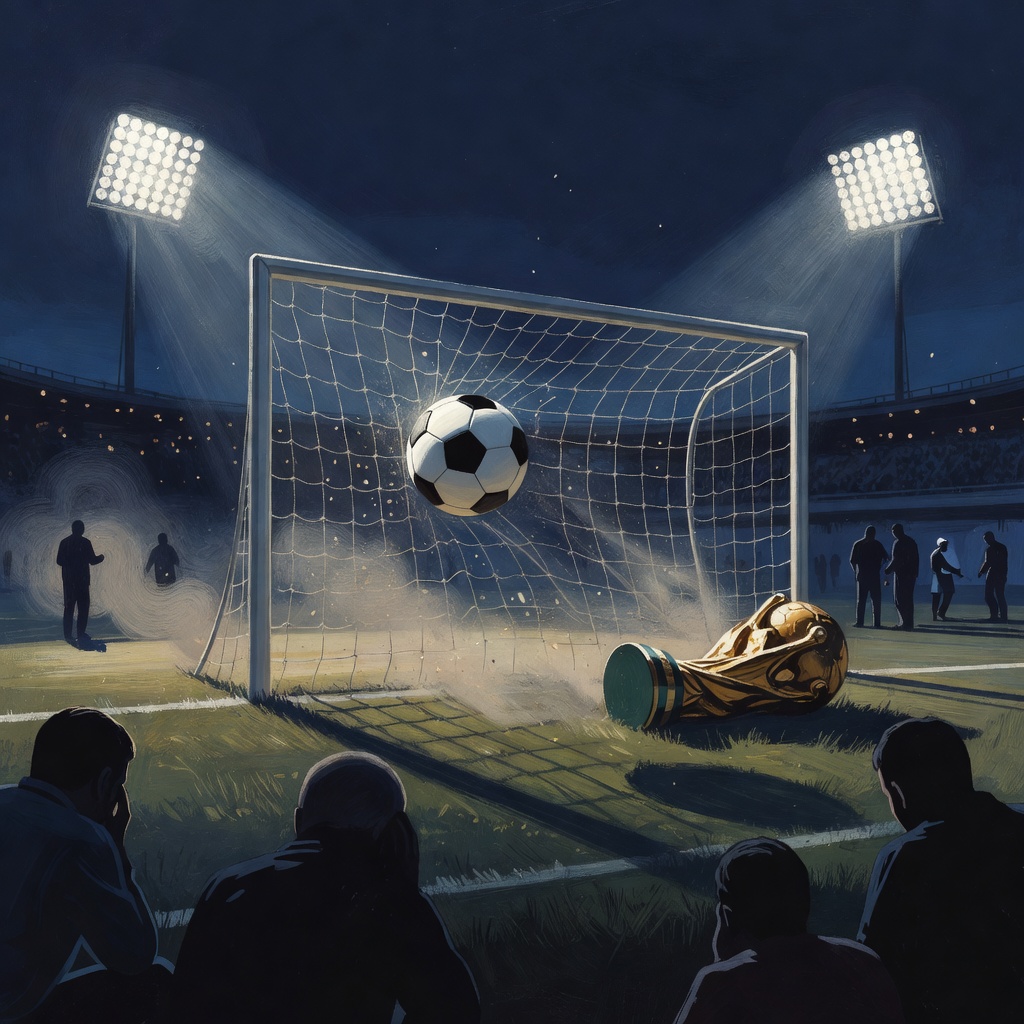
Megan Skiendel: Hassan Al-Tambakti deflecting Marc Cucurella's shot into his own net. Four-nil. Spain. Saudi Arabia. Atlanta. But look — the verdict isn't about Hassan Al-Tambakti. The verdict is about what Saudi Arabia actually bought with all of that Saudi Pro League money.
David Sterling: Which is?
Megan Skiendel: A very expensive storefront. You know when a restaurant spends everything on the interior design and nothing on the kitchen? Cristiano Ronaldo, Benzema, Neymar, Mane — that's the interior design. Stunning. None of them can wear the Saudi Arabia jersey. Not eligible. The kitchen — the actual national team — just got cooked 4-0 in Atlanta on June 21st. That's the whole story.
David Sterling: Well, hold on. That's the clean version. Let me push back a little, because — Spain drew nil-nil with Cape Verde in their opener. Cape Verde. Tournament debutants. That was its own shock. So the 4-0 might be partly Spain recalibrating, not Saudi Arabia being uniquely broken.
Megan Skiendel: That's fair. I'll give you that.
David Sterling: And the timing argument — I actually think it deserves a real hearing. Current Saudi players predate heavy PIF investment. Judging the model by this squad is like — wait, actually the analogy I want is — it's like auditing a factory before the new machinery has run a full production cycle. The 2034 squad isn't this squad.
Megan Skiendel: Sure. And they beat Argentina at the 2022 World Cup. Drew Uruguay in the 2026 opener. That's not nothing.
David Sterling: Right. And frankly — Vision 2030's actual thesis is soft power and economic diversification. Not a World Cup semifinal. Critics may be grading Saudi Arabia on a metric the program never claimed to optimize for.
Megan Skiendel: Okay — but if 2034 arrives and the home team is genuinely underdeveloped, that soft power argument collapses on live television in front of a billion people.
Megan Skiendel: And that's — yeah, that's exactly the trap. Because the players who will be on that 2034 squad are literally in academies right now. Sixteen, seventeen years old. We can basically see the pipeline already. This isn't a future question.
David Sterling: That's the number that actually matters. Eight years.
Megan Skiendel: Eight years. And then compare that to — I mean, Lamine Yamal. Tenth minute. First World Cup start. Second-youngest ever to score an opening goal, behind Pelé. That's not an accident, that's La Masia across two decades of institutional investment showing up in the tenth minute in Atlanta.
David Sterling: And Oyarzabal added two more before the 25th minute.
Megan Skiendel: Twenty-first and twenty-fourth. Three-nil before the first hydration break. That's a systems comparison, not a scoreline.
David Sterling: So the load-bearing question is — wait, actually — is there any evidence the Saudi academy system is producing players at La Masia's rate? Because that's what the 2034 deadline actually tests.
Megan Skiendel: And that's where the 'too early' defense gets evasive. The investment was supposed to build that pipeline. Hassan Al-Tambakti deflecting that ball in the 49th — that's a pre-PIF player under maximum pressure. The question is whether the next Al-Tambakti looks different. And honestly, from what's visible in those academies right now? That's not a verdict we can avoid much longer.
David Sterling: Fine. I'll half-concede it. Maybe Saudi Arabia paid five billion dollars for a marketing campaign. That's — actually, that's not the worst outcome if Vision 2030's real metric is global image, not a trophy. But someone inside that program is watching Luis de la Fuente celebrate his 65th birthday by winning four-nil, and they are hosting this tournament in eight years.
Megan Skiendel: His birthday. On that day.
David Sterling: June 21st. Sixty-five candles. Four-nil. That's the image they're sitting with going into 2034. And the uncomfortable truth is — Saudi Arabia had something real in 2022. Argentina. They had the Uruguay draw in this tournament. So it's not nothing. But the load-bearing number isn't five billion. It's eight. Eight years to find out whether a football culture is the one thing that was never actually for sale.