Eliza Ward: Brian — I'm going to start with a single sentence and I want your gut reaction: Anthropic just committed ten billion dollars over six years to a company that did not exist in December.
Brian Reed: My gut reaction is — that sentence should not be grammatically possible.
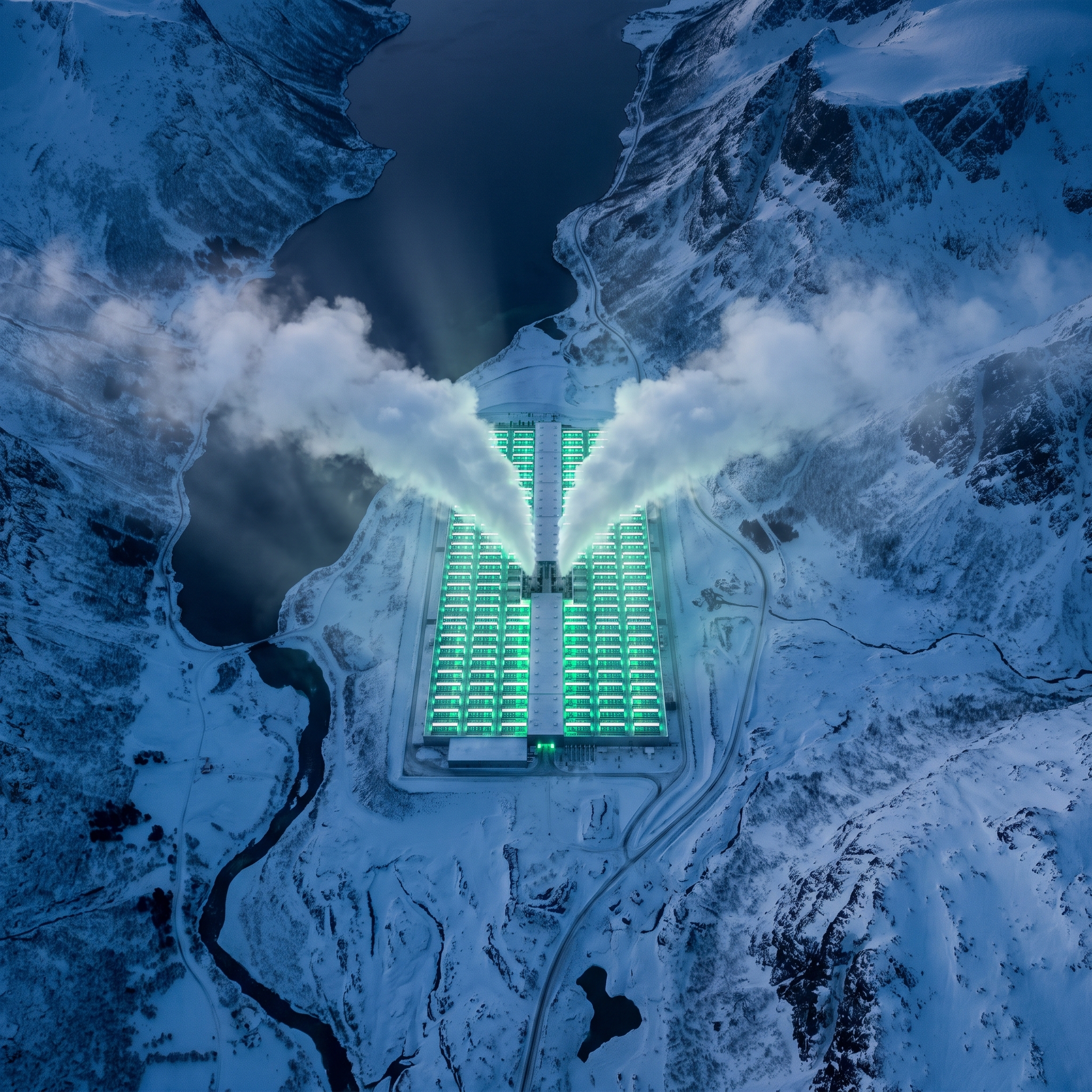
Eliza Ward: And yet. Volta Infra Holdings, founded January 2026, roughly seven months old at deal signing — that's the counterparty. Norway data center, Tydal campus, operated by Bitdeer Technologies Group. Nvidia Vera Rubin chips going in. This is what we're into today.
Brian Reed: The part I don't get immediately is — how does a company with no operating history convince JPMorgan to write a $1.3 billion credit backstop for it? Because that's what made the deal bankable.
Eliza Ward: That's exactly the structural question. But before we get there — Ricard Boada, Volta's CEO, will not confirm Anthropic is the client. Anthropic won't either. Bloomberg sourced the counterparty from unnamed sources. And Andreessen Horowitz — an investor in Volta — published their investment announcement the same day the Bloomberg piece dropped. August 4th, 2026.
Brian Reed: Wait — so the deal leaks, and the same day, a16z goes public with their stake?
Eliza Ward: Same day. Which — I mean, you can call that timing. Or you can call it a rollout that partially got away from them.
Brian Reed: The question underneath all of this is whether Anthropic's actual revenue trajectory can support being the anchor client for a startup that is betting its entire six-year business on one counterparty — and whether Bitdeer can actually build a 133-megawatt facility in Norway fast enough to matter.
Eliza Ward: The Bitdeer question is real — but the thing underneath it, the actual mechanism, is simpler than we've made it sound.
Brian Reed: Walk me through it.
Eliza Ward: Volta has three hundred million dollars. It is committing ten billion. The gap between those two numbers — that gap is JPMorgan.
Brian Reed: Actually, the way I'd put it: it's like a first-time homebuyer who can only close because a wealthy co-signer tells the bank, 'if they miss a payment, I'm covering it.' JPMorgan is the co-signer. Anthropic's future revenue is what the bank is actually lending against. Volta just... lives in the middle of that.
Eliza Ward: That's it. That's the whole thing. And the part that should stop people — Volta's founders, Ricard Boada and Sofia Gumuzio, they're former Brookfield asset-management executives. Infrastructure finance backgrounds. Not data center operators. They knew exactly how to structure a credit facility. That's the actual skill they brought.
Brian Reed: Wait — so the headline is 'AI startup builds data center' and the real story is 'two finance people figured out how to get JPMorgan to absorb the execution risk on a construction project they haven't started yet.'
Eliza Ward: With a one-point-three billion letter of credit from JPMorgan affiliates and a second unnamed institution. Yes. Without that backstop, a seven-month-old company with no operating history cannot make this contractual commitment. Full stop.
Brian Reed: And the reward for threading that needle is — I mean, Volta expects roughly one-point-seven billion in annual revenue from Anthropic alone. One client. The entire business model. For six years. That's either a very clean structure or a very fragile one.
Eliza Ward: Both. The credit backstop is what makes it possible. Whether it holds is a different question — and that one lives with Bitdeer's construction schedule in Norway.
Brian Reed: But hold on — the 'financial innovation' framing that's been going around. I want to push on that, because I'm not sure it holds.
Brian Reed: The take is: JPMorgan backstopping Volta is a new model for AI infrastructure finance. Novel. Replicable. And — I mean, I don't know if the evidence reaches that, because we don't actually know what JPMorgan agreed to. Is this a full guarantee? A standby facility? What are the draw conditions? None of that is public.
Eliza Ward: The full terms of the credit facility — and the identity of the second financial institution — have not been disclosed. We know one-point-three billion, we know JPMorgan affiliates, we know there's a second party. That is the complete public record.
Brian Reed: Right — but here's where I'd push further. Even if the credit structure is perfectly engineered, it doesn't pour concrete. Bitdeer Technologies Group has to actually build a frontier-AI-scale facility in Norway on schedule. Bitdeer's stock jumped roughly fourteen percent on the announcement — which, great, but a stock price doesn't commission a data center. And Bitdeer's construction pace is the variable nobody's stress-testing when they call this innovative.
Eliza Ward: Wait — here's the scenario that makes this concrete. Staged delivery runs through March 2027. So Anthropic is paying for compute that does not fully exist yet. If Bitdeer slips two months — construction delay, power delivery issue, whatever — the financial structure doesn't fix that. JPMorgan absorbs Volta's execution risk. Who absorbs the compute gap?
Brian Reed: Anthropic does. Which means calling this a financial innovation is actually — no, it's more like calling a mortgage innovative because the lender is well-capitalized. The risk didn't disappear. It got redistributed. And the part that comes later — what this deal reveals about Anthropic's total spend across Amazon and Google — that's where you see whether redistributing risk is actually a strategy or just accounting.
Eliza Ward: The signal to watch isn't whether the credit held. It's whether Vera Rubin chips are flowing through Tydal by March 2027. That's when financial engineering meets a construction schedule.
Brian Reed: And that compute gap is the part that actually changes how you read Anthropic's whole supplier picture — because Volta isn't the only bet they've made. Amazon is up to $25 billion committed. Google — and this number, I mean, let me get this right — reportedly backstops $43.8 billion in data center leases for Anthropic. That's not a supply chain. That's... I don't know what that is.
Eliza Ward: Plus AMD. Plus Broadcom. Plus now Volta at $10 billion.
Brian Reed: Right — so what's the revenue model that justifies accumulating that much committed compute?
Eliza Ward: That's — wait, that's actually the question nobody's answered publicly. Dario Amodei has not put a number on Anthropic's revenue run rate that reconciles with this spend. We're inferring the demand from the supply commitments.
Brian Reed: Which is backwards. Normally you see the revenue and then the capex follows. Here you're reading the demand backward from the contracts.
Eliza Ward: And the Nvidia piece makes that even — actually, no, here's the specific thing that should get more attention: Nvidia is a Volta investor. And Nvidia is supplying the Vera Rubin processors going into Tydal. So Nvidia wins on the equity side and wins on the hardware sale. That's not a conflict exactly, it's — it's a fully aligned incentive structure. Nvidia's upside doesn't depend on whether the financial engineering holds.
Brian Reed: No, I don't buy that it's incidental.
Eliza Ward: It's not. And that's what makes this potentially replicable — if Bitdeer executes through March 2027, if Volta books that $1.7 billion annual revenue, the template is: find renewable energy infrastructure, thread JPMorgan-style credit through it, get Nvidia in as investor-slash-supplier, anchor it to a frontier lab. That structure can be copied.
Brian Reed: Watch for whether other neoclouds try to replicate that JPMorgan backstop. And watch whether Dario Amodei ever publicly confirms this deal exists. Because right now Anthropic's entire 2027 scaling roadmap rests partly on a contract nobody will authenticate.
Eliza Ward: That's what keeps striking me about this. Neither Anthropic nor Volta will confirm the counterparty relationship exists. The whole attribution rests on unnamed Bloomberg sources. So we're describing JPMorgan's credit structure, Bitdeer's construction schedule, Vera Rubin chip allocation — all of it — for a deal that neither principal will authenticate.
Brian Reed: Which means — I mean, what do you do with that? JPMorgan's $1.3 billion backstop could be the signal that banks now treat frontier AI labs as creditworthy anchors, utilities basically, and that's a structural shift in how compute gets financed. Or Ricard Boada never confirms it and we just... never actually know if that's what happened.
Eliza Ward: Both things are true at the same time and that's the uncomfortable place this lands. The signal is real — if JPMorgan did this. The evidence is unverified — because neither party said so publicly.
Brian Reed: Yeah. That's a strange place to end up.
Eliza Ward: Thanks for thinking through it with me.