Michael C. Vincent: Nineteen billion dollars. To a company worth twelve.
Michael C. Vincent: I mean, that's the whole story right there — but it needs some context, so here we go. Anthropic, the AI safety company behind Claude, signed a twenty-year data center lease with TeraWulf Inc. Filed via SEC Form 8-K on July sixth, 2026. Projected contracted revenue for TeraWulf: approximately nineteen billion dollars. TeraWulf's market cap at announcement: around twelve billion.
Michael C. Vincent: The deal is worth more than the company receiving it. Let that land.
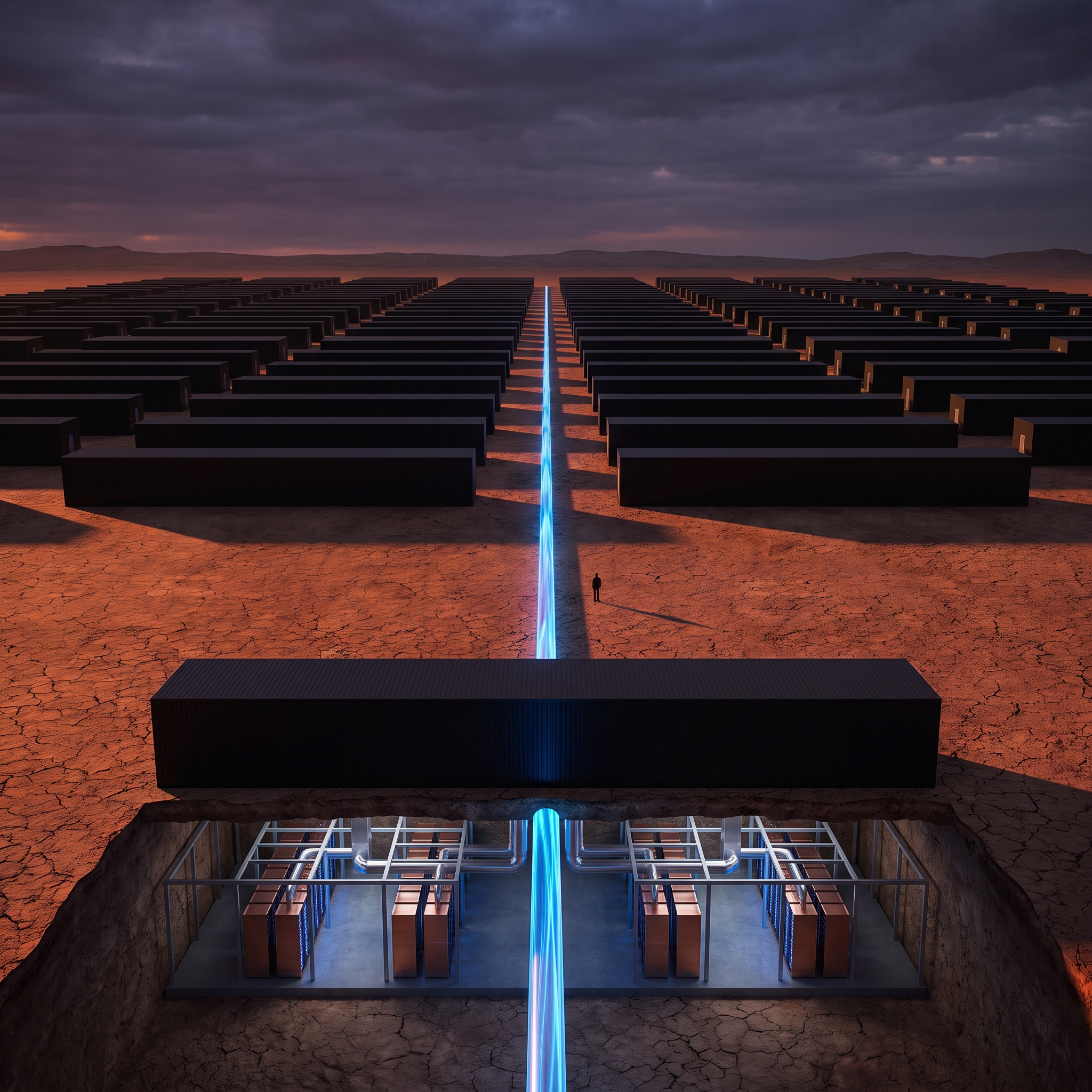
Michael C. Vincent: The campus is called Justified Data. It's in Hawesville — Hancock County, Kentucky — on the site of a former Century Aluminum smelter. And that's not metaphor, that's the whole point — the heavy industrial power infrastructure that used to run a smelter is exactly what makes this site valuable to a company that needs four hundred and one megawatts of critical IT load for its AI platform.
Michael C. Vincent: Initial capacity expected in the second half of 2027. Full four-oh-one megawatts by early 2028.
Michael C. Vincent: WULF — TeraWulf's ticker — surged eighteen, nineteen percent when the announcement hit. Settled around four percent by end of day. Still up more than eighty percent year-to-date.
Michael C. Vincent: The market read it clearly. But the read I think is getting missed — the one I actually want to make a case for — is that this deal only exists because TeraWulf used to mine bitcoin.
Michael C. Vincent: TeraWulf announced in May 2026 — just two months before Anthropic came calling — that it was formally pivoting away from bitcoin mining toward AI data center infrastructure.
Michael C. Vincent: That timing is not coincidental. It is the whole point.
Michael C. Vincent: The bitcoin-to-AI infrastructure pivot — former crypto miners taking their existing power infrastructure, their grid connections, their operational expertise, and repositioning for an AI market that pays far better — this is what that looks like when it actually works. And Justified Data, on a dead smelter site in rural Kentucky, is the most dramatic example we have.
Michael C. Vincent: A twenty-year deal sounds like certainty. It reads like certainty. That SEC Form 8-K lands and the number is right there: nineteen billion dollars, contracted.
Michael C. Vincent: But contracted by whom.
Michael C. Vincent: Anthropic is a private company. Its revenue, its margins, its customer base, the actual financial architecture underneath all of this — none of it is public. When Paul Prager goes out and describes this deal as backed by investment-grade credit, that characterization is very difficult to independently verify. We are, to some degree, taking his word for it.
Michael C. Vincent: And look, I'm not saying the word is wrong. I'm saying we can't check it.
Michael C. Vincent: That matters when you're talking about a single-tenant facility. The Justified Data campus is purpose-built, exclusively for Anthropic's Claude AI infrastructure — not a multi-tenant setup where you can backfill if one client walks. If Anthropic can't or won't pay, there is no plan B at four hundred and one megawatts.
Michael C. Vincent: Picture it. Four hundred megawatts going dark on a dead smelter site in Hawesville, Kentucky.
Michael C. Vincent: That's the concentration risk. The nineteen billion exceeds TeraWulf's own market cap — and it flows from one source.
Michael C. Vincent: The broader argument for this deal — the one Anthropic is making with its feet, essentially — is that compute is strategic infrastructure. That megawatts of reliable data center capacity are as critical to an AI company as talent or technology. You lock it in. You don't leave it to the spot market.
Michael C. Vincent: And that logic is sound. Actually — it's more than sound, it's the logic the entire hyperscaler economy runs on right now. The six largest US hyperscalers are on track to spend roughly seven hundred billion dollars on capital projects in 2026. Combined. Their capex is set to exceed their operating cash flow.
Michael C. Vincent: Seven hundred billion.
Michael C. Vincent: That number only makes sense if running frontier AI models stays a high-margin paid business. If the revenue assumption holds.
Michael C. Vincent: And here's where I'd ask you to actually sit with something — competitive AI models from China, free or effectively free, are already pressuring that assumption. Not hypothetically. Now.
Michael C. Vincent: The infrastructure lock-in is real. A twenty-year physical commitment — described as among the longest in the data center space — and it will outlast the technology and economic conditions that motivated it.
Michael C. Vincent: Twenty years is a very long time to be right.
Michael C. Vincent: In 2006, nobody was building a data center to run large language models. Nobody could have. The technology didn't exist.
Michael C. Vincent: So when Paul Prager celebrates this publicly — and he should, from his position it is a genuinely remarkable anchor — the unspoken thing is that TeraWulf's upside is only as durable as Anthropic's business model, and Anthropic's business model is only as durable as the assumption that Claude remains something people pay for.
Michael C. Vincent: The smelter got replaced. What replaces Claude?
Michael C. Vincent: Nobody knows. That's not a criticism — it's just the honest underside of a bet this large, this long, on a single tenant whose books nobody has seen.
Michael C. Vincent: The part that is still open.
Michael C. Vincent: Second half of 2027. That's the first real accountability checkpoint — the moment when initial capacity is supposed to come online at Justified Data, when all of this goes from a number on an SEC Form 8-K to actual megawatts moving through actual infrastructure on a dead smelter site in Hancock County, Kentucky. If that date slips, the twenty-year clock starts with a crack already in it.
Michael C. Vincent: Full four hundred and one megawatts — early 2028. That's the second marker. Less than six months later.
Michael C. Vincent: Both of those dates depend on variables that Anthropic and TeraWulf don't fully control. And one of those variables is Hancock County itself.
Michael C. Vincent: The community pushback is real. Environmental concerns. Infrastructure strain. The questions you'd expect when a project this size lands in a county of roughly nine thousand people who watched a Century Aluminum smelter define — and then leave — their economy. A press release about projected local tax benefits does not resolve that. It doesn't. The environmental legacy of that site is not a branding problem; it's a physical and regulatory one, and it remains unresolved.
Michael C. Vincent: Think about what Hancock County is actually being asked to absorb. A campus drawing four hundred and one megawatts of critical IT load — that's not a quiet neighbor. Grid capacity questions, water, heat, the visual and audible footprint of industrial computing at that scale — these aren't abstract. And the people raising them aren't wrong to raise them.
Michael C. Vincent: The investment-grade credit characterization — Paul Prager's framing of how this deal is backed — that matters here too, because if community opposition or environmental permitting delays the second half 2027 milestone, you're suddenly asking: what are the contractual consequences? What does Anthropic owe if TeraWulf can't deliver on schedule? Those terms aren't public. Anthropic's financials aren't public. The architecture underneath this is, by design, invisible to us.
Michael C. Vincent: The asymmetry runs in one direction. If 2027 lands cleanly — power flows, the campus delivers, WULF holds its gains, Paul Prager is vindicated — the upside is enormous and the story writes itself. But if it slips — even slightly, even for reasons that have nothing to do with capital or technology — the concentration risk I described bites immediately. One tenant. No plan B. A twenty-year commitment on a site with an unresolved industrial past.
Michael C. Vincent: Second half 2027. That's the number to watch. Not the nineteen billion — that's the projection. The megawatts. The date. The moment Hancock County either becomes the most improbable AI infrastructure success story in the country, or the place where the crack showed up first.
Michael C. Vincent: And nobody says this plainly — Anthropic didn't just lock TeraWulf into twenty years. TeraWulf locked Anthropic in too. Both of them are now hostage to an assumption about frontier AI's profitability that neither one fully controls, written into a physical building on a dead smelter site, enforceable for two decades.
Michael C. Vincent: Twenty years. That's not a business metric. That's a generation. The people negotiating this deal may not be running either company when it expires. The technology Claude runs on will be unrecognizable. Whatever replaces the economics of frontier AI — and something will — both parties will still be sitting inside this agreement, in Hancock County, Kentucky, with four hundred and one megawatts committed and nowhere else to put them.
Michael C. Vincent: The mutual trap is the deal.