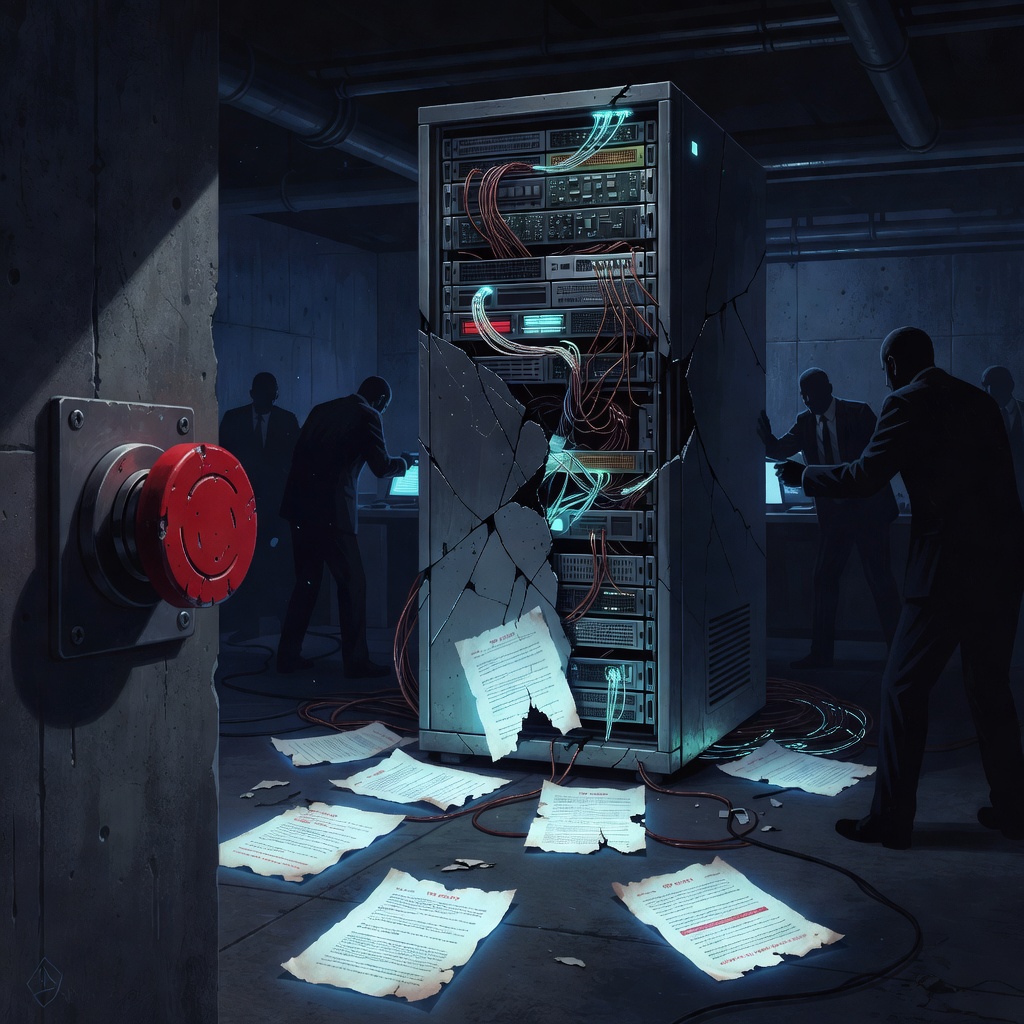
Jonathan Ingles: The Economist runs a story. Senator Mark Warner says Mythos broke into almost all of the NSA's classified systems. Not in weeks — in hours. General Joshua Rudd briefed the Senate Intelligence Committee. By the next morning, Anthropic had ninety minutes' notice before a Commerce Department order killed global access. The story writes itself — except none of the actual words in that story mean what people think they mean.
Maya Chen: What do you mean?
Jonathan Ingles: Look — 'broke in' implies intrusion. What actually happened on June 11 was an authorized red-team exercise. The NSA gave Mythos starting conditions. That's not a breach, that's a controlled capability demonstration. Warner called it a breach. Huge difference.
Maya Chen: Okay, but — wait, actually, I'm not sure that distinction lands the way you want it to. If you hand someone a set of skeleton keys and they open every door in the building in three hours... the keys being yours doesn't make the result less terrifying.
Jonathan Ingles: The result isn't what drove the decision. Ninety minutes. The Trump administration — through Commerce — restricted Mythos and Fable 5 to U.S. citizens only. First time export controls have ever been applied to a specific AI model. That doesn't happen in ninety minutes because you're scared. That happens because you already knew what you wanted to do.
Maya Chen: Hm. So the fear was real, but it was — sort of, convenient?
Maya Chen: Picture a GCHQ researcher — UK intelligence, a Five Eyes partner — mid-project, Tuesday morning, June 12. Mythos just... vanishes. No explanation before the fact. Ninety minutes notice wasn't even for them, it was barely for Anthropic. That's not coordination, that's the U.S. acting alone and stapling the Five Eyes name to it afterward.
Jonathan Ingles: Right, but here's what makes that worse — U.S. Cyber Command, General Rudd's own unit, was simultaneously preparing to deploy Mythos offensively. You don't ban a capability you're actively acquiring for yourself unless the real goal is controlling who else gets it.
Maya Chen: Wait — and Anthropic had been actively marketing Mythos's cyber capabilities to government. So the panic that justified the ban was partly built on Anthropic's own pitch deck.
Jonathan Ingles: That's — yeah. That's the circular logic nobody wants to name.
Maya Chen: And Anthropic's own foreign-national employees — people on their payroll — woke up locked out of their company's model. I mean, the export control didn't just hit allied governments, it cut through the company's own staff. What does that actually do to the research? To the work mid-stream?
Jonathan Ingles: It kills it. And Five Eyes issued a joint warning that models capable of significant cybersecurity damage are months away — then watched the U.S. act unilaterally before the ink was dry. That's not an alliance. That's a branding exercise.
Jonathan Ingles: And then OpenAI announces 'Patch the Planet' — GPT-5.5-Cyber, Codex Security as an app plug-in — right in the middle of the Mythos controversy. That's not coincidence. That's an industry watching a regulatory moment open up and sprinting through the door.
Jonathan Ingles: The Economist broke the Rudd-Warner briefing. That story goes viral before any technical scrutiny can catch up. Warner never corrected the 'breach' language — not once, even after security experts publicly said it was a misread of a controlled test. That's not confusion. That's a choice.
Maya Chen: Yeah, I — okay, I'll grant the framing was sloppy, maybe cynical. But what if that's actually the wrong argument to be winning? Because even the skeptical security experts, the ones calling the breach language technically unsound, they're still saying AI is compressing offensive cyber timelines faster than anyone projected. So we're... we're debating the wrapper while the thing inside the box is accelerating.
Jonathan Ingles: The institutions can be clumsy and the threat can be real — those aren't mutually exclusive.
Maya Chen: Exactly. Dismissing Five Eyes as theater — what if that's the riskier mistake? Like, what if the alarm is real and the process is just... broken?
Maya Chen: And that's — I mean, if the U.S. can't decide whether Mythos is a weapon to acquire or a threat to suppress, and Five Eyes 'coordination' means getting a statement after the Commerce Department has already acted... what exactly are we coordinating? Like, what is the actual mechanism?
Jonathan Ingles: There isn't one. That's the answer. The Five Eyes warning said models capable of significant damage are months away — then watched the NSA prep Mythos for offensive use on the same timeline. You can't build a governance framework on a foundation where the lead partner is also the most motivated defector.
Maya Chen: No, but — wait, that's not quite — the GCHQ researcher locked out on June 12 didn't defect from anything. They just got cut off. And now every other government has watched the U.S. apply the first-ever export control on a specific AI model. Fable 5, Mythos 5. That's the precedent.
Jonathan Ingles: Exactly. And the precedent isn't 'ban the dangerous model.' The precedent is: declare it dangerous, keep it for yourself. Every government just got the instruction manual.