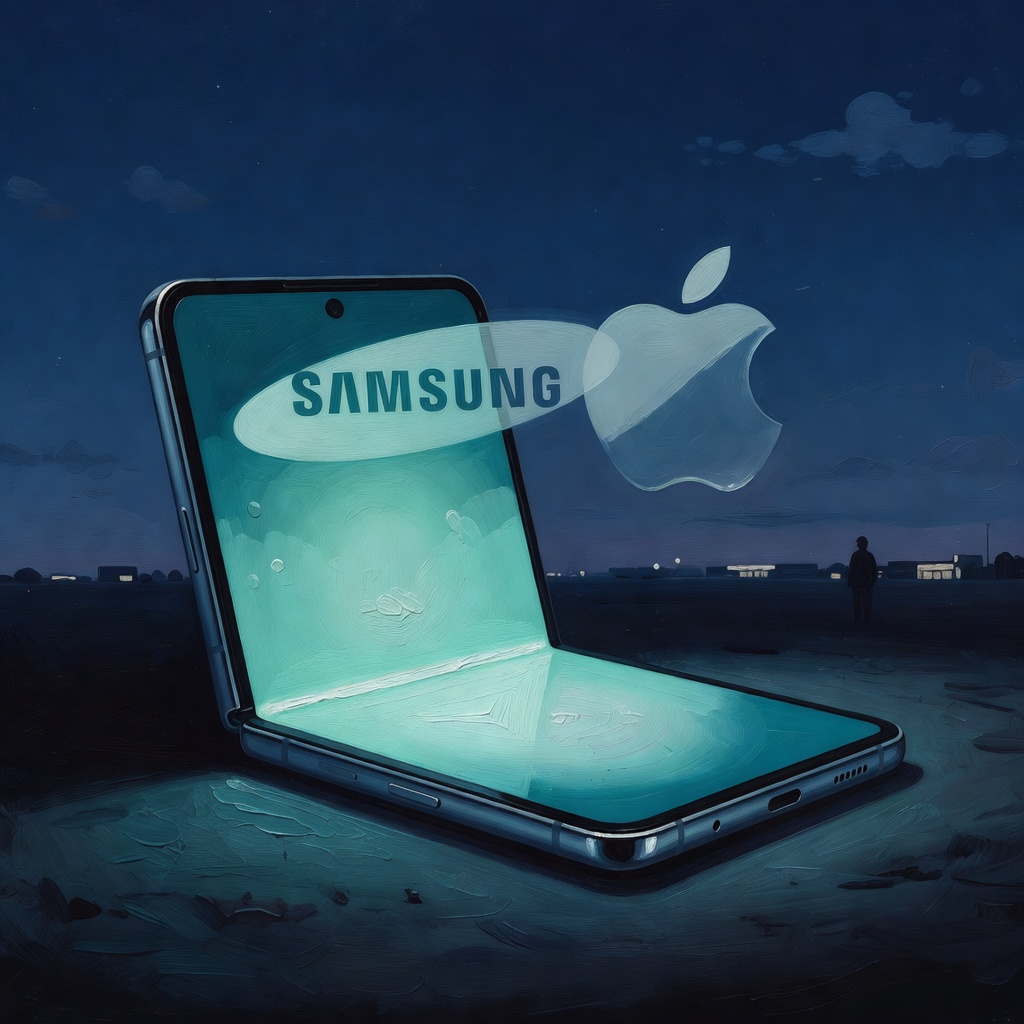
Jordan Hale: Three million foldable OLED panels. Rolling off production lines in Vietnam right now. Like — not prototype panels, not test samples, actual modules.
Alex Mercer: That's the number that got me too.
Jordan Hale: The Elec reported it June 22nd — Apple officially authorized Samsung Display to manufacture foldable OLED modules. And you know what, I want to just say the plain version of what this means before we get into any of the weeds. This is confirmation. Not a rumor, not a supply-chain whisper — Samsung has 50 of 80 back-end lines in that Vietnam facility running on this order. The iPhone Fold, iPhone Ultra, whatever we're calling it, it's being built.
Alex Mercer: Okay, wait — I'd push back slightly on 'confirmation.' Module production approval and a shipping product are different things.
Jordan Hale: Sure, but Samsung cleared 80% yield against Apple's 70% threshold. They didn't just pass — they passed with room to spare.
Alex Mercer: That part I won't argue with.
Alex Mercer: But 50 of 80 lines — that's 62.5% utilization. Apple typically pushes supply partners to 70, 80% before a major launch ramp. So that number is actually... cautious.
Jordan Hale: Huh. I hadn't framed it that way.
Alex Mercer: And then there's the hinge. Reports are saying squeaking and durability concerns are still unresolved — like, not quietly fixed in the background, actually unresolved — while panels are already rolling off that Vietnam facility. I'm not totally convinced those two things can both be true at the same time without something being off about the timeline.
Jordan Hale: Wait, so you're saying Apple greenlit display production but the device itself isn't — the hinge isn't done? Those are separate tracks?
Alex Mercer: Basically, yeah. Module production approval means one component cleared a quality bar. It does not mean the iPhone Fold ships on time. And the structural weirdness is — Apple is exclusively locked into Samsung Display for three years. Three years. The same Samsung that's been iterating the Galaxy Z series publicly for years. That's their sole foldable OLED supplier.
Jordan Hale: And Samsung's their biggest foldable competitor. Like, that's not a minor detail — that's the whole tension.
Jordan Hale: But okay, zoom out for a second — because I think this is where the cautious read actually misses something. Samsung is building a whole separate line at the A3 factory. In Asan, South Korea. Sixth-generation glass sheets, dedicated exclusively to foldable iPhone panels. Like, not repurposed capacity — new infrastructure.
Alex Mercer: The 15 million unit target.
Jordan Hale: Fifteen million annually! And Apple's initial order is 3 million. So Samsung is building capacity that's, you know, five times what Apple is actually asking for right now. That's not a supplier hedging — that's Samsung betting harder on the iPhone Fold's future than Apple itself is betting.
Alex Mercer: I think that's actually right. Three million at launch, 15 million once A3 is live — that math only makes sense if this goes mainstream by 2027. Not niche.
Jordan Hale: And the panels themselves — CoE technology, M16 OLED material set — these aren't last-gen components Samsung is clearing out of inventory. This is their best current display stack.
Alex Mercer: Which brings me back to the hinge thing. It's November 2026, someone unfolds an iPhone on a conference table — there's an audible squeak. Does that actually happen?
Jordan Hale: My read? No. I mean — the A3 line exists, the yields are above 80%, Samsung locked in for three years. The supply chain is quietly solving what we're not hearing about. The absence of news isn't proof the hinge is broken.
Alex Mercer: I mean — fine. The screens are real. I'll give you that. But here's what's actually bothering me: MacRumors ran Hartley Charlton's piece on June 22nd, The Elec broke it, SemiconductorsX backed it up — and Apple has confirmed exactly zero of this. Not a word. The entire late 2026 window, the 3 million panels, the A3 line — all of it is supply-chain inference.
Jordan Hale: Yeah, no, that's — that's true. Apple's silence is total.
Alex Mercer: The supply chain told us everything about the display. It has stayed completely quiet about whether anyone fixed the hinge.