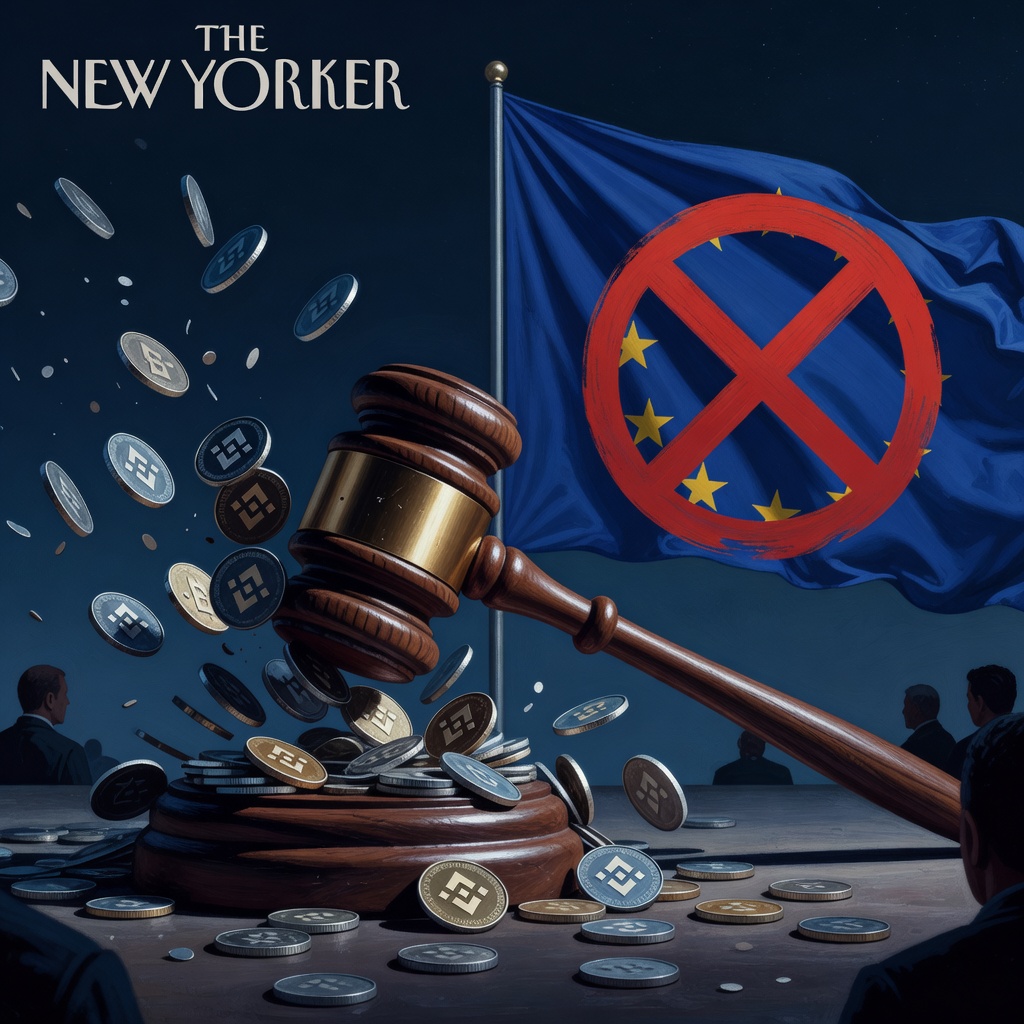
Jonathan Ingles: Binance filed in January 2026. Created a local holding company — Binary Greece — specifically to anchor the MiCA application through Athens. Quietly. No announcement.
Cole Bryant: Binary Greece — I didn't even know that was a thing.
Jonathan Ingles: Most people don't. And that's actually the story. Because June 16th, Reuters — Papadimas and O'Donnell — report that the Hellenic Capital Market Commission is set to reject it. Which means, look, MiCA passporting kicks in and Binance loses access to all 27 EU member states simultaneously. July 1st deadline. Not because of 27 separate decisions — because of one. Athens.
Cole Bryant: And Coinbase and Kraken are just — already licensed.
Jonathan Ingles: Already licensed. Already waiting. Quite honestly, I don't know why everyone's framing this as a Binance compliance failure when what you're actually watching is a market consolidation event with regulatory cover.
Cole Bryant: Dude. That's — okay, you gotta explain that more because that's a lot.
Cole Bryant: Wait — no, hold on. I'm gonna pump the brakes on the victim framing for a second. Because Binance walked into this with a $4.3 billion DOJ settlement on its back. 2023. Largest compliance failure in crypto history. That's — I mean, that's the company we're talking about. And then they pick Greece? The smallest, least-scrutinised regulator in the entire EU system? That's not a rehabilitation strategy. That's a calculation.
Jonathan Ingles: Frankly, both things can be true.
Cole Bryant: Okay but — actually, no, does it change the framing? Because if you forum-shop the weakest regulator in the bloc and then the HCMC rejects you anyway — and they won't even confirm it publicly, they cited confidentiality rules — it's really hard to cast Binance as the good-faith actor here.
Jonathan Ingles: The HCMC won't comment. Binance says it met all MiCA requirements. Got no formal denial letter. Nobody's showing cards. That ambiguity cuts both ways.
Cole Bryant: Right — but Binance promising an update before June 30th while Reuters has two anonymous sources saying rejection is imminent? That's not ambiguity, bro. That's a gap.
Jonathan Ingles: It is a gap. The question is who benefits from the gap staying closed. And Coinbase and Kraken are already licensed and very comfortable right now.
Jonathan Ingles: Look, here's what nobody wants to say out loud. Binance cleared the 18-month MiCA review period. Scott Melker flagged it — @scottmelker. Eighteen months. They sat through the whole transitional window, and still no formal documentation of what they got wrong. That's not rigorous oversight. That's — I mean, what is that?
Cole Bryant: Wait — eighteen months and no rejection letter?
Jonathan Ingles: No formal letter. Binance says it received nothing. HCMC won't confirm. And July 1st is — it's the cliff. The transitional period ends, no grace period, no negotiation window. Someone in Berlin, June 29th, has real money in a Binance earning account. App works fine. Next morning? Geofenced out. Can't trade, can't move funds legally, has to transfer to Coinbase at a worse rate. Because one bureaucrat in Athens didn't issue a piece of paper.
Cole Bryant: That's — yeah, that's the part that actually gets me. Like, CryptosBatman on X — a hundred and thirty-seven likes, not viral, but — he said 'this is not just a Binance issue, something is broken.' And I think he's pointing at exactly that. The passporting mechanic itself.
Jonathan Ingles: The EU built a system where one national regulator's decision — one — excludes a firm from twenty-seven countries simultaneously. Athens decides, Berlin loses access. That's either a feature or a flaw, and nobody in Brussels will publicly defend which one it is.
Cole Bryant: No, I'll give you that. That's the thing — even if Binance brought this on themselves, the mechanism is genuinely strange.
Cole Bryant: I mean — maybe Greece was a gamble. But, like, the house decided the rules after everyone placed their bets. That's — I don't know, that's a weird game.
Jonathan Ingles: The house always wins when the house writes the rules mid-hand. That's not a bug. That's the point.
Cole Bryant: And Coinbase and Kraken just — wait, they didn't lobby, didn't fight, didn't do anything. They just got licensed and sat there.
Jonathan Ingles: Binance paid four-point-three billion dollars trying to become a legitimate player. The EU's answer is apparently: not through that door. Coinbase and Kraken didn't need to do anything except wait.