Hope Sterling: Juniper, I need you to picture something with me — long week, and I am deep in a Business Insider article at midnight about a woman named Maggie Shannon who just... put a brain scanner on her head in the middle of a product demo.
Juniper Vale: What did it look like?
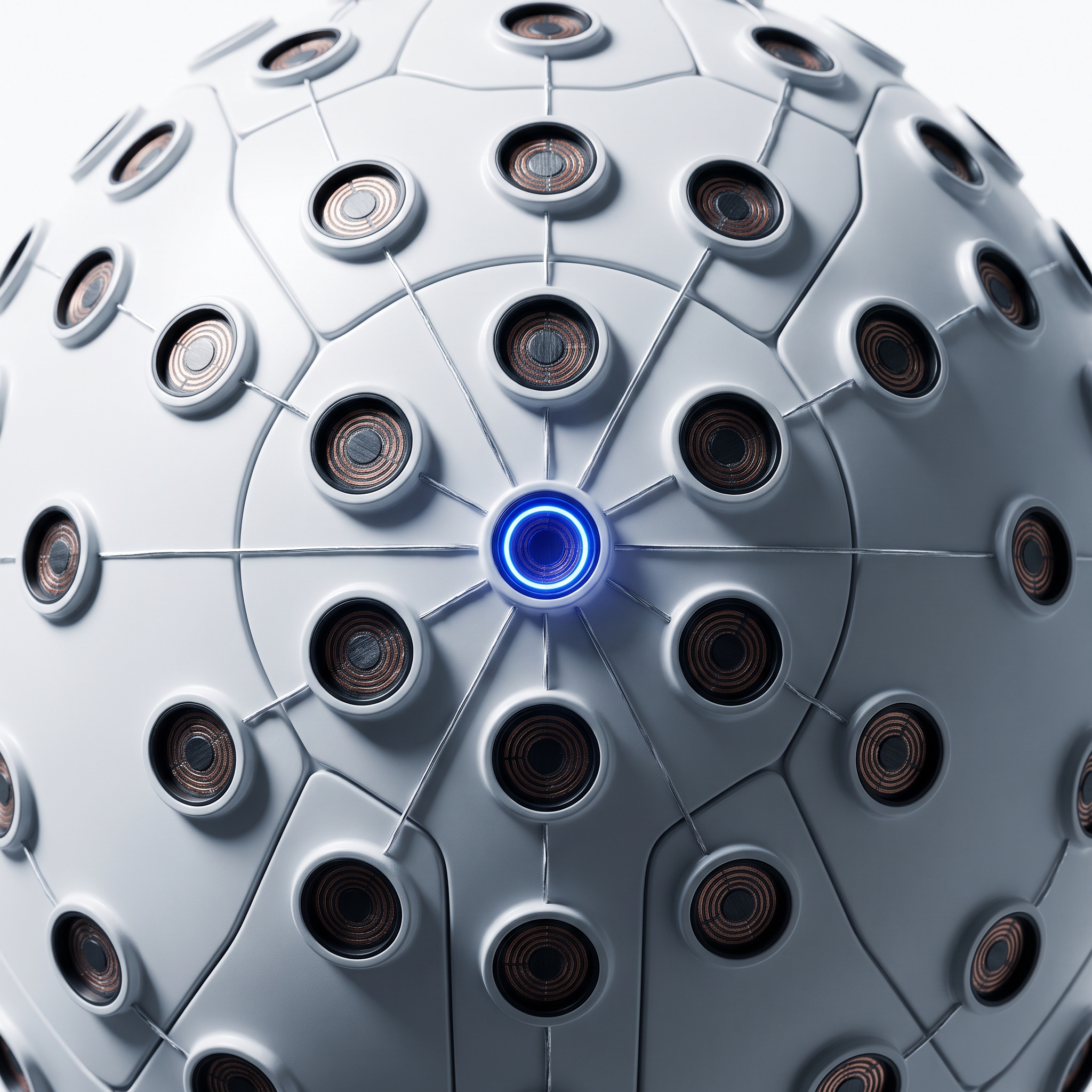
Hope Sterling: A fancy ski helmet. That's literally how she described the Kernel Flow headset. A fancy ski helmet — that was partly designed by a former Oakley employee, by the way — and it reads your brain.
Juniper Vale: Right — but the part that doesn't fit is that the science underneath it is serious. This isn't a wellness gadget dressed up as neuroscience. There's peer-reviewed research on this thing.
Hope Sterling: Okay, which is wild, because Bryan Johnson — who founded Kernel back in 2016 — put over sixty million dollars of his *own money* into it. Not a fund. His money. And then in 2023 he declared it the, quote, 'Apple Watch for your head.' Like that's not a press release line, that's a full thesis.
Juniper Vale: It is a full thesis. And the question we're actually sitting with today is whether the science backs that thesis up — or whether the sixty million dollars and the ski helmet aesthetic are doing a lot of the heavy lifting.
Hope Sterling: Okay but he also said — and I am not paraphrasing — that this is 'the world's first brain interface capable of imaging every brain on the planet.' In a Medium post. In 2023.
Juniper Vale: Every brain on the planet. That's the one. That's what we have to test.
Hope Sterling: Wait but like — how does it actually do that? Because 'reads your brain' sounds like something from a SkyNet pitch deck.
Juniper Vale: Okay, here's the plain version. You know how a pulse oximeter clips on your finger and shines light through your skin to measure oxygen in your blood? Flow does that — but through your skull. Near-infrared light goes in, bounces off oxygenated versus deoxygenated hemoglobin, comes back. Your brain uses more oxygen where it's more active. That's the whole thing.
Hope Sterling: So it's — wait, it's just a finger clip. For your head.
Juniper Vale: More sophisticated, but yeah, that's the intuition. Technically TD-fNIRS fires picosecond laser pulses — we're talking millionths of a millionth of a second — and measures when the scattered photons come back, which tells you depth and concentration. Kernel published actual peer-reviewed work on this: ketamine effects on the brain, alcohol effects. Academic researchers called the data quality credible. That part is not hype.
Hope Sterling: Okay no I believe the science, I do — but then why does Kernel need people to sit around watching Netflix in the headset right now?
Juniper Vale: That's exactly the gap. The physics works — Flow2 has 40 optical modules, up to 3,500 measurement channels, whole-head coverage. That is a serious instrument. But knowing what the light patterns mean? What happiness looks like versus fear versus sadness in your specific brain data? They're literally recruiting volunteers to watch Netflix to build those training datasets right now. That's not a finished product. That's a very credible public beta.
Hope Sterling: So the hardware is real but the — the interpretation layer is still, like, crowd-sourced from Netflix binges.
Juniper Vale: Exactly. And I don't think that makes it a scam — I think it makes it a different thing than Johnson's 'Apple Watch for your head' framing suggests. An Apple Watch doesn't need ten thousand people watching Succession to learn what a heartbeat is. The measurement is figured out. This one — the measurement works, the meaning is still being trained.
Hope Sterling: Scientifically validated is not the same as ready for my nightstand. Those are not the same sentence.
Juniper Vale: And that gap — nightstand versus beta — is actually where Johnson's bet gets interesting rather than embarrassing. Because he didn't just fund this from the outside. He put Flow into Project Blueprint. His own skull, his own biohacking regimen, wearing the headset as part of his actual daily protocol.
Hope Sterling: Wait — he's the test subject? Like, himself?
Juniper Vale: Primary test subject. And I mean — sixty million dollars of his own capital is one thing, but that's a different kind of skin in the game. That's your brain in the device every day.
Hope Sterling: Okay no, that actually — that lands differently for me. Like I came in ready to call this a vanity project, right, but a vanity project is when you put your name on something. This is when you put your, like, literal neurons on the line. That's — I'll give him that one.
Juniper Vale: That's the kernel of truth in the whole 'Apple Watch for your head' pitch. He's not selling something he's afraid to wear.
Hope Sterling: But then — okay, this is the part I cannot figure out — in March 2023 he hands the CEO role to Ryan Field, who was the CTO, and steps back to Chairman. And the framing was like 'we're entering first commercial applications.' Which sounds great! But I keep thinking — does Field want the biohacker use case or does he want enterprise? Because those are not the same product.
Juniper Vale: That is — yeah, that's genuinely unresolved. Picture it: it's Wednesday afternoon, 2026, a company rolls out 'optional' focus-hour monitoring with Flow headsets, and your manager pulls up a dashboard showing when your brain lit up during the three p.m. slump. Johnson might hate that application. Field might love it. We don't know yet which direction commercial actually goes.
Hope Sterling: And that scenario — the Wednesday afternoon brain dashboard — is honestly scary in a way the sci-fi stuff never was. And there's a whole layer to that I want to get into, because the data this thing collects isn't like step counts.
Juniper Vale: Right — and that part, the question of what happens when brain data about depression or PTSD reaches an insurer before any law exists to stop it — that's where we're going next.
Hope Sterling: And like — that's the thing that keeps tripping me up. Because my Fitbit knowing my heart rate is whatever, fine, but brain scans can surface depression. PTSD. Cognitive decline. Those are not the same category of information.
Juniper Vale: No legal framework protects that data at consumer scale. None. Not right now.
Hope Sterling: Wait — nothing? Like zero?
Juniper Vale: Nothing designed for this. HIPAA covers medical providers. It doesn't cover a wearable you bought. And brain data isn't classified the way genetic data is. So if Flow reaches mainstream adoption before any regulation catches up — which it might — there's genuinely no guardrail on what an employer or insurer does with it.
Hope Sterling: Okay that is — I mean, Ben Hamley, who runs global R&D at JLL, actually told Business Insider this directly. He said devices like Flow could be great for tracking neurofitness, but — and I wrote this down — 'no one wants to ever feel like their mental privacy is invaded.' Especially at work. He said especially at work.
Juniper Vale: And that's from someone in real estate who is actively thinking about this for workplaces. Not a privacy activist. Someone whose job is literally figuring out how offices should function. If he's hesitating, that tells you something.
Hope Sterling: So the calibrated take is — actually, I want you to land it, because I feel like I'm going to overclaim it.
Juniper Vale: The science is real. TD-fNIRS is real physics, peer-reviewed, not a gimmick. The design is genuinely approachable — that Oakley background shows. But Flow is real science hitting a regulatory vacuum at exactly the wrong moment. The risk was never whether it works. It's that the data it produces — depression, PTSD, cognitive states — could reach a workplace or an insurer before any law exists to say it can't. That's the actual collision.
Hope Sterling: Okay I'll — fine, I'll say it. Maybe 'Apple Watch for your brain' is slightly premature as a tagline. Like, slightly. But the thing that won't leave me is that the first big scandal isn't going to be, like, a bad sensor reading or the Netflix training data leaking or whatever. That's not the crisis.
Juniper Vale: It won't be. The first Flow scandal will be a leaked brain scan. Someone's depression, someone's cognitive decline — and an employer or an insurer who saw it before any law existed to say they couldn't. That's not a hypothetical. That's technologically possible today.
Hope Sterling: Yeah. That's — I mean, that's where I land too. And it's kind of a horrible place to land.
Juniper Vale: It is. Thanks for going there with me.