Brian Reed: Hey. Good to be here. Though — not under these circumstances, honestly.
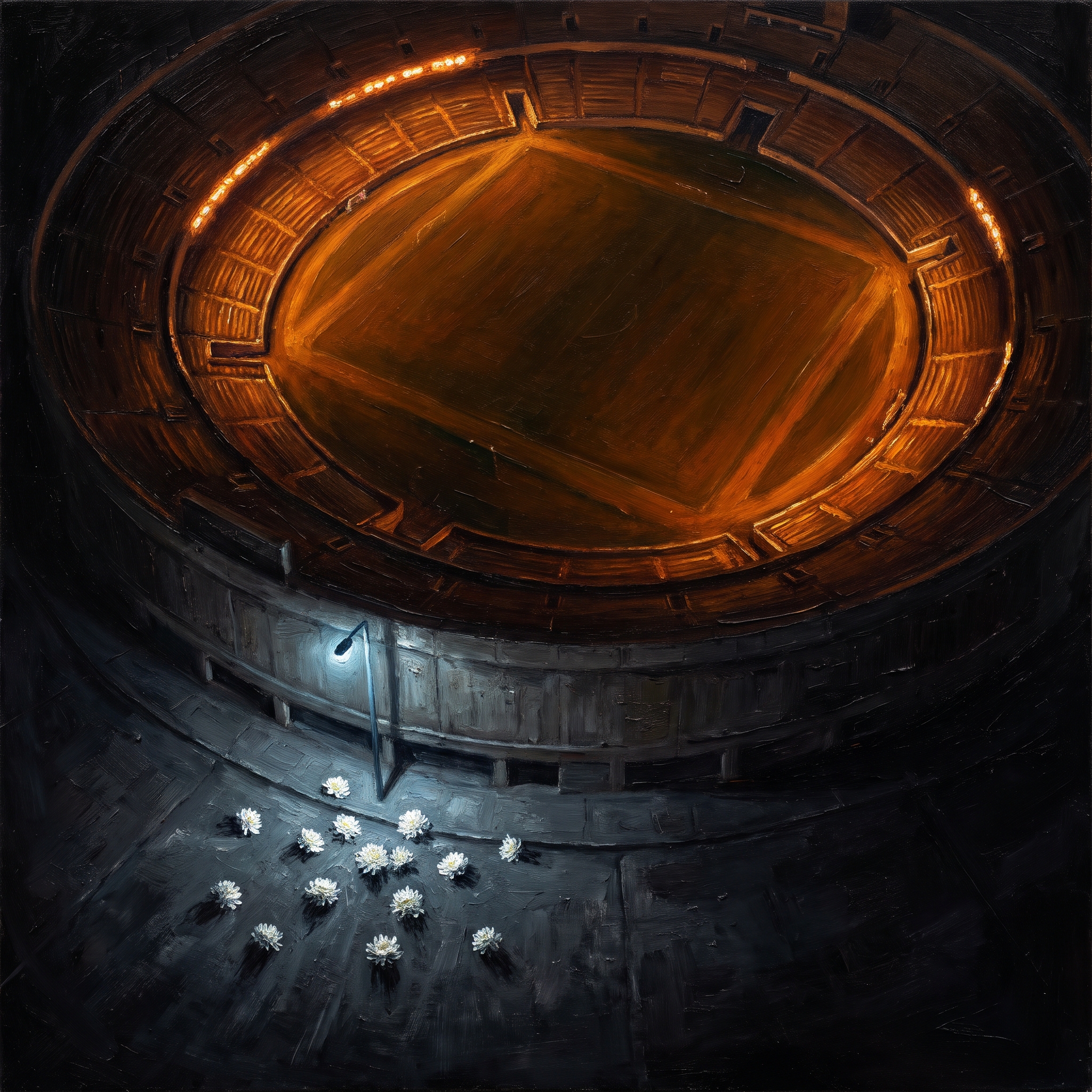
Brian Reed: So we're looking at Tallahassee, Saturday night — October 24th. Eleven people shot near Bragg Memorial Stadium on Perry Street. FAMU homecoming night. And six of those eleven were kids.
Eliza Ward: Six juveniles. The youngest was eleven years old. That's the number that — wait, I had to read it twice.
Brian Reed: And there's a twelfth person. A grandmother. She wasn't shot — she was hurt running. Fleeing the gunfire. Which is, I mean, that's its own thing. That's what panic looks like when it has a body.
Eliza Ward: Right — and one of those eleven is in critical condition. Three total with serious injuries, eight listed stable. At least one FAMU student among the wounded.
Brian Reed: Tallahassee Police Chief Lawrence Revell held a press conference just after midnight on October 25th. That's when the injury count and the age range got confirmed publicly.
Eliza Ward: Hours after Florida A&M had already put out a public safety alert — around 8:40 p.m. — saying the campus itself was safe.
Brian Reed: But here's what that 8:40 alert doesn't tell us — Revell's press conference, just after midnight, that's where 'preliminary findings indicate a physical altercation' enters the picture. And I keep turning that phrase over. Preliminary. Indicate.
Eliza Ward: Right — that's the thing that needs separating. 'Preliminary findings indicate' is not 'we know a fight caused this.' It's a working theory.
Brian Reed: It's like a detective walking into a room and saying 'it looks like an argument started here' — useful direction, not a verdict. We don't know who fired. We don't know if the two or three people in the altercation are the people who shot anyone.
Eliza Ward: And we definitely don't know — wait, this is the part that matters — whether that altercation had any connection to the game crowd at all. Arkansas–Pine Bluff beat FAMU 31–28. Game ends. Hours pass. Then this. Proximity noted. Connection: not established.
Brian Reed: Not established. So what did Revell actually confirm, as opposed to — you know, what the 'preliminary' framing is doing?
Eliza Ward: Confirmed: eleven gunshot wounds, the twelfth injury while fleeing, age range including that eleven-year-old, severity — one critical, eight stable. And that the Violent Crimes Unit took over the investigation from responding officers. That part's locked. No arrests, no suspect named, no motive. Those are still open.
Brian Reed: No arrests as of initial reporting. That's — yeah, that's significant.
Eliza Ward: And there's one more piece — Florida State University, about a mile away, issued its own emergency alert saying its community didn't appear to be involved. Which tells you something about the geographic footprint of the response, even if FSU's statement doesn't add anything to what actually happened on Perry and Manatee.
Brian Reed: So the Violent Crimes Unit has a working theory — altercation, two to three people, escalated — and everything else is still investigative inference. That's the honest version of where this stands.
Eliza Ward: That's the honest version — but there's a take already out there I want to push back on. The idea that FAMU did the right thing institutionally. Issued a safety alert at 8:40 p.m., said campus is safe, job done. I don't think that holds.
Brian Reed: The case for it being sufficient is — I mean, universities can only speak to their own jurisdiction, right? FAMU doesn't own Perry Street.
Eliza Ward: Right, but the crowd on Perry Street was there because FAMU organized a homecoming. That's not a neighborhood crowd. That's families who drove in from out of state for a FAMU event.
Brian Reed: Walk me through the actual scenario.
Eliza Ward: Parent drives in for homecoming. Game ends — FAMU loses 31–28 to Arkansas–Pine Bluff. They get the 8:40 alert on their phone. 'Campus is safe.' They think, okay, we're fine, let's walk to the car. Their car is on Perry Street. That alert told them nothing about where they were actually standing.
Brian Reed: And FSU's alert — a mile away — same shape. 'Our community doesn't appear to be involved.' That's also institutional perimeter logic, not — it's not telling a pedestrian walking between the two campuses anything actionable.
Eliza Ward: Exactly — two institutions, two perimeter statements, and the actual zone where eleven people got shot is the gap between them. Perry and Manatee isn't campus. It's also not nowhere. It's where people leaving Bragg Memorial Stadium walk.
Brian Reed: So 'campus is safe' addressed the university's legal exposure. It didn't address the eleven-year-old who was in that corridor.
Eliza Ward: That's the gap. And the part that makes this worse — we'll get to it — is what happens after the Violent Crimes Unit closes the case, because right now there's no mechanism to ask whether that semi-public zone needs a different answer every October.
Brian Reed: And that's the gap that actually — let me think about this — the Violent Crimes Unit working the case, that's the criminal accountability track. That's real. But it doesn't automatically trigger anyone asking: should Perry Street look different on homecoming weekend next October?
Eliza Ward: Those are two completely separate tracks. No handoff.
Brian Reed: Right. And there's no — I mean, is there a cross-institutional body that even owns that question? Some HBCU consortium, or a Florida state-level office that looks at crowd corridors near Bragg Memorial Stadium and says 'this configuration produced eleven gunshot victims, we should examine it before October 2027'?
Eliza Ward: Not one that's been publicly identified. That's the honest answer. Nobody's named a mechanism.
Brian Reed: Which brings me to Virginia State — August 2026, five people shot, parents calling for better campus security afterward. Different institution, different month, I'm not calling it a pattern.
Eliza Ward: Wait — that's actually the important distinction. Makola Abdullah at Virginia State faced the same post-incident pressure. Parents demanded action. And we don't know what changed structurally, if anything. That's context, not proof of a cycle.
Brian Reed: The structural sameness stands out. Large crowd, semi-public streets adjacent to the campus event, incident, alert saying the campus itself is safe, investigation — then headlines fade. That sequence at FAMU, that sequence at Virginia State. Whether it's a documented pattern or not, the conditions are replicable.
Eliza Ward: And the mass shooting classification question cuts right into this — multiple local outlets called this a mass shooting based on eleven gunshot victims. Some didn't use that term. That classification isn't cosmetic. It affects how much policy attention gets allocated and by whom.
Brian Reed: So the concrete thing to actually watch: does the TPD Violent Crimes Unit investigation produce anything that formally reaches FAMU's administration about that Perry and Manatee corridor — or does it close as a criminal matter, full stop, and the next homecoming arrives with the same uncontrolled adjacent streets and no identified upgrade?
Eliza Ward: That's — yeah, that's the question I can't get past. Eleven people shot near Bragg Memorial Stadium, no arrests, no named suspect, investigation ongoing. And when that investigation closes — whether it ends in a conviction or it just goes cold — nobody has identified whose job it is to look at Perry and Manatee and ask: what's different before October 2027?
Brian Reed: Is there even — I mean, I keep trying to name the person or the office, and I can't. Is it FAMU's administration? The city? Some joint board? Because right now it feels like the Violent Crimes Unit closes a criminal file, and the crowd-corridor question just... doesn't have an owner.
Eliza Ward: Nobody's named one. That's the honest answer the reporting supports. And that's what I'd want settled — not a verdict on fault, just: is there a named body, a named person, whose job formally includes that intersection on homecoming weekend? If yes, who? If no, that's the finding.
Brian Reed: An eleven-year-old was shot near a university stadium on homecoming night. No arrests. And the same night is coming back.
Eliza Ward: It is. We'll be watching.