Ben Okonkwo: Eleanor, I want to try something — I'm going to give you a deal and I want your instinct on whether it closes.
Eleanor Crane: Mm, go on.
Ben Okonkwo: Australian company. AI data centers. Nvidia is a backer. Blackstone is a backer. They come to market at A$11 a share, trying to raise A$7 billion, which puts them at a US$30 billion valuation. And on Tuesday morning — October 7th — the book is showing indications of interest well above the offer size. Does that deal close?
Eleanor Crane: I mean — yes? Those names alone, and the book looking covered... that closes.
Ben Okonkwo: Firmus withdrew the IPO on October 9th. Two days later. Gone.
Eleanor Crane: Wait — October 9th as in two days after the book looked oversubscribed?
Ben Okonkwo: Seventy-two hours, roughly. And I'm not going to explain it yet — I just... the sheer fact of it is the thing. A$7 billion raise, Nvidia, Blackstone, book over-indicated, and then nothing. October 9th, withdrawn.
Eleanor Crane: That's — how does 'well above the offer size' become a pulled deal in three days?
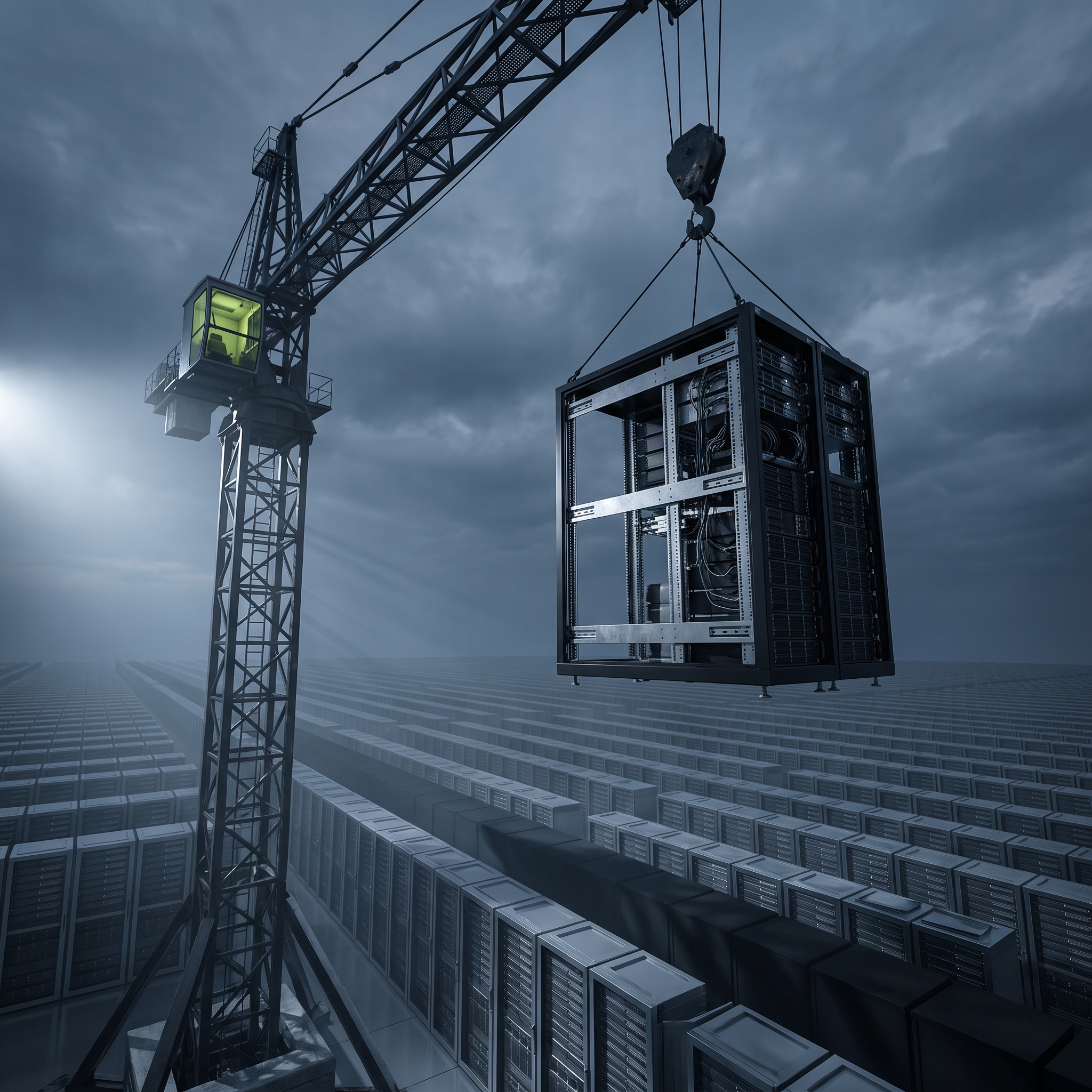
Ben Okonkwo: Because when investors actually opened the prospectus — I mean really sat with the numbers — what they found is that Firmus had built forty-two megawatts. Of a planned one gigawatt. That's roughly four percent of the target capacity. Operational. Right now.
Eleanor Crane: Okay, wait. Say that again in plain English.
Ben Okonkwo: Imagine someone asks you to invest in a restaurant that seats five hundred people. But right now, there are twenty seats actually built. And ninety-seven percent of the revenue they're promising you — the money they say justifies the valuation — depends on the other four hundred and eighty seats that don't exist yet. That's Firmus.
Eleanor Crane: Ninety-seven percent unbuilt revenue. That's not a scaling story — that's a floor plan with a stock price attached to it.
Ben Okonkwo: And that's what the board's official statement — 'market volatility and prevailing market conditions' — completely papers over. John Pearce at UniSuper said it directly: compelling story, not a compelling valuation. Significant additional debt and equity still required to actually build the thing. That's not sentiment. That's arithmetic.
Eleanor Crane: What did the execution risk actually look like from the outside? Was there a signal before October 9th?
Ben Okonkwo: Maas Group. Construction services firm, owned three-point-two percent of Firmus. Their shares fell thirty percent — thirty — before the IPO was even officially dead. Just on reports that Firmus might cut the size of the raise. The market was pricing the execution risk through a proxy before the announcement came.
Eleanor Crane: Thirty percent. On a company that just held a stake.
Ben Okonkwo: Which tells you investors understood — once they actually modeled it — that the gap between forty-two megawatts built and one gigawatt planned isn't a construction timeline. It's the entire business model. And at a US$30 billion valuation, you cannot hide that inside optimistic revenue forecasts anymore. Joseph Koh at Blackwattle called it 'priced to perfection.' Perfection meaning: everything gets built, on time, customers pay, hyperscalers don't eat your lunch. None of that is guaranteed when four percent of your capacity exists.
Eleanor Crane: And 'priced to perfection' is doing a lot of work there — because that phrase implies the math is coherent at perfection. Is it?
Ben Okonkwo: The August fundraising round — US$10.5 billion. Eight weeks later they're asking public markets for US$30.6 billion. Nearly triple. And in those eight weeks... no disclosed new customer wins. No new revenue commitments. The underlying business is identical. So what changed? The story got bigger. That's it. The pitch got more ambitious and the number followed the ambition, not the other way around.
Eleanor Crane: Nothing in the business changed.
Ben Okonkwo: Nothing verifiable. And this is — actually, this is the mechanism I want to name, because it has a shape. Private investors in August accepted the US$10.5 billion on narrative. On the Nvidia name, the Blackstone name, the vision of one gigawatt. But public investors in October — pension fund managers, institutional allocators — they run their own models. They don't inherit the private round's assumptions. John Pearce at UniSuper basically said it out loud: significant additional debt and equity still needed. That's not a caveat. That's the whole case against the price.
Eleanor Crane: So Pearce is essentially saying — the vision is real, the price is fantasy.
Ben Okonkwo: Yes. And this is what I'd call private-to-public valuation transfer risk — the idea that what private markets will accept on a handshake, public markets will reject when they run a stress test on the debt. The forty-two megawatts built doesn't support a US$30 billion number without a debt structure that assumes everything — construction, customers, hyperscaler tolerance — all goes right simultaneously.
Eleanor Crane: And the part that comes later — why Nvidia and Blackstone and Coatue and Jane Street weren't enough to close it, and what Accelevation's ongoing IPO tells us about where the bar actually moved — that's going to reframe this whole thing.
Ben Okonkwo: It will. Because the brand-name backing question is — I mean, it's almost a separate failure mode entirely.
Eleanor Crane: What did investors think they were buying in August that they couldn't buy at US$30.6 billion in October? Same company. Same story.
Ben Okonkwo: Same company, same story — but I think that's actually the wrong frame, because what changed is *who's asking the question*. Private investors in August were, I mean, they were essentially buying access to a network. Nvidia's on the cap table — that's a signal. Blackstone, Coatue, Jane Street. You're not underwriting the forty-two megawatts; you're underwriting the relationships. Public investors in October had to underwrite the gigawatt. And that's a completely different ask.
Eleanor Crane: So the brand names weren't wrong — they were just answering a different question than the one public markets were asking.
Ben Okonkwo: Exactly — and the indications of interest being 'well above' the offer size early in the book, that's consistent with this. Those early signals were almost certainly from investors anchoring off the cap table. Nvidia's in. Blackstone's in. I'll put my name down. But when underwriters pushed for *firm* commitments — actual money, actual price — that's when the analysts ran the numbers. And the halo effect had been doing the work that due diligence should have done.
Eleanor Crane: The halo delayed the scrutiny rather than replaced it.
Ben Okonkwo: And then — and this is the part that I find genuinely clarifying — Accelevation. Different company, same moment in the market, pursuing a US$5.37 billion U.S. IPO. And that deal is *proceeding*. Why? Because Accelevation posted a hundred and forty-seven percent year-over-year revenue growth between 2024 and 2025. Actual operating revenue. The market isn't rejecting AI infrastructure — it's rejecting the blueprint-with-a-price-tag version of it.
Eleanor Crane: Wait — a hundred and forty-seven percent actual growth and the deal moves forward. That's the bar.
Ben Okonkwo: That's the bar. And it also — it puts Ray Dalio and Michael Burry's broader warnings in context, because institutions are now stress-testing against macro risk in a way they weren't eight weeks earlier. The bubble warnings didn't kill Firmus, but they made every pension fund's risk committee a little more interested in the spreadsheet.
Eleanor Crane: And Firmus? After October 9th — where does a withdrawn A$7 billion IPO go?
Ben Okonkwo: Private capital markets. That's the official pivot. And there's an unconfirmed signal — one person involved in the transaction — pointing to a potential Nasdaq listing eventually. Which is interesting, actually, because it suggests the valuation question doesn't go away. It just moves to a different room.
Eleanor Crane: A different room with the same spreadsheet, though. That's what I keep thinking. Somewhere right now there's a data center with forty-two megawatts actually running — humming, cooling, serving customers — and next to it, a document that says one gigawatt. And public markets looked at the distance between those two things and said: not yet.
Ben Okonkwo: That's — I mean, that is exactly the image. And what's clarifying about it is that 'not yet' isn't a rejection of AI infrastructure. Accelevation proceeds. The category isn't broken. The goalposts just moved — from 'fund the vision' to 'show us what's built.' And that shift is now documented. October 9th is the date it happened in writing.
Eleanor Crane: You opened with — does this deal close? And I said yes, automatically, because of the names on the cap table. That answer aged badly.