Michael C. Vincent: You look like someone who has news.
Hope Sterling: I have extremely upsetting news, yes. I was at my aunt's place this weekend and she was like, devastated — genuinely devastated — because she found out that huge chunks of a show she loved as a kid just don't exist anymore. And I kept thinking, how? How does a television show just cease to exist? Turns out the answer is way more sinister than I expected.
Michael C. Vincent: Sinister is a strong word for archival policy.
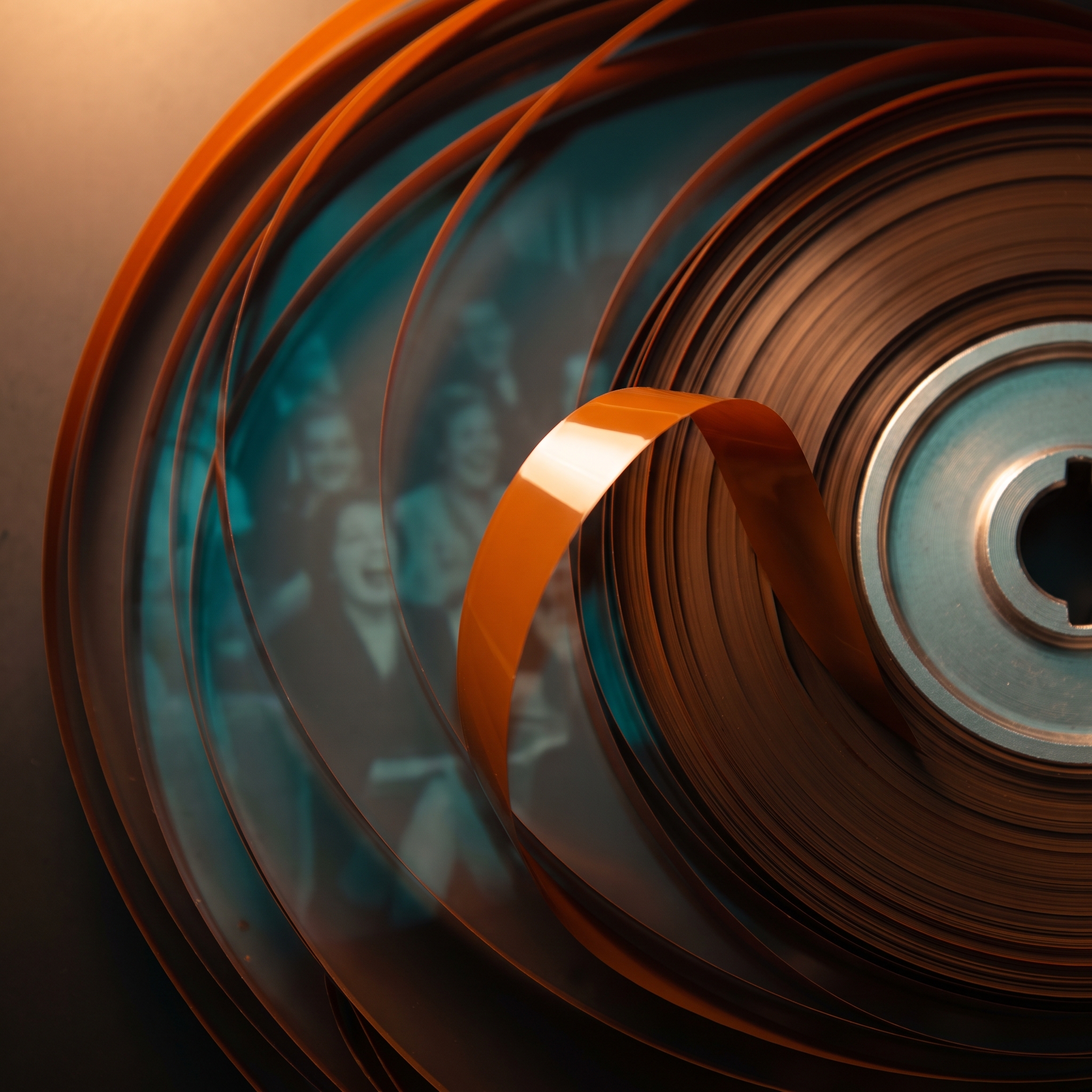
Hope Sterling: Is it though? Because what we're actually talking about is networks deliberately, systematically wiping their own recordings — erasing them so the expensive tape reels could be reused. That was the standard practice from the fifties all the way through the seventies. And then — okay, and then the thing that made me want to scream — in 1956, Ampex introduces this 2-inch Quadruplex videotape recorder, NBC and the other networks jump on it immediately, and suddenly you can record everything. Which sounds great! Except now you have a cheap, erasable medium and a culture that thinks TV is disposable, and that combination is catastrophic.
Michael C. Vincent: The technology made preservation possible and erasure easier at the same time.
Hope Sterling: Exactly — and nobody thought to choose preservation! Like, CBS's archive literally does not begin until 1972. ABC's starts in 1978. NBC's in 1980. And the DuMont Network's archive, after DuMont folded in 1956? Reportedly just dumped into Upper New York Bay. Gone.
Michael C. Vincent: Into the water. Not stored badly — into the water.
Hope Sterling: Into the water. And that's what we're getting into today — like, how did this actually happen, who made these calls, and what did we actually lose.
Michael C. Vincent: But before we make them the villains — picture a network executive in, say, 1963. He's got a shelf of expensive tape reels, and someone asks why he doesn't keep last Tuesday's broadcast. Imagine you're renting a whiteboard by the hour. Of course you erased yesterday's notes. Nobody was paying to read old notes.
Hope Sterling: Wait — so it wasn't negligence, it was just, like, the only thing that made sense given how they were thinking about it?
Michael C. Vincent: That's exactly it. The core idea is this: erasure was the correct decision given what anyone knew at the time. The Ampex reels were costly infrastructure, not storage. You needed the reel again next week.
Hope Sterling: Okay but — and this is the part that gets me — Goodson-Todman. The production company. They figured out preservation mattered while the networks were still wiping everything. Like, they arranged to keep their shows. So somebody knew?
Michael C. Vincent: They did. And I'd be careful not to overread that — Goodson-Todman were the exception, not proof the networks were being reckless. Most producers had no secondary market to sell into. No reruns meant no reason to store.
Hope Sterling: Which is wild because — okay, the dates tell the whole story. CBS archives begin in 1972, ABC's in 1978, NBC's in 1980. Those aren't random. That's literally the moment reruns became profitable enough that keeping a tape was worth more than reusing it.
Michael C. Vincent: Money moved first. Conscience, if it came at all, came second.
Hope Sterling: It's not even — I mean, it's not that people woke up one day and decided preservation was important. The financial calculus just shifted and the wiping stopped. That's the whole story.
Michael C. Vincent: Which raises the uncomfortable question — what does that tell us about right now, and what we're treating as disposable today?
Hope Sterling: But okay — here's what I didn't say yet, and this is the part that like, genuinely keeps me up. Even the tapes that somebody decided to keep? They weren't safe. Because the tape itself is — it's dying. Like, the oxide coating that actually holds the magnetic signal, it's bonded to a plastic backing, and over decades it just... physically separates. Flakes off. And once that's gone, the signal is gone. Irreversibly.
Michael C. Vincent: So even 'preserved' tapes weren't really safe.
Hope Sterling: Not even close. Picture a network archivist in 1983 — she finds a reel that should've been wiped, tucks it in a storage room, goes home thinking she did something good. Twenty years later someone pulls that reel and the oxide is literally crumbling off the backing like flaking rust. The signal is just — it's gone anyway. She saved it from the erase button and it died on the shelf.
Michael C. Vincent: That is a genuinely cruel irony.
Hope Sterling: And then there's sticky-shed syndrome — which, the name sounds almost funny but it is not funny at all. Moisture gets absorbed into the binder, and the oxide starts sticking and shedding the moment you try to play the tape. You can treat it — there's a baking process, controlled playback — but a lot of tapes are deteriorating past the point of rescue before anyone even attempts treatment. Like, the window closes and nobody noticed.
Michael C. Vincent: So deliberate erasure and chemical decay were — they were converging on the same outcome regardless.
Hope Sterling: Compounding, yeah. But — wait, actually the part that I think is the worst, and it's happening right now — the 2-inch Quadruplex decks that can even read surviving tapes? They're failing. Ampex built them, they became the industry standard, and now those machines are just... retiring. The engineers who know how to maintain a 2-inch quad deck are retiring or dying. That's a hard deadline. A physically intact tape becomes unreadable not because the tape failed but because the machine to play it no longer exists.
Michael C. Vincent: And that deadline — is it measurable? Like, do we know how much runway is left?
Hope Sterling: Not precisely, which is maybe the scariest part. And — I'll say this — the thing that makes it even more surreal is that some of what actually survived came from the most unexpected places, and we'll get into that: kinescopes, home recordings, all this stuff everyone dismissed as garbage-tier that turned out to be the only record we have.
Michael C. Vincent: That word — garbage-tier — that's the operative word, isn't it. Because a kinescope is literally a film camera pointed at a glowing television monitor. Not a clean dub. Not a transfer. Someone in a dark room aiming a lens at a screen and hitting record. Black-and-white, lower resolution than the original. Everything the industry dismissed as inadequate.
Hope Sterling: And yet UCLA Film and Television Archive — they've collected over three hundred of them. DuMont kinescopes. Three hundred. From the network whose archive supposedly went into the bay.
Michael C. Vincent: That number stopped me cold.
Hope Sterling: Right — because the kinescopes weren't even made to last. They were a stopgap. Like, before videotape, if an affiliate in Denver wanted to air a show that originated live in New York, you couldn't beam it across the country in real time, so someone kinescoped it, shipped the film, and the expectation was — use it, done. Nobody was thinking archive. They were thinking logistics. But then the original tape gets wiped, the original broadcast evaporates, and the only thing left is that shipped-around film dub that survived by — I mean, basically by accident, in somebody's storage cabinet.
Michael C. Vincent: The inferior copy outlived the original. You see, there's something almost poetic and terrible about that simultaneously.
Hope Sterling: And then — okay, the home recording thing is the same logic, pushed even further. Because VHS and Betamax owners in their living rooms, just taping off the air for themselves, they accidentally became an entire preservation layer. And the Library of Congress and the Paley Center — the Paley Center was founded by William S. Paley in 1975, specifically because corporate archives weren't cutting it — they are now actively seeking those home recordings. Like, calling for them. Because some rerun of a variety show that a teenager taped in 1977 is the only copy on earth.
Michael C. Vincent: The amateur preserved what the professionals erased.
Hope Sterling: And the cruel irony — the magnetic tape the networks trusted completely? Mostly gone. The lossy film dub, the basement VHS, the thing everyone called inferior? That's the archive.
Michael C. Vincent: Which makes me wonder — what are we trusting completely right now that future archivists will find horrifying we relied on?
Hope Sterling: YouTube. Like — that's my actual answer. The platform auto-deletes accounts that go inactive, it quietly changes what gets monetized so creators abandon old content, and there's no — I mean, there's no Library of Congress equivalent sitting there catching the weird niche stuff. The same logic as NBC wiping its reels: preserve what has commercial return, let the rest go. A capitalist media economy is just structurally hostile to the stuff that doesn't pay for itself.
Michael C. Vincent: And the playback problem follows. Ten years from now, the expertise to recover a degraded 2-inch Quadruplex tape is gone. Twenty years from now, maybe it's the codec knowledge to reconstruct a compressed video file from a dead platform. Different format. Same deadline.
Hope Sterling: Your aunt's show. The one she loved as a kid. Someone at a network made a completely rational decision about tape costs, and now it just... isn't there. That's the whole thing, isn't it. Two rational decisions, compounding, and then irreversible.