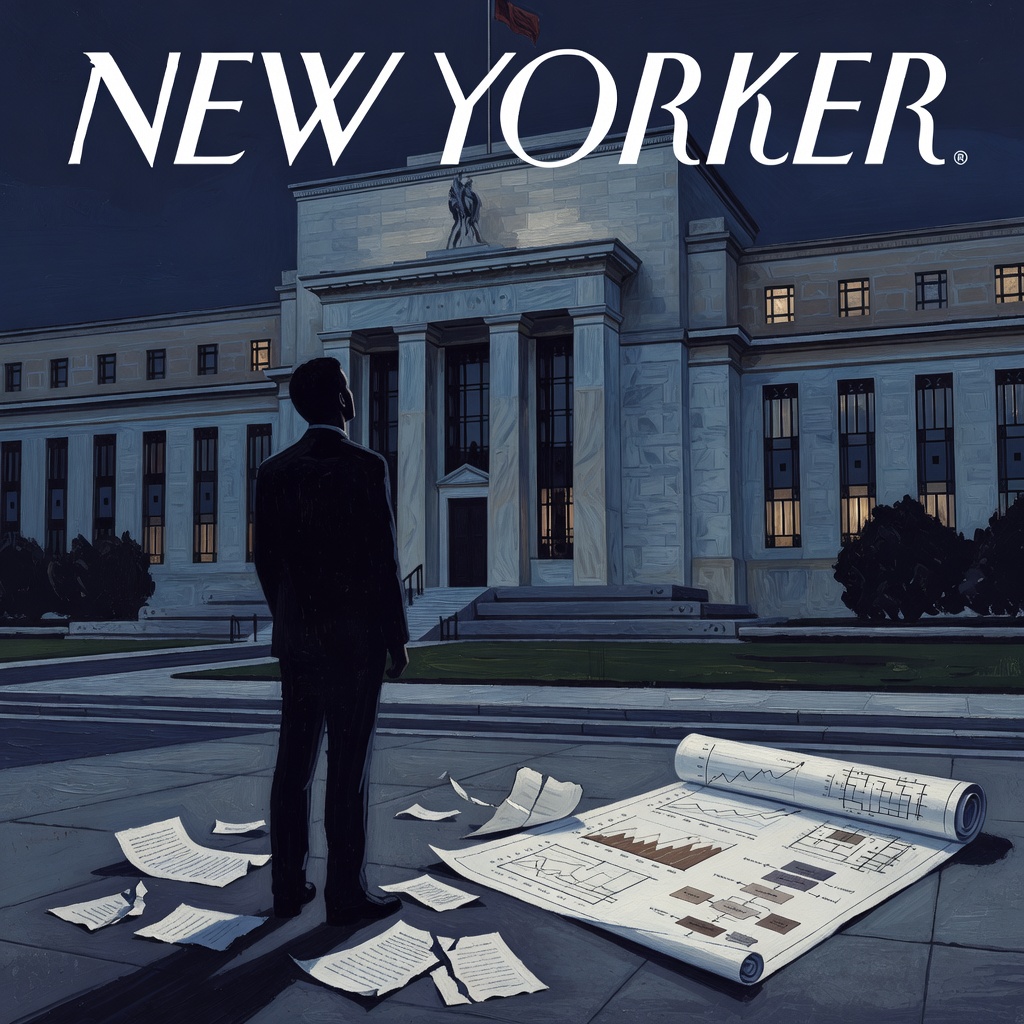
Ryan Castillo: The number that matters from June 17th is 13. Basis points. Two-year Treasuries, single day.
Jordan Hale: No way — lead with that? Not the thing Warsh actually said?
Ryan Castillo: That number IS what Warsh said.
Jordan Hale: Okay, yeah, that's — actually that's the whole story, isn't it. Kevin Warsh, first FOMC meeting, unanimous 12-0 vote to hold the federal funds rate at 3.50 to 3.75. Fine, boring. But then the statement drops and the forward guidance is just... gone. He said — I mean, he literally said out loud — 'forward guidance is not the business we should be in.' And you know what that's like? It's like a boss who's been sending the team detailed weekly plans forever, and one day just posts a two-line note and says figure it out. That shorter memo IS the message. Markets figured it out in about four hours: 13 basis-point spike, biggest single-day move in two-year Treasury yields since April 2025, and traders pricing in 83% odds of a rate hike before year-end. Neil Wilson at Saxo called it 'wholesale regime change at the Fed.' Which, yeah.
Ryan Castillo: So he claims humility. Markets priced in hawkishness.
Jordan Hale: That's the bluff the bond market called.
Ryan Castillo: Hold on. Because the 12-0 unanimous vote is doing a lot of work in that framing and I'm not sure it deserves to.
Jordan Hale: What do you mean — like the unity is fake?
Ryan Castillo: Look at the dot plot. 12-0 on the rate hold, sure. But 9 of 18 FOMC officials projected at least one rate hike in 2026. Nine. The median dot is pointing at a 25-basis-point increase. That's not a unified institution — that's a 9-9 tie on the thing that actually matters, dressed up in a unanimous vote.
Jordan Hale: Okay and — wait, actually this is the part that won't leave my head. Warsh refused to submit his own dot. The dot plot his institution published. A sitting Fed Chair declining to contribute a projection — that's never happened before. And the inflation forecast in that same document got revised up to 3.6%. So he's saying 'I don't signal the future' while the document he signed off on is... absolutely signaling the future.
Ryan Castillo: That's the tell. CNBC called it the most hawkish meeting since 2022-23. Viktor Fischer — RockawayX founder — put it plainly on X: 'Easing bias formally removed. Warsh came out hawkish to set credibility.' That's not humility. That's sequencing.
Jordan Hale: And Jerome Powell is sitting in that room. Like, you know — the previous chair, now just a governor, watching Warsh tear out the architecture he built. That's a strange human position to be in.
Jordan Hale: But like, I was skeptical too, but the five task forces are real. Warsh announced five of them: communications strategy, balance sheet management, inflation framework, data sourcing, productivity analysis. American Banker ran the headline 'We have a task force for that.' That's not a press release accident, that's — you know, that's actually structural.
Ryan Castillo: Five domains. That's not one committee covering a rebranding exercise.
Jordan Hale: Right, and the shorter statement — Warsh literally described it as 'a bit shorter' — that's not an editing choice, that's a philosophy. He kept the 2% inflation target completely intact while dismantling nearly every tool built to hit it and tell people they were hitting it. Think about a CFO on Tuesday morning opening that 132-word statement instead of 341 words, trying to decide whether to price in a hike. The ambiguity is the point.
Ryan Castillo: Wait — he kept the 2% target?
Jordan Hale: Unchanged. With a 3.6% inflation forecast sitting right next to it. I mean — that's the tension, right? He's not abandoning the destination; he's just... torching the GPS. Dr. Boyce Watkins flagged exactly this on X, that raising the forecast to 3.6% while scrapping forward guidance is basically a tacit admission that the 2% target isn't credible on its current timeline.
Ryan Castillo: So the task forces are the bet — that redesigning the institution from five directions simultaneously is what makes silence readable as discipline instead of chaos.
Ryan Castillo: And then two-year yields steadied at 4.17% on June 18. The panic — if that's even what it was — lasted one trading session. Which is almost more unsettling than if it had continued.
Jordan Hale: Wait, because stability the next day doesn't mean the uncertainty resolved — it just means traders... stopped screaming and started guessing quietly?
Ryan Castillo: Exactly. The FOMC didn't stop communicating on June 17. It just stopped being responsible for the translation. That's the actual structural shift. Markets will fill that vacuum — they always do — and what they fill it with is their own assumptions, which at 83% probability of a hike are already running hotter than anything Warsh has explicitly said.
Jordan Hale: I mean — yeah. And when your transparency strategy requires five task forces and a Bloomberg explainer to parse, you might have a clarity problem, not a credibility solution.