Onpode
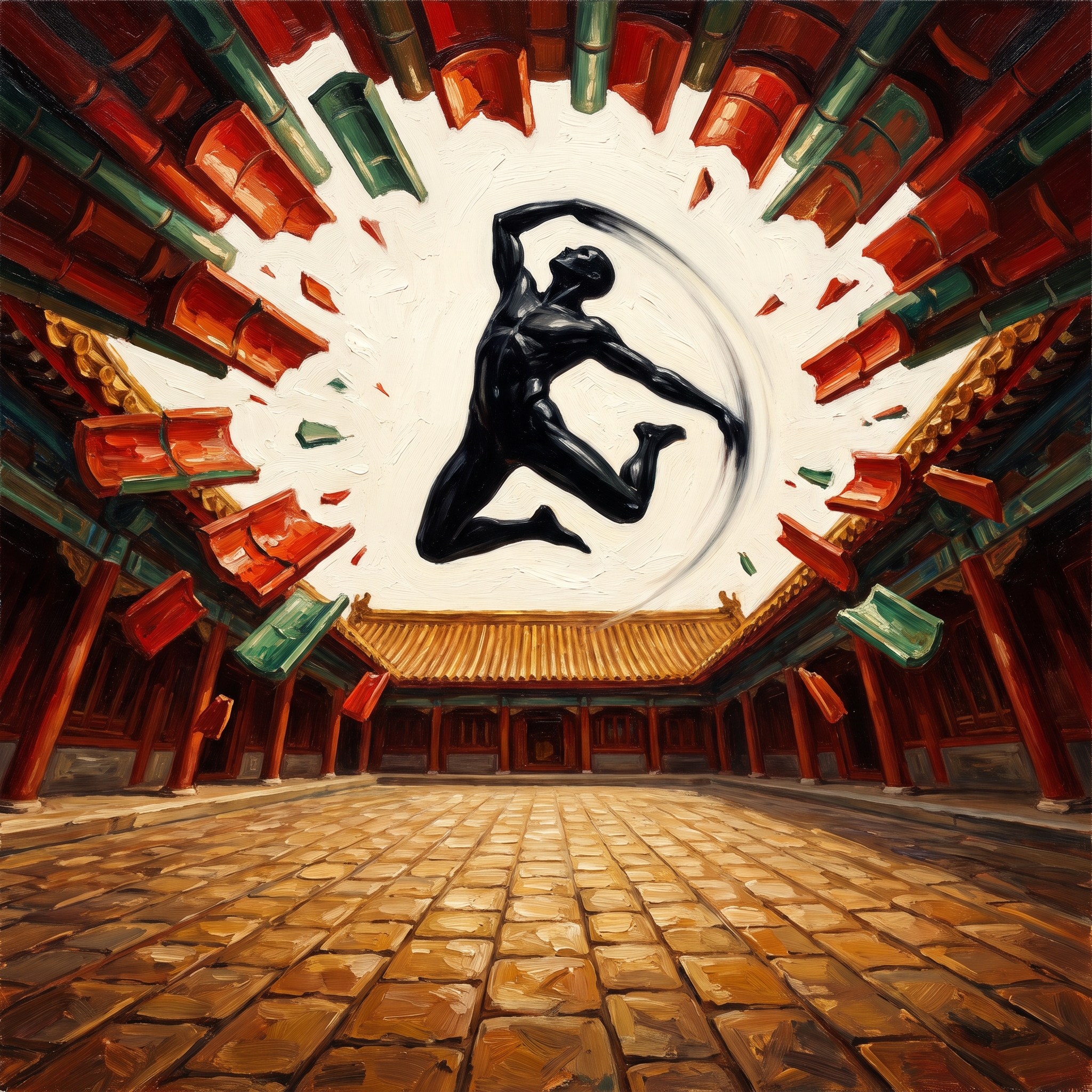
Cover art for Kung Fu Hustle's physics-defying battle scenes spark viral praise for live-action cartoon storytelling

Kung Fu Hustle's physics-defying battle scenes spark viral praise for live-action cartoon storytelling

August 10, 2026 · 6 min

Hope Sterling & Finn Brooks

A viral Kung Fu Hustle clip — 18.3k likes, 3k reposts after @_dave_mccoy posted it on August 9th — reignited debate about live-action cartoon logic. Stephen Chow improvised the Road Runner chase on set, using his own blue socks as VFX reference markers. The lineage traces from Chaplin through Warner Bros. animation to Hong Kong action cinema.

Stephen Chow's 2004 Hong Kong martial arts action-comedy Kung Fu Hustle has resurfaced in social media conversation after a clip posted by X/Twitter account @_dave_mccoy on August 9, 2026 described the film's exaggerated action physics as "live action cartoon logic at its absolute finest," garnering 159 likes and a follow-up post about the road runner chase sequence receiving 18.3k likes and 3k…

0:006:05
Get the next episode on Media deep dive live action sitcoms and cartoons

Follow it free — new episodes land in your feed.

Or make your own — any topic, in minutes

More Onpode episodes on Media deep dive live action sitcoms and cartoons

About this episode

A clip from a 2003 Hong Kong action comedy is outrunning the algorithm in 2025, and this episode wants to know exactly why. The Road Runner chase from Kung Fu Hustle — posted by @_dave_mccoy on August 9th, tagged 'live-action cartoon logic at its absolute finest' — pulled 18.3k likes and 3k reposts, and the episode uses that moment as a pressure test for a bigger question: what does it actually take to make cartoon physics feel native to a live-action film instead of bolted on? The answer turns out to run deeper than Stephen Chow. Slapstick preceded animation — Buster Keaton and Chaplin were already treating gravity as optional — and Warner Bros. cartoons learned from them, not the other way around. O'Donnell's Laws of Cartoon Motion, published in Esquire in 1980 and reprinted in an IEEE journal in 1994, formally named the rules that physical comedy had been running on for decades. Jackie Chan documented that lineage in 1993 by embedding actual Looney Tunes sound effects into City Hunter's choreography. What Kung Fu Hustle did was grow from inside that tradition rather than borrow from it. The mo lei tau nonsense-comedy DNA was already there. Chow wasn't importing a style — he was extending a lineage. The episode also digs into why commitment is the load-bearing element: the moment a director winks at the camera, the contract breaks. The blue socks detail — Chow using his own socks as a VFX tracking reference, improvising the whole chase on set — is the clearest possible illustration of what full commitment looks like in practice. About six minutes.

Frequently asked

Why is the Kung Fu Hustle Road Runner chase going viral again?

A clip of Kung Fu Hustle's Road Runner chase posted by @_dave_mccoy on August 9th earned 18.3k likes and 3,000 reposts, tagged 'live-action cartoon logic at its absolute finest.' Viewers responded to Stephen Chow's full commitment to cartoon physics — a tonal contract modern blockbusters rarely offer — which has only become clearer 22 years after the film's release.

Did Stephen Chow actually improvise the Road Runner chase in Kung Fu Hustle?

Stephen Chow improvised Kung Fu Hustle's Road Runner chase on set — it was not in the script. While on a wire rig, Chow directed the crew to use his own blue socks as VFX reference markers, a detail that became shorthand for his total physical and creative commitment to the scene's cartoon logic.

Did cartoon physics originate in animation or live-action film?

Cartoon physics originated in live-action slapstick before animation adopted it. Buster Keaton, Charlie Chaplin, and the Three Stooges were already using rules — survive impossible violence, bounce back, treat gravity as optional — decades before Warner Bros. cartoons. The rules were formally named in O'Donnell's Laws of Cartoon Motion, published in Esquire in June 1980 and reprinted in an IEEE journal in 1994.

How did Hong Kong action cinema connect to Looney Tunes?

Jackie Chan's 1993 film City Hunter incorporated actual Looney Tunes sound effects into its fight choreography, forming a documented link in a lineage running from Chaplin and Keaton through Warner Bros. animation to Hong Kong action cinema and then to Stephen Chow's Kung Fu Hustle. The tradition was passed down rather than invented at any single point.

Why do critics and audiences split on live-action films that use cartoon logic?

Moana's 32% critic score versus 88% audience score on Rotten Tomatoes illustrates a possible pattern, though it is not certain the gap is specifically about cartoon logic — it may reflect broader skepticism toward live-action remakes. The cartoon-logic hypothesis holds that layering absurdist rules onto existing IP reads differently to critics than when those rules grow organically from a film's own genre DNA, as in Kung Fu Hustle.

Grounded in 7 sources
The Influence Of Looney Tunes On Live-Action Filmmakers · cartoonbrew.com
10 Live Action Films That Feel Like a Cartoon, According to Reddit · collider.com
Cartoon Laws of Physics · dgp.toronto.edu
"Kung Fu Hustle" text version · ejumpcut.org
Cartoon physics · en.wikipedia.org
Kung Fu Hustle (2004) Review | Far East Films · fareastfilms.com
'Kung Fu Hustle': A Cult Classic Action Movie We Never Talk About · movieweb.com
Read transcript

Hope Sterling: Three thousand reposts. Hi, hello — three thousand people on August 9th saw a Kung Fu Hustle clip and could not let their friends not see it.

Finn Brooks: Good morning to you too — wait, which clip?

Hope Sterling: The Road Runner chase. @_dave_mccoy posted it, tagged it 'live action cartoon logic at its absolute finest,' called to bring back fun action cinema — 18.3k likes, 3k reposts. And I keep thinking about whoever watched that at midnight and immediately texted the link to three people because they felt something they haven't felt watching a Marvel movie in, like, years.

Finn Brooks: That feeling being — what, exactly? Permission?

Hope Sterling: Permission! That's literally the whole thing. Cartoon logic isn't a mistake, it's a contract — Stephen Chow goes, in this world, nobody dies when they should die, bodies bounce, gravity is a suggestion — and you accept it, and then everything is funny and huge and real all at once. Modern blockbusters don't make that deal anymore. They killed the ability to even offer it.

Finn Brooks: Killed is doing a lot of heavy lifting there.

Hope Sterling: It is! And I'll defend it. Because it's not like they forgot — it's that somewhere along the way a joke in an action scene became, like, a sign of weakness. And Kung Fu Hustle just went full cartoon and didn't even blink, and twenty-two years later the internet is losing its mind over it.

Finn Brooks: Okay but — actually, no, wait — 'blockbusters killed it' assumes cartoon logic came from cartoons in the first place. And that's the part that blew my mind when I went down this hole. Buster Keaton, Charlie Chaplin, the Three Stooges — they were already running on those rules. Survive impossible violence, bounce back, gravity is optional. Animation didn't invent that, it learned it from them.

Hope Sterling: Wait — so slapstick came first?

Finn Brooks: Slapstick came first. And someone actually codified it — there's an Esquire article from June 1980, O'Donnell's Laws of Cartoon Motion, which is a sentence — and it got reprinted in an IEEE journal in 1994, which is a completely unhinged sentence — formally naming the rules that live-action physical comedy had been running on for like sixty years already.

Hope Sterling: An IEEE journal. For cartoon physics. I cannot.

Finn Brooks: And then Jackie Chan — City Hunter, 1993 — he literally put Looney Tunes sound effects in the choreography. Documented. So the lineage goes: Chaplin and Keaton to Warner Bros. animation, Warner Bros. animation to Hong Kong action, Hong Kong action to Stephen Chow. It never died, it just kept getting passed down.

Hope Sterling: Okay that actually does complicate my whole 'they killed it' thing — like, if it's a continuous thread... but we should get into what full commitment actually looks like on a set, because the blue socks detail and then the Moana numbers together tell a really specific story about where that thread holds and where it snaps.

Finn Brooks: That thread holds exactly as long as the director refuses to wink at the camera — and that's where the blue socks thing just destroys me, because Stephen Chow is on a wire rig, the Road Runner chase wasn't even in the script, he improvised the whole thing on set, and he looks down and goes — use my socks. My blue socks are your VFX reference point. He's not doing a cartoon, he IS the cartoon.

Hope Sterling: He committed so hard he became the tracking marker. That's unhinged in the best way.

Finn Brooks: And that's — okay wait, that IS the mechanism though? Like, the mo lei tau tradition, the whole Hong Kong nonsense comedy DNA that Chow was already working in — cartoon physics didn't feel imported into Kung Fu Hustle, it felt native, because the absurdist rules were already baked into the genre. He wasn't bolting cartoon logic onto a serious film. It grew from inside.

Hope Sterling: Which is exactly why the Moana situation is so interesting — 32% critics, 88% audience on Rotten Tomatoes. Because that's cartoon logic layered onto existing IP instead of grown from the ground up, and critics clocked it immediately.

Finn Brooks: Though — I mean, we don't actually know if that split is specifically about cartoon logic or just... general taste on live-action remakes. Like, Dwayne Johnson responding to that gap publicly doesn't tell us which part audiences loved.

Hope Sterling: No, fair, that's a real hedge. But the Kung Fu Hustle cult-classic framing is interesting too — like, it wasn't universally celebrated on release either. High-risk tonal choice, critics didn't all get it, and now twenty-two years later it's the clip everyone's sharing. The commitment aged in.

Finn Brooks: Nobody winks. That's genuinely the whole answer.

Hope Sterling: My one detail is the socks. Like, @_dave_mccoy posts a twenty-two-year-old clip and the reason it hits is because Stephen Chow was literally down there on the wire going — my blue socks, those are your markers, let's go. No budget line for that. He just *was* the cartoon.

Finn Brooks: Mine is Jackie Chan in City Hunter, 1993, actual Looney Tunes sound effects in the choreography — meaning this whole lineage, Chaplin to Warner Bros. to Hong Kong to Chow, it never needed saving. Someone just had to stop abandoning it.

Hope Sterling: Wait, that's it exactly. Blockbusters didn't lose the technique. They lost the nerve.

Finn Brooks: Yeah — yeah, I'll take that.

Hope Sterling: The man used his own socks and made a film that's beating the algorithm twenty years later. The CGI budget wasn't the problem. The blue socks were free.
Kung Fu Hustle's physics-defying battle scenes spark viral praise for live-action cartoon storytelling · Onpode