Hope Sterling: Hey, long week — but I have something that is going to make you feel things, I promise.
Juniper Vale: I'm already nervous. Go.
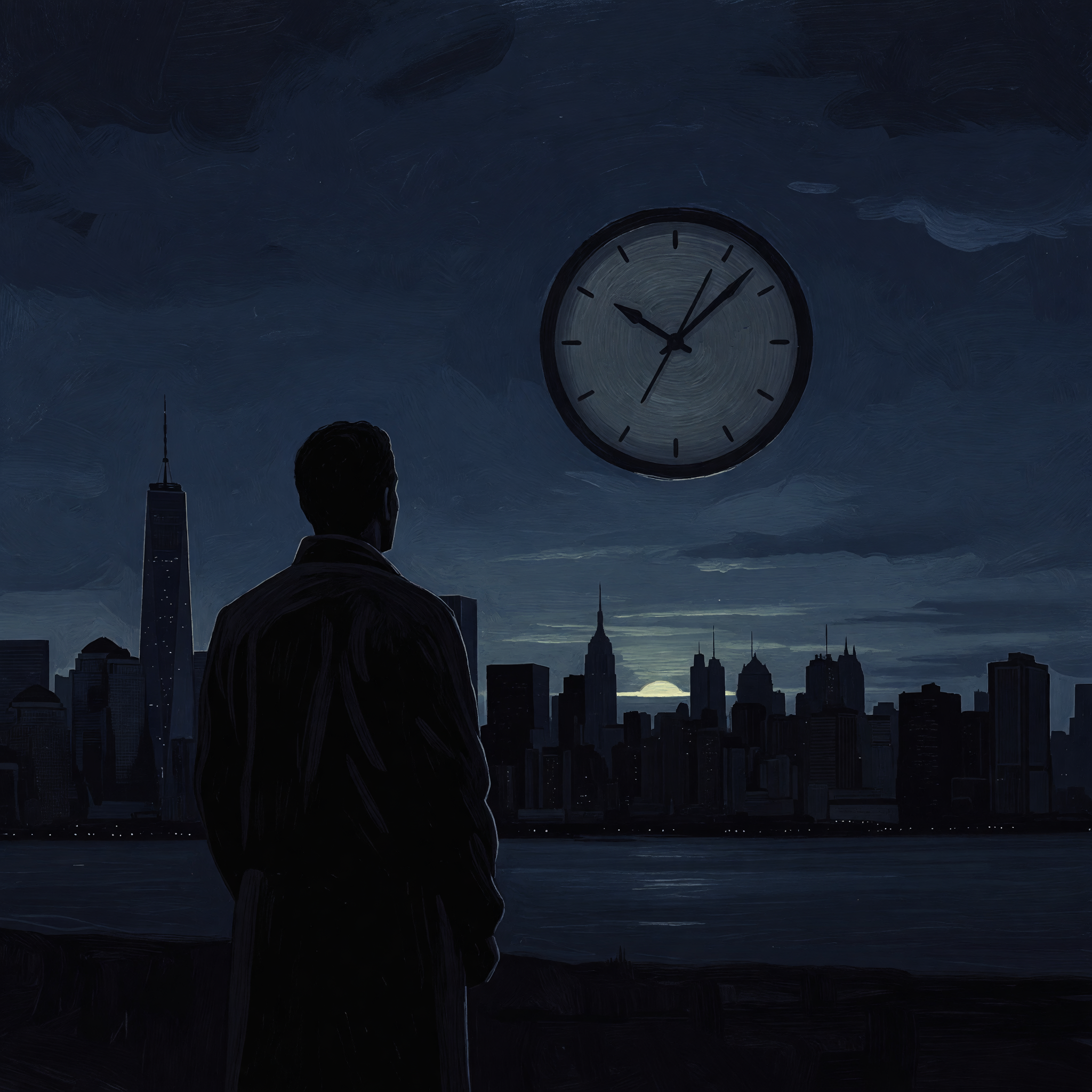
Hope Sterling: Neil deGrasse Tyson goes on NewsNation — on a show called The Hill — and tells the anchor Kellie Meyer that if the Sunshine Protection Act passes, New York City's sunrise in January would be 8:20 a.m. Like, the sun doesn't come up until 8:20.
Juniper Vale: Okay, that I did not have a visual for until just now.
Hope Sterling: Right — but here's the part that broke my brain a little — the House had already passed it. July 14th, 308 to 117, Rep. Vern Buchanan's bill just sailed through, and then Rep. Scott DesJarlais played 'Here Comes the Sun' to celebrate. The actual Beatles song. While Tyson is out here like, the sun is not coming.
Juniper Vale: That's the whole episode, actually — that gap between the party on the House floor and what the science says about winter mornings. Those two things cannot both be true.
Hope Sterling: But wait — is the 8:20 thing just like, Tyson being dramatic? Because I feel like people are gonna say that.
Juniper Vale: No, and here's the actual mechanism — think of it this way. Your body is basically a plant. It wakes up when sunlight hits. That's not a metaphor, that's literally how circadian rhythms work — sunrise triggers the biological clock. So when the Sunshine Protection Act says 'the clock reads 8:20 when the sun comes up in January,' your body doesn't care what the clock says. It's still waiting for the sun. And every morning it loses that fight.
Hope Sterling: Stop — so we're just permanently jet-lagged all winter?
Juniper Vale: That's pretty close, actually. And the research — I mean, there's a systematic review in the European Journal of Epidemiology from February 2026 that looked at the epidemiological evidence and found consistent adverse health effects from that misalignment. We're talking disrupted sleep, more traffic accidents. Scientific American ran a piece July 17th, 2026, same conclusion: permanent DST is the wrong direction. Permanent standard time is what the science supports.
Hope Sterling: Okay and the 8:20 — that's New York City. What about places that are already on the western edge of their time zone?
Juniper Vale: Yeah, so — and this is where it actually gets worse. New York City is the optimistic number. Cities sitting on the western edges of their time zones already have later sunrises because of where they fall geographically. Permanent DST pushes that even further. So 8:20 understates what this looks like across the country.
Hope Sterling: I can't get over this — we actually tried this already, like we have a real data point from 1974, and that story is honestly where this whole debate gets even messier.
Juniper Vale: And 1974 is actually the gut-punch here — because we're not guessing at what happens. We ran the experiment. Energy crisis, year-round DST, the whole thing. People hated it. Dark January mornings, kids at bus stops before sunrise, and Congress folded and reversed it. That's not a hypothetical. That's a result.
Hope Sterling: Wait — they actually reversed it mid-experiment?
Juniper Vale: They did. The public reaction was that swift. And now — I mean, this is the part that's hard to explain — state legislatures have introduced over 800 bills trying to lock in permanent DST the second federal law allows it. So it's not like a fringe thing. Rep. Vern Buchanan sponsors the Sunshine Protection Act, it passes 308 to 117, President Trump is publicly backing it. The political momentum is completely real.
Hope Sterling: The hot take gets a point there — like, people genuinely want this. That's not manufactured, that's eight hundred bills worth of wanting it.
Juniper Vale: Oh, a hundred percent — that part's right. The frustration with switching clocks twice a year is completely legitimate. But wanting to stop switching and choosing permanent DST specifically — those are different questions. And the Uniform Time Act of 1966 actually makes this lopsided in a weird way: states can already opt into permanent standard time without any new federal law. They cannot do permanent DST without one. So the House voted to unlock the option scientists say is worse, when the option scientists prefer was already available.
Hope Sterling: No way — so permanent standard time is already on the table and nobody's talking about it?
Juniper Vale: Picture a January 15th. Suburban New York, 7:45 a.m. bus stop. Under permanent DST — no sunrise until 8:20. That kid stood in the dark, rode to school in the dark. And we know exactly how that plays out because 1974 told us. The hot take wins on the frustration. It just picked the wrong solution.
Hope Sterling: Wait — so Tom Cotton blocks it in the Senate, and the whole thing just... the scientists' version wins by accident? Like nobody voted for it and it still happens?
Juniper Vale: Cotton literally said the Sunshine Protection Act won't 'see the light of day' in the Senate — which, I mean, the phrase is doing a lot of work there. But yeah — if he kills it, the Uniform Time Act of 1966 still lets states flip to permanent standard time on their own. No new federal law needed. So the scientifically literate outcome might be the one Congress accidentally produced by failing.
Hope Sterling: So the Senate accidentally saves us from ourselves. That's genuinely the most 2026 ending to a story I've ever heard.
Juniper Vale: It really is. And that's actually where I land on this whole thing — a little uneasy, honestly. The frustration behind those 800 bills is real. But the House picked the wrong fix, Tyson went viral warning them, and now the best-case outcome might be gridlock. That's a strange kind of luck.