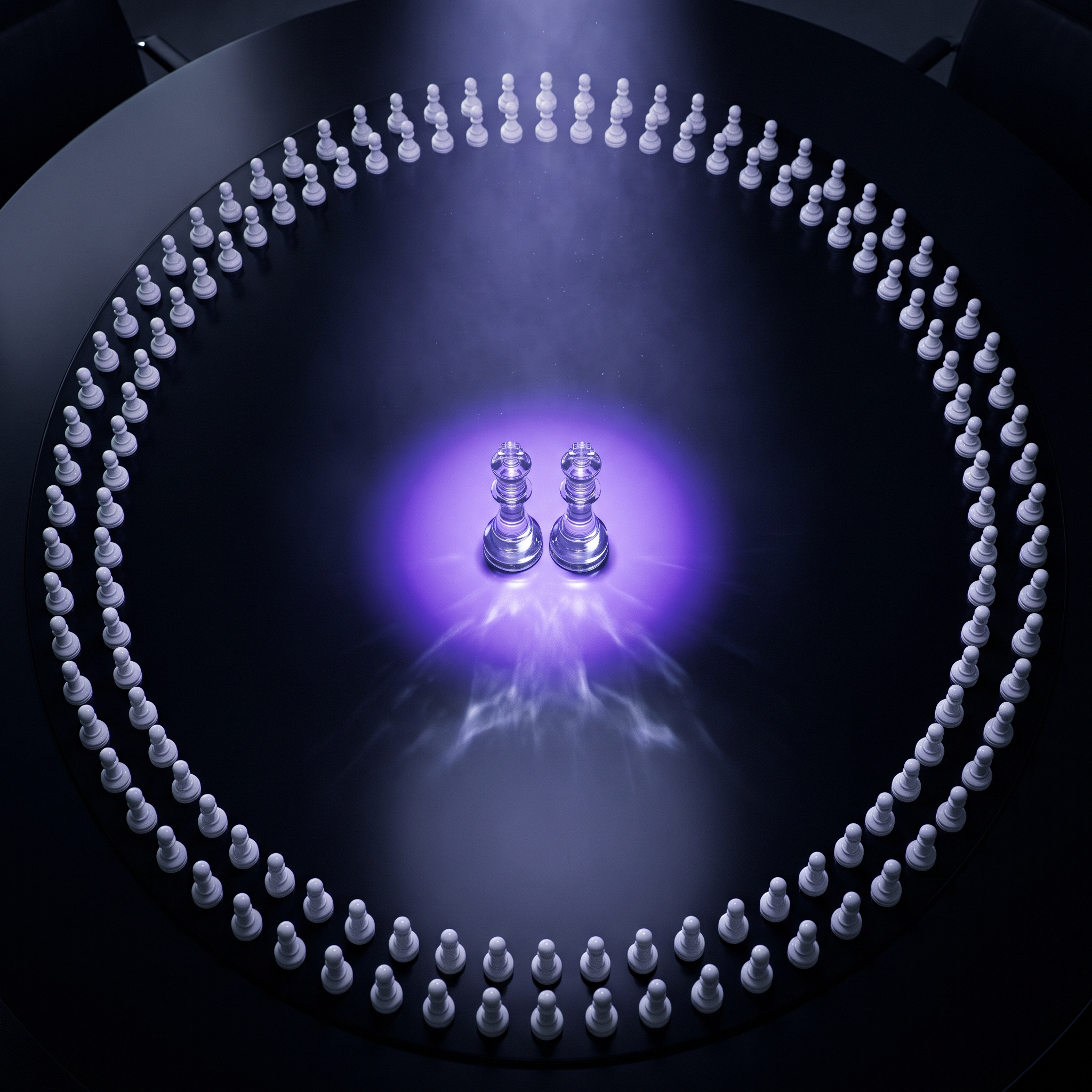
Hope Sterling: The companies with the most to lose from AI regulation are the ones cheering the loudest for it. Just… sit with that for a second.
Hope Sterling: Because on March 31st, 2026, Anthropic's CEO Dario Amodei got on a plane, flew to Canberra, and personally signed a Memorandum of Understanding with the Australian government. Met with Prime Minister Anthony Albanese to make it official. First deal inked under Australia's National AI Plan.
Hope Sterling: Then July 15th — Albanese stands up and announces a whole national AI framework. A new Office of AI inside the Department of the Prime Minister and Cabinet. A push toward mandatory standards. And Anthropic? OpenAI? Both welcome it.
Hope Sterling: Publicly. Warmly. Enthusiastically.
Hope Sterling: And I know the generous read — like, maybe they genuinely believe in safety? Maybe Anthropic committing to joint evaluations with Australia's AI Safety Institute, sharing findings on model capabilities and risks, is just… the right thing to do?
Hope Sterling: Maybe. But The Guardian surfaced analysts saying something a little colder: that clear standards help Anthropic and OpenAI reassure investors, reduce legal uncertainty, and build a case for expansion in other markets. That's not the language of conscience. That's the language of competitive advantage.
Hope Sterling: There's a reason the biggest, most resourced players always seem to end up enthusiastic about rules — and it's not because rules are hard for them.
Hope Sterling: Regulatory capture doesn't require bad intentions. It just requires being the company in the room when the rules get written. And right now — Anthropic is VERY in the room.
Hope Sterling: The MOU. The AUD$3 million in Australian research partnerships using Claude for disease diagnosis and computer science education. Dario personally doing the handshake with Albanese. That's not a footnote in a press release — that's a relationship being built, carefully, with the government that's about to write the rules.
Hope Sterling: And I think we owe it to ourselves to call that what it is, even if the safety research is genuinely happening and even if Australia's framework is — and it might be — a real world-first in AI governance. Both things can be true. That's what makes this so — ugh, like, complicated in the best and worst way.
Hope Sterling: But that's what sticks with me.
Hope Sterling: Regulatory capture — and I want to actually name it, not just imply it — is the thing that happens when the companies a government is supposed to be overseeing end up being the ones who write the rules.
Hope Sterling: Not because they bribed someone. Not because there's a villain in a boardroom laughing. Just because they were — in the room.
Hope Sterling: And when Dario Amodei is literally the first person to sign under Australia's National AI Plan, when Anthropic is the company sitting across from the Office of AI helping design what "safe" even means — that is being in the room.
Hope Sterling: Now imagine you're a scrappy startup.
Hope Sterling: Small lab, ten engineers, a promising model — and the compliance framework you now have to meet was co-designed by your two largest competitors.
Hope Sterling: The costs that feel light to Anthropic — the audits, the safety evaluations, all of it — those are CRUSHING for you.
Hope Sterling: That's the incumbency moat. That's how this works.
Hope Sterling: And then there's — okay, this is the part that really gets me — Moonshot AI.
Hope Sterling: Moonshot AI is a Chinese lab, and their open-source model Kimi K3 was judged competitive with Claude and ChatGPT — like, genuinely competitive, not in a "oh that's cute" way — and they actually had to temporarily pause new subscriptions because demand strained their capacity.
Hope Sterling: That's a real threat. That's market pressure.
Hope Sterling: But Moonshot AI is not in Canberra. They're not shaking hands with Albanese. They have zero seat at the table where Australia's legislation — which is expected by early 2027, world-first mandatory national AI framework — gets shaped.
Hope Sterling: And I want to be careful here, because the MOU is non-binding — it's literally a Memorandum of Understanding, shared intent, no hard legal teeth — but the relationships it builds, the access it creates, the reputation it locks in… that's very real.
Hope Sterling: Oh, and Wired reported that Anthropic is also pushing US state governments to regulate AI faster.
Hope Sterling: Australia isn't a one-off. This is a strategy — multi-jurisdictional, deliberate, consistent.
Hope Sterling: And look — does that make the safety cooperation fake? Not necessarily. But it does mean that whoever gets to write the rules… wins. And right now, it's not Moonshot AI writing them.
Hope Sterling: Early 2027. That's the date.
Hope Sterling: That's when Australia's legislation is expected — like actual legislation, not an MOU, not a framework document, not a vibe — mandatory national AI rules, which would make it a world first among developed democracies, and I keep turning that over because the question isn't whether the law comes, it's whether it has any teeth once it gets there.
Hope Sterling: Because here's the structural thing that nobody is really sitting with.
Hope Sterling: Australia has no major domestic AI champions. Like, zero. They don't have an Anthropic. They don't have an OpenAI. The Office of AI sits inside the Department of the Prime Minister and Cabinet — which means it's coordinating standards for the whole of government — but it's doing that without a homegrown industry it can actually lean on, so when it needs to evaluate whether a model is safe, when it needs technical input on what compliance even looks like… it calls Anthropic. It calls OpenAI. Because who else is there?
Hope Sterling: That's not a conspiracy. That's dependency.
Hope Sterling: Albanese said it himself — the whole point was moving from issue-by-issue, sector-by-sector responses to a unified whole-of-government approach. And I actually think that's real governance ambition. I do. But a unified approach built on the technical expertise of the companies you're trying to regulate — I mean, does that resolve the problem or just organize it more neatly?
Hope Sterling: And meanwhile, Anthropic is tripling its international workforce — CNBC reported that — so Australia is one node in something much bigger, a deliberate global expansion where you show up, build the relationship, help shape the standard, and then scale into a market that now has rules you understand because you wrote them.
Hope Sterling: That's the part that keeps me up a little.
Hope Sterling: Because if Australia's framework becomes a template — and there are real signals it might, other allied democracies watching, the whole world-first framing doing its work — then the standards that Anthropic and OpenAI helped shape in Canberra don't stay in Canberra. They propagate. They become the baseline. And Moonshot AI, Kimi K3, any Chinese lab closing the capability gap — they're building toward a benchmark they had no hand in writing.
Hope Sterling: That's the geopolitical endgame. Not just one country's rules. The architecture of allied-democracy AI governance, with US incumbents embedded at the foundation.
Hope Sterling: Early 2027 — watch it. Watch what Australia actually binds Anthropic and OpenAI to, watch whether the Office of AI has any leverage over companies that are bigger than most of the institutions trying to govern them, and watch whether this is the moment a country with no domestic AI champions accidentally hands the pen to the companies it invited in to help.
Hope Sterling: The definition of "safe" is not a neutral, technical fact sitting out there waiting to be discovered. Someone writes it. Someone decides what counts. And right now, the someone doing that deciding is Anthropic, sitting across from Australia's AI Safety Institute, sharing findings on model capabilities and risks, participating in joint evaluations — like, that's the MOU, that's literally what they committed to. Which means the rubric that Moonshot AI's Kimi K3 eventually gets measured against? Built in part by Kimi K3's competitor.
Hope Sterling: That's not a glitch. That's the structure. And honestly — I don't think Dario Amodei flew to Canberra, shook Albanese's hand, and thought "perfect, I've rigged it." I don't think that's what happened. But intentions don't change the architecture. The Office of AI, inside the Department of the Prime Minister and Cabinet, has no domestic champions to lean on. Australia has none. So the technical expertise flows one direction, and the rules that come out of that — the world-first mandatory framework everyone's watching, the legislation expected early 2027 — those rules carry the fingerprints of the people who were in the room.
Hope Sterling: The uncomfortable question isn't whether the safety research is real. It's whether safety rules designed by incumbents protect the public — or protect incumbents from disruption. And I genuinely do not know that Anthropic and OpenAI know the answer to that either. But early 2027 is coming. The pen is already in someone's hand.