Hugo Vance: You had that look when you walked in — something's been sitting with you.
Lila Soto: Ha — yeah. D23 was two days ago and I keep staring at the same sentence: Jon Favreau, Anaheim, August 15th, announces Oswald the Lucky Rabbit as a hybrid live-action miniseries for Disney+ in February 2027. And the footnote nobody's saying loudly enough is that Oswald is the character Walt Disney lost to Universal in 1928. The one that basically started the whole company's identity crisis.
Hugo Vance: Now that is the thread worth pulling.
Lila Soto: And it's not alone — same D23 window, Disney confirmed live-action Tangled for March 31st 2028, showed actual first-look footage of Teagan Croft as Rapunzel and Milo Manheim as Flynn Rider. And Figment, the hybrid film, is still in development. Three projects, one showcase, all carrying this same hybrid format framing. It feels like a thesis statement from Walt Disney Studios — except I'm not sure they've fully written the thesis yet.
Hugo Vance: Well. Three announcements is not a thesis — it's a posture. The question is whether the hybrid format is materially new, or whether it's Snow White's failure reflected back as aesthetic reinvention.
Lila Soto: Exactly what I mean — like, Kathryn Hahn is in both the Oswald cast and as Mother Gothel in Tangled. Both hybrid projects. And I keep wondering what that actually signals about who's trusting this format versus who's just… along for it.
Hugo Vance: Of course, Favreau ran this play before — The Jungle Book, 2016, live-action CGI hybrid, nearly a billion worldwide. So there's institutional memory behind the choice of director at least. Whether the format itself solves what ailed Snow White — that I'm more doubtful of.
Lila Soto: So that's what we're trying to figure out — is the hybrid format a genuine creative bet, or is it the same pipeline logic dressed up in a way that just feels new enough to get a pass?
Hugo Vance: Think of it this way — same cards, new table. That's the whole thing. Disney keeps losing at poker with straight remakes, Snow White being the most recent example, so they switch to hybrid. But the cards in their hand are still classic Disney IP. Oswald, Figment, Tangled — all catalog. The visual rules changed. The underlying bet didn't.
Lila Soto: Wait — so is this a perception fix more than a creative one?
Hugo Vance: Yes. That's precisely what it is. Lilo and Stitch crossed a billion dollars on a hundred million budget — that proved the pipeline works when execution lands. But Moana the same year gets called a heartless remake. So what changed between those two? Not the format. Execution, casting, tone. Not the table.
Lila Soto: Huh. So the hybrid framing is almost — I mean, is it giving audiences permission to feel like it's different? Even if structurally it isn't?
Hugo Vance: That's the complication, yes. The format is genuinely distinct — filmed live performance blended with animation inside a single narrative, not just animated characters dropped into live footage. That's technically real. But the source material logic is identical to every remake before it.
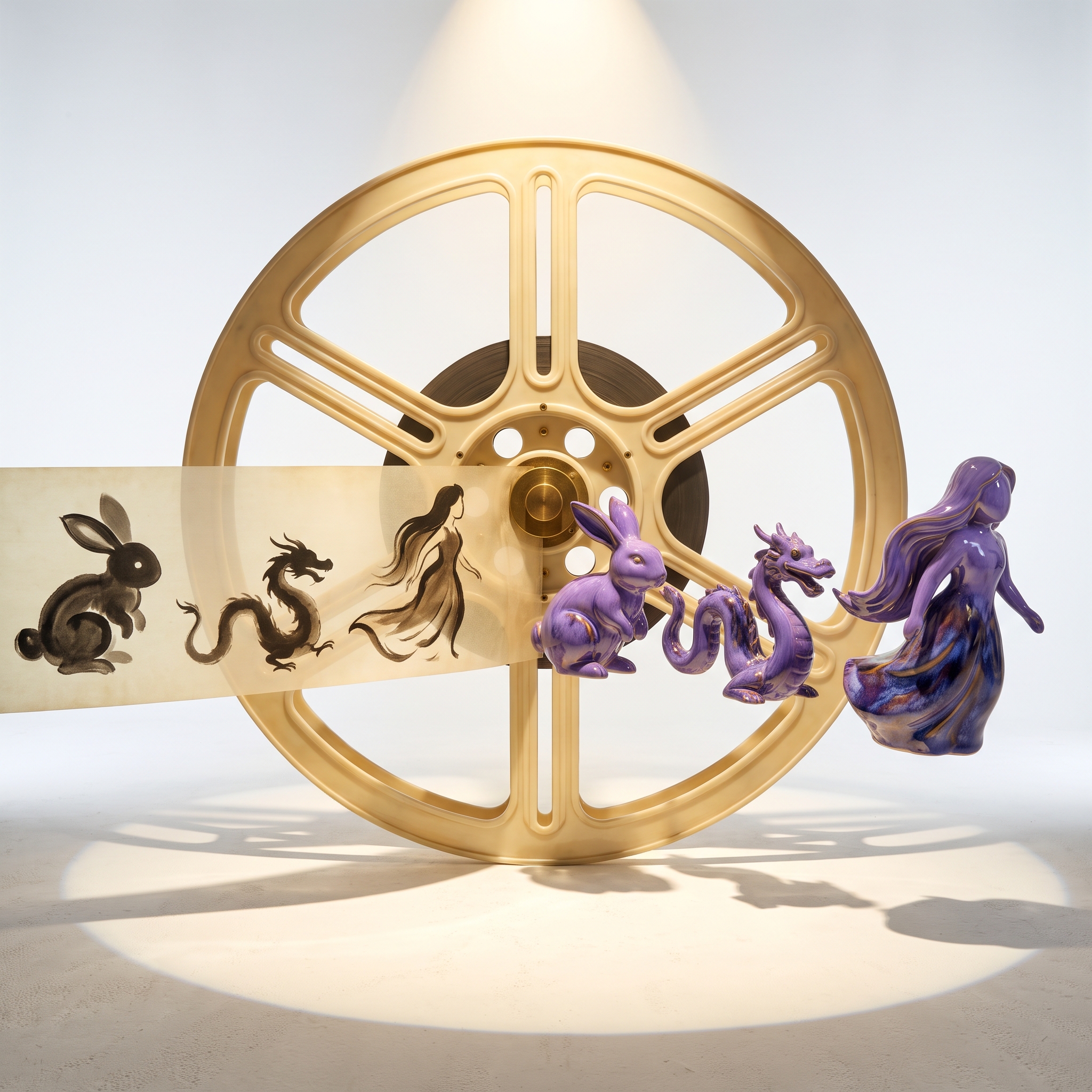
Lila Soto: Which is wild because Figment — a purple Epcot dragon — is so minor that it almost feels like permission to actually reinvent something. But Walt Disney Studios is still the one holding the deed.
Hugo Vance: Indeed. And Seth Rogen and Evan Goldberg through Point Grey producing it — that's a genuine outside sensibility attached to inside IP. Whether that breaks the pattern or just decorates it, I genuinely don't know yet.
Lila Soto: So the format isn't the solution. It's the announcement of a solution.
Hugo Vance: That's the thing the D23 timing confirms for me. Two days ago — same window as Snow White's hangover still in the air. The question isn't whether hybrid works aesthetically. It's whether audiences can actually tell the difference between a new table and new cards.
Lila Soto: New table, same cards — but here's what that actually means for Oswald specifically. Picture a 55-year-old who rode Journey Into Imagination at Epcot in 1983, still has a Figment pin on their bag. They hear Seth Rogen and Evan Goldberg are producing this. That's not nostalgia fatigue — that person has never seen Figment on screen. In their lifetime. That's a completely different emotional position than someone watching Snow White get remade for the third time.
Hugo Vance: Yes. And Oswald is actually the stronger version of that argument. Most audiences don't know Disney even has him back. He appeared in the Epic Mickey Wii game, and a 2024 remaster — but that's it. Nearly a century of dormancy. There's no Oswald fatigue because there's been no Oswald.
Lila Soto: Wait — since 1928?
Hugo Vance: Lost to Universal in 1928, reacquired more than twenty years before this D23. And nobody celebrated. That's the thing — the reacquisition just quietly happened. So Favreau announcing a full hybrid miniseries now, with Kathryn Hahn, Albert Brooks, Ryder Allen — that cast — audiences aren't arriving with thirty years of remake disappointment loaded. That dormancy is genuinely an asset.
Lila Soto: Which is kind of — I mean, is that strategic luck dressed up as creative vision? Because Disney didn't plan the dormancy. Universal just held him.
Hugo Vance: Mm. Almost certainly luck. But they're spending it like vision.
Lila Soto: And Kathryn Hahn committing to both — Oswald and Tangled — that's not nothing. That's someone who looked at the hybrid bet twice and said yes both times. It's the talent signal that matters most.
Hugo Vance: You see, Favreau's The Jungle Book nearly hit a billion in 2016 — that's the proof of concept she'd be reading. The format has a win on the board.
Lila Soto: Though — and this is the part I think gets stranger — the financial mechanics underneath all of this, the eighteen-million in California tax credits, the way Tangled's footage leaked out of Spain before the official reveal, that's where I keep wondering if creative vision is even the thing actually driving which projects get made.
Hugo Vance: But the creative conviction gets harder to read. April 23rd, 2026 — California Film Commission awards eighteen point two million dollars in tax credits to an unannounced Walt Disney Studios film, strongly associated with Figment. That's the number. Nobody has confirmed it on the record. But if that attribution holds, the state of California may have been a variable in whether Figment gets made at all.
Lila Soto: Wait — eighteen million before the project is even announced?
Hugo Vance: That's how the incentive program works — you file, you get the credit offset against state taxes for filming locally. The commission doesn't wait for a press release. And that number shifts the question from 'did Walt Disney Studios believe in Figment' to 'did the greenlight math require California to subsidize the risk first.'
Lila Soto: Which is — I mean, that completely changes what Seth Rogen and Evan Goldberg attaching to it means. Because if the financial floor is partly a state incentive, are they the creative bet, or are they the talent layer that makes the subsidy application look serious?
Hugo Vance: That I can't answer. But I'd be cautious about treating Point Grey as a pure creative signal when the economics aren't settled. The 'strongly associated' caveat matters.
Lila Soto: And then Tangled just — blows up the whole clean story. Because Tangled is a straight live-action. No hybrid. Teagan Croft, Milo Manheim, Spain, July 2026, footage leaks before D23 even opens. Disney's trying to frame a format pivot and their highest-profile project doesn't fit the frame.
Hugo Vance: Yes. And the leak is — well, that's the part that complicates the announcement strategy itself. The Spain footage circulates, fan scrutiny lands immediately, Snow White's reception still raw from 2025. Then Disney presents first-look footage at D23 anyway, confirms March 31st 2028, Kathryn Hahn as Mother Gothel, everyone performs surprise.
Lila Soto: So the announcement isn't controlling the narrative — it's chasing it.
Hugo Vance: Which means the hybrid framing — Oswald, Figment — may be doing double work. It's not just a creative format. It's the part of the portfolio Disney can still announce on its own terms. Tangled leaked. The tax credits on Figment are unconfirmed. The only story Walt Disney Studios actually controlled at D23 was Favreau and Oswald.
Lila Soto: And that's — yeah, that's the part that stays with me. If Oswald and Figment work, does Disney learn 'hybrid format is the answer,' or do they learn 'dormant IP is the answer'? Because those are really different lessons.
Hugo Vance: That's the question I can't resolve. The studio will read the result, not the reason. If Favreau's Oswald miniseries lands in February 2027 and the numbers hold, Walt Disney Studios will probably greenlight the next catalog property — and they may never know whether it was the hybrid format or simply that nobody was tired of Oswald yet.
Lila Soto: Which means the real test isn't Oswald at all. It's whether Tangled — straight live-action, Teagan Croft, March 2028, no hybrid cover — either vindicates or breaks the whole thing.
Hugo Vance: Yes. And we won't know for two years. That's an uncomfortable place to sit.
Lila Soto: Genuinely uncomfortable. Good conversation though — thank you for turning it over with me.