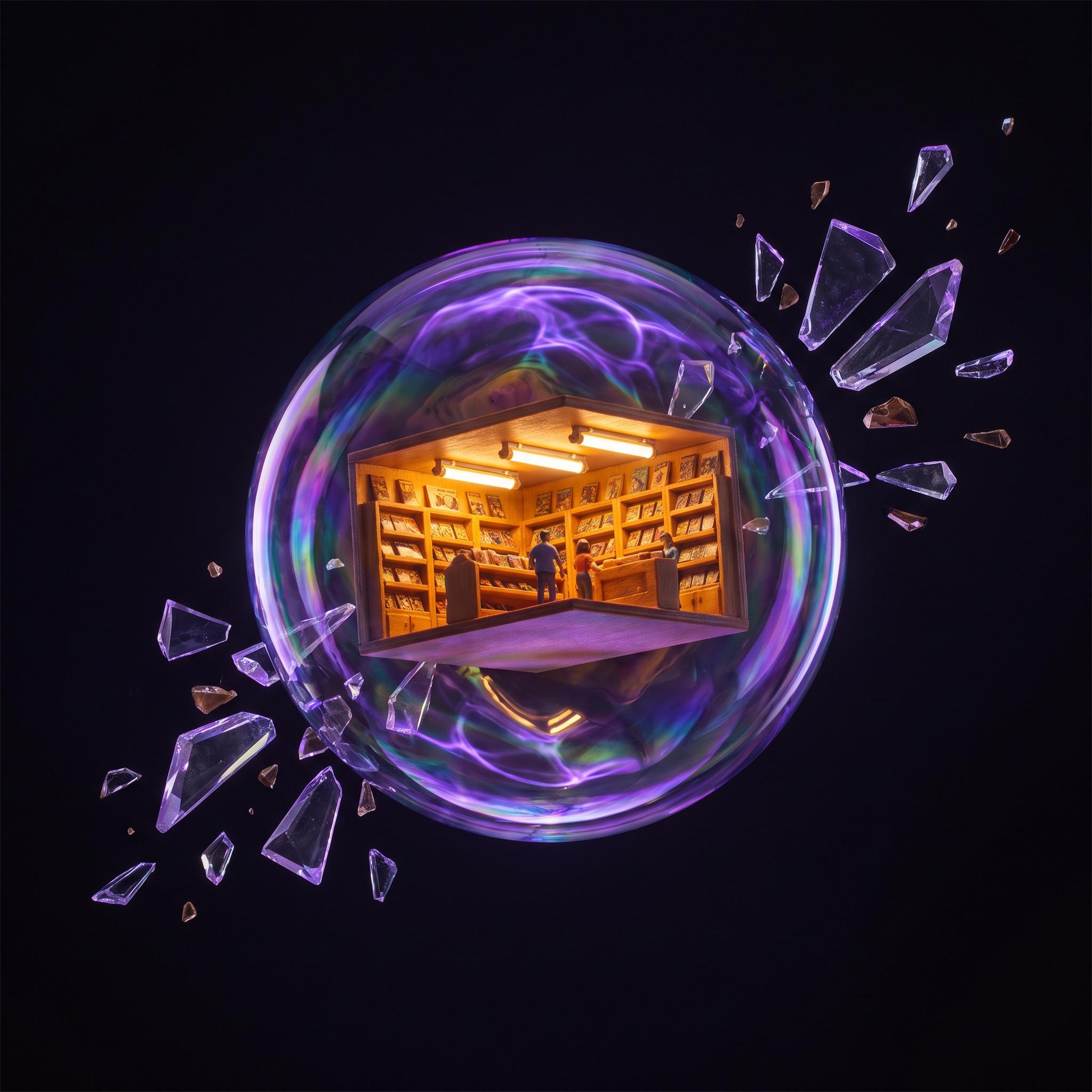
Hope Sterling: Okay hi, quick question — do you remember Stuart? From Big Bang Theory? The guy at the comic book store who was always kind of sad and hovering?
Finn Brooks: Kevin Sussman. Yeah, one hundred percent — he was like the background character who showed up to make the main guys feel better about themselves.
Hope Sterling: He has a show. Like — his own show, leading it, July 23rd on HBO Max, ten episodes, and the plot is that he accidentally destroys a quantum device Sheldon Cooper and Leonard Hofstadter built and now he has to fix a multiverse Armageddon.
Finn Brooks: Wait — say that again. He BREAKS it?
Hope Sterling: He breaks it and reality fractures and now, like — the only person who can save every universe is the one guy nobody ever expected to save anything. It is the most Stuart thing that could possibly happen to Stuart.
Finn Brooks: Dude that's — okay the clean version of this is: the least qualified person in the building accidentally causes the biggest disaster in history and now he has to be the hero. That's the whole show. That's actually kind of perfect for a character like Stuart.
Hope Sterling: Right?! And Chuck Lorre is behind this — like, the guy who built Big Bang Theory from 2007 to 2019 is now betting on Stuart specifically.
Finn Brooks: And it's on HBO Max, not CBS — which is already the first thing that tells you this is not a normal franchise move. What does that mean for how they're actually telling the story?
Hope Sterling: Okay but that's the part — like, CBS could not have made this version. Young Sheldon ran seven seasons on CBS, wrapped in May 2024, totally normal network trajectory. Georgie & Mandy's First Marriage starts on CBS in October 2024, right, still totally normal. And then Stuart lands on HBO Max. That is not just a different channel, that is a completely different — like, permission structure?
Finn Brooks: And it's the fourth installment. Fourth. The first three are all broadcast CBS and then number four just — hops the fence entirely and goes streaming.
Hope Sterling: Which, wait — Chuck Lorre actually pitched this back around 2019 when Big Bang ended and somebody passed on it. It sat in a drawer for years.
Finn Brooks: Right — and THAT is the signal. Because the pitch didn't change that much, the platform did. CBS says no, HBO Max says yes, and suddenly the show can be a sci-fi horror-comedy instead of whatever a network Stuart spinoff would've been.
Hope Sterling: Okay but the Zak Penn thing — I'm sorry, nobody is talking about this enough. The Avengers. The Incredible Hulk. Bill Prady and Chuck Lorre brought in an actual Marvel franchise writer to build inside the Big Bang universe.
Finn Brooks: That's — yeah, that's not a résumé flex, that's a genre signal.
Hope Sterling: Like, Zak Penn knows how multiverse mechanics actually function in a story — he's done it at scale — so having him in the room with Lorre and Prady is literally the reason this can be sci-fi and not just, like, a quirky CBS sitcom where Stuart makes sad faces in alternate timelines.
Finn Brooks: And that's what gets buried in the 'oh cool another spinoff' read, right? The headline is fourth Big Bang show, and the actual story is — no, actually, this one escaped broadcast entirely, landed on streaming, and they rewired the creative team to match.
Hope Sterling: That's — yeah. That's the thing the headline buries.
Finn Brooks: Okay but that clean version I just gave? I already want to poke a hole in it — because the reviews dropped and they are not telling the same story at all.
Hope Sterling: Oh the review thing is — no, okay, LISTEN — because everyone's going 'divisive show, middling consensus, whatever.' That's the wrong read.
Finn Brooks: Walk me through it.
Hope Sterling: NPR on August 3rd — positive, 'fun and familiar,' they're specifically praising the fact that Lauren Lapkus as Denise gets to be central, Brian Posehn's Bert is there, John Ross Bowie's Kripke is back. Like, that review is written by someone watching a reward show. A 'your faves finally matter' show. Vulture drops theirs on July 23rd — the actual premiere date — and it's 'painful at nearly every turn,' smug metafictionality, wall-spaghetti plotting. Those aren't two opinions about the same thing.
Finn Brooks: No but — 'painful at nearly every turn' isn't just different expectations, that's a structural diagnosis.
Hope Sterling: Right, but — wait, actually that's kind of my point? Vulture is judging it as a sci-fi comedy, like, does the craft hold up. NPR is watching Denise and Bert finally get storylines and going 'oh this is lovely.' They are not watching the same contract.
Finn Brooks: Hmm — and the show can't even pick which one it is, right? Like it can't decide if it's a sequel or a direct spinoff, that's still unresolved.
Hope Sterling: That's the tell! The creative team is navigating both audiences at the same time and it shows in the DNA. Which — honestly the part I want to get to is whether Kevin Sussman can even carry the weight of that, like, what the multiverse format actually does to his character stakes. That's a whole other thing.
Finn Brooks: No, I don't buy that the split just means the show is middling. You're right. Two audiences, two contracts, one show that apparently couldn't choose.
Hope Sterling: And that's what makes the Kevin Sussman thing so — okay, like, whether the show lands or not, they bet the whole format on him. Not on Sheldon adjacent, not on someone from the main cast doing a cameo tour. Stuart. Eleven seasons of the punchline and now he's the load-bearing wall.
Finn Brooks: And it's not just Stuart — wait, this is the part that actually gets me — Denise, Bert Kibbler, Barry Kripke. They pulled the entire bench. Every character who existed to make Sheldon's world feel populated is now the main cast.
Hope Sterling: The whole bench!
Finn Brooks: Which means the multiverse format has to carry, like, real weight for all of them — and Sussman himself said in press that Stuart and Denise's relationship status changes across alternate universes and it's, quote, 'a bit confusing.' That's — I mean, is that charming honesty or is that a warning?
Hope Sterling: Okay that quote is doing a lot of work. Because on one hand — sweet, it rewards people who watch all ten episodes. On the other hand, if the guy leading the show is like 'yeah it's confusing,' that might mean the multiverse is actually letting them dodge committing to where Stuart and Denise actually land.
Finn Brooks: That's the trap, right? Everything Everywhere All At Once used the multiverse to go deeper into its character. The MCU used it to — honestly, kind of avoid consequences. And we're now in 2026 and the concept has been everywhere for years, so arriving on HBO Max now, Stuart has to justify the format in a way that maybe Even Marvel doesn't bother to anymore.
Hope Sterling: Like, picture someone who's been watching since 2009, who remembers Stuart nervously asking if anyone wanted to play D&D — that person is now supposed to track which universe's Denise is which? That's a real ask.
Finn Brooks: It is — but that's actually the one genuine gamble here. Not just 'can Stuart carry a show.' It's 'can Stuart carry a show in a format the franchise has never used, in a genre that's already peaked.' Those are two different bets stacked on top of each other.
Hope Sterling: And we find out July 23rd whether they stuck the landing or just, like, stuck the jump.
Finn Brooks: Ten episodes. That's what's still sitting with me — ten. Young Sheldon got seven seasons, Georgie and Mandy is still running on CBS, and the most genre-weird, swing-for-the-fences thing in the whole franchise gets the shortest run by a mile.
Hope Sterling: Mine is Zak Penn in the room. The Avengers guy. Like — that's the detail that stands out to me, because it means somebody looked at this pitch and went 'we need someone who's actually done multiverse at scale.' That's not a vibe hire.
Finn Brooks: And that's — wait, actually that's the whole unresolved thing, right? If this works commercially, if enough people finish all ten episodes despite Vulture calling it painful at nearly every turn — that's not just good news for Stuart. That tells you franchise IP loyalty will follow a character into a completely different genre on a completely different platform. That's the answer nobody has yet.
Hope Sterling: Okay I'm choosing to believe it works. I'm toasting Stuart Bloom, eleven seasons of sad comic book guy energy, and now — multiverse Armageddon. He deserved this.
Finn Brooks: To Stuart. Reluctant hero of every universe.