Miles Ashworth: Megan, good — you're here, I've been quietly furious all morning and I need someone to tell me I'm wrong.
Megan Skiendel: Bold assumption that I will. What is it.
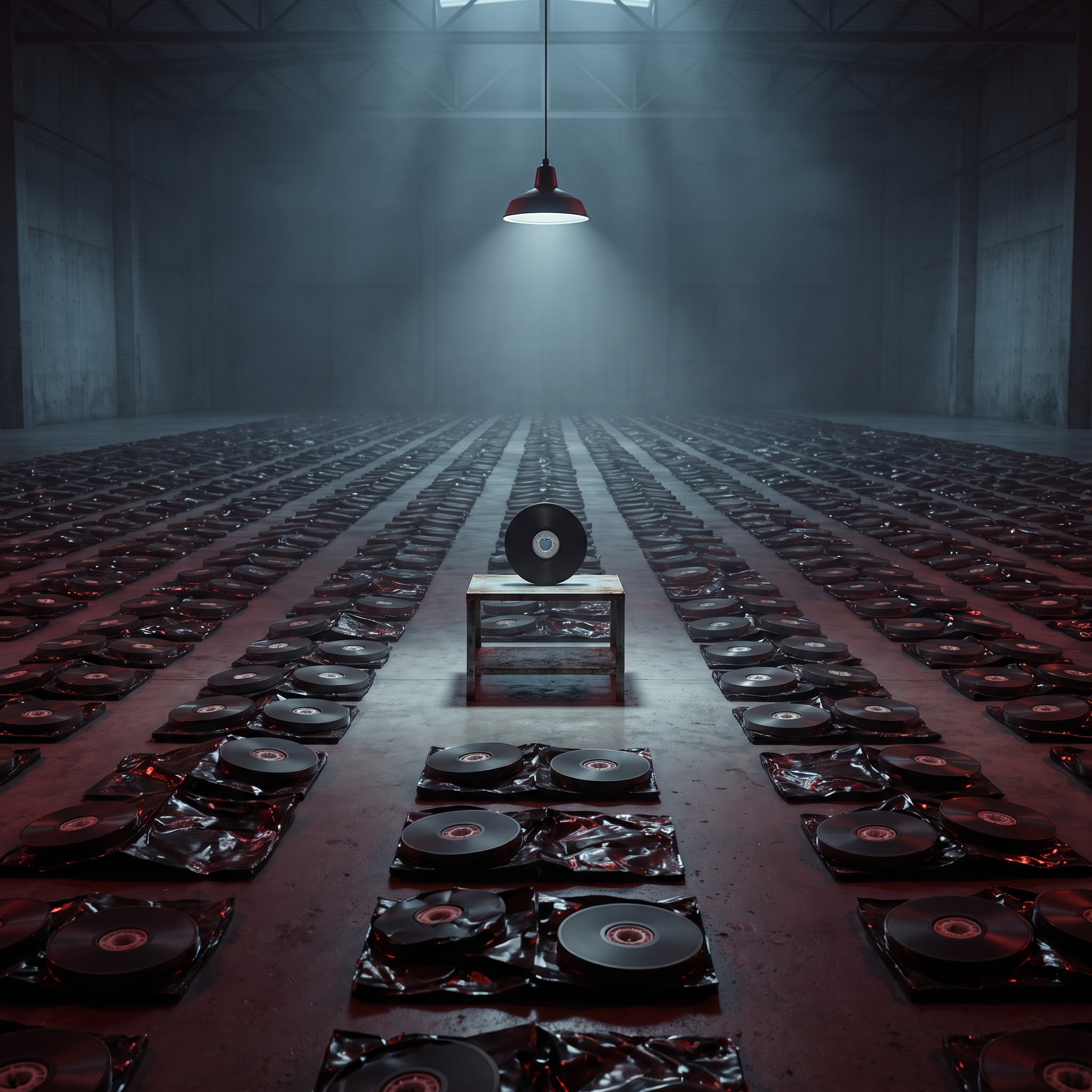
Miles Ashworth: The BBC. No formal archiving policy until 1978. They destroyed sixty to seventy percent of everything they produced in a roughly twenty-year window — and I keep being told this was rational. That it was accounting. That the tape was expensive and of course they wiped it.
Megan Skiendel: I mean — it was rational. That's not absolution, that's the uncomfortable part. Videotape came in commercially from 1956, and the entire institutional framing was that tape was a production asset, something you recorded on for transmission and then reused. Nobody budgeted it as a permanent archive. Erasure wasn't destruction — it was the tape going back into the drawer.
Miles Ashworth: NBC wiped a decade of Johnny Carson on that logic.
Megan Skiendel: A decade, yes — and the Australian Broadcasting Corporation wiped nearly their entire output from the fifties and sixties. That's not one rogue archivist making a bad call. That's a shared structural incentive producing the same outcome across three different broadcasting institutions independently. And the word they all used was junking. Not erasing, not destroying — junking. Like old stock.
Miles Ashworth: So today — what, exactly, is the question we're chasing. Was this inevitable, or is that just what you say afterwards to feel better about it.
Megan Skiendel: Whether the structure made individual choice irrelevant. Or whether people in those rooms knew what they were erasing and did it anyway.
Miles Ashworth: And that's the bit that actually unlocks it for me — whether the structure made choice irrelevant. The Ampex machine, 1956. Commercial videotape arrives, and it is physically enormous, extraordinarily expensive, and designed — from the first day anyone plugged it in — to be recorded over. The identity of the medium was baked in before any broadcaster made a single editorial decision about it.
Megan Skiendel: The analogy I keep reaching for — imagine your office orders expensive sticky notes that can be peeled off, wiped clean, and reused. Nobody builds a climate-controlled vault to archive old sticky notes. They weren't designed to be filed. That's videotape. That was literally the institutional logic.
Miles Ashworth: Right — but someone still had to sign the work order.
Megan Skiendel: They did. And honestly, I don't think most of them hesitated, because — and this is the mechanism — archiving wasn't just expensive storage. You had to climate-control the physical facility, manage ongoing rights, and here's the part that gets underplayed: holding tape you hadn't cleared for continued use created legal liability. Regulatory exposure, talent contracts. So erasure wasn't just economically rational. It was risk management. Wiping was a one-time action that made every one of those problems vanish simultaneously.
Miles Ashworth: The liability angle — that's the bit I find genuinely monstrous. You're saying destroying Doctor Who was, functionally, the legally cautious option.
Megan Skiendel: Within the infrastructure that existed, yes. The BBC had no cataloguing systems, no dedicated facilities, no institutional mandate to preserve anything. Preservation wasn't a built-in function. It was an afterthought that required someone to actively fight for it — and fight upward, against accounting.
Miles Ashworth: Which nobody did. Or — well, almost nobody.
Megan Skiendel: Edie Adams did. After the networks wiped Ernie Kovacs' programs, she physically went and retrieved the tapes that hadn't been destroyed yet and donated them to UCLA. One person. That's the entire margin between survival and nothing.
Miles Ashworth: Which is — frankly, that's the thing that should horrify people. Not the policy. The fact that one widow with a car was the archival infrastructure.
Megan Skiendel: And that's the part I want to pull on, because — Edie Adams is the exception that actually breaks the clean structural argument. If the system fully determined outcomes, she couldn't have walked out with anything. The tapes she retrieved weren't already destroyed. Which means there was a window.
Miles Ashworth: A window someone had to know existed.
Megan Skiendel: Right — and Doctor Who is the same shape of story. The Daleks' Master Plan wasn't caught in a blanket wipe. It was specifically ordered wiped. Named decision, named programme. And yet some copies survived because individual technicians had made their own copies beforehand. So management ordered erasure and the floor-level person said, quietly, no.
Miles Ashworth: Without telling anyone.
Megan Skiendel: Without telling anyone. Which — I mean, picture the actual moment. A technician, physically holding a reel that's been ordered for destruction, deciding to put it in a bag instead. That's not policy. That's a person making a judgment call about what matters, inside a system that explicitly told them it didn't.
Miles Ashworth: And then the Nigerian TV station. That's the one that really — look, overseas broadcasters received physical film copies, and one station in Nigeria simply never got round to destroying theirs, and those became the last surviving evidence of episodes that were wiped in London. That is genuinely extraordinary.
Megan Skiendel: Extraordinary and completely accidental. Nobody at that Nigerian station was preserving Doctor Who intentionally. They just — hadn't junked it yet. Overseas distribution created an unintentional backup because nobody coordinated the destruction internationally. The system was only totalising in the places it was paying attention.
Miles Ashworth: Which explains why United! is gone completely — no export market for a BBC football soap — and why The Likely Lads survives only in fragments. Genre hierarchy. Someone ranked them disposable before the overseas copies even shipped.
Megan Skiendel: Daytime, game shows, sitcoms — judged to have no rerun value, so no one fought for them, no foreign buyer wanted them, no technician quietly slipped a copy into a bag. The structure didn't erase them; the structure just made sure no individual had a reason to save them. And what's permanently gone — honestly, we still don't have a real count, and that number gets worse the closer you look at it.
Miles Ashworth: Which is the part I suspect we haven't actually reckoned with yet.
Megan Skiendel: And that unquantified number is — look, that's actually where the cost reversal bites hardest. Digital storage got cheap enough that keeping everything permanently costs less than the administrative overhead of deciding what to delete. We flipped the equation. But the BBC's 1978 archiving policy is a starting line, not a rescue. Everything before that date is a forensic recovery problem.
Miles Ashworth: A starting line. That's — well, that's quite a reframe.
Megan Skiendel: Because the British Film Institute and the Library of Congress are still out there — actually combing overseas archives, negotiating with foreign stations. The Vanderbilt Television News Archive exists specifically because someone in 1968 decided broadcast news was too important to leave to networks that had already demonstrated what they'd do with it. These are institutions built to do what the broadcasters refused to.
Miles Ashworth: And CBS surviving archives begin only in 1972. ABC's in 1978. So two of the three US major networks — their entire first decade or two is just... absent.
Megan Skiendel: Gone or unconfirmed missing. Which is the other problem — the sixty to seventy percent BBC deletion figure isn't a verified count. There's no single authoritative source for it. It's an estimate. What's permanently gone versus still sitting in a crate in, I don't know, Lagos — actually unquantified.
Miles Ashworth: Which means the Nigerian Doctor Who find isn't a closing chapter. It's evidence the overseas search model still works.
Megan Skiendel: Exactly that. Picture a tape librarian at a Nigerian station in 1974 — the erasure order from London simply never reaches her desk. She's got other problems. The tape sits. Fifty years later it's the only copy on earth. That's not preservation, that's — I mean, that's geography as accident.
Miles Ashworth: And now the BFI is the institution knocking on her successor's door. The whole recovery apparatus runs on that accident.
Megan Skiendel: Which is — frankly, that's the unease underneath all of it. The digital cost reversal means we'll never lose something the same way again. But what's already gone is unquantified, possibly irrecoverable, and what remains is dispersed in places no one's thought to look yet.
Miles Ashworth: Which is — well, that's where I started, isn't it. Furious that this was called rational. And I think I'm landing somewhere slightly different now. It was rational. That's the actual horror. The BBC, NBC, the Australian Broadcasting Corporation — none of them were being reckless. They were all running the same calculation, correctly, inside systems that weren't built to value what they were erasing.
Megan Skiendel: And the policy didn't change in 1978 because someone finally cared. The math changed. Digital storage reversed the equation — keeping everything permanently got cheaper than the overhead of deciding what to delete. The institution caught up to the economics. Not to some new understanding of cultural memory.
Miles Ashworth: Which leaves the one question I don't think either of us can answer.
Megan Skiendel: If the cost equation had never reversed — if digital storage had stayed expensive — would we even know what we were missing? Honestly, I think we'd have the estimate. The sixty to seventy percent figure. And we'd call it a shame, and move on. Good talk.