Max Rivera: There's a version of this story where a politician says something provocative at a religious event and it just… disappears. You've seen it. I've seen it. Thirty-six hours and it's gone.
Max Rivera: This one I don't think disappears that easily.
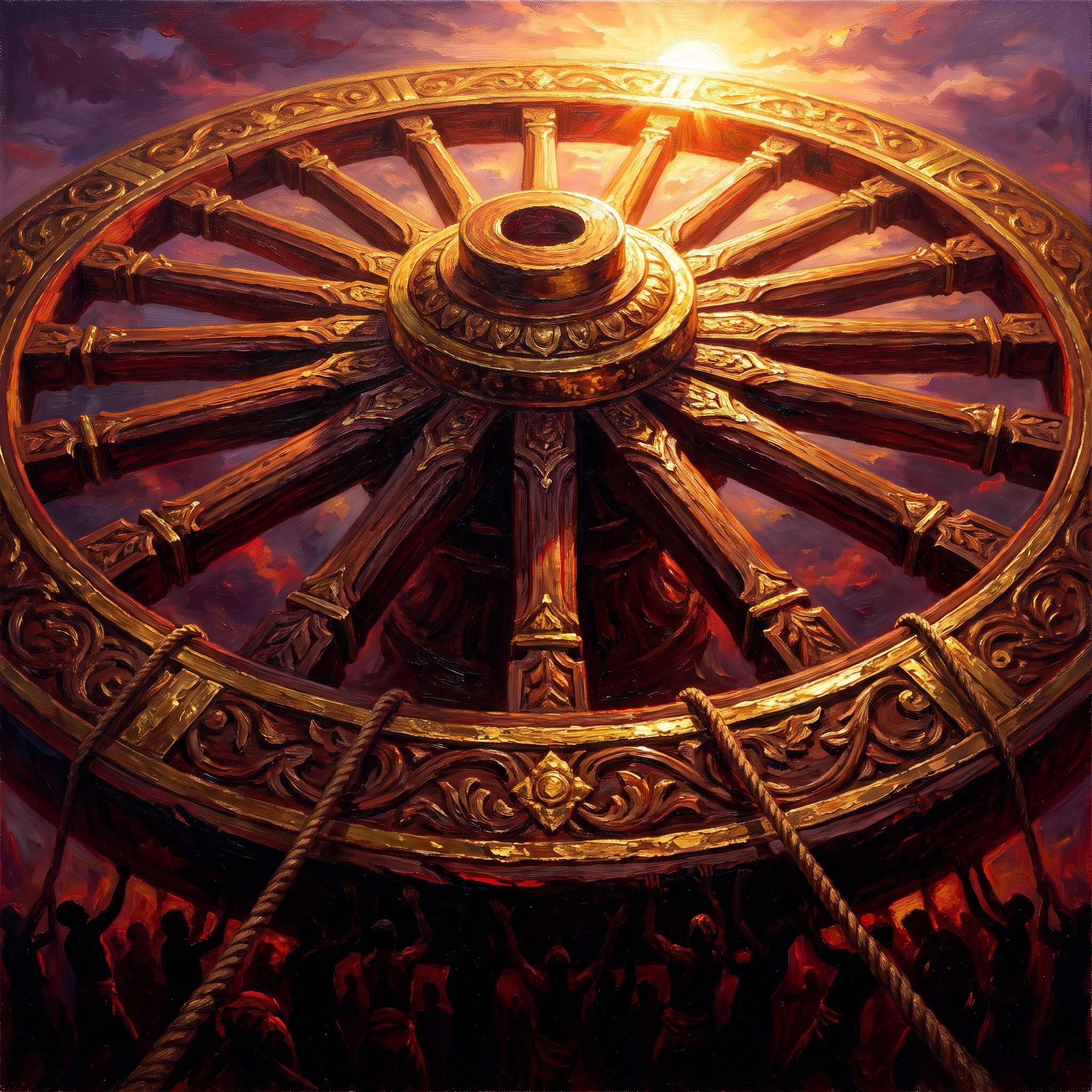
Max Rivera: July 25, 2026. The Dharmanagar Rath Yatra Carnival — organized by the Dharmanagar Municipal Council at Town Kalibari, for the occasion of Ulta Rath Yatra, which is the return procession, the closing movement, Jagannath's chariot coming back to the temple. Not the main Rath Yatra — that was July 16 in Odisha — this is the concluding return, ten days later, in Tripura.
Max Rivera: Tripura's Governor, Indra Sena Reddy Nallu, is there for the prize distribution ceremony. Reporters ask questions. And he says — this is the actual quote, from ANI, same day — 'The 21st century is going to belong to Hinduism.'
Max Rivera: Full stop. That sentence.
Max Rivera: Now — Governors in India are constitutionally weird in a specific way. They're not elected. They're appointed by the President. They function as ceremonial heads of state governments and they're explicitly expected to be politically neutral — to stand above religion and party, to represent every citizen in that state.
Max Rivera: That's the design. Whether it survives contact with reality is a longer conversation. But the design is: neutrality.
Max Rivera: So when a sitting Governor tells reporters the century belongs to one religion, at a festival celebrating that religion — does the constitutional frame even hold? Or does it just quietly stop applying at moments like this?
Max Rivera: That's the real question underneath this. And we're going to get there.
Max Rivera: He didn't just say it and leave it floating. He gave you evidence.
Max Rivera: The Governor cited the daughter of Sukarno — the former Indonesian president — as an example of someone from another faith returning to Hinduism. That's the anchor. That's the thing he put underneath a civilizational claim about the entire 21st century.
Max Rivera: One anecdote. Unverified.
Max Rivera: I went looking for it. The Sukarno's daughter story — it's not confirmed anywhere in available sources. No documented account of it. Which means the single named piece of evidence propping up 'the century belongs to Hinduism' is… a story someone told, that no one has independently verified.
Max Rivera: That's the evidentiary floor here. Sit with that.
Max Rivera: Then he pivots to the Gulf. Hindu temples being built in Gulf countries — and he attributes that directly to Narendra Modi's diplomatic efforts. Modi gets the credit. It's framed as a government achievement, a foreign policy win that also happens to be a religious-cultural advance.
Max Rivera: Here's what's interesting about that. Diplomatic relations improving, Gulf countries allowing Hindu temples — that's real, that's a thing that's happened. But the causal chain the Governor is drawing — Modi's outreach therefore Hindu culture advances globally — that's a political characterization. It's not independently verified as a causal fact. The sources don't establish that link.
Max Rivera: He dressed a talking point as a fact.
Max Rivera: And look — this is where the Hindu cultural nationalism framing matters. Because there's a long tradition of rhetoric that positions Hindu identity as not just one part of Indian national identity, but as CENTRAL to it, foundational, the thing the country is really built around. The Governor's remarks land squarely in that tradition. The century belongs to Hinduism. People are returning to the fold. Modi's diplomacy is spreading it globally.
Max Rivera: That's a coherent ideological frame. It's just not what a constitutionally neutral Governor is supposed to be saying.
Max Rivera: ANI ran it. Multiple outlets picked it up the same day — thenewsmill.com, newsable.asianetnews.com, same date, July 25. Wide dissemination. It's out there.
Max Rivera: Documented pushback? Zero. As of that date — no political party rebuttal, no civil society response, nothing on the record.
Max Rivera: That silence is the concrete thing. Not an abstraction — it's just quiet. A Governor makes a sweeping declaration about which religion owns the century, at a public event, on the record, and the response is… nothing you can point to.
Max Rivera: I don't know if that's normalization or strategic calculation or something else entirely. But it's the thing that actually stays with me — not the claim itself, which is verifiable as thin. The silence around it. That's what tells you something real about where we are.
Max Rivera: And the platform itself is what keeps striking me.
Max Rivera: Rath Yatra isn't a press conference. It's not a party rally where everyone already knows the frame. The chariot procession of Jagannath draws mass public participation — families, kids, people who came for the festival, not for a policy briefing. When a Governor speaks at an event like that, the words travel differently than they would in a committee room. They land in a different kind of space.
Max Rivera: Which is exactly why the silence is so strange.
Max Rivera: Think about what it would normally take for a statement like this to generate a response. A constitutional officer — appointed, not elected, expected to be above religious advocacy — tells reporters the century belongs to one religion, at a mass religious event organized by the Dharmanagar Municipal Council, and it's picked up by ANI, spread to multiple outlets the same day. That's not a quiet moment. That's a documented, widely disseminated statement.
Max Rivera: And still. Nothing you can point to.
Max Rivera: No opposition party. No religious scholar pushing back. No civil society body on record — not as of July 25.
Max Rivera: So what would it actually take? That's the question I don't have a clean answer to. Is there a threshold — a word, a venue, a specific claim — where institutional accountability kicks in? Or has that threshold already shifted and we're only going to see that clearly in retrospect?
Max Rivera: Because there's a version of this where the silence is strategic — opposition parties making a calculation that pushing back amplifies the statement, gives it more oxygen than it deserves. That's a real consideration. I'm not dismissing it.
Max Rivera: But there's another version where the silence just… reflects what's normal now.
Max Rivera: Where a sitting Governor framing Hindu cultural nationalism as the century's inevitable direction — from a Jagannath chariot procession platform, on the record — is just not news enough to respond to.
Max Rivera: Those are very different situations. And you can't tell them apart from the outside just by looking at the quiet.
Max Rivera: At some point, the absence of response stops being a gap in coverage and starts being the actual signal — what the system is saying by saying nothing. I don't know if we're there yet. But the thing to watch isn't a date or a vote. It's whether this kind of statement, from this kind of official, in this kind of setting, ever generates a named, documented response. That's the threshold question. And right now it's still open.
Max Rivera: That's what stays with me.
Max Rivera: Secular democracy doesn't fail in a single loud moment. It doesn't. It shifts in the quiet ones — when a constitutional officer, someone appointed precisely to stand above religion and party, declares the century belongs to one faith, on the record, to reporters, and the system around him just… continues.
Max Rivera: That's not a hypothetical. That's July 25, 2026. Indra Sena Reddy Nallu. Documented. Disseminated. Unanswered.
Max Rivera: The design says he shouldn't have said it. The silence says the design didn't notice.