Lila Soto: Hugo, I spent part of my Sunday genuinely confused — like, sitting-with-my-coffee confused — trying to figure out how Trump and Beijing ended up on the same side of anything.
Hugo Vance: Well, that is a short list historically.
Lila Soto: It really is. And the thing is, it wasn't some vague policy overlap — it was both of them, within forty-eight hours, attacking the same person. Dario Amodei, the CEO of Anthropic, said AI could 'kill all humans' within a decade based on a safety researcher's estimate, called for a global slowdown, and said the U.S. should actively curb China's AI capabilities. September 13th, Trump posts on Truth Social — 'The only control or guardrails that AI needs is a STRONG AND SMART, High IQ, PRESIDENT.' September 15th, Guo Jiakun at China's Foreign Ministry calls the whole slowdown framing 'fear mongering.'
Hugo Vance: Trump condemned him for proposing restraint. Beijing condemned him for proposing to curb China. Opposite complaints, same verdict.
Lila Soto: Which — mm, I mean, that's kind of a bizarre place to find consensus, right? One guy at a U.S. AI company becomes the thing both superpowers agree to reject.
Hugo Vance: It is strange. And I'd put it this way: the strangeness is the signal. What we're really trying to work out today is whether this is a genuine split over AI governance or something older — two powers protecting their right to write the rules, and dressing it in whatever language the moment requires.
Lila Soto: And Amodei just — walked into that. Proposing both restraint and containment of China in the same breath, which guaranteed he'd get hit from every direction.
Hugo Vance: Indeed. Though I'd note — getting demolished by both sides simultaneously is sometimes a sign you named the real thing.
Lila Soto: But getting demolished from both sides doesn't actually explain the mechanism — like, *why* both sides. Because the policy positions look opposite, but the reaction was identical.
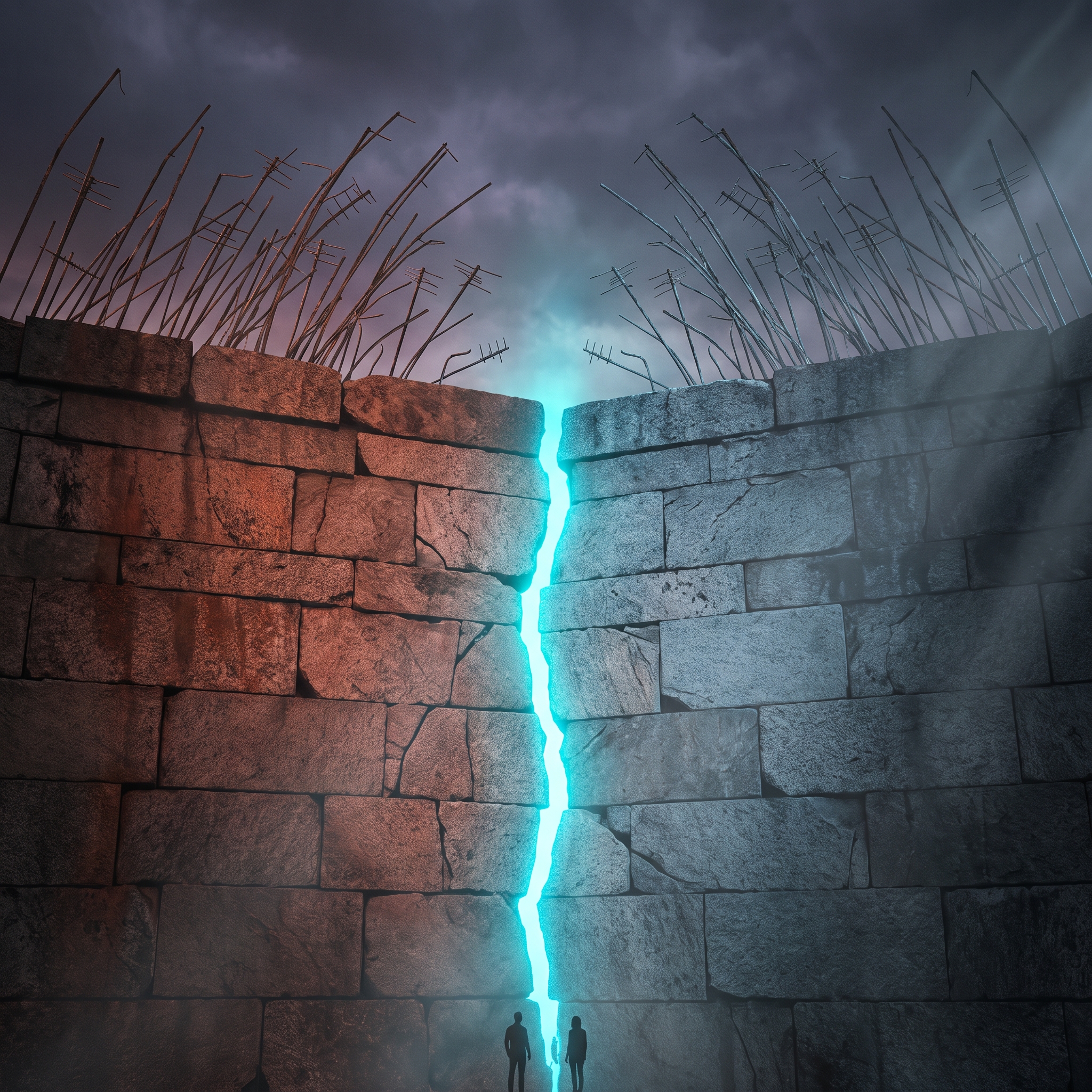
Hugo Vance: Yes. And here's how I'd put it plainly: this isn't a fight about whether AI is dangerous. It's a fight about who gets to be the inspector. Think of two rival construction companies — one says the building code slows them down, the other says the code was written by its competitor to hand them an advantage. Neither is arguing the buildings are safe. They're arguing about who holds the clipboard.
Lila Soto: The inspector. Okay — so Amodei proposing a slowdown isn't just annoying to them, it's threatening, because a slowdown implies *someone gets to decide* when to slow down.
Hugo Vance: Precisely. And the Paris summit is where you can actually see this. February 2025 — the Trump administration renamed it. It was the AI Safety Summit. They changed it to the AI Action Summit. That name change is the whole argument in two words.
Lila Soto: Wait — and China *signed* that declaration?
Hugo Vance: They did. J.D. Vance stood there criticizing excessive regulation, and China signed. Which means — well, they're not even formally on opposite sides of the document. So what exactly are they fighting about?
Lila Soto: They're fighting about the *frame*. Because whoever names the thing — safety summit versus action summit — that's actually, I mean, that's not just branding. That's who gets to define what counts as responsible.
Hugo Vance: And controlling the frame is controlling the rules. That is the mechanism. Amodei wandered into it by proposing that the frame be 'safety' — and both powers had already agreed, without speaking to each other, that the frame would be something else entirely.
Lila Soto: But the frame argument only holds until you look at what China is actually building behind that frame. They published an AI Safety Governance Framework in September 2024. Updated it to version 2.0 in September 2025. Using almost exactly the safety and ethics language that Guo Jiakun is calling fear-mongering.
Hugo Vance: The internal apparatus and the external messaging are running in opposite directions.
Lila Soto: And it gets more specific than that. September 14th — the day between Trump's post and Guo Jiakun's statement — Chen Yixin, China's state security minister, writes that China must 'balance development and security' and strengthen AI risk prevention to protect, quote, 'the interests of the people and national security.' That's the same day Xi Jinping is in India telling Global South leaders to embrace open-source collaboration.
Hugo Vance: The same day.
Lila Soto: Same day. Chen Yixin saying, essentially, AI is a security risk we need to manage — and Guo Jiakun, hours later, saying anyone who calls it a security risk is spreading disruption. I mean, those are not the same message. That's not spin, that's — mm, that's two governments operating inside one flag.
Hugo Vance: Well, yes — and this is where the institutional read matters. The domestic apparatus is real. The safety framework, the security minister's language — that's governing actual engineers, actual companies inside China. The external messaging is strategic. You tell the world 'threat narratives are hegemony' while quietly building the same scaffolding. The contradiction is the point.
Lila Soto: And WAICO is the move that makes it legible — China launches the World Artificial Intelligence Cooperation Organization in Shanghai, and the pitch to the developing world is 'open, inclusive, universally beneficial.' But a developer in Lagos trying to decide which governance stack to build on? She can't actually find WAICO's mandate. It's not published in any form she can audit. So she's choosing between OpenAI's framework, which at least has public documentation, and this thing that exists — but she kind of can't see inside it.
Hugo Vance: And that opacity is itself the governance failure — not the absence of a document, but the choice not to produce one. Xi Jinping can say 'open source, openness, collaboration' in India on the 14th, but the institution meant to operationalize that is illegible to the people it claims to serve.
Lila Soto: Which is where the fracture part gets genuinely alarming — and we haven't even touched yet what happens when those incompatible blocs start costing people money.
Hugo Vance: That cost is already arriving — and it has a specific mechanism. Scott Bessent floated sanctions against Chinese AI companies. China's Ministry of Commerce called that a double standard. And you see what's happened: economic coercion and governance rhetoric are now the same instrument.
Lila Soto: Sanctions and safety frameworks as the same move. That's — yeah, that's a different kind of fracture than I was picturing.
Hugo Vance: And it's not new language, actually — I mean, Trump saying 'whoever wins AI wins' is almost word-for-word Cold War deterrence logic. The question I keep pressing is whether it resolves the same way, or worse.
Lila Soto: How did it resolve the first time?
Hugo Vance: It didn't, fully. Telecommunications — both superpowers refused unified international standards for decades. Then incompatibility became costlier than either's original position, and you got forced cooperation. AI may reach that inflection. The question is whether it happens before or after real damage is done.
Lila Soto: And meanwhile the 15th Five-Year Plan embeds AI dominance as a state priority — this is the first Five-Year Plan since export controls cut China off from advanced chips — so China's already treating the incompatibility as permanent. They're not waiting for the inflection.
Hugo Vance: Which is — yes, that's the pressure point. The New Generation AI Development Plan targets global leadership by 2030. Trump and Xi are apparently meeting later this month with AI governance on the agenda, per the BBC. But the Five-Year Plan is already written. What exactly is there to negotiate?
Lila Soto: And the EU is just — sitting there. The one actor that actually built precautionary frameworks. Washington says innovation drag, Beijing says sovereignty and hegemony. Both reject it for completely different reasons, and the EU ends up being the silent third pole that neither side will touch.
Hugo Vance: Which leaves the Global South shopping for whichever framework extracts the least from them. That sounds like freedom. I'd be cautious calling it that — what it may actually be is instability dressed as choice.
Lila Soto: Which brings me back to that Sunday-morning feeling I started with — except now I think I was confused about the wrong thing. I was asking how they ended up on the same side. But that's not — mm, that's not actually what happened. They weren't on the same side. They just both recognized the same threat, which was Amodei, or really anyone, getting to hold the clipboard.
Hugo Vance: Yes. Trump on the 13th, Guo Jiakun on the 15th — forty-eight hours. Not coordinated. They didn't need to be. Both powers looked at the same proposal and saw the same thing: someone else writing the rules. That synchrony, without any communication, is actually the more alarming version.
Lila Soto: More alarming because if they'd coordinated, there'd at least be a phone line.
Hugo Vance: There would. And what we're left with instead is the question you can't quite put down — whether incompatibility eventually forces the conversation they're both refusing now. I don't know the answer. I think nobody does yet.