Ben Okonkwo: Marcus, long week — but I've got a question that's been sitting badly and I think it's yours to untangle.
Marcus Kline: Now I'm listening.
Ben Okonkwo: If I told you a show's internal cosmology says there's roughly one copy of each main character per timeline — not infinite versions, just one — would you expect that show to treat death and failure as reversible?
Marcus Kline: No. I would not.
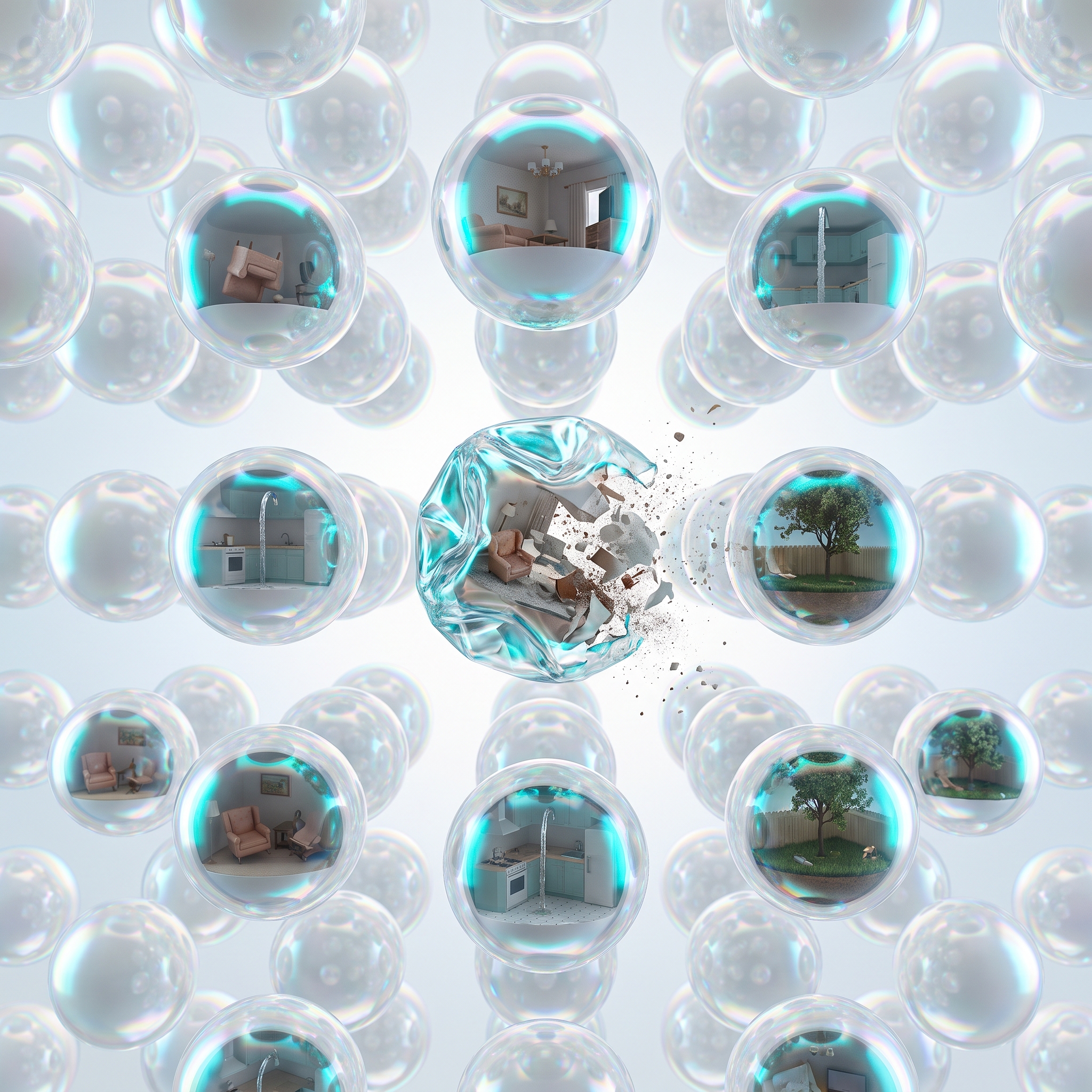
Ben Okonkwo: Rick and Morty. Adult Swim, premiere December 2, 2013. Dan Harmon — who built the thing alongside Justin Roiland — described it as a cross between The Simpsons and Futurama. And the show tells us, straight out, most timelines have a Rick, most Ricks have a Morty. Sparse. Not infinite. And then Rick Sanchez uses the multiverse like an infinite escape hatch anyway. Every time.
Marcus Kline: So the show argues for scarcity and then behaves as though abundance applies. That's — hm. That's not a logic error. That's a structural decision someone made and never quite reconciled.
Ben Okonkwo: Right — and the question I can't let go of is whether Morty Smith's trauma actually accumulates across that structure, or whether the sparse multiverse makes certain losses genuinely irreversible in ways the show acknowledges and then steps back from.
Marcus Kline: Now that question has a very specific answer in Season 1, Episode 6. And it is not a comfortable one.
Ben Okonkwo: That specific answer — 'Rick Potion #9,' January 27, 2014 — it's the one case where consequence actually lands. Morty buries a version of himself in the backyard. But if that episode proves the weight is real, why does the rest of the series feel like it dissolves?
Marcus Kline: Because the escape hatch isn't actually infinite. That's — now, that's the thing nobody says plainly. The multiverse in this show is governed. Think of it like a hotel that advertises infinite rooms but has a front desk, a guest registry, and a manager who can remove you. That's Rick's multiverse. Someone built the walls.
Ben Okonkwo: The Citadel of Ricks.
Marcus Kline: The Citadel of Ricks — an actual in-universe governing body of interdimensional Ricks, imposing hierarchy, consequence, politics, within a supposedly boundless multiverse. And then the Central Finite Curve as a boundary concept — the multiverse isn't unbounded, it's curated. Rick built a perimeter. And — Slate says directly that the show gets multiverse theory demonstrably wrong. The real Many-Worlds Interpretation means infinite simultaneous branches, no governors, no registry. Rick and Morty replaces that with... administrators.
Ben Okonkwo: Okay, that's interesting — Slate calling it demonstrably wrong. But wrong how? Sloppy writing, or something else?
Marcus Kline: Intentional. I think the wrongness is load-bearing. Because if the multiverse were actually infinite with no governors — no Citadel, no Curve — escape always works, consequence never sticks, and the show collapses into noise. So Dan Harmon and the writers built in limits. The escape hatch only functions when the show decides to open it.
Ben Okonkwo: So if it's governed, why does escape still feel so effortless most of the time?
Marcus Kline: Because the show chooses when to enforce its own rules. The Citadel exists. The Curve exists. And then the show ignores them when the episode needs a clean exit. That's not a multiverse problem. That's a policy problem. Rick Sanchez didn't discover an infinite escape hatch. He built one — and kept the keys.
Ben Okonkwo: But keeping the keys is the part that breaks down, because — okay, picture this. Someone watching 'Rick Potion #9' for the first time. January 27, 2014. They see Morty Smith standing in a garage, mud literally on his hands, having just buried his own body in the backyard. His corpse. A version of him that died minutes earlier. And upstairs, Beth and Jerry are eating breakfast, completely unaware their son is now an impostor who slid in from a ruined dimension. That image. And then the show — across season after season, through season eight, through 'Hot Rick' airing July 27, 2025 — largely walks away from that register. Not the multiverse. The *grief* of it.
Marcus Kline: Nine seasons. And that image — Morty burying himself — it doesn't recur as policy.
Ben Okonkwo: Right — and that's a production choice. Justin Roiland and Dan Harmon could have made the grief cumulative. They didn't. So the question I want to put to you is: was 'Rick Potion #9' a proof of concept the writers chose to retire, or was it — wait, actually, this might be sharper — was it a ceiling they couldn't figure out how to sustain?
Marcus Kline: A ceiling. Yes. Consider what sustaining it would require — every subsequent escape would have to carry that mud. That backyard. And the show's format doesn't allow that weight at volume. So they proved it once, confirmed it worked, and then — the fact is — they filed it away.
Ben Okonkwo: Filed it away, or outsourced it?
Ben Okonkwo: Because there's something about Beth and Jerry's marriage — the domestic wreckage that keeps reassembling itself across dimensional resets — that carries weight in a way the multiverse never quite erases. And whether that's load-bearing structure or just thematic wallpaper is the thing I think we have to get to.
Marcus Kline: Now that's the question. Because if the family chassis is doing the actual work — if Beth and Jerry's damage is what persists when the multiverse won't — then 'Rick Potion #9' isn't an anomaly. It's a diagnostic.
Ben Okonkwo: A diagnostic of what the show actually believes consequences *are*. Not dimensional. Personal. And Morty Smith burying himself is the only moment it said so without flinching.
Marcus Kline: And if it's personal — if consequence lives in Beth and Jerry's marriage rather than in dimensional physics — then Dan Harmon wasn't actually building a sci-fi show. He was building a domestic sitcom with an escape clause stapled to the outside. He said it himself. Simpsons and Futurama. And the Simpsons half is doing the load-bearing work.
Ben Okonkwo: Wait — the Simpsons half specifically? Not Futurama?
Marcus Kline: Futurama gives you the multiverse permission structure. The Simpsons gives you Beth and Jerry. And Beth and Jerry — their divorce, their reconciliation, the specific wreckage of two people who shouldn't be together but keep reassembling — that persists across every dimensional reset. Because it's not dimensional. It predates Rick Sanchez. It predates the garage.
Ben Okonkwo: Okay, but here's the part I can't fully close — is that persistence structurally enforced, or is it just convention? We follow the same family, so it looks like continuity. But the multiverse hasn't actually locked anything in. The show could swap Beth tomorrow and we'd never know the mechanism had failed.
Marcus Kline: No, and I think — actually, that ambiguity is the admission. Shuke Lin, Fuzhou University of International Studies and Trade, frames this through non-linear temporality — the show's spatial construction makes continuity feel earned when it structurally isn't. Which means the family chassis works because the audience grants it permission, not because the cosmology enforces it.
Ben Okonkwo: So the family is load-bearing only because we decide it is.
Marcus Kline: And Rick Sanchez knows that. The show casts him in god-like terms across multiple seasons — and a god who understands that emotional weight is audience-granted will weaponize it. He keeps Beth and Jerry in orbit not because the multiverse requires it. Because the story requires it. The nihilism — the famous Rick nihilism — it's a comic register, not a philosophical position the show actually means to dismantle. It's a punchline protecting the machinery underneath.
Ben Okonkwo: Nihilism as armor. Not as argument.
Marcus Kline: And the machinery underneath is a woman named Beth Smith deciding every few seasons whether her marriage survives — and a man named Jerry Smith absorbing the damage of a family that treats him as optional. That dynamic doesn't need a multiverse. It needs a kitchen table and a long silence.
Ben Okonkwo: Jerry at the kitchen table. That's actually where I land on this. Not the Citadel. Not the Central Finite Curve. Jerry Smith absorbing the damage — that's the thing the multiverse can't touch, and the show knows it.
Marcus Kline: And season nine will settle it, or it won't. If the consequences from season eight start locking in — if what 'Hot Rick' set in motion actually carries forward — then the multiverse was always a permission structure the show was negotiating with. If escape costs nothing again... well. The window dressing was never the point anyway.
Ben Okonkwo: The family was.
Marcus Kline: The family was.
Ben Okonkwo: Good place to stop. Genuinely — I needed that untangled.