Brian Reed: She's been going to the gym three times a week for four months. Spin, weights, the whole thing. And her scale moved two pounds.
Eliza Ward: Hold on — are we starting in the middle of something?
Brian Reed: Yes. Eliza, hey — we're starting in the middle on purpose, because that's where the story actually lives. Her name is Sarah, she's 42, works a desk job. Four months of spin class and weight training. Stronger, more energy, knees feel better. Scale: 189 to 187. Her doctor saw her BMI last week and said she needs to lose weight.
Eliza Ward: And she's thinking about quitting.
Brian Reed: She's thinking about quitting. And that's — I mean, that's the cost of the wrong metric, right? And then there's this paper. August 2026, Frontiers in Public Health, lead author Jineng Chen — a randomized controlled trial, twelve weeks of combined aerobic and resistance training in overweight or obese adults with cardiometabolic risk factors. Fat mass went down. Strength went up. Overall scale weight? Basically flat.
Eliza Ward: So the trial is naming something that Sarah didn't have language for.
Brian Reed: That's exactly it. The science and the person are pointing at the same thing and somehow the doctor's office hasn't caught up.
Eliza Ward: Yeah — I've heard that story. Sitting in a waiting room being told a number that doesn't capture any of it.
Brian Reed: But here's where it actually gets strange — the people who built the study are the ones pumping the brakes. Jineng Chen, Junlin Chen, Kailin Mao, Zhejun Chen, Zepeng Lin — they published this in Frontiers in Public Health in August and they called the effects modest. Their word. Single center. Short duration. Specific population.
Eliza Ward: Wait — the authors said modest?
Brian Reed: In the paper. So I want to make sure we're landing this clearly — the finding is real. Twelve weeks, combined aerobic and resistance training, overweight adults with cardiometabolic risk factors. Fat mass down. Strength up. Scale basically flat. That happened.
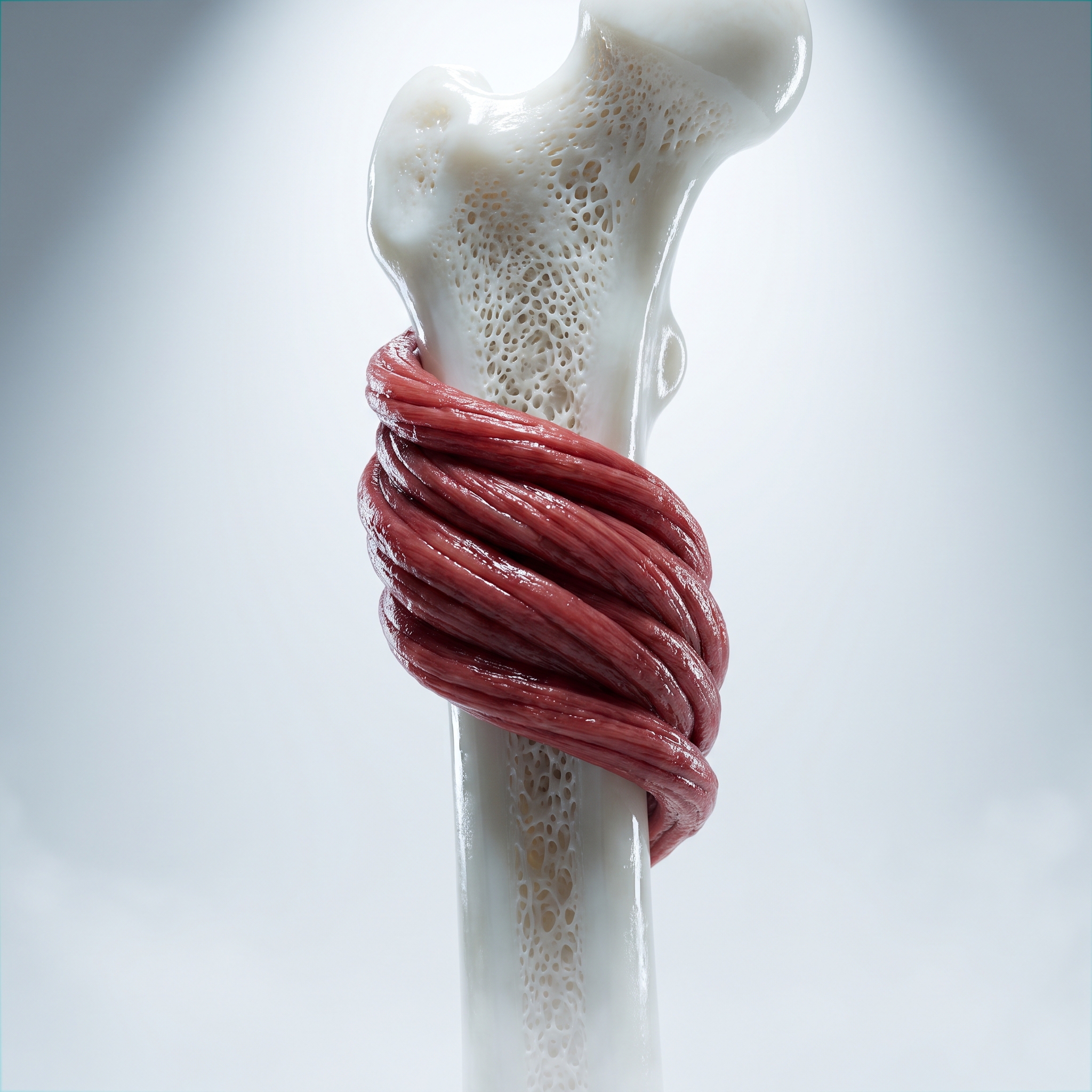
Eliza Ward: Okay — here's the analogy that actually made this click for me. Think of your body like a house being renovated. You gut a bathroom, you add insulation — the house is genuinely better. But the total square footage doesn't change. Fat went down, muscle went up, total weight stayed flat. The scale measures square footage. It missed the renovation entirely.
Brian Reed: That's the thing, right? The renovation happened. And then the inspector shows up, checks square footage, says nothing changed.
Eliza Ward: Which is — I mean, that's what happened to Sarah. Her doctor ran the square-footage check. But the authors of this trial are also saying: we measured one house, one contractor, twelve weeks. Don't generalize past that.
Brian Reed: So the people who ran the study are telling us not to overread it. And yet here we are — October 14th, two months after publication, and it's trending. With no expert commentary. No methodology critique. Nothing.
Eliza Ward: No announced replication either. No follow-up trial in the pipeline. For something being framed as a paradigm shift — the research agenda is quiet.
Brian Reed: So what's actually moving? The finding, or the story about the finding?
Eliza Ward: Both, probably — but that's where the correlational problem actually bites. Because there was already a PMC systematic review showing physical activity improves cardiometabolic markers in people with obesity independent of weight loss. That's been sitting there. The pattern was visible.
Brian Reed: Right — so why wasn't that enough? Why does anyone need Jineng Chen's RCT if the correlational signal was already there?
Eliza Ward: Because correlation can't — wait, let me get this straight — correlation tells you two things move together. It can't tell you that one caused the other. Maybe people who exercise without losing weight were already metabolically healthier before they started. You can't rule that out from observational data.
Brian Reed: And that's the threshold the RCT actually crosses. You randomize — you assign people to the training group or not — and now the two groups are comparable at baseline. Whatever improves in the training group, the exercise caused it. That's — I mean, that's the whole point of Chen's design. Twelve weeks, supervised, controlled. Fat mass down, strength up, scale flat. That's causal now, not just suggestive.
Eliza Ward: Which is what the PMC meta-analysis on concurrent training couldn't give you either — that one compared concurrent versus aerobic versus resistance on body fat, but again, correlational framing. Same ceiling.
Brian Reed: And then there's the interference worry — the thing I kept seeing when I went through the literature. The fear that if you add cardio to a strength program, you blunt the strength gains. The MDPI Healthcare systematic review and meta-analysis went at this directly for middle-aged and older adults. Concurrent training versus resistance training alone — no meaningful difference on muscle mass or strength. The interference effect basically doesn't show up in that demographic.
Eliza Ward: So the design choice that made Chen's trial work — the combined program — wasn't actually a compromise.
Brian Reed: Not in this population. And SEARHC had already figured that out practically — they've been running Beyond the Scale programs, lifestyle interventions measured entirely outside weight metrics, before this trial existed. The clinical instinct was ahead of the randomized evidence. Chen's paper just — it gives that instinct a causal backbone. BMI can't see abdominal fat distribution. It can't see that the person in front of you has lost fat mass and built muscle. SEARHC was already acting on that gap.
Eliza Ward: And the part that comes later — that's where I want to go — is how far it actually is from one modest RCT to a doctor changing what they say in that exam room. And who absorbs the cost while we wait to find out.
Brian Reed: That cost isn't abstract, though. That's the part I want to sit with. Because translating a randomized trial into clinical guidance — replication, expert engagement, guideline revision — none of that has happened here. Two months post-publication, there's no high-engagement expert discussion of Jineng Chen's trial anywhere. Not on social media, not in the literature. The scientific community hasn't visibly weighed in.
Eliza Ward: Which is — wait, is that silence skepticism, or is it just the normal lag?
Brian Reed: That's what I can't tell. And in the meantime — I mean, picture someone at a physical therapy discharge appointment. She's regained full range of motion, her grip strength doubled over eight weeks. Her discharge summary goes to her GP flagged with her BMI. The GP sees the flag, not the grip strength. That's the mechanism. That's where the gap lives.
Eliza Ward: Right — but the trial is also limited to overweight or obese adults with multiple cardiometabolic risk factors. We don't know if any of this generalizes outside that population. That's not me dismissing it — that's the authors.
Brian Reed: No, absolutely. And that's the tension. The person who quits because the number didn't move — she's absorbing the cost of institutional caution. But the institution's caution exists because one short-term single-center trial shouldn't rewrite counseling overnight.
Eliza Ward: Both things are just — they're both true.
Brian Reed: And the question sitting underneath all of it is: does this trial, as one data point among others — the PMC systematic review, the MDPI concurrent training meta-analysis — does that stack justify shifting counseling toward body composition and functional strength now? Or do we wait?
Eliza Ward: And who decides what waiting costs.
Brian Reed: That's — yeah. That's the question the evidence can't answer on its own.
Eliza Ward: Sarah moved two pounds. The trial moved the scale basically zero. And somehow — I mean, that might actually be the point.
Brian Reed: Jineng Chen and the team didn't set out to move the scale. They set out to ask what else changes when you train — fat mass, strength, composition. And the answer was: those things change, even when the number doesn't. Sarah's answer was the same. Different person, same finding.
Eliza Ward: And the question underneath — who actually starts exercising and keeps going, if the metric shifts from scale weight to body composition and functional strength — that one's still open. The trial's a data point. Not the answer.
Brian Reed: It is. And I think — honestly, that's an okay place to be with it. One modest RCT in Frontiers in Public Health, single center, twelve weeks. The authors said so themselves. It doesn't close anything. It just — it names something that a lot of people already felt but couldn't point to.
Eliza Ward: Yeah. Good conversation.