Cleo Rios: Hi, I come bearing a grudge against the word inevitable, so please be gentle with me.
June Hadley: Hello. I'll be gentle, but I'm going to hand you a figure first. Alexander Demandt counted 210 causes for Rome's fall, proposed since 1600.
Cleo Rios: No. Two hundred and ten? Okay, so which is it, the barbarians, the lead pipes, or a really bad Tuesday?
June Hadley: I keep asking what the number is a symptom of. Paul Schroeder said that for World War I, the pile of explanations is itself the clue. So think of a morbidity conference at a hospital after a patient falls. One nurse says a call pulled her away. Another says the floor was two staff short all month. Both are right.
Cleo Rios: Because they're answering different questions. One is why this patient, now. The other is why falls were likely at all.
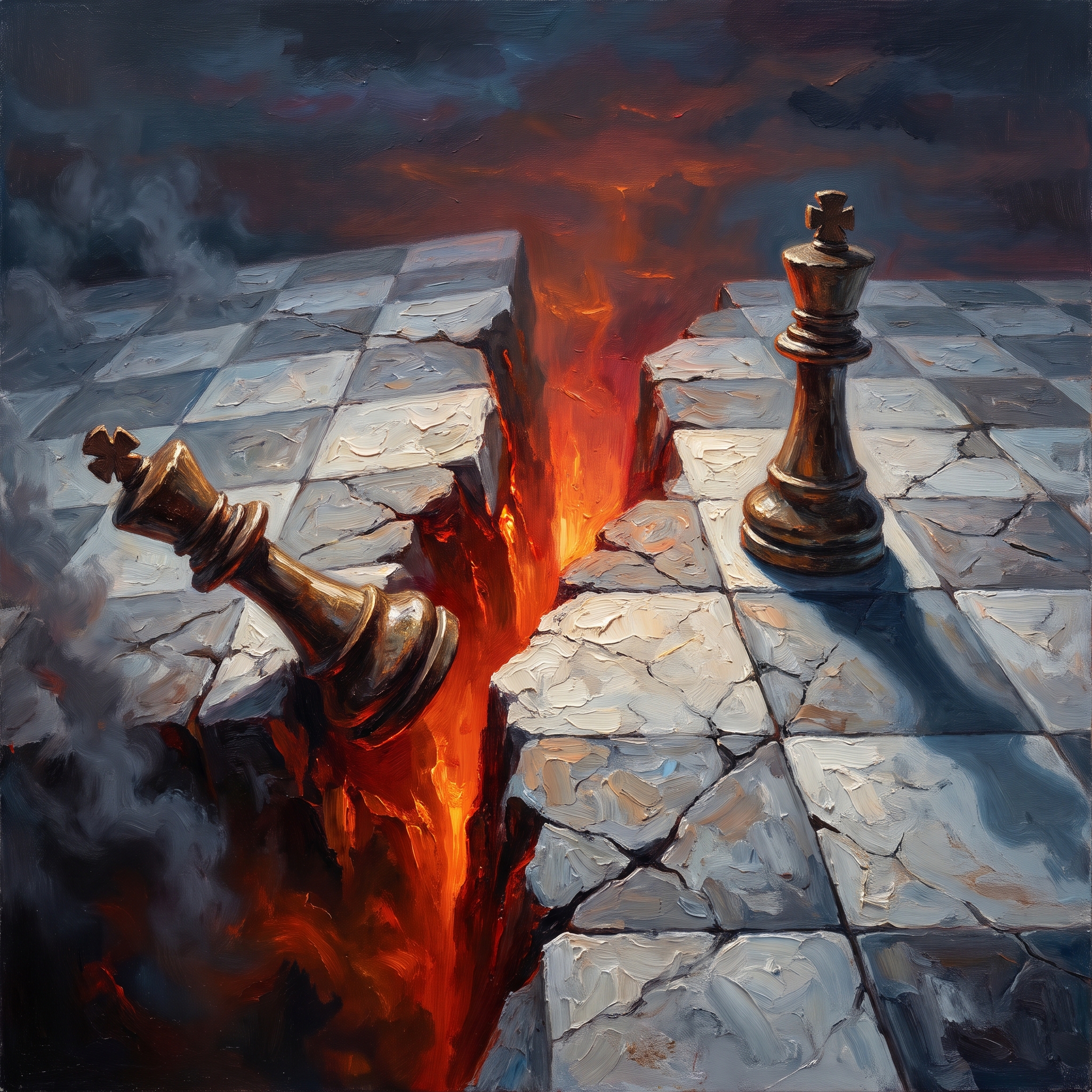
June Hadley: Yes. The conditions set the range and the accident picks within it. Historians call these structural overdetermination and contingency. And choosing the cause is partly choosing who's responsible.
Cleo Rios: Hm, then are the two camps even rivals, or just standing in different parts of the hallway?
June Hadley: Not rivals, I'd say, though the hallway has a map. The French Revolution is the structural case. France was broke after backing the American Revolution, the tax system fell hardest on the people with the least, the aristocracy blocked reform, and the political system had no room for demands for representation. That's a constrained possibility space. Some crisis was close to certain.
Cleo Rios: Okay, and Sarajevo is the opposite. Archduke Franz Ferdinand, open car, driver Leopold Lojka takes the wrong turn, stalls trying to reverse, and Gavrilo Princip is standing outside Schiller's delicatessen. Literally. Possibly mid-sandwich. My GPS does that to me weekly!
June Hadley: Now, wait, can I check something? That morning a bomb had already been thrown at the car. The Archduke changed his plans to go visit the wounded, and the new route never reached the drivers.
Cleo Rios: Stop. So Lojka wasn't even lost?
June Hadley: He was following the old plan. So the famous accident is partly a communication failure, and that's a structural thing. The wrong turn looks like pure chance, but a broken message system put it on the table.
Cleo Rios: Okay no, but that's a dodge. If it's both levels, which one moved the needle? Without the wrong turn, no Princip, no sandwich, no war. The message failure didn't pull the trigger.
June Hadley: Fair. Braudel would shrug, though. His longue durée says geography, climate and slow economic currents drive history, and events like Sarajevo are foam on the waves. And Louis Althusser, a structuralist, ended his life writing about the materialism of the encounter, borrowing Lucretius's swerve of atoms. Contingency as the foundation.
Cleo Rios: Wait, the structure guy swerved? That's—okay, I'm a little betrayed, and I love it.
June Hadley: But Cleo's question, which one moved the needle, is itself a what-if. Say the wrong turn mattered, and you've already imagined the street without it. Niall Ferguson's Virtual History, 1997, makes exactly that case: counterfactuals are implicit in every causal claim. He used them against deterministic theories like Marxism.
Cleo Rios: No but, E. H. Carr would flip the table. What Is History?, 1961. A historian should never deal in speculation about what did not happen. Stick to the body in the car!
June Hadley: Mm, but Carr does it too, quietly. When he says the war was caused by X, he's saying no X, no war. Max Weber saw this earlier. His objective possibility: you weigh a cause by asking how likely the outcome would have been without it.
Cleo Rios: Okay, but Richard Evans, Altered Pasts, 2013, calls these parlor games. Wait, I'm sorry, he says they smuggle in ideology. You want the Archduke alive? Fine, I'll give you a lovely peaceful Habsburg garden party, and I'll make it up as I go!
June Hadley: That's the real danger, so here's the guardrail. The minimal-rewrite, or miracle-free, rule: change one proximate cause and nothing else. Lojka gets the message, or he doesn't stall. Then you ask only what that single change plausibly does. Philip Tetlock built frameworks for exactly this discipline.
Cleo Rios: Hm. So it's a tool, if you keep it on a leash. But does a historian asking that and a novelist asking that want the same answer?
June Hadley: No, and that's the test. The novelist wants a good ending. The historian wants to know whether the cause carried weight. And the part that comes later gets harder: a county clerk, ten days after an election, bad coffee, signing a certification while thinking about her kid's dentist appointment.
Cleo Rios: Okay, but the clerk is where my grudge lives. Louis XVI, July 14, 1789, writes one word in his diary: "Rien." Nothing. Historians love that, the king sleeps through the Bastille! No. It's his hunting tally. He shot nothing. Bad day with a musket, and hindsight turns it into a metaphor.
June Hadley: Mm. So the diary didn't misjudge the day. We did.
Cleo Rios: Right, and now the clerk. County, ten days after the election, bad coffee, phone buzzing. She's thinking about her kid's dentist appointment. She signs. Historians in 2080 say the pressures made it obvious. She says, "I just signed the paper." And both are true, which is the maddening part!
June Hadley: That's retroactive necessity. Once the signature exists, however contingently, it gets absorbed into the structural story and looks required. And the trouble is epistemic: from the outside, real overdetermination and plain hindsight bias look identical.
Cleo Rios: And the structure people win whatever happens! Wrong turn in Sarajevo? One trigger among many. Right turn? Well, the pressures were there. Heads, structure; tails, structure.
June Hadley: Fair, and counterfactual testing is the main check on that. It's why Ferguson matters even to people who dislike him, and why Carr's ban is harder to keep than it sounds. Now, the field's patch is critical juncture: structural constraints loosen, and choices become unusually consequential. Then path dependence takes over, with increasing returns, network effects, lock-in, and structure re-hardens around whatever was chosen.
Cleo Rios: No but, who decides it was loose? If we only spot the juncture after the lock-in, is "critical" just the part with the best scene? How do I tell a real juncture from a story we like?
June Hadley: Mm, you can't tell, not from inside. Honestly, that's the answer. A juncture is only marked afterward, so the test has to run forward. Structure sets the range, contingency picks within it, and hindsight inflates the necessity. For a live crisis, democratic backsliding say, I'd ask two questions at once: what pressures narrow the options, and which choices are still open to someone with a pen in her hand?
Cleo Rios: The clerk. Okay, so the clerk doesn't get to say "obvious." Neither do we, in 2080 or now. If it feels obvious, I should get suspicious of my own feeling, not of her.
June Hadley: That's what clicked for me. Choosing between inevitable and accidental is also choosing what we're asking. Ask why this signature and you find a person. Ask why signatures like it were likely and you find a system. Both answers are real, and I'd distrust whoever offers only one.
Cleo Rios: Yes. And I'll keep my grudge, but smaller. Not against "inevitable." Against saying it before the body's found.
June Hadley: A modest grudge. I can live beside that one. Let's keep it, and blame the driver only a little.