Topic · 24 episodes
History
History is not a neutral record — it is a constructed argument. Onpode's coverage explores how primary sources like the 2300 BC Victory Stele of Naram-Sin were built to praise, not document; how historians move beyond correlation to genuine causal explanation; how Magna Carta's 811-year legacy still shapes live debates over democratic norms; and how a 900-pound time capsule sealed today will test what future generations make of our present moment.
Frequently asked
Are primary sources in history reliable?
Primary sources are structurally biased by design, not by accident. The Victory Stele of Naram-Sin, carved around 2300 BC, is one of the earliest surviving official records — and it praises a campaign rather than documents it. Historians manage this permanent distortion through triangulation and absence reasoning, but never fully eliminate it.
How do historians explain causation rather than just correlation?
Historical explanation requires more than showing two events occurred together. Historians must identify the mechanism — the actual process linking cause to effect — distinguishing genuine causal relationships from coincidental patterns. Correlation alone is insufficient; the explanatory work lies in demonstrating why one thing produced another.
Why does Magna Carta still matter today?
Magna Carta's 811-year legacy remains politically active. The White House has explicitly tied the document to current debates over democratic norms and the rule of law, demonstrating how a medieval charter continues to be invoked as a living reference point in modern constitutional and governance arguments.
What is a time capsule meant to preserve for future historians?
A 900-pound time capsule filled with state contributions was recently sealed and will not be opened for 250 years. It raises the same questions historians always face: what a society chooses to preserve, what it omits, and how future generations will interpret objects selected with deliberate intent rather than accidental survival.
Episodes
 The Munich Conference precedent: when powerful nations negotiate over weaker parties' fates, what's at stakeAt the Munich Conference on September 29–30, 1938, Britain, France, Germany, and Italy transferred Czechoslovakia's Sudetenland to Hitler without Czech or Soviet participation — because excluding both nations was Hitler's precondition for attending. Czechoslovakia lost its defensive fortifications and industrial base; Germany occupied the rest six months later.
 The 1972 China-Japan joint statement set rules that now fuel conflict — history reversedThe 1972 China-Japan Joint Communiqué deliberately used the phrase 'fully understands and respects' — not 'recognizes' — on Taiwan's status, a distinction confirmed by Japan's own treaty lawyer Takakazu Kuriyama. Fifty-four years later, both governments cite the same sentence as legal proof of opposite facts, with no tribunal to settle it.
 Iran's security chief says Trump faces a choice: he can't wage war or negotiate — both are blockedIran's security chief Mohsen Rezaei declared on September 29 that US airline sanctions amount to an 'aerial blockade' — framing Trump as 'trapped in a quagmire where he can neither negotiate nor wage war.' But Iran's own preconditions — sanctions relief before talks begin, Hormuz closed — help maintain the deadlock Rezaei blames on Washington.
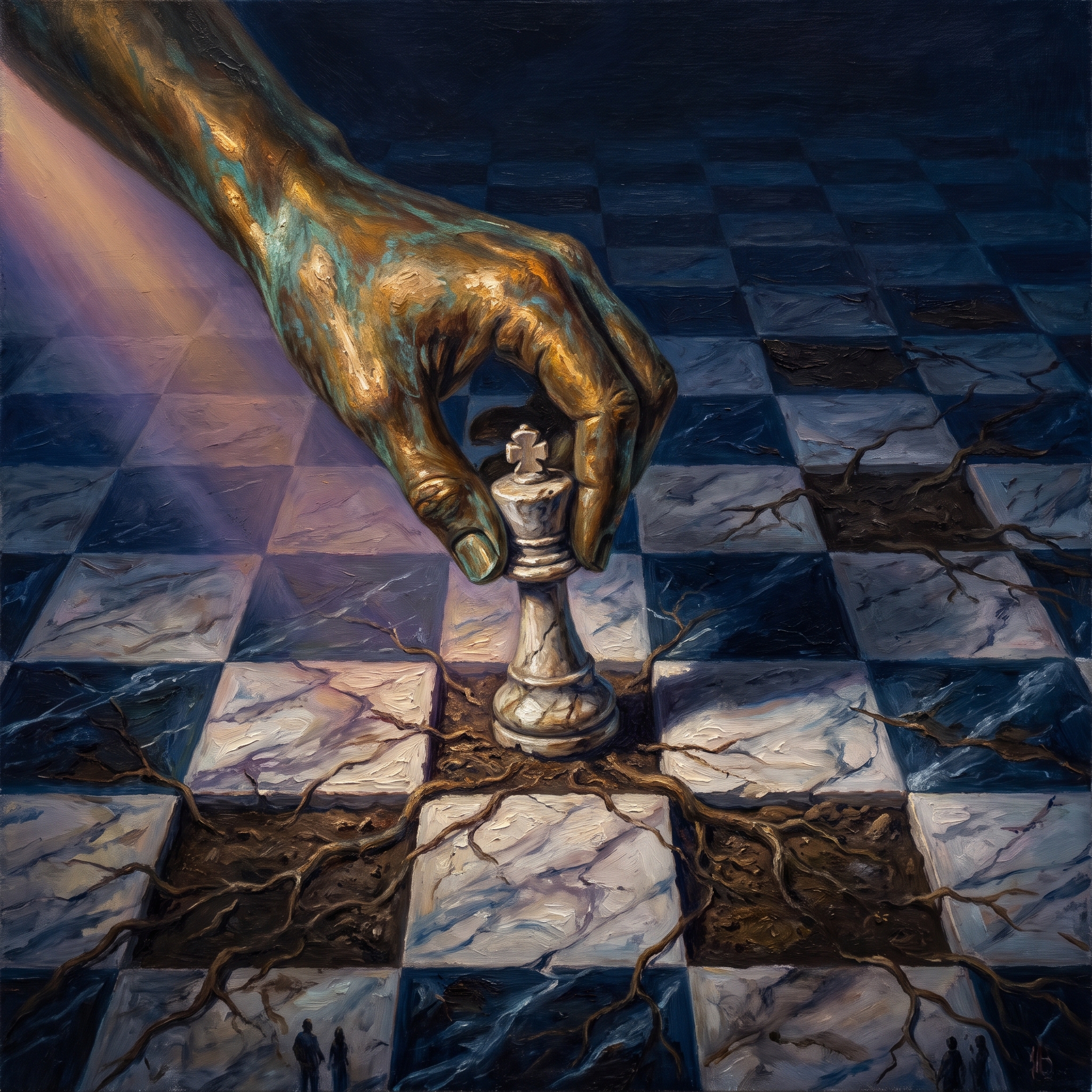 How historians balance great-person narratives with impersonal forcesA study of 1,108 leaders across 130 countries found that a leader's death in office measurably shifts economic trajectories in autocracies but the effect nearly vanishes in democracies — suggesting individual agency is real but structurally gated, not intrinsic, which neither Carlyle's Great Man theory nor pure historical materialism fully predicted.
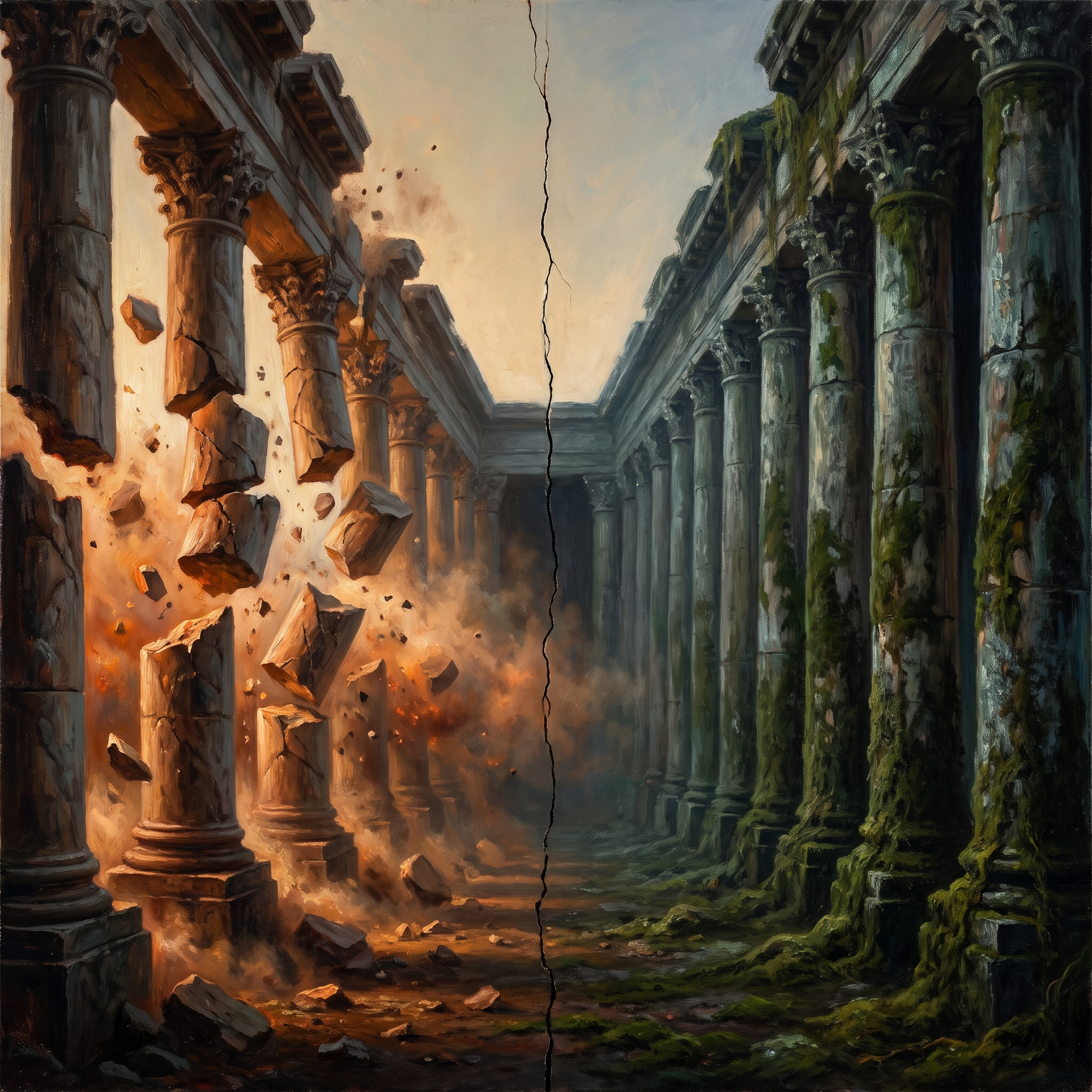 Why rapid institutional collapse and slow erosion produce different legaciesA synthetic control study of 66 countries found that post-revolutionary Iran diverged significantly from its counterfactual on GDP, institutional quality, and executive constraints — while U.S. civil rights reforms durably embedded voting access but preserved structural inequalities. Both paths carry measurable costs that only become legible after the fact.
 Why the printing press, steam engine, and internet followed similar adoption curvesEverett Rogers synthesized 508 diffusion studies in 1962 to identify the S-curve — slow start, fast middle, slow end — common to every major technology. But the lag between invention and widespread productive deployment ranges from 7 years (internet) to 121 years (steam ships), making the curve real but impossible to locate yourself on.
 What people remember is often not what historians find in the evidenceA federal judge ruled in February 2026 that removing slavery panels from the President's House in Philadelphia was unlawful — the National Park Service removed them anyway. Collective memory and archival history serve different functions: memory binds groups socially; archives self-correct through evidence. No institution currently decides when one overrides the other.
 Why historians need both eyewitness accounts and modern scholarshipThe Donation of Constantine — a forged medieval document — shaped European church-state relations for 800 years before Renaissance scholar Lorenzo Valla exposed it in 1440 by analyzing its anachronistic Latin. The case reveals why historians must cross-reference independent primary sources and apply source criticism before interpretation: corrupted primary evidence produces methodologically sound but factually wrong secondary scholarship.
 What would have happened if X — and why historians reject the questionEvery causal claim in mainstream history secretly embeds a counterfactual — removing any link in the causal chain implies the outcome would differ. Historian Matthew Rellihan's 2025 taxonomy shows counterfactuals vary by degree, not kind, and Mukharji and Zeckhauser's 2019 research on explanation bias suggests banning explicit 'what if' reasoning leaves archives more distorted, not less.
 How the shift to writing changed what history could be aboutWriting was invented in 3200 BCE Uruk to count barley — not to preserve history. The historical discipline then built its evidentiary standards around that accounting accident, systematically excluding what scribes never needed to record: women's lives, marginalized communities, oral knowledge held across generations.
 Why a diary written yesterday carries different weight than one written a century agoA diary written yesterday and one written a century ago are both 'primary sources,' but historians rank them by two variables: proximity to the event and intentionality of creation. A tax ledger beats a memoir not because memoirists forget, but because ledgers had no reason to persuade anyone.
 Smithsonian history museum leader pushes back on Trump White House labeling museum leaders as radical activistsThe White House 'Saving America's Story' report, released July 4, names National Museum of American History director Anthea Hartig over 100 times and labels her a 'radical activist.' Hartig testified on July 21 that the 162-page report does not fairly characterize the museum's work — but six of nine Smithsonian regent seats expire in 2026, giving the White House a potential board majority without winning a single public argument.
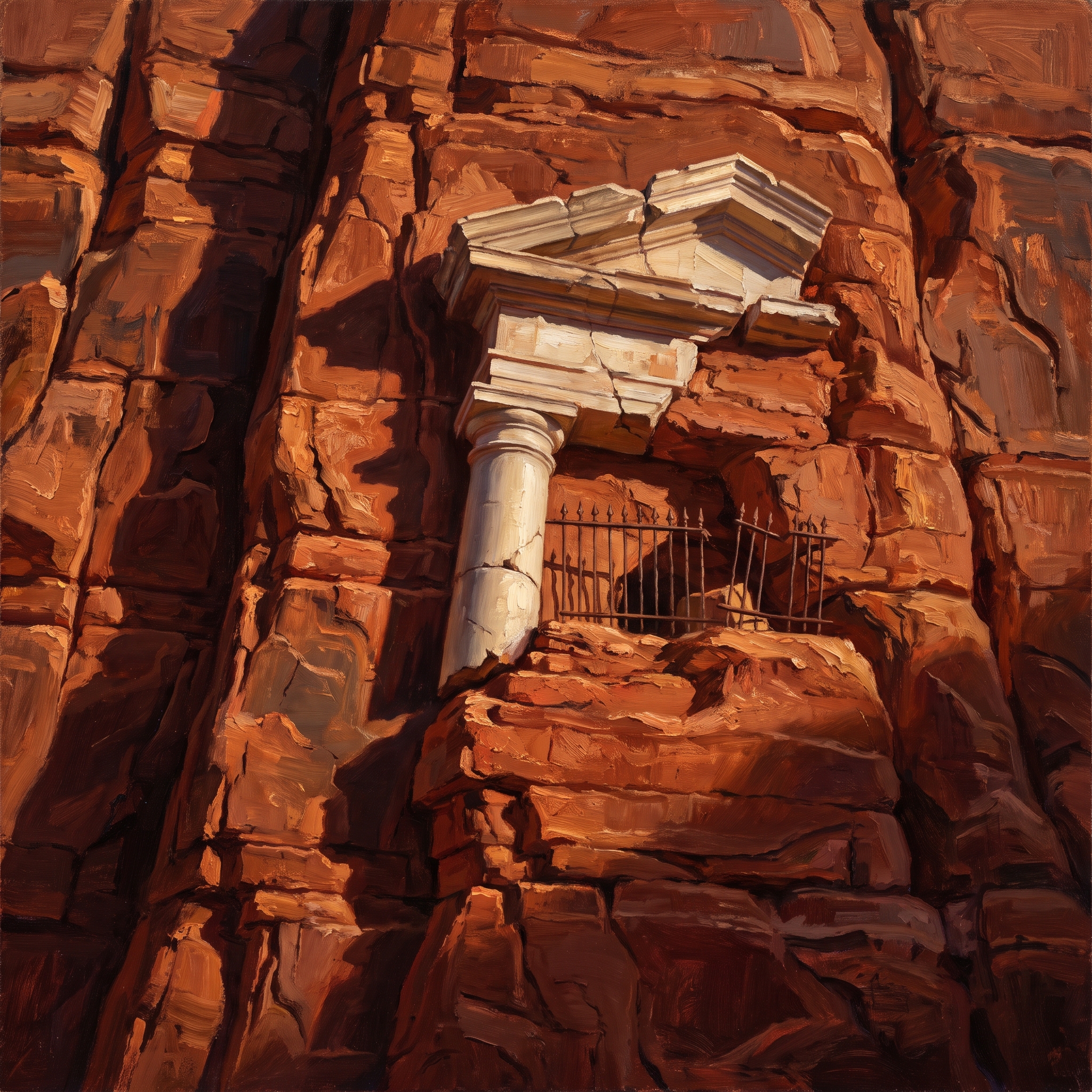 Indigenous scholars say authoritarianism is more American than we admit—250 years of history proves itThe U.S. Constitution established two simultaneous governing systems from 1787: democratic institutions for settlers and authoritarian control over Indigenous nations via plenary power and the Doctrine of Discovery. Indigenous legal scholars argue this is load-bearing architecture, not a correctable flaw — and the Supreme Court's 2022 Oklahoma v. Castro-Huerta ruling revived 1830s removal-era logic to prove it.
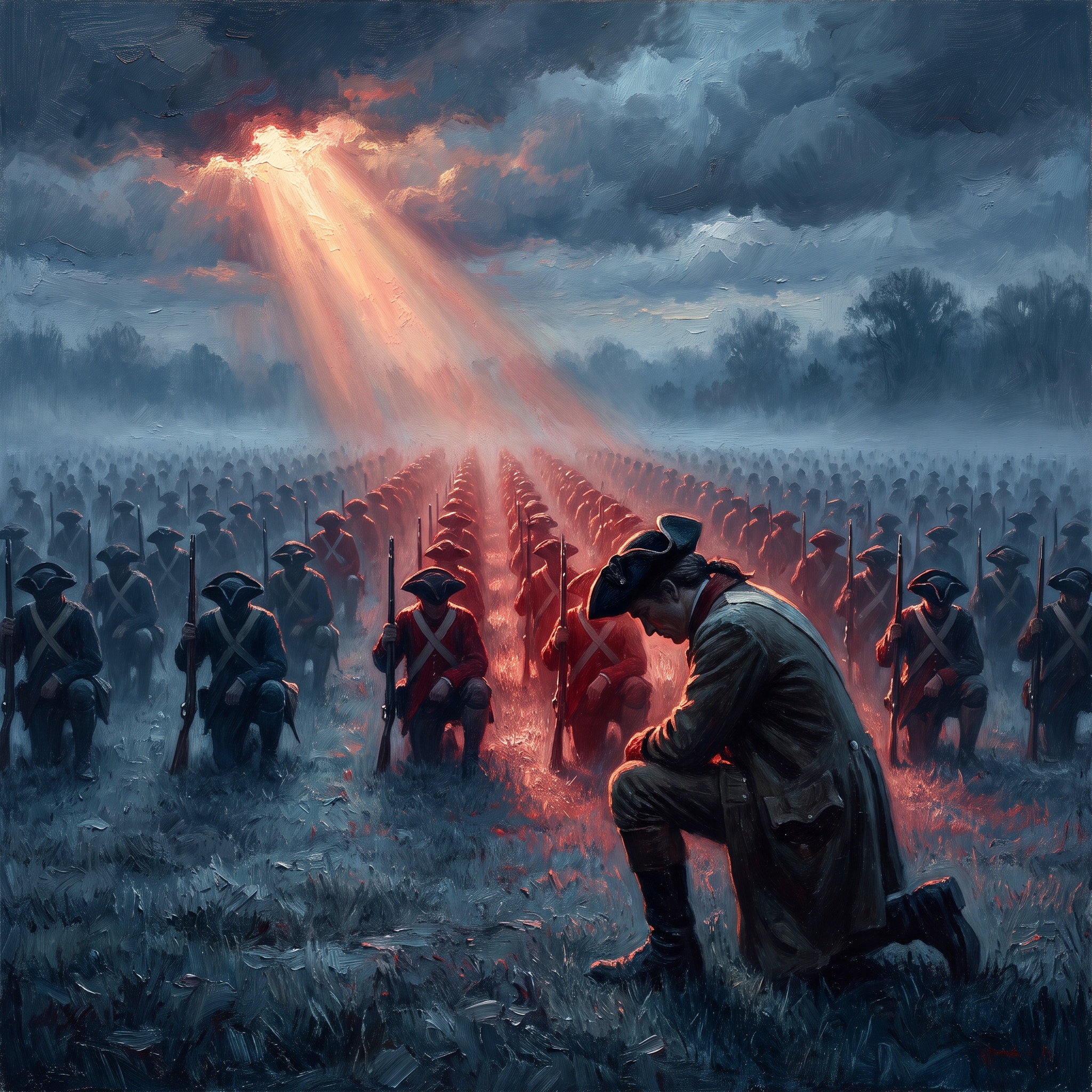 250 years ago today, Washington ordered troops to worship before battle—why it still resonatesIn July 1776, George Washington issued a General Order requiring Continental Army troops to attend divine services and appointing regimental chaplains — with the exact date disputed between July 2nd, 9th, and 21st. That chaplain structure has never been reversed. Washington never privately confirmed whether he believed in a personal God.
 Why historians require multiple causal chains, not just sequence or correlationSequence and correlation never prove historical causation — historians must identify mechanism, rule out confounding variables, and run explicit counterfactuals. Ivan Ermakoff distinguishes three modes of causal investigation (morphological, variable-centered, genetic), yet Anton Froeyman showed historians shift between them silently, treating inference as readout rather than argument.
 The 14th Amendment built modern civil rights — and it's under attack right nowThe 14th Amendment's birthright citizenship survived a 2025–2026 Supreme Court challenge by one vote, before Congress introduced the Citizenship Act of 2026 as a statutory workaround thirteen days later. Ratified in 1868 to nullify the Black Codes, the amendment's reach has always depended on political and judicial will, not text alone.
 How historians carve history into eras — and why the boundaries always matterHistorical period labels like 'the Renaissance' and 'Early Modern' are constructed arguments, not neutral facts. Jacob Burckhardt coined the Renaissance as a coherent era in 1860 — nearly two centuries after events it describes. Choosing a period's start date, end date, and name is itself a theory of causation disguised as a calendar entry.
 On July 4, Tehran deliberately framed Iran's millennia against America's 250-year spanIran scheduled Ayatollah Ali Khamenei's funeral — he was killed in a U.S.-Israeli airstrike on February 28, 2026 — to coincide with America's 250th birthday on July 4th. Iranian state media explicitly framed a civilization over 3,000 years old as answering a nation of 250 years, turning a funeral into a civilizational counter-statement.
 On July 7, 2026, China and Japan clashed near disputed islands on the war's anniversaryOn July 7, 2026 — the 89th anniversary of the 1937 Lugou Bridge Incident — Japan and China's coast guards each claimed to have expelled the other from near the Senkaku Islands. China's CCG operates near the Senkakus roughly 353 days a year, producing competing official records that make a shared factual baseline structurally impossible to establish.
 At 250 years, Americans can't agree on what their nation's birth actually meansCongress chartered America250 in 2016 with $150 million to plan a nonpartisan semiquincentennial, but the Trump administration's parallel Freedom 250 operation diverted $68.3 million through the Department of the Interior. A House Democrats' 55-page report called it corruption. The most unifying moment of the summer was the FIFA World Cup — which nobody in Washington planned.
 Why primary sources lie — and how historians account for the distortionPrimary sources are structurally biased by design — not by accident. The Victory Stele of Naram-Sin, carved around 2300 BC, is among the earliest surviving official records, and it praises a military campaign rather than documenting it. Historians manage this permanent distortion through triangulation and absence reasoning, but never eliminate it.
 The mechanism behind historical explanation — why 'correlation' isn't enough
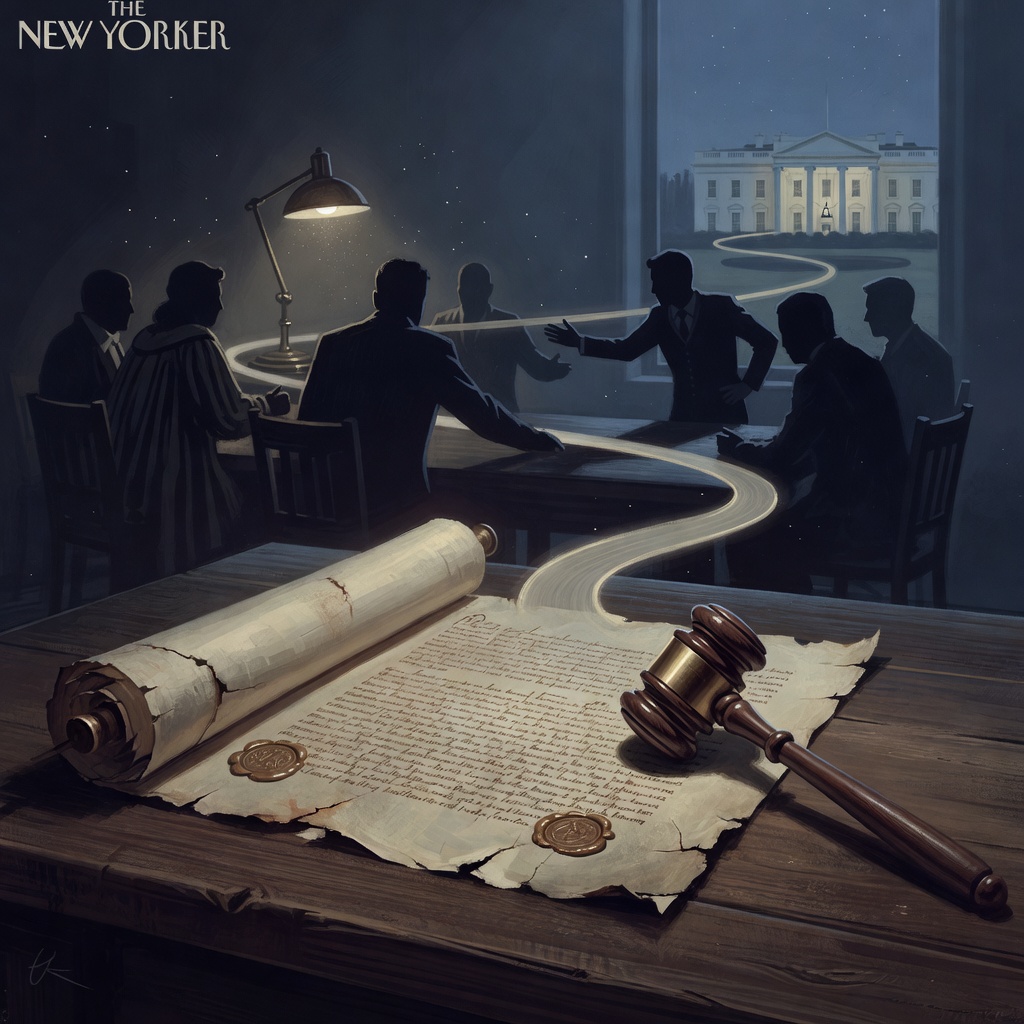 The White House tied Magna Carta's 811-year legacy to current debates over democratic norms and rule of law
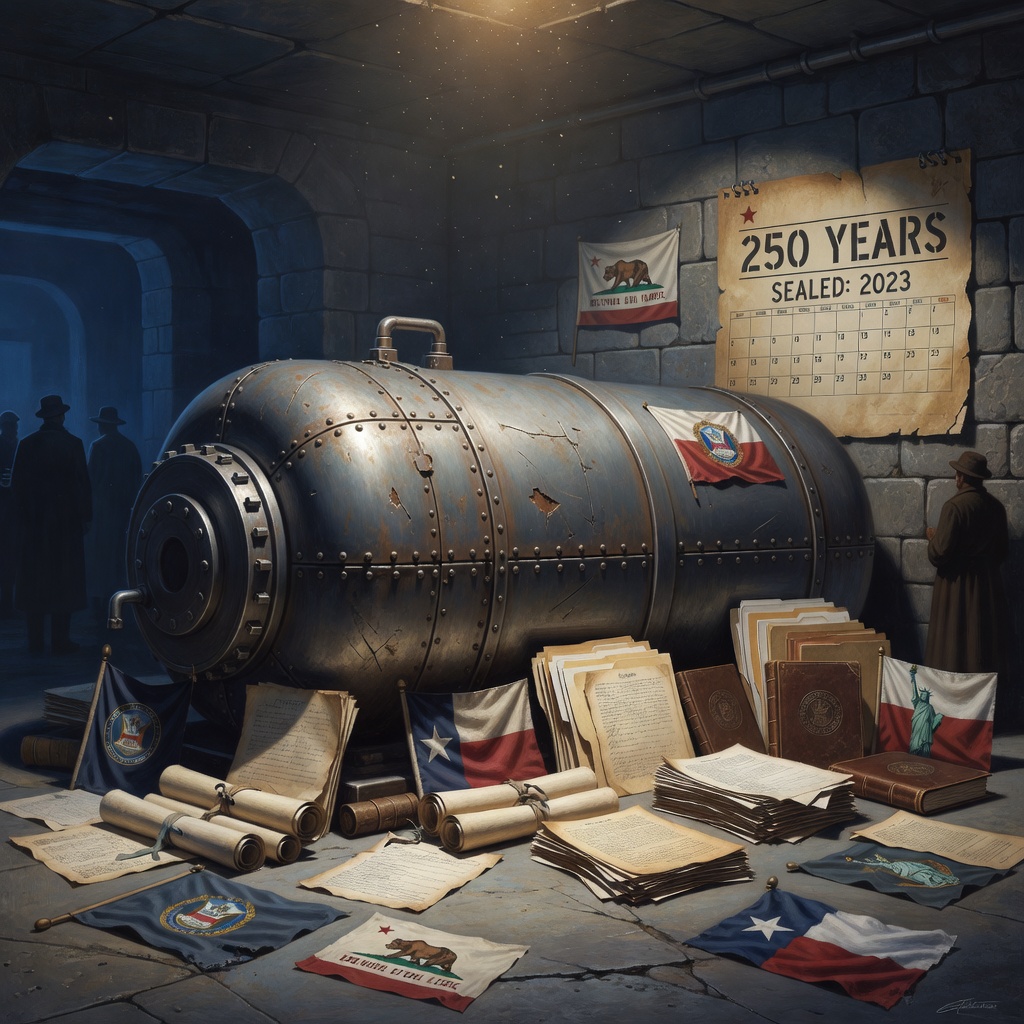 A 900-pound time capsule filled with state contributions just sealed—won't open for 250 years