Eleanor Crane: Hey — did you see this Reuters thing drop this morning?
Ben Okonkwo: The poll? Yeah, I've been staring at it.
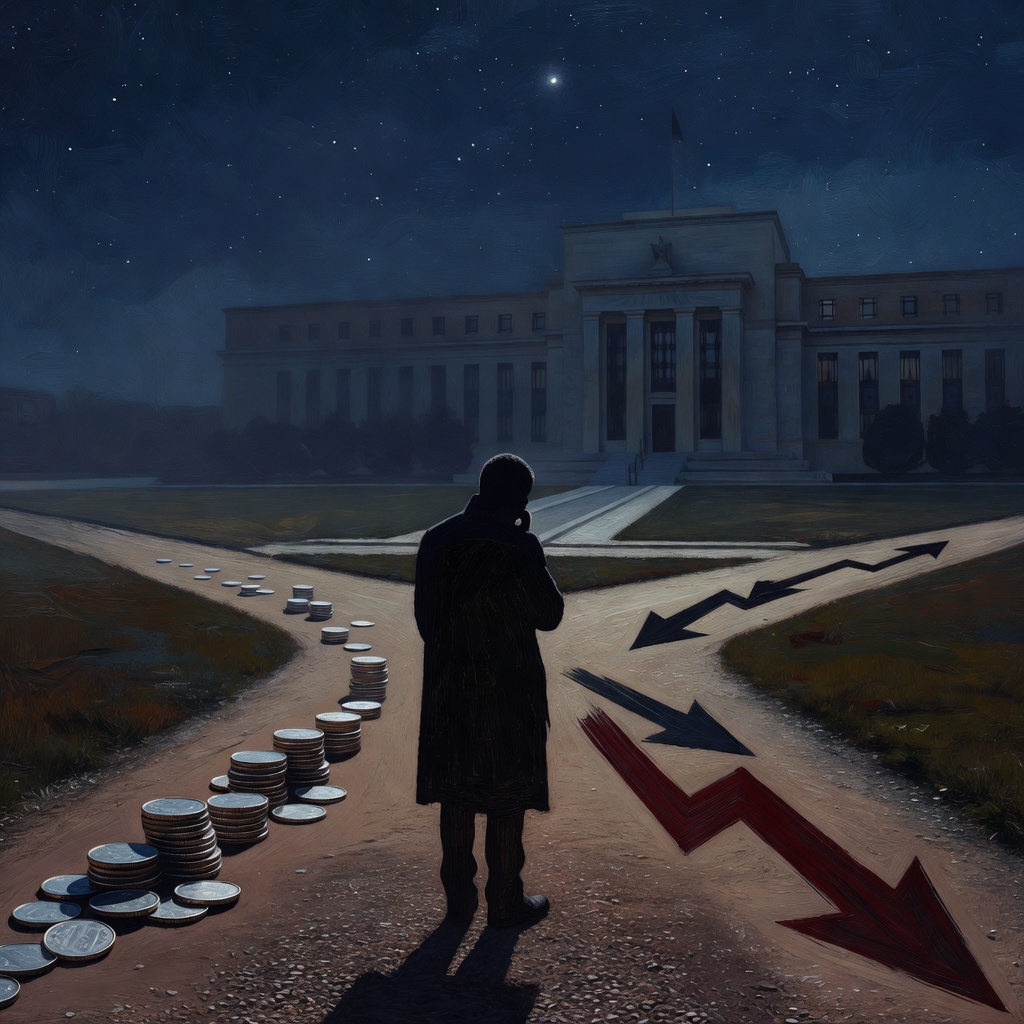
Eleanor Crane: Seventy-eight of a hundred and two economists. June twenty-third through the twenty-fifth. All saying the Federal Reserve holds at three-fifty to three-seventy-five through the end of 2026. And then you've got financial markets pricing in — not one — two rate hikes before year-end. One side is spectacularly wrong. And I think it's the markets.
Ben Okonkwo: Okay, strong opening. Walk me through it.
Eleanor Crane: Think about it like a landlord. Your landlord jacks up your rent because a pipe burst — emergency, costs money, makes sense. But once the pipe is fixed, they don't raise it again. The spike was the event. Not the new normal. The U.S.-Israeli war on Iran started February twenty-eighth, oil prices spiked, inflation hit four-point-one percent — highest in three years, double the Fed's target. But oil is already back near pre-war levels. The pipe got fixed. And the Reuters economists, basically all of them, are reading it exactly that way.
Ben Okonkwo: Hm. The transitory argument, essentially.
Ben Okonkwo: Right, transitory — but I want to actually walk through what that word has been covering for four months, because it's doing a lot of work. March poll, all 96 economists: hold at the March eighteenth meeting, first cut still penciled in for June. Then April, fifty-six of a hundred and three say hold through end of September — pushed the cut back six months. May, eighty-three of a hundred and one, hold through Q3. Now June, seventy-eight of a hundred and two say hold through all of 2026. Each time the timeline slips, the label stays the same. 'Transitory.' But the goalposts just... moved.
Eleanor Crane: Three revisions in four months.
Ben Okonkwo: And here's what bothers me — actually, it's less that they revised and more *when*. Each revision happened before conditions meaningfully changed. The PCE projections are still, what, three-point-seven in Q2, three-point-four in Q3, three-point-two in Q4. That's the math they're trusting. But inflation is currently above four percent and the model keeps saying 'wait, it'll fix itself.'
Eleanor Crane: And at what point does 'wait, it'll fix itself' stop being a forecast and start being a posture?
Ben Okonkwo: That's — yeah, exactly the question. I mean, I'm not saying the PCE path is wrong. Maybe it does glide down that way. But the nonfarm payrolls number from March — an unexpected drop of ninety-two thousand — that should have complicated the picture, and instead the consensus just... held firm.
Eleanor Crane: So the label is load-bearing, and nobody's stress-testing the beam.
Ben Okonkwo: But okay — I want to give you something, because I think you're actually right about the markets overcounting. Kashkari is one vote. One. Minneapolis Fed president, projecting one hike in 2026, citing doubts about the Iran peace deal and the AI investment buildup. That's real, that's his signal. But the FOMC as an institution — economists in the Reuters poll describe it as likely to 'act as a brake' on any abrupt regime change under Warsh. The committee structurally resists sharp pivots.
Eleanor Crane: So the market is pricing Kashkari like he's the Fed.
Ben Okonkwo: Essentially, yeah. And then Vanguard's Josh Hirt comes out and says holding is — I'm quoting — 'the most appropriate stance.' That's not a hedge. That's a direct endorsement of the consensus.
Eleanor Crane: And Warsh himself — I mean, his press conference surprised people. He stressed returning to the two percent target, which sounds hawkish. But Trump has eased off him completely, even with inflation above four percent. Which is... strange. Trump shredded Jerome Powell for not cutting. Warsh gets silence. What's driving that?
Ben Okonkwo: Conviction or positioning — right, that's the open question.
Eleanor Crane: Think about a mortgage broker sitting at her desk this Tuesday morning. She's pulled the Reuters poll — seventy-eight economists, hold through 2026. She's also got the futures strip showing two hikes. Her clients want to know whether to lock in now. Those two instruments are pointing in opposite directions and she has to pick one methodology to trust by end of day.
Ben Okonkwo: And oil already retreated to near pre-war levels — that weakens the case for hikes materially. So, partial win. The FOMC brake is real. Kashkari's loud, but he's one voice.
Eleanor Crane: And that's my problem, actually — not with the forecast, but with what happens to the forecast if it's wrong. If inflation glides down exactly as the PCE path suggests, Kevin Warsh gets credit, the Reuters poll gets framed as the moment the consensus held its nerve. But if inflation sits above three-point-five through Q4 2026, the same seventy-eight economists who got more confident as inflation rose will have to explain that. And I suspect the explanation will be — well, it's better than feared. Which is... I mean, is that a forecast anymore?
Ben Okonkwo: Right. That's the unfalsifiability trap. 'Better than feared' isn't a vindication — it's a goalpost that moves to wherever the ball lands.
Ben Okonkwo: The real tell is whether anyone even remembers to check. Indradip Ghosh's June twenty-sixth story — that poll — either gets cited as the moment the consensus read it correctly, or it quietly becomes the high-water mark of anchoring bias dressed as expertise. And my guess is nobody formally decides which. The narrative just... adjusts. That's when a forecast stops being falsifiable and starts being a story someone is telling about themselves.