Topic · 60 episodes
Finance
Finance in mid-2026 is defined by one overriding tension: a newly hawkish Federal Reserve under Chair Kevin Warsh colliding with borrowers who are already absorbing the consequences. Warsh's first FOMC meeting on June 17, 2026 eliminated forward guidance, revealed a 9-of-18 dot-plot split favoring rate hikes, and pushed the PCE inflation forecast to 3.6%. HELOC rates at 7.47% and 30-year mortgages at 6.47% are repricing in real time — and leverage math means the margin for error is shrinking fast.
Frequently asked
What did Kevin Warsh signal at his first Fed meeting?
At his first FOMC meeting on June 17, 2026, Kevin Warsh held rates at 3.50–3.75% but refused to submit a dot-plot projection — a move no modern Fed chair has made. Nine of eighteen members penciled in a 2026 rate hike, and Warsh cut the policy statement from 341 words to 132, eliminating all forward guidance.
Why are HELOC rates rising if the Fed hasn't raised rates?
Average HELOC rates hit 7.47% in mid-June 2026 — the fifth consecutive weekly increase — even though the Fed held rates steady at four straight meetings. Lenders are pre-pricing an expected Fed hike, meaning variable-rate home equity borrowers are absorbing a move that no FOMC member has yet voted for.
How does leverage amplify losses in financial markets?
At 30-to-1 leverage, a 3% asset decline wipes out all equity. The math that makes borrowed money a clean return amplifier also strips away decision-making control once a position falls below a broker's maintenance threshold, turning a symmetric formula into a one-sided structural trap with no room to wait out a downturn.
Will lower mortgage rates after the Iran deal last?
The average 30-year U.S. mortgage rate fell to 6.47% on June 19, 2026 after an Iran deal framework reopened the Strait of Hormuz and cut energy risk priced into Treasury yields. But with CPI at 4.2% and Fed Chair Kevin Warsh signaling possible hikes, the relief may be fragile.
What happened to Fed rate-cut expectations in 2026?
The June 17, 2026 dot plot shifted sharply hawkish: the median year-end rate forecast jumped from 3.4% to 3.8% and nine of eighteen FOMC members projected at least one 2026 hike. The 2-year Treasury yield surged 16 basis points on the day, and the Fed's 2026 PCE inflation forecast rose 0.9 points to 3.6%.
Episodes
 Why bid-ask spreads, order flow, and market makers determine who profitsBid-ask spreads correlate with per-trade volatility at an R² exceeding 0.9 across electronic markets — meaning the spread is less a fee than a real-time measure of information asymmetry. Market makers widen or withdraw quotes when adverse selection risk peaks, as happened during GameStop's January 2021 spike, exposing liquidity as a permission, not a guarantee.
 Bond vigilantes are doing the Fed's job for it—and pushing yields to 19-year highs in the processThe U.S. 30-year Treasury yield hit 5.27% on August 1, 2026 — the highest since June 2007 — without the Fed raising rates. Bond vigilantes, uncoordinated institutional sellers pricing in 3.3% core PCE and Iran-war risk, effectively tightened financial conditions the Fed refused to, costing a Denver homeowner roughly $800 more per month.
 US mortgage rates just hit their highest level in a year as Treasury yields soar—here's what borrowers face nowThe 30-year fixed U.S. mortgage rate hit 6.66%—a one-year high and the fourth consecutive weekly increase, per Freddie Mac—even though the Fed held its benchmark rate at 3.50–3.75%. The driver is the 10-year Treasury, not the Fed funds rate, leaving first-time buyers fully exposed while locked-in sellers stay put.
 The Fed's new chair is refusing to telegraph his thinking—and markets are punishing him for itFed Chair Kevin Warsh held rates at 3.5–3.75% on July 29, 2026, but refused to offer forward guidance or a dot-plot entry — and 30-year Treasury yields spiked to 5.22%, the highest since 2007. Markets priced the silence as doubt, not discipline, transferring policy optionality to the bond market.
 New Fed Chair Warsh held rates steady with no cut signal—markets immediately bet he's lost control of inflationOn July 29, 2026, Fed Chair Kevin Warsh held rates at 3.50–3.75% with no guidance on future moves. The 30-year Treasury yield hit 5.27%—its highest since June 2007—on a day when inflation data came in cool, signaling bond markets have lost confidence in Warsh's direction.
 When to pay taxes now vs later — the structural choice with no universal answerChoosing between a Traditional and Roth retirement account is not an investment decision — it is a bet on your future tax bracket. U.S. marginal rates have ranged from under 10% to 94% since 1913. Splitting contributions across both account types preserves flexibility without requiring a 30-year income or policy forecast.
 Why passive indexing beats active managers — the fee mechanism that compoundsActive equity funds average 1.3% annually in fees versus 0.1–0.2% for index funds — a gap that compounds silently on a growing balance, erasing roughly $180,000 from a modest portfolio over decades. John Bogle proved this arithmetic in 1975, and Morningstar data through December 2023 confirms it holds, decade after decade.
 Why borrowed money magnifies returns and crashes alike — the mechanism of contagionSubprime mortgage losses in 2008 totaled under $500 billion, yet global household wealth destruction reached $16 trillion — a roughly 32-fold gap explained by leverage mechanics. Borrowed money amplifies gains and losses identically; when collateral values fall, forced selling drives prices lower, triggering the next margin call in a self-feeding liquidity spiral.
 Kevin Warsh's testimony on rate outlook offers 'heat but not a lot of new light'—here's what traders heardFed Chair Kevin Warsh's July 14–15, 2026 congressional testimony offered hawkish rhetoric — 'no tolerance for persistently elevated inflation' — but zero rate guidance, while inflation sits at 3.5%, 75 basis points above target. With a 50-50 split on the 19-member FOMC, traders built an AI dubbed WarshGPT just to decode the silence.
 June housing starts hit 1.43M—yet high mortgage rates and inflation are keeping buyers awayJune 2026 housing starts hit 1.43 million annualized units — a 19% jump — but the gain was entirely driven by a 76.2% surge in multifamily construction. Single-family starts fell for a third straight month, now 3.2% below last year, while a 30-year mortgage rate of 6.55% requires a $109,152 qualifying income to buy a median-priced home.
 Why banks lending deposits out means money supply expands beyond cash reservesThe U.S. Federal Reserve set the reserve requirement ratio to zero percent in March 2020, exposing the money multiplier model as a pedagogical artifact rather than an operational constraint. Banks are now governed by Basel III capital and liquidity ratios instead — but the underlying maturity mismatch that enabled Silicon Valley Bank's $42 billion single-day collapse in 2023 remains structurally intact.
 Inflation data and JPMorgan earnings this week could reshape Fed rate expectationsOn July 14, 2026, the June CPI print drops at 8:30 a.m. ET and new Fed Chair Kevin Warsh testifies before the House Financial Services Committee ninety minutes later — while JPMorgan, Goldman Sachs, and three other major banks report Q2 earnings the same morning, creating a rare, simultaneous stress test for Fed policy.
 Mortgage rates surge on inflation fears—June home sales just dropped 2.4%U.S. existing home sales fell 2.4% in June 2026 to a seasonally adjusted annual rate of 3.73 million, even as home prices hit an all-time record high. Mortgage rates reached 6.49–6.55%, driven by U.S.–Iran tensions spiking the 10-year Treasury yield to 4.57%—not Federal Reserve policy.
 Fed Governor Waller just rejected Trump's push for lower rates—here's the splitFed Governor Christopher Waller publicly rejected Trump's demand for rate cuts in July 2026, as the FOMC held its benchmark rate at 3.5–3.75% for the fourth consecutive meeting. Headline PCE inflation rose from 2.5% to 4.1% in one year, driven partly by Trump's own tariffs, leaving Waller unable to cut without worsening the inflation his president created.
 Why banks can lend out more than they hold — and why it's stable until it isn'tFractional reserve banking lets commercial banks lend out most of what depositors hold, creating new money at the moment of lending — not recycling existing savings. The U.S. Federal Reserve dropped the reserve requirement to zero percent in March 2020, and the system held. What keeps it stable is not a rule or a ratio — it is collective belief.
 Why borrowed capital magnifies returns symmetrically — the math of financial leverageAt 20x financial leverage, a 5% asset gain produces a 100% return on equity — and a 5% loss wipes equity to zero. The leveraged return formula r_e = L × (r_a − r) + r is mathematically symmetric, but equity's hard floor at zero means real-world consequences are not.
 30-year mortgage rates hit 6.49% as US-Iran truce unravels, pushing borrowing costs higherThe 30-year fixed mortgage rate rose to 6.49% for the week ending July 9, 2026, driven by the collapse of the US-Iran ceasefire on July 8th. Maritime intelligence firm Kpler recorded only 41 daily ship transits through the Strait of Hormuz — down from a normal 120–130 — spiking Brent crude to $79.26 and rattling Treasury yields.
 Fed minutes reveal hawkish officials pushing for hikes if inflation stays elevatedThe June 2026 FOMC minutes revealed a perfect 9-9 split among Federal Reserve officials on whether to hike rates, even as all 18 voted unanimously to hold. Inflation pressures from tariffs, a Strait of Hormuz supply shock, and AI infrastructure spending pulled in different directions — while June payrolls came in at just 57,000.
 Why banks don't lend out deposits — they create new money when they lendWhen a commercial bank approves a loan, it creates a new deposit by typing a number into a ledger — no existing savings are moved. The Bank of England's 2014 Quarterly Bulletin states this explicitly: banks are not intermediaries recycling deposits. Broad money is created by lending itself, constrained by capital requirements and borrower demand, not reserve ratios.
 Two inflation reports on July 14-15 will determine whether Fed cuts or holds rates steadyJune CPI drops July 14 at 8:30 a.m. Eastern and June PPI follows July 15 — the two prints that determine whether Fed Chair Kevin Warsh hikes or holds at the July 28–29 FOMC meeting. May CPI hit 4.2% year-over-year, but core CPI was only 2.9%, and Kalshi gives a July hike just 10% odds versus CME FedWatch's 18.8%.
 Bond markets signal Fed will stay tight longer—mortgage rates refusing to drop despite cooling inflationThe 30-year fixed mortgage rate sat at 6.655% on July 8, 2026, even after U.S. inflation cooled and oil dropped from $111 to $73 a barrel. Real Treasury yields of 1.9–2.2% — driven by federal debt load and a hawkish Fed dot plot — are keeping mortgage rates anchored near 6.6%, not inflation.
 Warsh abandons 14-year tradition of publishing rate projections amid Fed infightingAt the June 2026 FOMC meeting, Fed Chair Kevin Warsh broke a 14-year tradition by refusing to submit a rate projection to the dot plot — revealing an exact 9-9 split among the 18 officials who did participate, leaving markets with no unified Fed guidance and no announced replacement tool.
 Fed minutes reveal deep disagreement—some see rate hikes needed, others see cooling inflationAt the June 2026 FOMC meeting, the dot plot split exactly 9-9 on whether to hike rates, and new Fed Chair Kevin Warsh submitted no projection — the first time a sitting chair has withheld a dot since the plot launched in 2012. The July 8 minutes are now the most detailed public record of what that silence means.
 Why borrowed money in finance creates both wealth and contagionLong-Term Capital Management ran a 940:1 leverage ratio — $5 billion in capital beneath $4.7 trillion in notional derivatives exposure — and one margin call it couldn't meet required a Fed-coordinated $3.6 billion rescue. The same forced-liquidation mechanism that crashed markets in 1929 reappeared in 1998, 2008, and Archegos in 2021.
 Stop waiting for the perfect mortgage rate — financial experts say it doesn't existMortgage rates have stayed above 6% since September 2022, with Freddie Mac's 30-year fixed at 6.43% as of July 2nd. Financial experts say timing the market is as futile as timing flight prices — but the real hidden risk is that roughly 1 in 5 Americans don't know their credit score shapes their personal rate more than market shifts do.
 Samsung results triggered a chip rout that pulled down Nasdaq and S&P 500 despite Dow strengthSamsung Electronics reported Q2 operating profit of 89.4 trillion won — a 19-fold jump that beat analyst consensus of 87.3 trillion won — yet its stock fell 10%, triggering a global chip rout. Intel dropped 9.7%, AMD fell 8%, and the SOXX ETF lost 5% in a single session, while the Dow set a record at 52,900.
 Fed Chair Kevin Warsh's first FOMC minutes just warned inflation is running hot — what happens nextFed Chair Kevin Warsh's first FOMC minutes held rates at 3.50–3.75% with a ~130-word statement — roughly half the length of any Powell equivalent — saying only that inflation is running hot and the Fed will deliver price stability. Markets priced an 80% chance of a year-end hike from that silence alone.
 New Fed Chair Warsh signals rate hikes as inflation hits three-year highs — markets tornFed Chair Kevin Warsh signaled rate hikes at the ECB's Sintra Forum on June 30, 2026, despite May PCE hitting a three-year high of 4.1% and private payrolls missing badly at 49,000 versus a 107,000 consensus. Nine of nineteen FOMC members have penciled in at least one hike for 2026.
 Why borrowing to invest multiplies both gains and drawdowns symmetricallyWith 2:1 leverage, a 10% asset loss wipes out 20% of your equity — and recovering that 20% equity loss requires a 100% asset gain, not 20%. The math is symmetric on the way down but asymmetric in recovery. Research on manufacturing firms finds 20–40% debt-to-equity ratios genuinely maximize returns, but the optimal threshold shifts invisibly with market conditions.
 Fed signals rate pause as inflation swaps plunge, but mortgage rates still stuck at 6.36%Despite oil under $69 a barrel and one-year inflation swaps falling from 3.6% to 2.2%, the 30-year fixed mortgage rate sits at 6.36%—rising two weeks running. Mortgage rates track the 10-year Treasury yield, not the Fed funds rate, and sticky services inflation is keeping that yield elevated.
 The mechanics of leverage — why borrowed money magnifies volatility in both directionsAt 30-to-one leverage, a 3.3% asset decline wipes out equity entirely — the threshold pre-2008 investment banks actually crossed. The math is symmetric, but losses carry a deadline: margin calls force liquidation into falling markets, creating a pro-cyclical cascade. The mechanism is structural, not incidental.
 June jobs report came in at just +57K, well below forecast — yields fell and the curve steepenedThe June 2026 jobs report showed only 57,000 payrolls added — roughly half the 115,000 forecast — while a separate BLS household survey showed employment fell by 507,000. Treasury yields dropped and the yield curve steepened, but the 564,000-gap between two official measurements left the Fed with no clean read on the labor market.
 Trump and Fed Chair Kevin Warsh are headed for a public clash on interest rates — Wall Street braces for impactFederal Reserve Chair Kevin Warsh held the federal funds rate steady at 3.5–3.75% at his first FOMC meeting in June 2026, defying Trump's demand for cuts to 1% or lower — with inflation running at 4.2%, more than double the Fed's 2% target. Warsh was confirmed by the narrowest margin in Fed history: 54 votes.
 The mechanism: why longer bonds yielding less than short-term debt signals economic contractionAn inverted yield curve — where short-term U.S. Treasury yields exceed long-term ones — has preceded every U.S. recession since 1960, but the 2022–2024 inversion lasted over two years while GDP grew 2.9% in 2023 and over 3% in 2024 with no NBER-declared recession, raising serious questions about the signal's reliability post-QE.
 State Street's baseline sees gold hitting $5,500/oz by Q1 2027 — here's the Fed math behind itState Street Global Advisors forecasts gold returning to $5,500/oz by Q1 2027 — not a new high, but a revisit of the January 2026 record. The call is less a price target than a bet on Federal Reserve policy paralysis persisting: 4.27% CPI, a 57,000-job miss in June, and 41 tons of monthly central bank buying underpin the thesis.
 Consumer spending just surged to a three-year high despite 4.1% headline inflation — what's fueling the paradoxU.S. consumer spending rose 0.7% in May 2026 while PCE inflation hit 4.1% — more than double the Fed's target — but real spending adjusted for inflation gained only 0.3%. The surge reflects income keeping pace with prices, not genuine confidence, as the personal savings rate falls to its lowest since 2022.
 57,000 June payrolls missed consensus by half — September hike bets just collapsedJune 2026 nonfarm payrolls came in at 57,000 — roughly half the Dow Jones consensus of 113,000–115,000. The unemployment rate fell to 4.2% only because labor force participation dropped to 61.5%, a five-year low, as roughly 507,000 people left the employment count. September Fed rate-hike bets collapsed the same afternoon.
 Why rate hikes hit different borrowers and savers at different speedsWhen central banks raise rates, variable-rate borrowers — credit cards, HELOCs — feel the increase within weeks, while 30-year fixed-rate mortgage holders may feel nothing for years. The full inflation response takes up to 29 months to arrive. That gap is not a flaw; it is built into the contract structures and legal architecture underneath monetary policy.
 Markets slashed July Fed rate-hike odds to under 20% as traders rapidly repriced futures on weak payrollsAfter the June 2026 BLS report showed only 57,000 nonfarm payrolls — half the 115,000 Dow Jones forecast — CME FedWatch July rate-hike odds collapsed from roughly 31% to 18.8% the same day. But unemployment fell to 4.2% only because 507,000 workers left the labor force, shrinking the denominator, not because hiring improved.
 The 57K jobs miss sent mortgage rates falling to 6.43% — the lowest in seven weeksThe 30-year fixed mortgage rate fell to 6.43% — a seven-week low — after the June 2026 jobs report showed only 57,000 jobs added against a forecast of 115,000. That soft data reduces pressure on the Fed to hike, but the same weak labor market that pushed rates down also makes a 30-year commitment riskier for buyers.
 The Fed's nightmare scenario is real — cooling labor markets collide with lingering price pressuresThe June 2026 U.S. jobs report showed only 57,000 nonfarm payrolls — less than half the 115,000 consensus — while 720,000 people exited the labor force, dropping unemployment to 4.2% for the wrong reasons. With inflation at 4.2% and the Fed holding at 3.50–3.75%, cutting and holding rates both hurt workers.
 US added just 57K jobs in June — half what markets expected, shifting Fed policy betsThe U.S. economy added just 57,000 jobs in June — roughly half the Bloomberg consensus of 113,000 — while 720,000 people left the labor force entirely, pushing the participation rate to 61.5%, its lowest since March 2021. The falling unemployment rate masks a shrinking workforce, leaving the Fed with no clean policy move in either direction.
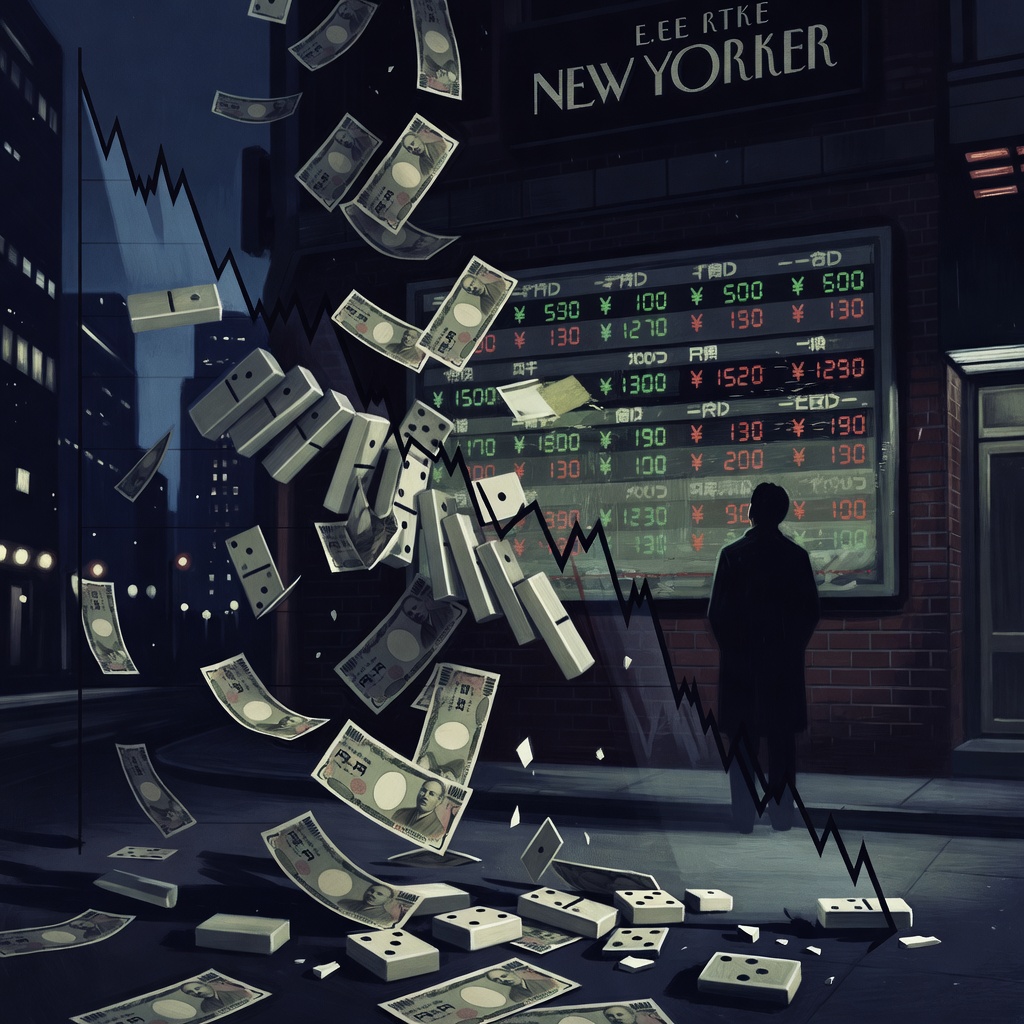 The yen just hit a 40-year weakness record — and it's rattling markets globally through carry tradesThe Japanese yen hit 162.83 per dollar in late June 2026 — a 40-year low not seen since December 1986 — and Japan's record $74 billion intervention failed to hold the line. A 300-basis-point gap between the Fed's 3.5–3.75% rate and the Bank of Japan's 1% fuels carry trades that keep pressure on the yen.
 Stocks hit records while traders price in October rate hike odds amid 4.2% May inflationU.S. stocks are at all-time highs — Dow above 53,000, S&P 500 above 7,580, Nasdaq up roughly 27% since June 2025 — while May CPI sits at 4.2% and CME FedWatch prices in a possible Fed rate hike as early as October 2026. Two markets are pricing in incompatible futures.
 Why borrowed money magnifies returns — and why that's dangerousFinancial leverage amplifies returns by letting investors earn a spread on borrowed capital — a 100-dollar position with borrowed funds can turn a 10% asset return into 15% on equity. But the mechanism is perfectly symmetrical: two-times leverage means two-times the loss, and a margin call can force asset sales below fair value regardless of investor competence.
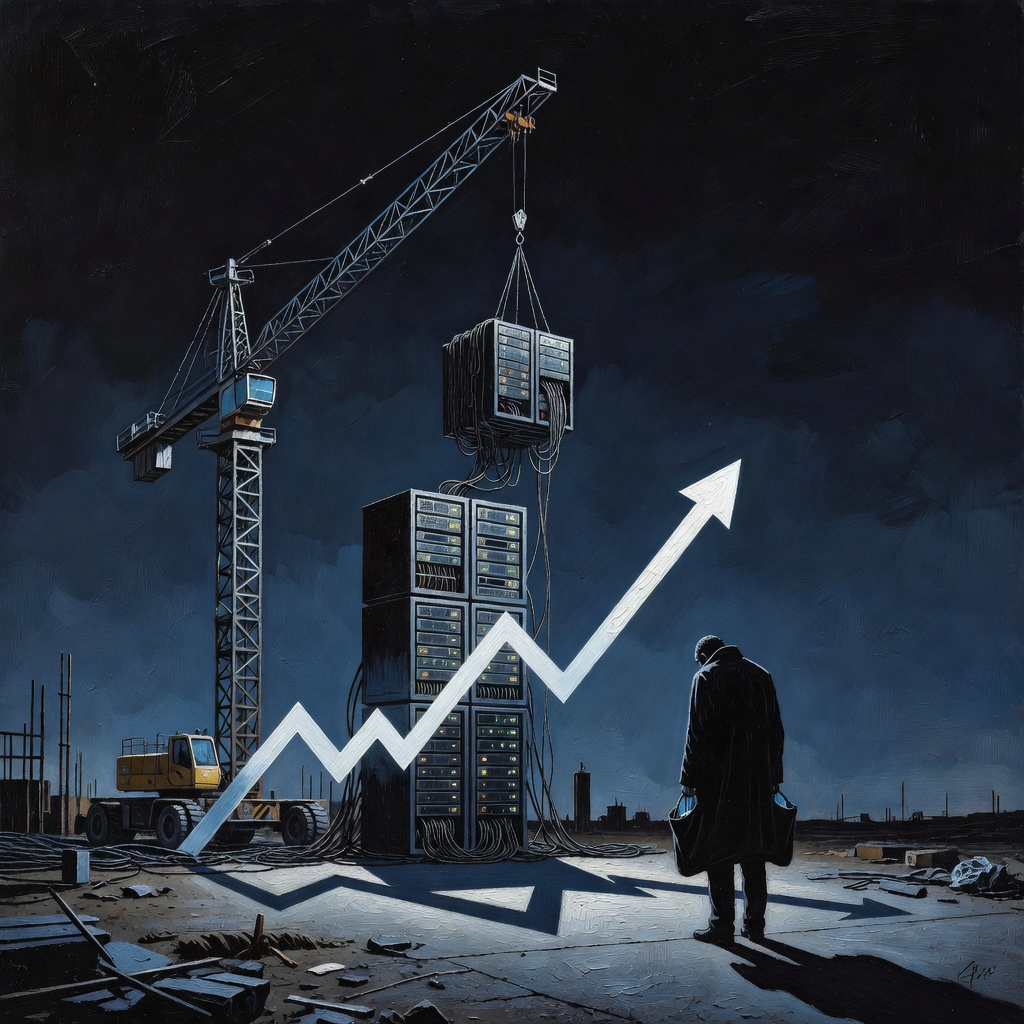 Higher real yields are making AI's trillion-dollar build-out way more expensive overnightReal yields above 2% and Kevin Warsh's hawkish Fed debut are repricing the entire AI infrastructure buildout. SpaceX's $25 billion bond drew $89 billion in demand but cracked in secondary trading — a warning sign for Samsung and SK Hynix as rising hurdle rates threaten trillion-dollar memory fab expansion plans.
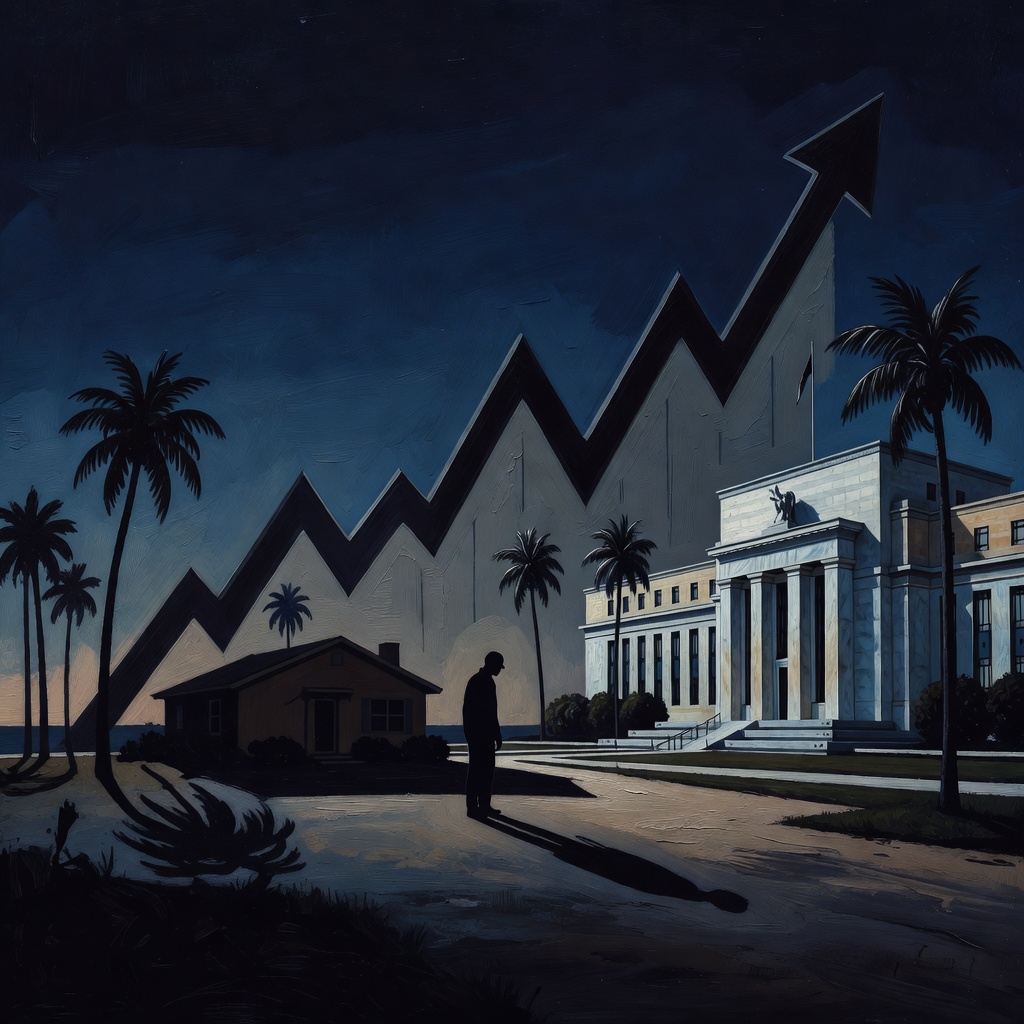 Warsh's reduced forward guidance is locking in painfully high mortgage rates for Florida homebuyersFed Chair Kevin Warsh held rates at 3.50–3.75% at his first FOMC meeting in June 2026, cut the post-meeting statement to 131 words from Powell's 341, and skipped submitting his own dot—unprecedented for a sitting chair. The resulting uncertainty is embedded in Freddie Mac's 6.49% 30-year mortgage rate as of June 29, 2026.
 Inflation hit a three-year high but consumers kept spending — the disconnect Wall Street fearsIn May 2026, the PCE inflation index hit 4.1% year-over-year — its highest since April 2023 — while consumer spending rose 0.7%. But real spending grew only 0.3% after inflation, the personal saving rate fell to 3%, and the income surge included a one-time federal disaster-relief boost to farm income.
 New Fed Chair Warsh just signaled higher-for-longer rates — markets are repricing everythingFed Chair Kevin Warsh held rates at 3.50–3.75% on June 17th and stripped the easing bias from the FOMC statement, triggering a broad market repricing. Barclays projected 10-year Treasury yields at 4.65% by mid-2027, with term premia at their highest since 2011 — all without Warsh hiking once.
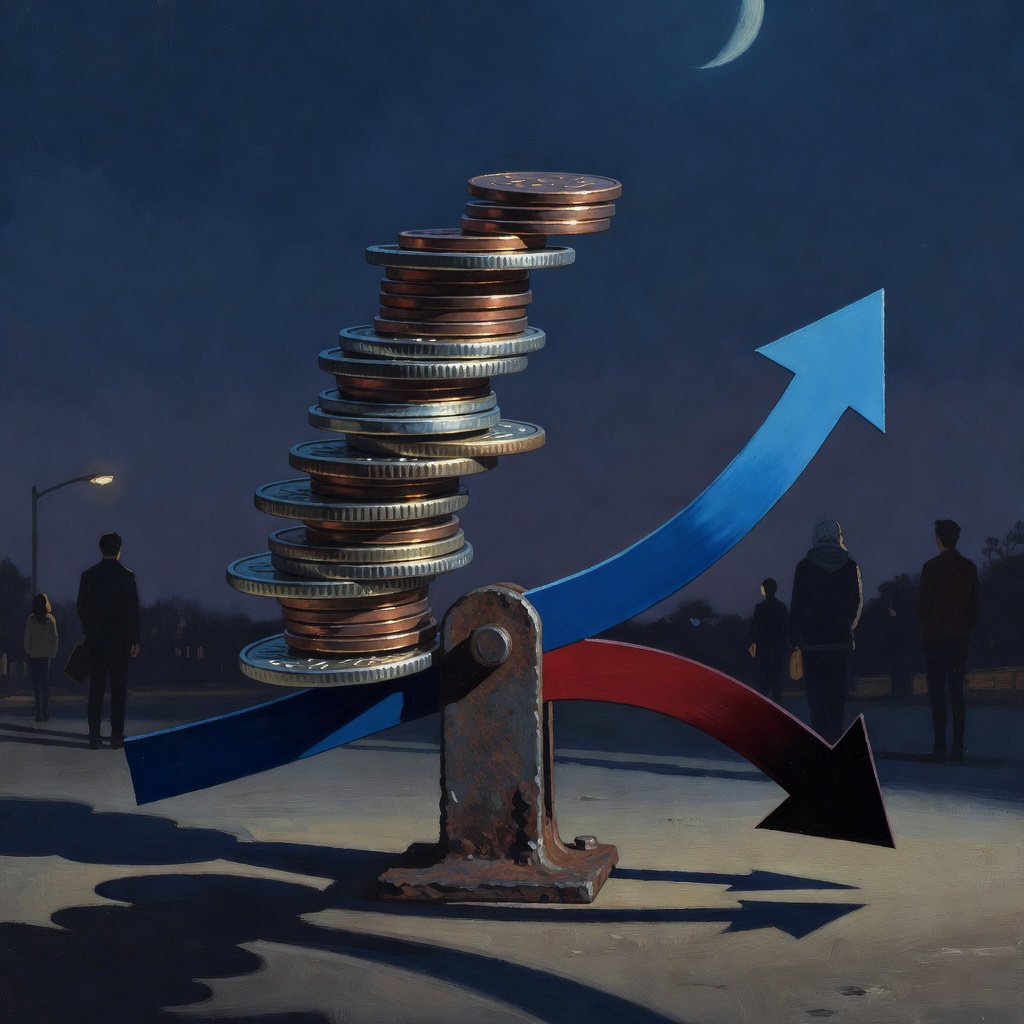 Why borrowed money magnifies returns and risks — the mechanics of leverageAt 60x leverage on BitMEX, 3.51% of long positions are forcibly liquidated every single day — not from market failure, but by design. Leverage amplifies both gains and losses at a fixed multiple of equity, but margin calls execute automatically before a trader can act, making the theoretical 100% loss floor functionally irrelevant.
 Mortgage lenders now using new credit models — here's who qualifies under the rulesAs of April 22, 2026, Fannie Mae, Freddie Mac, and FHA now accept mortgages scored using VantageScore 4.0 — the first alternative to Classic FICO approved for government-backed mortgage purchasing in decades. VantageScore 4.0 can include rent and utility payment history, potentially qualifying borrowers previously invisible to lenders.
 Core inflation just hit a 3-year peak — Iran energy shock and mortgage rates spikingU.S. PCE inflation hit 4.1% in May 2026 — the highest since April 2023 — while core PCE (excluding food and energy) reached 3.4%, its highest since October 2023. The Iran-driven oil shock that pushed Brent crude from $61 to $118 explains the headline, but the core reading shows inflation embedding into services and wages.
 New Fed Chair Kevin Warsh already shaking markets — his approach could be bad news for stocksKevin Warsh, sworn in as the 17th Fed Chair on May 22nd, triggered a 1.2% S&P drop at his first FOMC press conference — without changing a single policy. His stated goal of fixing asset overvaluation through balance sheet reduction and tighter conditions could reprice markets for years.
 Fed remains hawkish while markets price September rate cuts — conflicting signals shake investorsAt Kevin Warsh's first FOMC meeting, held less than four weeks after he took the chair on May 22, 2026, the committee voted 12-0 to hold rates — but markets repriced a 50.6% probability of a September hike within hours, driven by a 130-word policy statement that stripped all easing bias and forward guidance.
 Why borrowed money in finance magnifies outcomes — the math of leverageAt 100-to-1 leverage, a 1% price move erases your entire stake — but the real danger is the margin call that arrives before the loss completes, forcing liquidation at the worst price and cascading into correlated positions. LTCM and Archegos both proved that understanding the math isn't the same as acting on it.
 Trump just took a jab at his handpicked Fed Chair Kevin Warsh — over interest ratesFed Chair Kevin Warsh, appointed by Trump in 2026 with an implicit mandate to cut rates, faces PCE inflation at a three-year high and a Supreme Court case that could let Trump fire Fed governors — making his independence a personnel question, not just a policy one.
 Inflation hit a 3-year high in May — but markets bet the Fed won't hike despite oil-driven pressureMay 2026 PCE inflation hit 4.1%, a three-year high, driven largely by an oil shock after Iran closed the Strait of Hormuz — but Brent crude has since fallen 36% to $73.40. Core PCE still rose to 3.4%, 140 basis points above the Fed's 2% target, with semiconductors as a secondary driver markets are underpricing.
 Why borrowing to invest magnifies returns in both directions — the mechanismBorrowing to invest amplifies returns because ROE equals asset return plus the spread between asset return and debt cost, multiplied by the debt-to-equity ratio. When a $50K investment borrows another $50K at 2% cost and earns 10%, equity return jumps to 16%—but the same math runs in reverse when asset returns turn negative.
 Wall Street is split: some traders bet on hikes, others on easing as sticky inflation clouds the Fed's next moveCore PCE inflation hit 3.4% year-over-year — its highest since October 2023 — while U.S. Q1 GDP of 2.1% masked consumer spending growth of just 0.5%, its weakest in years. Wall Street has shifted from pricing cuts to pricing hikes, and new Fed Chair Kevin Warsh's silence on forward guidance is deepening market uncertainty.
 Economists say Fed holds steady this year — but Wall Street is betting on rate hikes insteadA June 2026 Reuters poll of 102 economists found 78 expect the Federal Reserve to hold rates at 3.50%–3.75% through year-end, even as financial markets price in two hikes. The divide turns on whether a tariff- and war-driven inflation spike above 4% is temporary or structural.