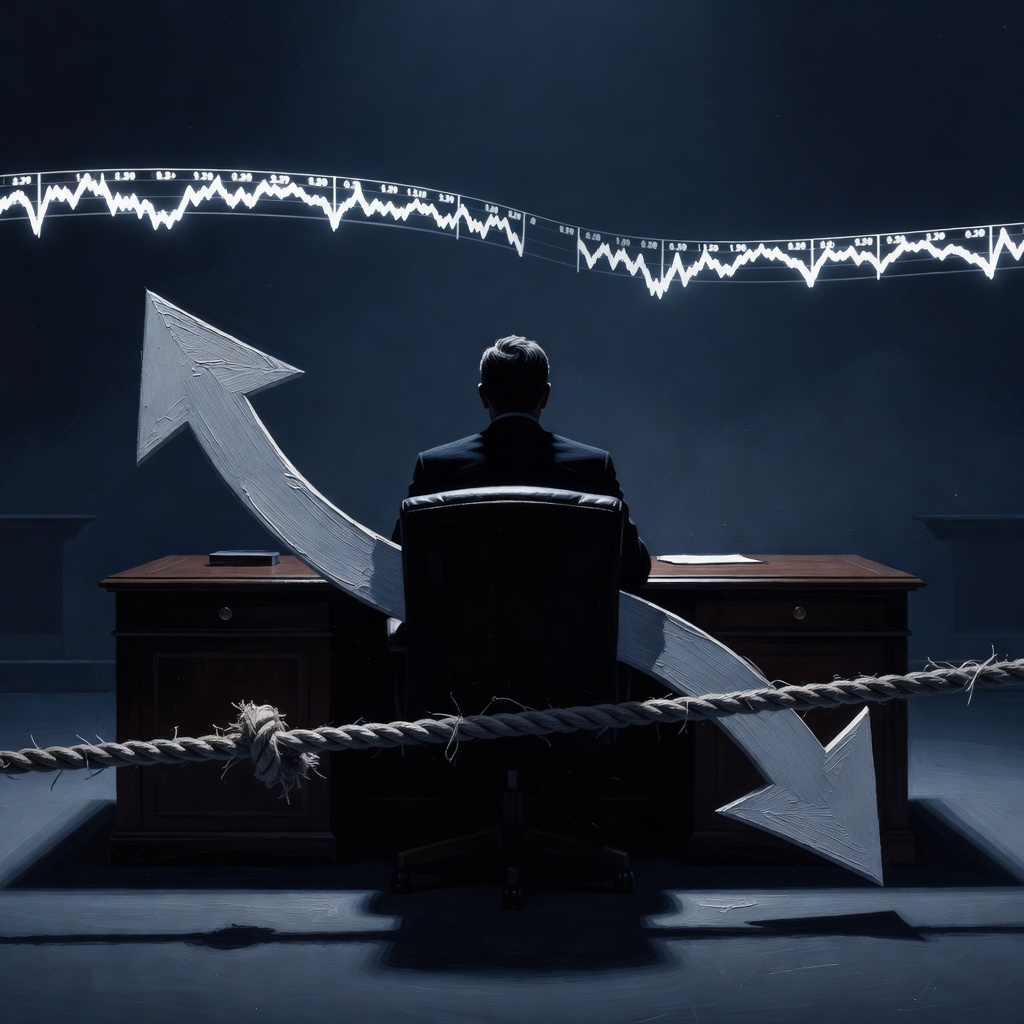
Sarah Lin: Okay — so I've been sitting with this image. Kevin Warsh, May 22nd, just sworn in as the 17th Fed Chair. Jerome Powell is gone. And Warsh has maybe three weeks before the data just... dismantles the thing he said to get the job.
Dr. Nathan Hayes: Hey — three weeks is generous, actually.
Dr. Nathan Hayes: May CPI lands at 4.2%, PPI at 6.5% — fastest inflation in three years. And the June 16th FOMC meeting, his debut, produces a dot plot that eliminates all 2026 rate cut expectations. Not reduces. Eliminates.
Sarah Lin: And consumer sentiment had already fallen to 49.8 — from 61.7 — before he even sat down in that meeting. So people were already feeling something shift. Um. Before the dot plot confirmed it.
Dr. Nathan Hayes: Now — what I want to name is that in confirmation hearings he wasn't just vaguely optimistic. He called the AI boom 'the most productivity-enhancing wave of our lifetimes' as a specific justification for lower borrowing costs. That's a falsifiable claim. And the inflation data is the test.
Sarah Lin: Mm. And the test came back fast.
Dr. Nathan Hayes: Right, but — here's what I want to separate out. The headlines are calling this a Warsh reversal. And I think that framing overstates his personal agency by a lot. The Fed held at 3.50 to 3.75 in March, held again in April. He didn't change anything. What moved was the dot plot's forward signal. And more importantly — the bond market.
Sarah Lin: The CME futures shift.
Dr. Nathan Hayes: Exactly — one month prior, CME FedWatch had 24% odds of a December 2026 hike. On the eve of his first meeting? 64%. That's not Warsh flipping. That's — wait, actually that's the inflation regime choosing hawkishness for him. The 10-year Treasury is sitting near its 94th historical percentile. The 30-year cleared a June 11th auction at 4.84%. Markets aren't waiting for his permission.
Sarah Lin: Okay but — if the signal flipped that hard, isn't that functionally a policy change? Even if the rate number didn't move?
Dr. Nathan Hayes: On transmission — yes. You're right. A mortgage is priced off that signal, not the fed funds rate itself. So the lived consequence is real. But UBS's Jonathan Pingle basically wrote that no one knows what Warsh's actual views are — called the press conference 'pivotal' in a way that read like an admission of uncertainty. ING doubted he'd vote for a cut at all despite Trump's pressure. The market moved on data, not on Warsh.
Sarah Lin: So the story isn't him reversing. It's... him arriving into a room where the walls had already moved.
Dr. Nathan Hayes: The bad take I keep seeing — and I want to name it directly — is that Warsh's AI-productivity thesis was a serious policy framework that just got unlucky with timing. No. It was structurally unfalsifiable from day one. You can't justify near-term rate cuts on productivity gains that haven't shown up in any inflation data yet. That's not a mechanism, that's — I mean, it's a promissory note. 'Trust me, disinflation is coming.' When?
Sarah Lin: But what if he genuinely believed it? Like — not cynical, just... wrong?
Dr. Nathan Hayes: That's the charitable read. And I'd hold it more seriously if Donald Trump hadn't nominated him partly as a vehicle for lower rates. That pressure exists. It's documented. So when Warsh calls AI 'the most productivity-enhancing wave of our lifetimes' in a confirmation hearing — you have to ask whether that's conviction or — wait, actually — whether the conclusion preceded the reasoning.
Sarah Lin: Mm. And then the Strait of Hormuz — Iran — that's not in his model at all.
Dr. Nathan Hayes: Right. The U.S.–Iran peace framework drops the Sunday before his June 17th meeting — which could theoretically reopen the strait, ease energy prices. But analysts are saying elevated energy markets through early 2027 at minimum. Steve Liesman put it plainly: the Fed has little power to bring rates down in the short term. And Warsh had already called the balance sheet 'bloated,' called monetary policy 'broken for quite a long time' — that's a structural hawk. The dovish confirmation rhetoric never fit the prior public record.
Sarah Lin: So the frame that it was bad timing — that's the part that doesn't survive.
Sarah Lin: And that's — yeah, that's the core of it. Because if the dot plot just wiped out every 2026 rate cut expectation, borrowers aren't recalibrating to later this year. They're looking at 2027 at the earliest. Which means — I mean, that's a mortgage decision. That's a small business not opening. And Warsh is sitting inside that, with Trump publicly demanding lower rates, and bond markets pricing in hikes. Those aren't just competing pressures. They're — they pull in opposite directions on the same body.
Dr. Nathan Hayes: The Federal Reserve independence question. Yeah. That's the actual test now.
Sarah Lin: And we still don't know — I mean, we genuinely don't know — whether the confirmation hearings were conviction or positioning. Whether he walked in believing the AI story, or whether he needed Trump's backing and said what the room required. That question isn't resolved. And maybe it won't be until we see what he actually does when the pressure from both sides is live at the same time.