Ben Okonkwo: The Bankrate survey dropped this week — average HELOC on a thirty-thousand-dollar line is sitting at 7.47%. Highest of the year. And the number that keeps stopping me is that this is the fifth consecutive weekly increase. During a Fed hold.
Eleanor Crane: During four straight meetings where the Federal Reserve didn't touch a thing.
Ben Okonkwo: Right. So — I mean, how does that work, mechanically? Shouldn't rates follow the Fed?
Eleanor Crane: Normally, yes. Your HELOC is tied to the prime rate, which lenders set roughly three points above whatever the Federal Reserve's rate is. Fed moves, your rate moves. But what we're seeing now — lenders are moving without waiting. They're betting the Fed will act, and they're passing that bet straight to borrowers.
Ben Okonkwo: So the homeowner in Ohio — she's not paying for policy. She's paying for a prediction.
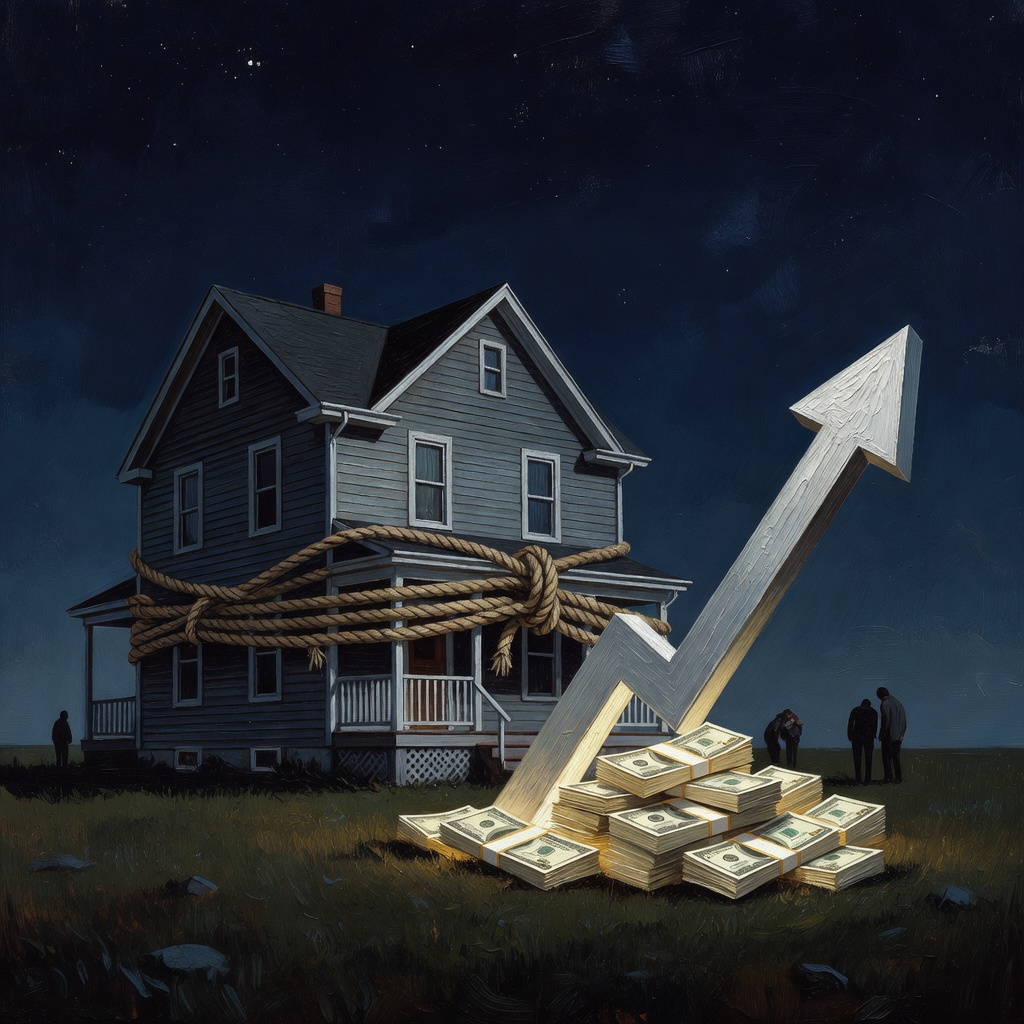
Eleanor Crane: That's exactly it. A credit card attached to her house — and someone else just raised the interest rate on it based on something that hasn't happened yet.
Ben Okonkwo: And then Intercontinental Exchange drops the Q1 numbers. $47 billion in home equity tapped. Highest first-quarter total since 2021. I mean — she's raising her rate on a prediction, and homeowners are... borrowing more anyway.
Eleanor Crane: Is that fear, or is that confidence?
Ben Okonkwo: That's — yeah, that's exactly the problem with the number. It doesn't tell you. What it does tell you: HELOCs and home equity loans accounted for 54% of that extraction. Cash-out refinancing made up the other 46. So people aren't refinancing their whole mortgage to get at the equity — they're opening lines. Variable lines. While rates are climbing.
Eleanor Crane: Which brings me back to the rate structure, because — wait, actually, tell me the fixed-rate number.
Ben Okonkwo: 8.13%. Five-year home equity loan, per Bankrate. Fixed. Which is higher than the variable HELOC at 7.47%. That's — the standard playbook in a rising-rate environment is lock in fixed. And right now locking in costs you more.
Eleanor Crane: That's backwards. And the Fed's own dot plot has nine policymakers projecting at least one increase this year — six projecting two. So the normal advice breaks down precisely when the rate risk is highest.
Eleanor Crane: And that's the thing I keep sitting with. The home equity cushion — the gap between what your house is worth and what you still owe — that's been functioning as America's informal safety net for decades. Not a government program. Not a bank product, really. A private cushion. And its cost is rising before the Federal Reserve has officially done anything.
Ben Okonkwo: Right, and the transmission mechanism is fast. One to two billing cycles after a Fed move — that's when HELOC borrowers feel it. But lenders are already there.
Eleanor Crane: So who is actually tapping that $47 billion? Because — and this is where I get stuck — Intercontinental Exchange doesn't tell us that. Is it the household that needs to cover a medical bill, or the one that sees low mortgage equity as an underdeployed asset?
Ben Okonkwo: That's — yeah, that ambiguity is doing a lot of work in the squeeze argument. Macro analysts are warning about a consumer squeeze, and the mechanism is coherent. But we don't have 2026 spending data showing households are actually cutting back. The worry is real; the confirmation isn't.
Eleanor Crane: I'd push back on that framing a little. Paying tomorrow's rates today — that's a stress even if no one's missed a payment yet.
Ben Okonkwo: Erik Schmitt at JPMorgan Chase is basically telling borrowers: compare the APR across every product — HELOC, home equity loan, personal loan, credit card — and just find the lowest all-in cost. Which is sound advice. It also tells you the situation is complicated enough that the answer isn't obvious anymore.
Ben Okonkwo: She closes the statement. Puts it face-down, maybe. And the number on it — 7.47% — that already has a Fed hike baked in. One that nine policymakers project but nobody's voted for yet. And if the Federal Reserve actually moves later in 2026, she absorbs it twice. Once from the lenders who already priced it in across five consecutive weeks. Once from the policy itself.
Eleanor Crane: And the dot plot isn't a promise. That's — I mean, those nine votes are projections, not commitments. She's paying for a rate path that the Federal Reserve's own committee hasn't agreed to.
Ben Okonkwo: Right. The number on her page is more certain than the policy it assumes.
Eleanor Crane: Yeah. That's what sticks with me.