David Sterling: Thirty-six percent. Five weeks. That's the only number that matters today.
Megan Skiendel: Brent crude.
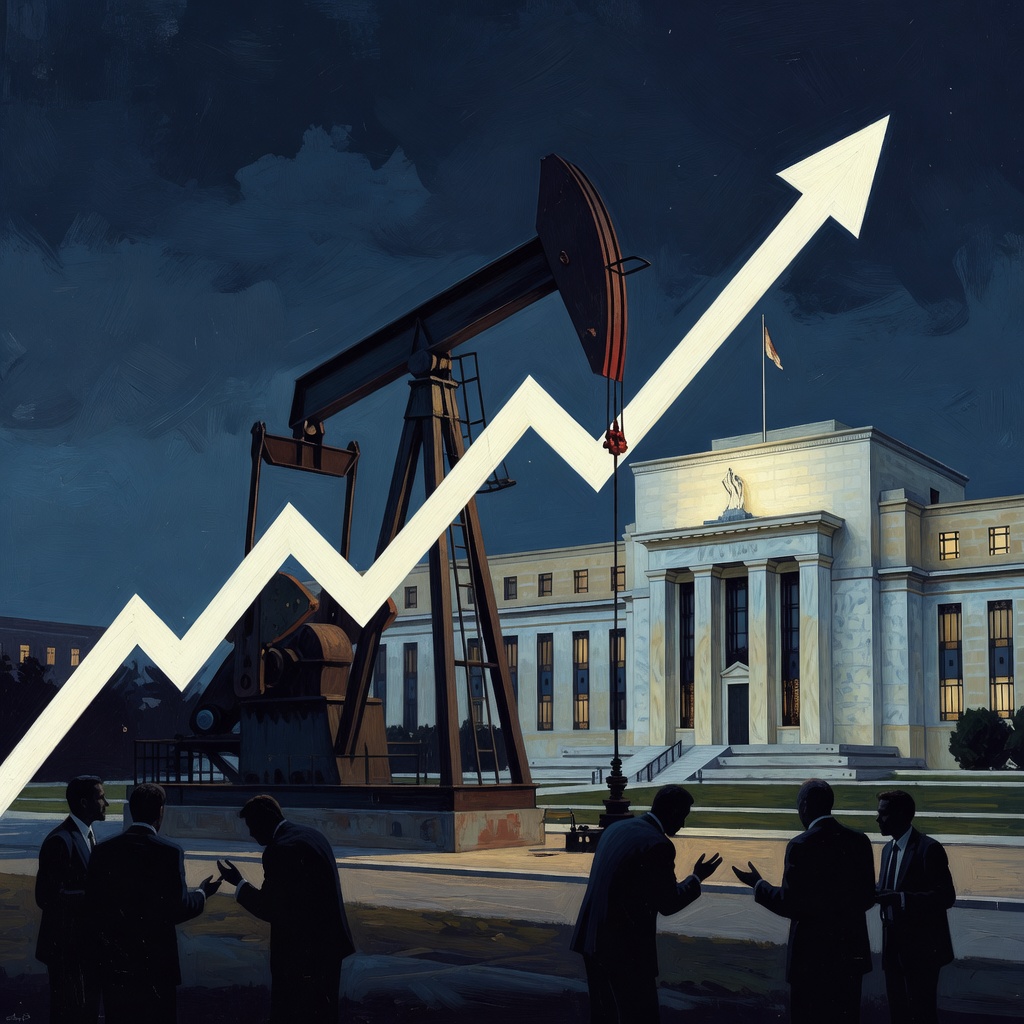
David Sterling: Brent crude. Peaked at a hundred and fourteen when Iran shut the Strait of Hormuz. Sitting at seventy-three forty now. And yet everyone is treating the May PCE print — four-point-one percent, a three-year high — like it's a policy signal. It's not. It's a — well, it's a photograph of a fire that's already been put out.
Megan Skiendel: The market figured that out fast.
David Sterling: Polymarket is pricing cuts, not hikes, for the Federal Reserve in 2026. The Fed is at four-point-two-five to four-point-fifty, holding. Powell goes out and says uncertainty is 'unusually elevated' — that is cover language for a man who sees the same crude chart everyone else sees and just can't publicly commit to what it implies.
Megan Skiendel: Honest question — do you actually believe Jerome Powell is that far behind, or is 'unusually elevated uncertainty' doing more work than you're giving it credit for?
Megan Skiendel: Look, both. The Commerce Department, Bureau of Economic Analysis, they publish core PCE. Not headline. Core. Excludes food and energy. And that number went up. Three-point-three in April, three-point-four in May. The Morningstar, FactSet consensus was three-point-three. It surprised to the upside. You can't wave that away with a crude chart.
David Sterling: Core moved independent of the oil shock.
Megan Skiendel: Completely independent. And the secondary driver the report flags? Semiconductors. Which — honestly, I was at a supply-chain roundtable in March, right when the Strait of Hormuz closure first looked credible, and every manufacturer in the room was already double-ordering chips. Not because demand was there. Because they were hedging geopolitical risk. That demand doesn't reverse when Brent crude retreats.
David Sterling: Wait — semiconductors? As an inflation driver?
Megan Skiendel: In the May PCE report. Secondary driver, they call it. Which — actually, no, I'd call that the buried lede. Core PCE is sitting a hundred and forty basis points above the Federal Reserve's two-percent target and part of what's pushing it isn't energy at all. The fever metaphor breaks down completely. The patient had a pre-existing condition before Iran closed the Strait.
David Sterling: So Powell's uncertainty language — maybe it's not cover. Maybe it's the only honest read of a report where the non-energy number is accelerating and nobody modeled it.
David Sterling: Right, but — let me actually grant the market something here. The energy math is real. Brent at seventy-three forty versus a hundred and fourteen — that difference is mechanical. Headline PCE in June, July, it pulls down. Full stop. The forward-looking bet isn't insane on those numbers alone.
Megan Skiendel: Defensible. Not correct, but defensible.
David Sterling: Here's where it actually breaks, though. The Fed normally has two variables — growth and inflation. That's the whole model. And now they have a third one that — I mean, they cannot touch it. Tehran controls whether the Strait of Hormuz stays open. That's not a market call. Polymarket cannot price that. Nobody can.
Megan Skiendel: And the political dimension makes it worse. Trump is staring down midterms with $4.56 gasoline on the record — May twenty-first, that's the peak. That price is in voters' heads. Even with Brent back at seventy-three forty.
David Sterling: And Israel's co-participation in the military action — that makes the causal chain contested politically. Who owns this shock? The Fed can't answer that question. Powell can't answer it.
Megan Skiendel: Which is probably why bond investors aren't waiting. They're already rotating to non-U.S. markets. That's the smart money voting with its feet — not modeling what the Federal Reserve might do in September.
David Sterling: The Fed is stuck between hawks who see four-point-one percent PCE as intolerable and doves who see a slowing economy. And Tehran is the third variable neither side modeled.
Megan Skiendel: And that's the trap, right? Because if July core PCE prints above 3.2% — which, given semiconductors are still in the system, is not a wild scenario — Powell's 'unusually elevated uncertainty' stops sounding like prudent caution. It starts sounding like a central banker who had the window and didn't move. The Federal Reserve cannot cut into 3.4% core. They just can't. And hiking into a slowing economy? Nobody wants to say that word out loud right now.
David Sterling: Okay, maybe Polymarket isn't pricing geopolitical risk so much as hoping Tehran takes the summer off.
Megan Skiendel: That's a hundred and forty basis points between 3.4% and the Fed's 2% target. That gap doesn't close because Brent crude behaved for six weeks.