Hope Sterling: Michael, hey — okay, I've been staring at this number all morning and I genuinely cannot get it to make sense in my head.
Michael C. Vincent: The yen number.
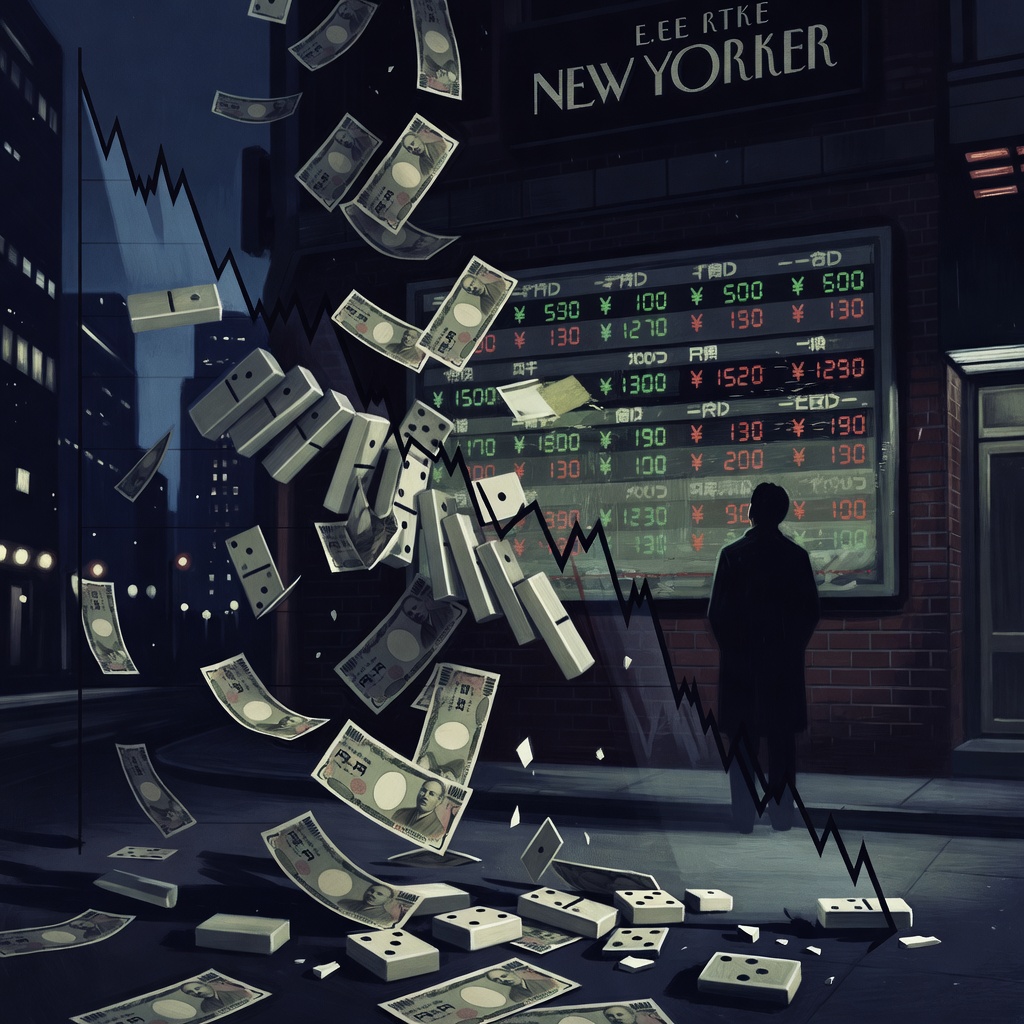
Hope Sterling: 162.83. Like, per dollar. Confirmed by LSEG data, late June into early July 2026 — that is a forty-year low, we're talking levels not seen since December 1986, and the thing that is literally making me lose my mind is that Japan didn't just sit there. They spent — okay wait — seventy-four billion dollars trying to stop this. The Japan Finance Ministry and the Bank of Japan dropped roughly ¥11.7 trillion into the market. And the yen... kept... falling.
Michael C. Vincent: That's the part that stops you cold. ¥11.7 trillion — a record intervention — and the market essentially looked at it, priced the futility in, and moved on.
Hope Sterling: And they got, like — a blip? April 30th, the yen bounced to around ¥155–156 per dollar after the suspected intervention, and then just — immediately reversed. That's it. That was their $74 billion.
Michael C. Vincent: Which is exactly what we're getting into today — Japan has now raised the Bank of Japan's benchmark rate to 1%, highest since 1995, Governor Kazuo Ueda is hinting at more hikes, and none of it is holding the line. Every tool is deployed. The question is whether any of it matters.
Hope Sterling: But wait — Japan just hiked to 1%, that's closing the gap, right? Like isn't that literally the move?
Michael C. Vincent: The dollar just posted its fourth consecutive quarterly gain against a basket of major currencies. End of Q2 2026. So Japan hikes, and the dollar just... keeps winning. Think of it this way: Japan is trying to hold a beach ball underwater, but the Fed is upstream pumping air into it through a pipe Tokyo doesn't control. That's the 300 basis points. The Fed sits at 3.5 to 3.75%. The BOJ is at 1%. Roberto Rios called that gap the structural engine keeping carry trades alive — and he's right.
Hope Sterling: Wait, so — okay, the carry trade thing. Traders borrow cheap yen, dump it into dollar assets, pocket the difference. That's the whole — that's just free money as long as the gap holds.
Michael C. Vincent: Exactly so. And speculators rebuilt their net short positions on the yen almost immediately after the April–May interventions. That tells you everything. The market isn't afraid of Japan's moves — it's betting against them in real time.
Hope Sterling: That is so cold. Like, Japan spends $74 billion and traders just go — yeah, we'll wait you out.
Michael C. Vincent: The BOJ's dilemma is almost cruel, actually — hike fast enough to close that gap and you risk a domestic recession. Hike gradually and the yen keeps sliding. Neither option has a clean exit. Washington sets the speed on this treadmill, not Tokyo.
Hope Sterling: And — oh, wait — there's this whole other argument floating around that Japan just needs to intervene smarter, like, hit harder or use surprise timing. We're going to get to why that completely misses the point in a minute, aren't we.
Michael C. Vincent: That's exactly the wrong take — and it's everywhere right now. Intervene harder, intervene smarter, catch the traders off guard. Analysts are already saying Japan may need up to $100 billion to actually defend the yen. They've spent $74 billion and gotten three weeks of breathing room. Where does the extra $26 billion come from, and why would it land differently?
Hope Sterling: No, I don't buy the 'surprise timing' argument at all — like, okay wait, the Japan Finance Ministry and U.S. finance chiefs held an online bilateral meeting and confirmed that 'decisive steps' are still on the table, and people latched onto that like it was a real signal—
Michael C. Vincent: Isn't it, though? Coordinated intervention — U.S. and Japan together — that's a different animal entirely.
Hope Sterling: It would be — analysts literally say coordinated intervention would be significantly more effective — but it's far from guaranteed. And here's the proof of which force actually moves this market: Kevin Warsh softened his inflation tone at one press conference. One official. And the dollar faded noticeably. That single moment moved USD/JPY more visibly than ¥11.7 trillion in Japanese money did. Mohamed El-Erian flagged exactly this — the carry trade risk, the yen weakness — and his point is that the Fed's posture is the dial Japan can't reach.
Michael C. Vincent: Imagine that. One Fed official's press conference doing more work than a record-setting sovereign intervention.
Hope Sterling: It's a power problem, not a tactics problem — and the person not thinking about any of this is the retail investor whose 401k just rode the largest quarterly equity gain in six years. S&P, Nasdaq, Dow — all up massively, end of Q2 2026. And part of what's inflating that is carry trade money flowing into U.S. assets. If the yen snaps back, that unwind rattles the very markets people are celebrating right now, and they won't see it coming.
Michael C. Vincent: That's the quiet risk sitting underneath all of it. The tactics debate — more intervention, better timing — it's a distraction from the structural trap. Tokyo doesn't set Fed policy.
Hope Sterling: And like — nobody in Washington is actually war-gaming this, right? That's the part that I keep — I mean, Bloomberg flagged the carry trade escalation risk, the Fed spillover risk, it's documented, and yet the question of what a Fed pivot does to yen carry trades unwinding violently is just... sitting there.
Michael C. Vincent: The yen hasn't been this weak since December 1986. Forty years. And the trade holding up the biggest quarterly equity gain in six years runs on a rate gap Washington built and Tokyo can't close. Whether anyone with actual authority is asking what happens the day the Fed blinks — I genuinely don't know the answer to that.
Hope Sterling: Neither do I. That's — yeah. That's where we are.
Michael C. Vincent: Good conversation. Unsettling one.