Cole Brennan: Quick question before we get into it — do you think bond traders sleep well?
Malcolm Reeves: After June 17th? No.
Cole Brennan: No. Because here's what happened — the FOMC meets June 16th and 17th, votes unanimously to hold at 3.50 to 3.75, and nobody — nobody — actually cared about that vote. CME FedWatch had it at 97% probability of a hold on June 13th. The decision was done before it was made.
Malcolm Reeves: So what were they actually watching.
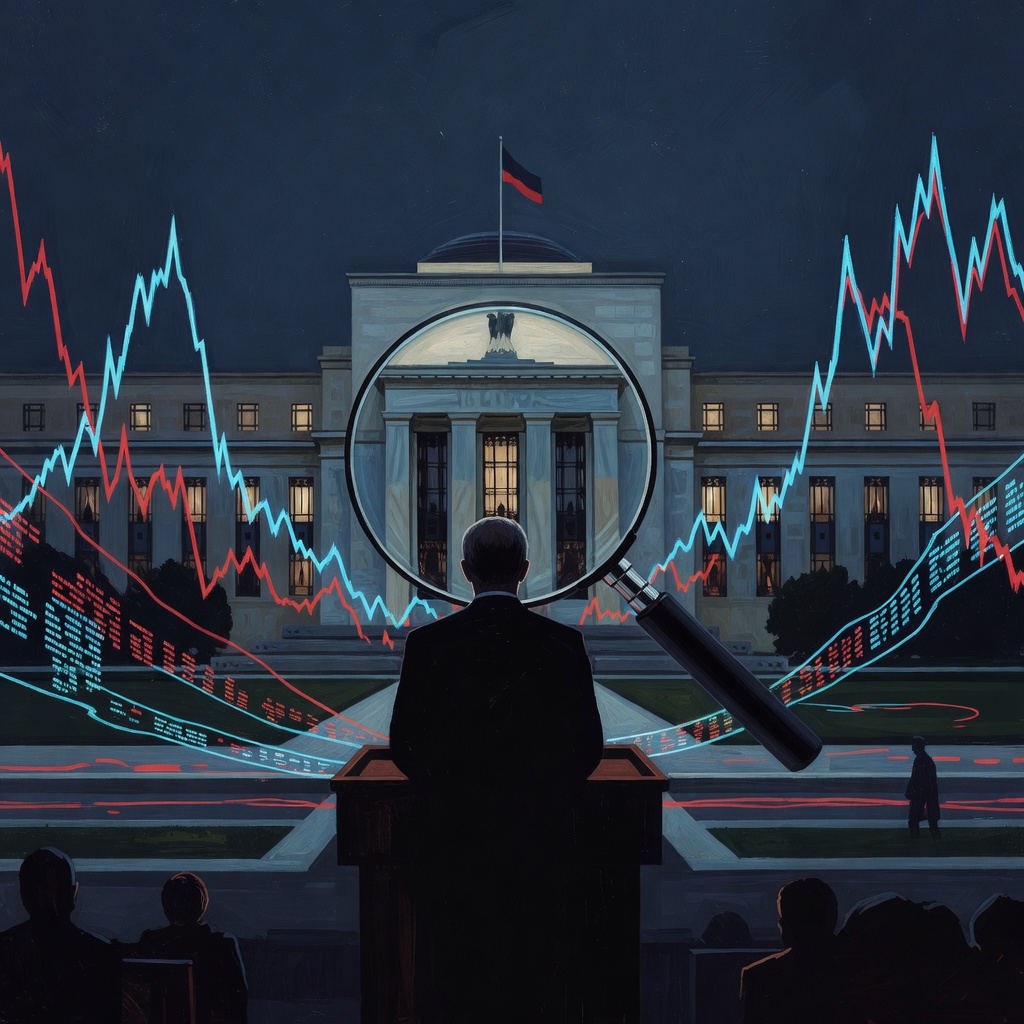
Cole Brennan: Kevin Warsh. 2:30 PM. Post-meeting press conference. The 17th Fed chair — sworn in May 22nd at the White House, 54-45 Senate vote, nominated by Trump on March 4th as — and this is the part that breaks my brain a little — as a rate-cutter. And bond markets are pricing in hikes by December 2026. Not cuts. Hikes.
Malcolm Reeves: That's a credibility trap from day one.
Cole Brennan: It's — yeah. It's like the policy itself became irrelevant. The Federal Reserve is now just a narrative machine and Warsh is the narrator. With inflation at a three-year high. That's the setup.
Malcolm Reeves: Now, hold on. 'Narrative machine' — I get the frame, but that's flattening what's actually sitting underneath this. Inflation is at a three-year high going into that room. Partly because of elevated energy prices tied to the U.S. war in Iran. That's not vibes. That's a hard economic floor the narrative has to stand on.
Cole Brennan: No, fair — yeah.
Malcolm Reeves: And Warsh said it himself. April 21st, Senate Banking Committee — 'inflation is a choice.' His words. 'The Fed must take responsibility for it.' That's not a tone read. That's a chair, before he's even sworn in, reaching back to Milton Friedman and putting the institution's neck on the line.
Cole Brennan: Which is — wait, that's actually what makes the 17-0 vote so strange to me. If there's that much on the line, unanimously? Who's not saying something?
Malcolm Reeves: That's the detail I don't think is getting enough air. The FOMC voted 17-0 to hold, yes — but there's reported internal dissent over the rate path forward. Not on the hold itself. On where rates go next. That vote papers over a real disagreement, and because it's unanimous, nobody outside that room has to reckon with it.
Cole Brennan: And Powell — Powell did a press conference after every single meeting. Warsh hasn't committed to that. So the dissent stays papered over and there's potentially less — I mean, fewer scheduled moments to even surface it publicly. That's — huh. That's not nothing.
Cole Brennan: And here's where I think — okay, wait, I actually want to defend the silence thing for a second. Because I think Warsh's whole pullback from forward guidance isn't just, like, stonewalling. He's been saying this for years. The Fed over-communicates. The dot plot creates dependency. Markets stop doing their own homework because the Fed is basically texting them the answers every quarter.
Malcolm Reeves: The Summary of Economic Projections.
Cole Brennan: Right — seventeen anonymous rate projections on a chart, every quarter, and markets treat it like a map. Warsh thinks that map has been leading everyone off a cliff. He's on record saying the Fed doesn't need to telegraph its every move, that over-communication has — his phrase — 'led to policy errors.'
Malcolm Reeves: And Volcker didn't telegraph. Early Greenspan didn't. The historical precedent is opacity before decisive action, not confusion.
Cole Brennan: That's — yeah, that's the vindication right there. Silence as a precursor to something real.
Malcolm Reeves: But the market told you anyway. Bond traders couldn't wait for an explanation — they just wrote the story themselves. Seventy percent probability of rate hikes by December 2026. Warsh said nothing definitive and they priced it hawkish regardless.
Cole Brennan: Which is — I mean, Jonathan Pingle at UBS literally called that press conference 'pivotal' and then said markets 'do not really know what his policy views are.' The establishment read was: we have no idea. And they still moved billions on tone alone. That's not confusion, man — that's strategic silence actually working.
Malcolm Reeves: Working. Until it doesn't. That's the whole bet Warsh is making. Because the next FOMC meeting — that room doesn't let him be silent on direction. The 17-0 holds right now because nobody had to say where rates go. The moment he has to answer that publicly, the reported internal dissent on the rate path either stays papered over or it doesn't. And if it surfaces — bond markets already priced hawkish on a whisper. Imagine what they do with actual fracture.
Cole Brennan: So the most powerful central banker in the world is winning by not talking. Great system.
Malcolm Reeves: The silence works until the next meeting forces a real answer. And when that answer comes — when Warsh actually has to stand at that podium and say something definitive about rates — the 17-0 either holds or it cracks. That's when we find out if he's Volcker or Burns.