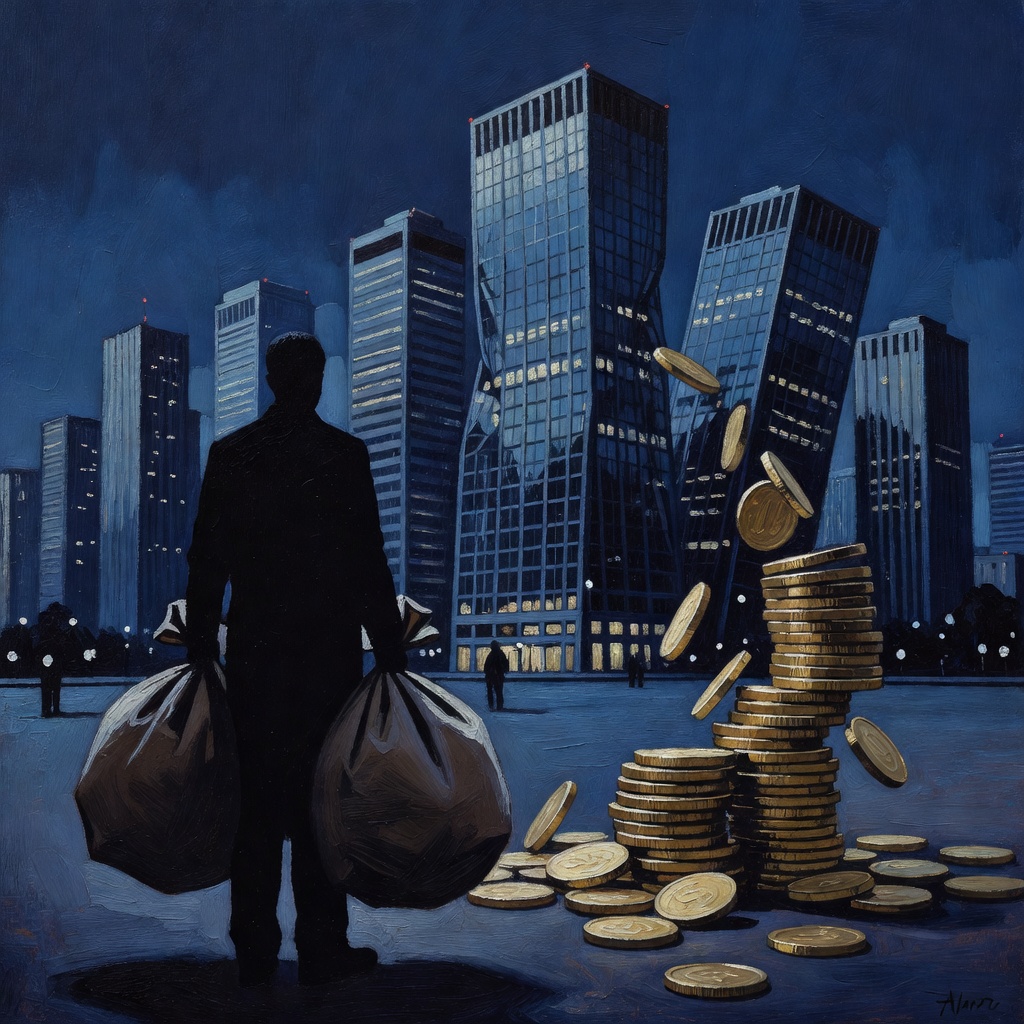
Jordan Hale: There's a room in Washington — you've seen the footage, the long table, cameras, reporters with their hands up — and on June 17th, 2026, the person walking to that podium isn't Jerome Powell anymore.
Alex Mercer: Warsh. First press conference.
Jordan Hale: Kevin Warsh, yeah — the 17th Fed Chair, Trump appointee, in the seat less than a month. And I keep thinking about what that moment actually feels like, you know, because the Federal Open Market Committee just voted unanimously to hold rates at 3.50 to 3.75, so on paper nothing happened.
Alex Mercer: Except everything happened in the language.
Jordan Hale: He strips out the language that said rates might come *down* — gone — and then, almost in the same breath, he acknowledges that companies are out there raising debt capital with... remarkable ease. $13.7 trillion in global corporate issuance in 2025. That's the number he's sitting on top of.
Alex Mercer: I think that admission is the most interesting thing he said. More interesting than the hawkish tone.
Alex Mercer: Because while he's talking, the 2-year Treasury yield is just — it's moving in real time. Markets are repricing the whole rate path on the fly. And then CME FedWatch, by the end of the press conference, September 2026 hike odds: sixty-seven percent.
Jordan Hale: Sixty-seven — wait, that jumped just from one press conference?
Alex Mercer: One press conference. And here's what nobody led with — the dot plot shifted. Nine of eighteen FOMC members are now projecting at least one rate hike in 2026. That's a reversal. Earlier expectations were cuts.
Jordan Hale: Okay but wait — nine members show their cards, markets freak out, yields surge... and Warsh himself? He didn't submit a dot-plot projection. Like, he made nine people go on record while keeping his own rate path completely hidden.
Alex Mercer: That's a power move.
Jordan Hale: It's a massive power move! You know, you're the chair, you're supposedly cleaning up Fed opacity, and your own position is the one thing nobody gets to see. And meanwhile Jeffrey Gundlach is out there saying the Fed's focus has clearly shifted to inflation over employment — like even bond investors are reading this as a genuine regime change.
Alex Mercer: And Trump appointed him expecting the opposite. Rate cuts, easier conditions — that was the whole idea. Warsh's first act is essentially to signal hikes. I mean, what does that actually cost someone in his position?
Jordan Hale: And that's what keeps nagging at me, you know — because picture a mid-market manufacturing CEO, Tuesday morning, sitting across from her CFO, looking at expansion plans. She can borrow. Capital's available. And then she goes home to a 6.5% mortgage she's been carrying since 2022 and it's like — wait, no — it's like two completely different economies are happening inside one person's life.
Alex Mercer: That's basically the transmission mechanism breaking in real time.
Jordan Hale: Right — and the Goldman Sachs Financial Conditions Index is actually *measuring* that looseness. This isn't anecdotal. Conditions are loose even while the Fed is signaling tightening. Warsh himself said corporations face no meaningful funding constraints.
Alex Mercer: Which is why Warsh's communications overhaul matters more than people realize. He signaled the Fed might change its whole framework by year-end. Mark Zandi at Moody's Analytics is explicitly warning that stripping guidance creates bond market volatility — he said he's 'not a fan.' But Kim Escue at Shelton Capital thinks the data-driven approach corrects past policy mistakes. I'm not totally convinced either side has this nailed.
Jordan Hale: Are we sure Zandi's wrong, though? Like if nobody knows what the Fed's thinking—
Alex Mercer: That's the tension. And it doesn't resolve cleanly. If large corporations shrug off rate signals regardless, then maybe less forward guidance costs almost nothing for them — but households? They're already squeezed.
Alex Mercer: Warsh walked out of that room having done three things. Signaled hikes are coming. Admitted corporations face no real funding constraints. And left his own dot-plot projection completely blank. Nobody knows his actual rate path — not markets, not the FOMC members who did submit projections. That's the thing sitting in the room after he leaves.
Jordan Hale: And maybe — I mean, maybe that's exactly the point. Like, you know, if the transmission mechanism is already working differently for corporations versus households, what would publishing his dot even accomplish? He's not fixing that split by being transparent about it. He's just... sitting inside the ambiguity on purpose.
Alex Mercer: I think that's fair. The Fed's tools may be designed for an economy that no longer exists — and Warsh might know that better than anyone in that room.