Onpode
Cover art for Trump just took a jab at his handpicked Fed Chair Kevin Warsh — over interest rates

Trump just took a jab at his handpicked Fed Chair Kevin Warsh — over interest rates

June 28, 2026 · 4 min

David Sterling & Megan Skiendel

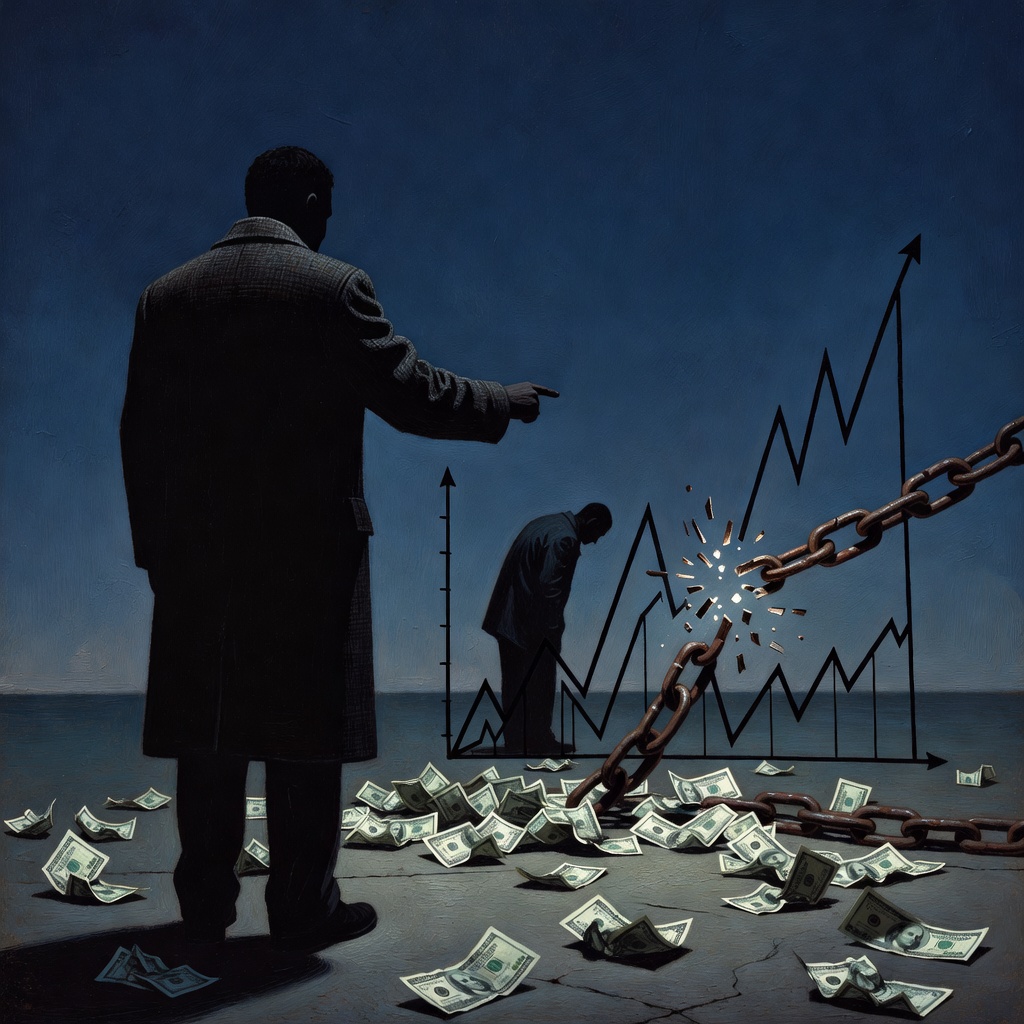
Fed Chair Kevin Warsh, appointed by Trump in 2026 with an implicit mandate to cut rates, faces PCE inflation at a three-year high and a Supreme Court case that could let Trump fire Fed governors — making his independence a personnel question, not just a policy one.

President Donald Trump appointed Kevin Warsh as the 11th chair of the Federal Reserve in early 2026, with Warsh succeeding Jerome Powell when Powell's term ended in May 2026.

0:004:23
Make your own on Onpode

Describe any topic. Hear it in minutes.

More Onpode episodes on Finance

About this episode

Kevin Warsh has been Federal Reserve Chair for barely two weeks, and the situation is already structurally strange. Trump said publicly — on Meet the Press, to Kristen Welker, on June 7th — that Warsh would not have gotten the job if he'd signaled the wrong thing on rates. That's a condition of employment, on record. Meanwhile, PCE hit a three-year high the same month Warsh took office, inflation topped 4% by late June, and markets are pricing in hikes while the White House wants cuts. The gap between why Warsh was hired and what the data is demanding is where this episode lives. It also gets into something most coverage has missed: the Supreme Court case involving Fed Governor Lisa Cook, which could hand the president a legal mechanism to fire sitting Fed officials. If that ruling goes the wrong way, the debate about Warsh's independence becomes a moot point — it's no longer about institutional norms, it's about who can be removed and when. Warsh dropping forward guidance, showing up at Sintra, the 'trust-based' framing from White House officials — the episode walks through what each of those moves actually signals, and what's still genuinely unresolved heading into a midterm cycle with inflation above 3%.

Frequently asked

Why is Trump criticizing Kevin Warsh on interest rates?

Trump told NBC's Meet the Press on June 7, 2026 that Warsh 'would not have gotten the job' without signaling rate cuts, then called rate hikes 'unfair' citing a May jobs report of 172,000 — below boom-level. Trump's public condition of appointment is now on tape, which is structurally different from his earlier pressure on Jerome Powell.

What is inflation doing in 2026 under Fed Chair Warsh?

PCE inflation — the Federal Reserve's preferred gauge — surged to a three-year high in May 2026, the same month Kevin Warsh took office as Fed Chair. By late June 2026, inflation had topped 4%, putting pressure on the Fed to hold or raise rates rather than cut them as Trump wants.

Can Trump fire a Federal Reserve governor?

The Supreme Court was considering that question as of late June 2026 in a case involving Fed Governor Lisa Cook, who won in two lower courts but whose case was still taken up. If the Court rules Trump can fire a sitting Fed governor, Fed independence becomes a personnel question rather than an institutional protection.

Is Kevin Warsh independent from the White House?

Warsh publicly asserted Fed independence at his first news conference, and a White House official described the relationship as 'trust-based' and explicitly different from the Powell era. However, with inflation above 4%, Trump on record about the terms of Warsh's appointment, and a Supreme Court firing case pending, that independence remains structurally contested.

Why did Kevin Warsh drop forward guidance?

Kevin Warsh eliminated Fed forward guidance after taking office in 2026, which removes the specific rate-path commitments he would otherwise have to defend publicly. Critics argue this is self-protection — Warsh cannot control rising PCE inflation data but can limit how much of it he must defend at a press conference podium.

Grounded in 11 sources
Trump wants new Fed chair to be 'totally independent' · bbc.com
Trump eases pressure on Fed Chair Kevin Warsh as PCE inflation hits 4.1% · cnbc.com
Trump trusts Fed Chair Warsh. It matters for more than interest rates · cnbc.com
Trump says Fed chair should ‘do whatever he wants’ but criticizes possible interest rate hikes · nbcnews.com
WATCH: New Fed chair Kevin Warsh holds first news conference ... · pbs.org
Supreme Court ruling, ECB conference likely to further frame Fed chief Warsh's early tenure - Reuters · reuters.com
America In Focus: key inflation gauge surges to 3-year high, mortgage rate climbs - The Washington Post · washingtonpost.com
Kevin Warsh’s 2026 Starts Looking Very Japanese - Forbes · forbes.com
President Donald Trump Just Took a Jab at His Handpicked Fed Chair, Kevin Warsh, Over Interest Rates | The Motley Fool · fool.com
Supreme Court ruling, ECB conference likely to further frame Fed chief Warsh’s early tenure | 1450 AM 99.7 FM WHTC | Holland · whtc.com
Kevin Warsh speech at ECB Sintra forum set for July 1 · x.ai
Read transcript

Megan Skiendel: Kevin Warsh has been Federal Reserve Chair for — what, two weeks — and Trump's already on Meet the Press drawing a line around the job offer. 'Would not have gotten the job.' That's not spin. That's a receipt.

David Sterling: Well, here's the point. PCE — the Fed's own preferred inflation gauge — surged to a three-year high in May 2026. The same month Warsh took office. That's the problem in one number.

Megan Skiendel: Right. So the contractor analogy works here — you hire someone cheap, costs immediately spike, they can't hold the price.

David Sterling: Exactly that. Trump hired for rate cuts. Inflation is now arguing for rate hikes. Warsh is caught between the actual data and the condition under which he was appointed.

Megan Skiendel: And inflation topped 4% by late June. So whatever Warsh says publicly about independence — and he did say it, at his first news conference — the numbers are not cooperating.

David Sterling: That's the core contradiction. Hired to cut. Data says hold or hike. That gap is where this whole story lives.

Megan Skiendel: But here's what's actually new — and I think this gets lost. With Powell, the pressure was slow escalation. The 'Too Late' nickname, the criminal investigation that got dropped, the removal threats — that built over months. Trump never said on record 'Powell would not have gotten the job if he'd signaled X.' He said it about Warsh. Out loud. To Kristen Welker on Meet the Press on June 7th. The condition of employment is on tape.

David Sterling: That is structurally different. I'll grant that.

Megan Skiendel: And then — same interview — Trump says 'Kevin is fantastic, I want him to do whatever he wants,' while calling rate hikes 'unfair' because of the May jobs report. One hundred seventy-two thousand jobs. That's not a booming number. That's his justification for saying hikes are off the table.

David Sterling: Look — a White House official is on record calling this 'trust-based,' explicitly different from Powell. And Bessent's posture toward Warsh has been noticeably more forgiving publicly. That's not nothing.

Megan Skiendel: When someone has to tell you the relationship is trust-based — honestly, that's when the trust is already priced in as collateral. That's not reassurance. That's a hedge.

David Sterling: Which brings me to the forward guidance thing. Warsh dropping it — is that actually independence, or is that just... removing the target he'd have to defend?

Megan Skiendel: Self-protection. That's the right word for it. He can't control the PCE number. He can control how much of it he has to defend at a podium. But look — that framing misses the bigger problem, which is the Cook ruling.

David Sterling: Right. The Supreme Court, final week of term, sitting on whether Trump can legally fire a sitting Fed governor. Lisa Cook fought this through the lower courts — won both times — and it still went up.

Megan Skiendel: And nobody is connecting that to Warsh's actual room to maneuver. If the Court rules Trump can fire Cook — Fed independence isn't an institutional question anymore. It's a personnel question.

David Sterling: That's — yeah. That's the variable that matters most. The 'this is different from Powell' take collapses entirely if the Court hands Trump a firing mechanism. The structural incentives are identical to 2017-2018. Elevated inflation, political demand for cuts, midterms approaching. The relationship temperature at appointment — I mean, that's just noise if Cook loses.

Megan Skiendel: Elizabeth Warren flagged this before the inflation data even landed — her warning about Warsh's appointment was always about this structural exposure, not his résumé.

David Sterling: Which is why Sintra matters. Warsh showed up at the ECB conference in Portugal late June — global central bank peers are already pricing his independence. If the Cook ruling goes the wrong way, that read changes overnight.

Megan Skiendel: And that's the collision course, honestly. It's September 2026 — inflation's still above 3%, Warsh holds at the last meeting before midterms, and Trump's at Mar-a-Lago that night. Somebody asks him about rates. He says 'Kevin's doing a great job.' But he says it like a man complimenting a waiter who forgot his order. The words are fine. The tone is the whole story.

David Sterling: That's — yeah. And the 'trust' narrative doesn't survive that room.

Megan Skiendel: No, it doesn't. The Federal Reserve's structural independence — I mean, whether it actually outlasts one appointment cycle — that is still genuinely open. We don't know.

David Sterling: The Supreme Court may answer the independence question before Warsh ever has to make the call himself. So which lands first — the Cook ruling, or the September inflation print?
Trump just took a jab at his handpicked Fed Chair Kevin Warsh — over interest rates · Onpode