Brian Reed: Hey. Did you see the EDF numbers from this morning?
Eliza Ward: Yeah — I've been staring at them. Two outlets, two different figures.
Brian Reed: Right, so — Reuters has 4.1 gigawatts offline during the June–July heatwave. Euronews is saying 3.65. And I don't — I mean, those aren't close enough that I'd call it rounding.
Eliza Ward: No, they're not. That's a real gap.
Brian Reed: And EDF cut output at — let me get this right — Golfech 2, Bugey 3, Saint-Alban 2, Nogent 2. Four reactors. At the same time. During the hottest stretch of the summer, when every air conditioner in France is running.
Eliza Ward: The demand spike and the supply cut were caused by the same event. That's the thing that — wait, actually, the Hungary detail is what got me.
Eliza Ward: Hungary has one nuclear plant. One. And the Danube dropped low enough that cooling was nearly threatened. That's a single-point-of-failure at the country level. Not stress on a system — the whole system, nearly gone.
Brian Reed: But hang on — because that Hungary detail, and the French curtailments, a lot of the coverage is treating them the same way. Like the reactors got too hot to run safely. And that's — I mean, that's not actually what happened, is it?
Eliza Ward: No. That framing is wrong, and it's spreading. The shutdown trigger isn't the reactor. It's the river.
Brian Reed: Meaning — what, exactly?
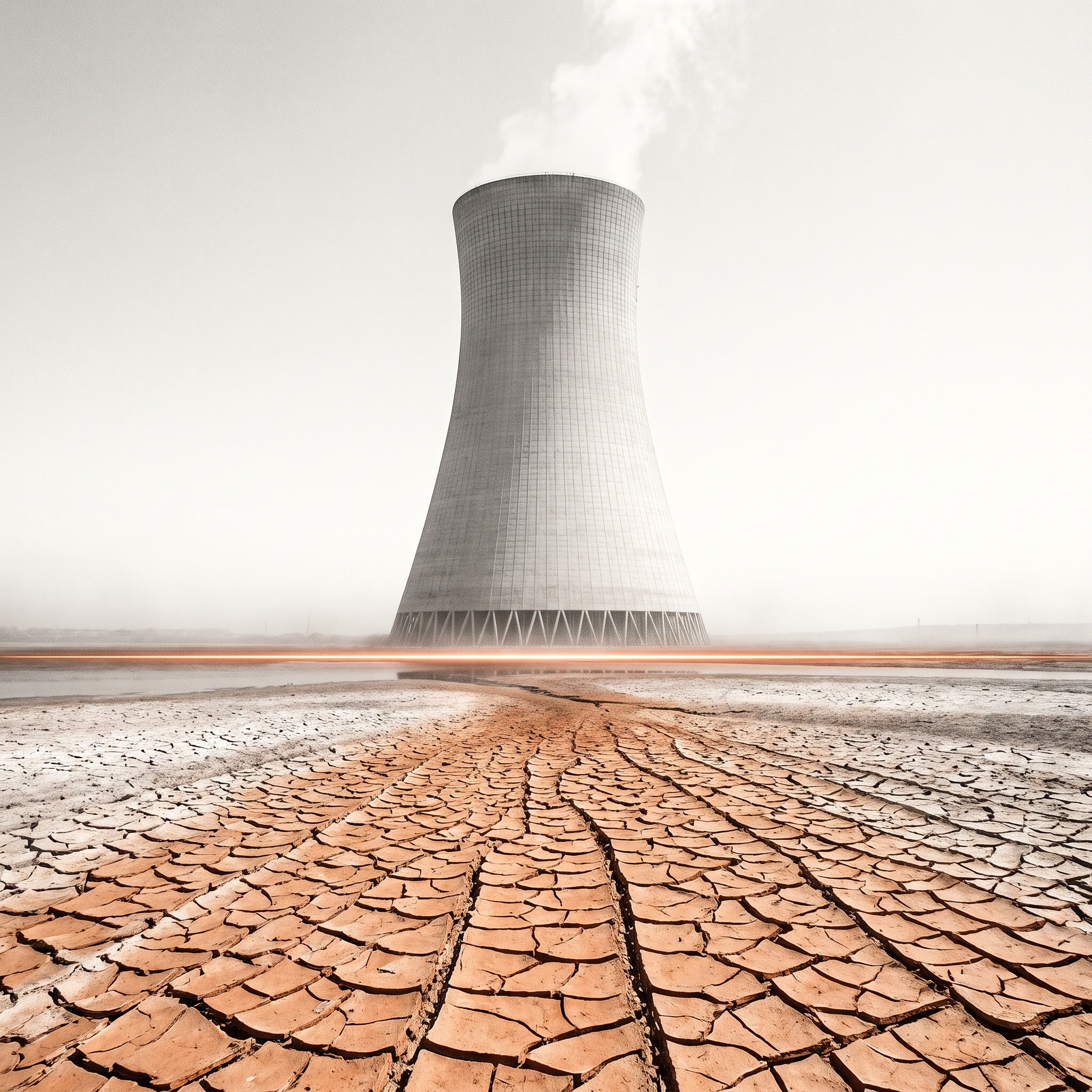
Eliza Ward: France has a hard cap: 28 degrees Celsius for the water being discharged back into the river. Once-through cooling — you pull river water in, it absorbs the plant's waste heat, you send it back out. When the Garonne was already warm and low, discharging more hot water would have cooked the ecosystem downstream. That's why Golfech 2 went offline. The reactor was fine. The river couldn't absorb any more heat.
Brian Reed: So it's an ecological protection rule. Not a — not a 'the reactor is about to melt' situation.
Eliza Ward: Think of it like a dishwasher draining into a small pond. Winter, no problem — the pond's cold, it absorbs it. But in a drought, when the pond is already warm and half-empty, you run too many cycles and you kill whatever lives in it. So you stop running cycles. That's Golfech. That's Nogent 2 watching the Seine temperature forecasts for July 14th.
Brian Reed: Okay, but — does the distinction actually matter for the grid? Like, offline is offline.
Eliza Ward: It matters completely for what you'd fix. If this were a reactor safety problem, you redesign the reactor. But it's not — it's an environmental regulation enforcing a 28°C limit to protect aquatic ecosystems. So what you'd have to change is either the cooling system, the regulation, or the river. You can't move the Garonne.
Brian Reed: Right — and if you just scratch the discharge limit to keep the lights on, you've traded a grid problem for a river problem. That's not a solution, that's a deferral.
Eliza Ward: And that deferral — that's the take I keep seeing get wrong. People are writing about 2026 like this is a revelation. Like the system just discovered it had a weather problem.
Brian Reed: The IAEA data goes back to 2000. Twenty-two years of this.
Eliza Ward: Right — 0.26% of annual fleet output, lost to thermal discharge rules, every year on average between 2000 and 2022. Which sounds small until you look at when. Eighty percent of those losses in July, August, September. It's not random attrition. You could — wait, you could almost put it on a calendar.
Brian Reed: And it's not spread across the whole fleet either. The part that actually landed for me — five riverine plants. That's it. Five plants account for nearly all of those losses over 22 years. Bugey and Saint-Alban on the Rhône show up in 2026, and they're the same sites that have been showing up in this data for two decades.
Eliza Ward: The 2003 heatwave was the first time it became publicly visible. Reactors reduced output, it made headlines, and then — I mean, what actually changed structurally after that?
Brian Reed: That's kind of the correction I'd push on the 'sudden crisis' framing. 2003 wasn't a warning shot. It was confirmation of something already in the data. And planners had it. The IAEA had it. So the question is — if the five-plant concentration was known and the July–September window was known, what exactly was the plan?
Eliza Ward: Predictable makes it worse, not better. That's the wrinkle. Because if it's a surprise you can say the models failed. If it's a known seasonal pattern across a documented 22-year window and the same five plants keep curtailing — that's a planning choice that someone made.
Brian Reed: And the Rhine research makes this regional, not just French — thermally most polluted major river basin relative to total flow, largely from nuclear discharge. That's not one country's regulatory quirk.
Eliza Ward: The piece we haven't touched yet is what actually happened on the demand side during those curtailments — whether the grid stayed whole or whether something dirtier filled the gap — and that's considerably harder to defend.
Brian Reed: And that's the part that actually bites — because all thermoelectric generation faces this. Coal, gas, nuclear. They all need cooling water. It's not a nuclear-specific vulnerability.
Eliza Ward: True, but — okay, here's where that distinction matters. Coal and gas degrade gradually when water gets warm. Nuclear hits the 28°C discharge limit and it's a hard regulatory cutoff. Not a performance dip — a stop.
Brian Reed: So the risk profile is different even if the mechanism is the same.
Eliza Ward: Right — and the timing is the thing that keeps nagging at me. July 14th, 2026. Someone in Lyon has their air conditioning running because it's a heatwave. Nogent 2 is watching Seine temperature forecasts for that exact date, waiting to see if it hits the threshold. The demand is spiking because of the heat. The supply is cutting because of the heat. Same cause, simultaneous effects.
Brian Reed: One weather event pulling in two directions at once.
Eliza Ward: And the thing I can't answer — and I want to be honest that I can't — is whether solar and wind actually covered that gap. Sources say diversification helps during heatwaves. Solar performs well when it's hot and sunny, sure. But 'performs well' and 'covers a 4.1 gigawatt simultaneous shortfall' are — wait, those are very different claims, and I haven't seen numbers that bridge them.
Brian Reed: The part I don't get is why that number isn't in the reporting. If the grid held, someone burned something to hold it. Gas? Did France import? What filled the 3.65 to 4.1 gigawatt hole — because that answer is the whole ballgame for whether this is a manageable stress or a structural crack.
Eliza Ward: That's what to watch. Not another heatwave forecast — the post-event generation mix data from EDF. If it shows a gas spike on July 14th, then the climate-solution framing around nuclear took a concrete hit that week. That's the specific number that changes the story.
Brian Reed: And that data exists. Someone has it. It's just — we don't, yet.
Eliza Ward: Hungary is my answer, actually. Not France. Because France has five riverine plants, it has EDF, it has 22 years of IAEA data — there's infrastructure around the problem even if the plan is thin. Hungary has one reactor. One. And the Danube nearly made that choice for them.
Brian Reed: And that's the image that — I mean, if the Danube coming within a thread of shutting down Hungary's only plant isn't the moment that forces a rethink of how Europe treats grid resilience, what is? Like, what's the threshold? Who draws it?
Eliza Ward: That's the part I genuinely don't know how to answer. Because the solar-and-wind diversification argument — structurally it makes sense, but we just said we can't quantify it. That 4.1 gigawatt hole might have been covered cleanly. Or it might have been gas. We don't have that number. So Europe is operating, right now, on an assumption that the backstop holds.
Brian Reed: Not a confirmed backstop. An asserted one.
Eliza Ward: Right — and that's where I'd leave it, honestly. Not 'nuclear is broken,' not 'the grid is fine.' Just: the vulnerability is documented, it's seasonal, it's concentrated in a small number of river-sited plants, and the one scenario that tests whether diversification actually covers it — a prolonged heatwave, not a single hot week — that scenario hasn't been stress-tested with numbers anyone's published yet.