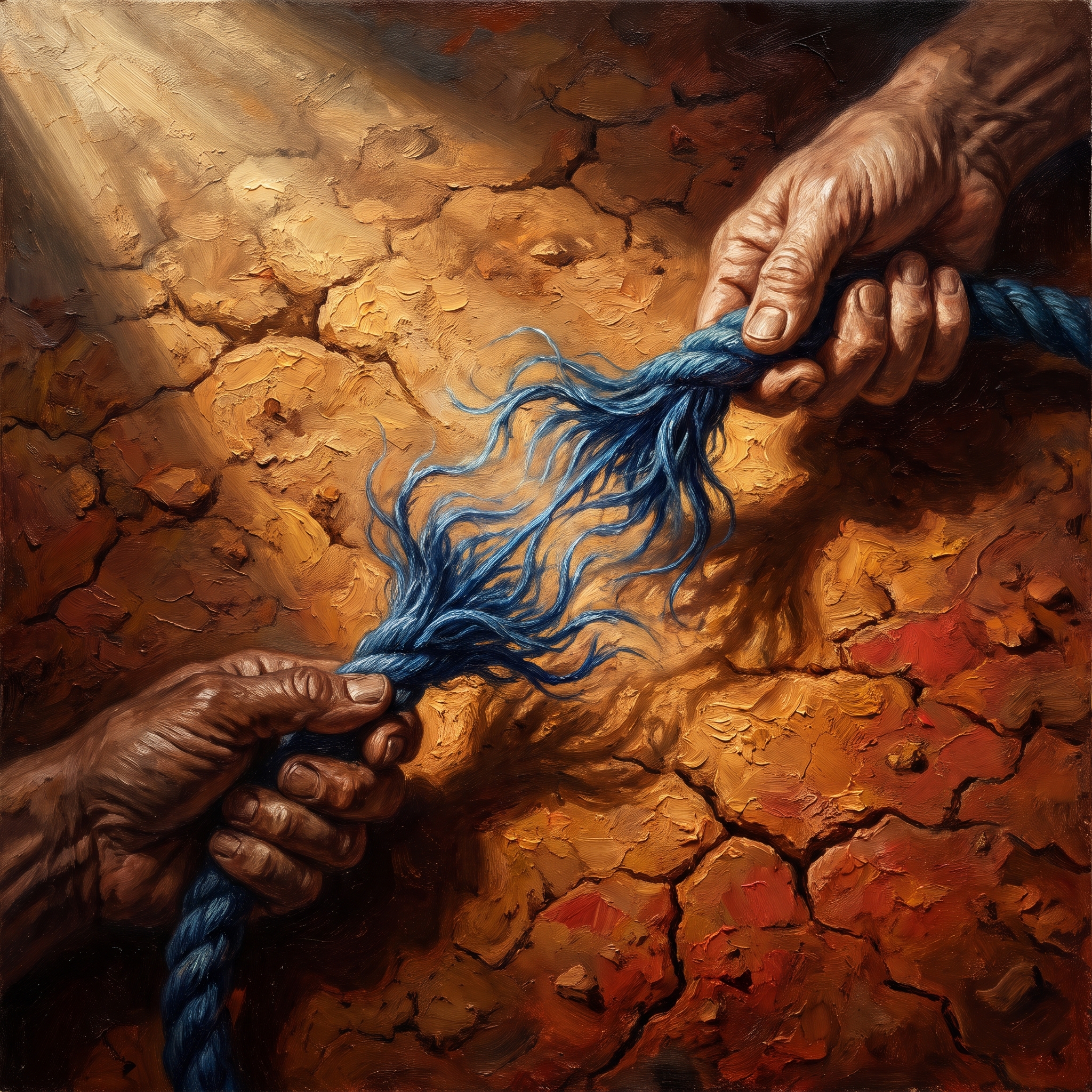
Cole Brennan: Hey — before we get into this, I have to ask: did you know the British government was still paying off the debt it took on in 1834 to compensate enslavers? Like, British taxpayers were paying that into the 2010s?
Malcolm Reeves: Is that right — where did you land on that?
Cole Brennan: I mean, I'm not a hundred percent sure of the mechanism, but that's the thing — the Slave Compensation Commission, 1834, twenty million pounds paid to former enslavers. Not to the people who were actually enslaved. And that transaction just... sat in an archive for close to two centuries.
Malcolm Reeves: Now that's the spine of what we're getting into today. The records were there — the full ledger of who got paid, for which plantations, what amounts — but they weren't publicly searchable until 2013. Nearly a hundred and eighty years of silence.
Cole Brennan: So what does someone do when they finally open that drawer and find their own family name in it?
Malcolm Reeves: That's the question. And it's exactly what happened to Laura Trevelyan — BBC journalist, descendant of families with interests in at least six Grenadian sugar plantations. She finds her name in that database. And eventually she emails a Grenadian historian named Nicole Phillip. Cold. Out of nowhere. And the two of them end up writing a book together — Entangled Past — about what happens after that email.
Cole Brennan: Which is what we're really trying to work out here — whether that's the beginning of something, or whether it's one family finding a way to feel better about a problem that's still very much structural.
Malcolm Reeves: Both things can be true. And the evidence is worth following before we decide.
Cole Brennan: But following the evidence means starting with 2013, right? Because that's the actual unlock — she doesn't find anything noble on her own. She just types "Trevelyan" into a search field.
Malcolm Reeves: Exactly that. The Slave Compensation Commission records existed since 1834 — nearly a hundred and eighty years in an archive. And then in 2013 they go online, fully searchable. And suddenly the ledger is just... there. Sir John Trevelyan. Six Grenadian sugar plantations. The financial benefits spelled out in black and white. Laura Trevelyan didn't commission a genealogist. She didn't go digging through parish records. She typed her family name into a database.
Cole Brennan: Six plantations. That's — wait, that's it?
Malcolm Reeves: Six. And that's the thing that stops me, actually — not vast landholdings, not some sprawling empire. Six Grenadian sugar plantations, and that's enough to anchor generations of family wealth and position. The scale is almost modest, which makes the longevity of it more striking, not less.
Cole Brennan: So she finds this in 2013. And she doesn't email Nicole Phillip until 2022. That's nine years of knowing.
Malcolm Reeves: Nine years. And I don't want to fill that gap with assumption — I mean, the sourcing doesn't tell us what she did with that knowledge in the interim. But Trevelyan herself has said something that I think frames it. She described it as — Britain sweeping slavery under the carpet, and her family being part of it. Personal silence and national silence running on the same track.
Cole Brennan: So the nine years isn't just her sitting on it — it's her being inside a culture that also doesn't want to look.
Malcolm Reeves: That's where the story gets structural. Because the records being online doesn't mean anyone's ready to act on what they find. The gap between the 2013 digitization and the 2022 email — that's not just Laura Trevelyan's private reckoning. That gap is the question.
Cole Brennan: But that gap closing — 2022, she actually sends the email — that's where I keep getting stuck. Because think about what that moment is for Nicole Phillip. She's a Grenadian historian, descendant of enslaved Africans brought to Grenada. She opens her inbox and there's a cold email from a BBC journalist whose ancestors owned the plantations where Phillip's ancestors were enslaved. What is that? Like, what do you even do with that message?
Malcolm Reeves: And I want to be honest — the sourcing doesn't give us Phillip's interior experience of that moment. We don't know what she felt reading it.
Cole Brennan: Right — but that's almost the point, isn't it? Trevelyan gets to feel moral agency. She decides to reach out. Phillip has to decide what to do with someone else's decision arriving in her inbox.
Malcolm Reeves: That asymmetry is real. Trevelyan is a BBC journalist with resources. She initiates. And — this is the part that the concept of entanglement actually tries to hold — their histories aren't separable. It's not that Trevelyan chose to connect these two families. The machinery of colonial Grenada already did that, permanently. The email doesn't create the entanglement. It just... acknowledges what was already true.
Cole Brennan: So avoidance — the nine-year silence — that's not neutral. That's also a choice.
Malcolm Reeves: Exactly. And that's what entanglement forces. You can't step outside it. If Trevelyan had never typed her name into that database — or typed it and closed the tab — she'd still be entangled with Phillip's family history. The connection doesn't require consent.
Cole Brennan: Which is — I mean, that reframes the whole thing. Because then Trevelyan traveling to Grenada afterward, actually walking those former plantations — that's not her creating a relationship. That's her showing up to one that already existed.
Malcolm Reeves: Now, yes. And the book, Entangled Past, is built on that premise — that neither family can opt out of this history. The question is only what you do inside it.
Cole Brennan: And what they actually did — the reparations payment, the concrete financial piece — it gets harder because there's a much bigger structural argument waiting that I don't think one family's payment resolves. We'll get there.
Malcolm Reeves: And here's what that structural argument actually looks like — not in the abstract. The CARICOM Reparations Commission was established in 2013, same year those records went online, following Hilary Beckles's Britain's Black Debt. Beckles is Pro-Vice Chancellor of UWI, chairs the Commission — and his claim isn't moral appeal. It's that Caribbean peoples hold a legal right to reparatory justice because the structural deprivation didn't end in 1834. It continued. The Trevelyan family payment doesn't answer that claim.
Cole Brennan: So one family paying is almost — I mean, it's not nothing, but against a Commission with a legal framework? That's a different scale entirely.
Malcolm Reeves: And Entangled Past actually acknowledges that risk directly — that a single family's apology and payment could become the story governments point to. 'See, it's being handled.' Private absolution standing in for institutional reckoning.
Cole Brennan: Which is — wait, that's the trap, right? The Trevelyan story is genuinely good. And that's exactly what makes it useful cover.
Malcolm Reeves: The book's counter-position — and I want to be careful here because the sourcing doesn't fully resolve this — is that individual and systemic repair are meant to be complementary. Not substitutes. The Grenada process as a replicable model, not an endpoint.
Cole Brennan: That's the hopeful read, though. And then Andy Burnham announces a formal dialogue with Caribbean nations right as this book drops — I mean, is that the complementary action? Or is that the government watching the Trevelyan story land well and deciding it's safe to gesture?
Malcolm Reeves: Honestly? The sourcing doesn't tell us. We don't know what Burnham's dialogue produces.
Cole Brennan: No, I know — but the timing alone is — that's not nothing. That's a government watching which way the wind is blowing.
Malcolm Reeves: And Beckles's framework demands more than dialogue. Reparatory justice is a right, not a conversation. The question the book leaves open — genuinely open — is whether institutions will follow where individual conscience leads, or just point at the Trevelyans.
Cole Brennan: So repair as practice, not symbol — that's the book's whole argument. And the unresolved part is whether practice at the family level creates pressure, or releases it.
Malcolm Reeves: And that question — whether practice creates pressure or releases it — I think that's actually where the book has to live. It can't answer it. Entangled Past is the record of what two people did when knowledge became impossible to avoid. Not a proof of concept. A data point.
Cole Brennan: That's — yeah. And it keeps pulling me back to the very start of all this. Someone just typed a family name into a search field. That's it. The Slave Compensation Commission records go online in 2013 and suddenly the ledger's just... there. And what I didn't appreciate at the top of this conversation is that the ledger being findable is itself a kind of rupture. Britain spent almost two centuries making sure that knowledge wasn't easy. And then it was. And nine years later an email gets sent.
Malcolm Reeves: 1834 to 2013. That's how long systemic obscuring held. And a database undid it. I don't know that I've fully sat with that until right now, honestly.