Finn Brooks: Hey — before we get into it, genuinely, I need to confess something: I almost didn't flag this story because the number seemed too small to be interesting.
Clara Bennett: Eleven meters.
Finn Brooks: Eleven meters! JAXA's RV-X — July 11th, Noshiro Rocket Testing Center in Akita Prefecture — goes up eleven meters, moves sixteen meters horizontally, lands. Done. Project manager Takashi Ito confirms in an online briefing it flew exactly as planned. And I'm like — is this news? But then I kept reading and the gap between what happened and how it was described started bothering me.
Clara Bennett: The 'direct challenge to SpaceX' framing.
Finn Brooks: Because the Falcon 9 — routinely landing and reflying orbital-class boosters since 2015, roughly a hundred and fifty missions per year — that's the benchmark. And we're drawing a line between that and an eleven-meter hop and calling them comparable? I mean — I want to defend the hop, actually, I think something real happened. But I can't get there with that framing.
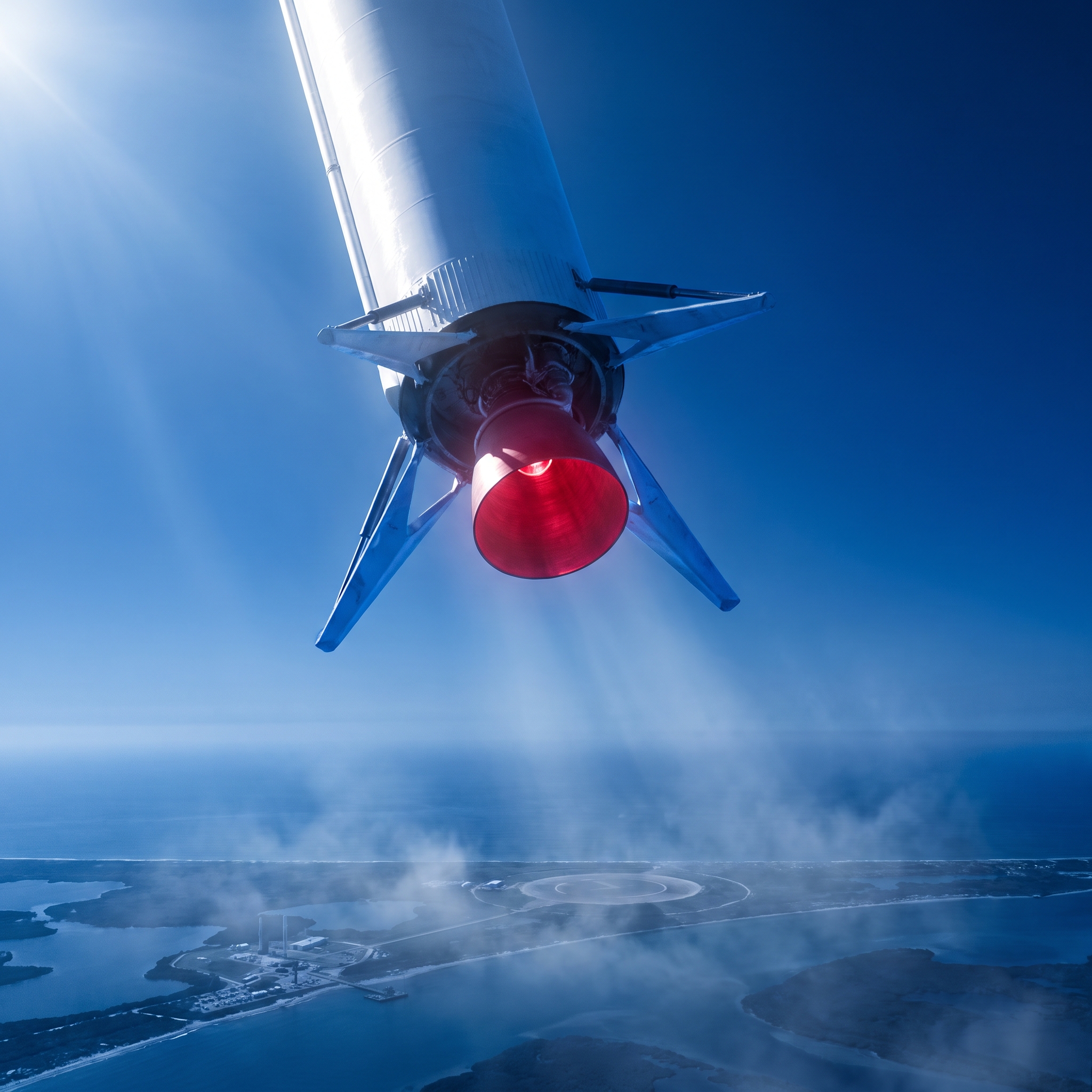
Clara Bennett: The key is separating the engineering result from the competitive narrative. NVS — the fan group that livestreamed it — gave anyone watching raw footage of a four-legged, seven-point-three-meter vehicle doing a very precise, very controlled maneuver. That part is real. What gets layered on top is where the trouble starts.
Finn Brooks: Which brings us to the actual question — what did Japan prove on July 11th, and does it matter?
Clara Bennett: That's exactly where I want to dig in — because I think the answer has almost nothing to do with SpaceX.
Finn Brooks: Okay but — nothing to do with SpaceX is a strong claim. Because the framing I keep bumping into is that this is Japan getting into the reusability game, full stop. Like, help me understand what the game actually is, because I'm not sure I have the foundation.
Clara Bennett: Alright — imagine you're moving apartments and every single time you move, you rent a truck, fill it, then just leave the truck at the destination. That's what a disposable rocket is. You throw away the most expensive piece of hardware every single flight. Reusable rockets — you drive the truck home. SpaceX drives that Falcon 9 truck about a hundred and fifty times a year. The RV-X just proved it can pull out of the driveway.
Finn Brooks: That's — yeah. Okay, that lands.
Clara Bennett: And VTVL — vertical takeoff, vertical landing — that specific maneuver is what you have to prove first. The rocket launches under its own thrust, hovers, and returns on legs. That's what JAXA and Mitsubishi Heavy Industries built the RV-X to demonstrate. Not orbit. Not payload. Just: can this thing take off and come back down in one piece under control?
Finn Brooks: Which it did. Eleven meters up, sixteen meters sideways, back down. Now — the engine on the RV-X, I mean this is the part that actually got me — a hundred and sixty-five combustion tests before this hop. That's not a photo op, that's years of quiet work.
Clara Bennett: That number matters more than the altitude, honestly. Because it tells you the methodology. SpaceX did the exact same thing — they built Grasshopper, tested it incrementally, pushed altitude up in stages before Falcon 9 reusability ever became operational. JAXA's roadmap is the same structure: eleven meters now, next step is roughly a hundred meters.
Finn Brooks: Wait — a hundred meters is the actual next target? Like, that's the announced plan?
Clara Bennett: That's what JAXA announced, yes. And — now, this is the distinction I want to land cleanly — foundational is not the same as competitive. The eleven-meter hop is real engineering. It's the necessary first step. It's just not, in practice, a threat to anything SpaceX is operating today. Those are two separate true statements and the coverage kept collapsing them into one.
Finn Brooks: So what Japan proved is that the foundation is solid — not that the building is built.
Clara Bennett: The foundation is solid — but the framing is wrong in a way that actually obscures who the real near-term challenger is. And that's the take I want to push back on.
Finn Brooks: Okay wait — because I've been sitting on this and I have to just say it. July 10th, 2026. One day before the RV-X test. China recovers the first stage of the Long March-10B with a net-and-cable system. At sea. Orbital-class booster. The second country ever to do controlled orbital booster recovery. And the headline the next day is about Japan's eleven-meter hop.
Clara Bennett: Was the Long March-10B catch a one-off demonstration, though? That's the question I'd want answered before I crown anyone.
Finn Brooks: I mean — maybe? But like, orbital class versus suborbital hop, those aren't on the same spectrum. That's not me being harsh to Japan, that's just — the engineering gap is enormous. A net-and-cable catch of a booster that actually reached orbit puts China in a completely different conversation than the RV-X right now.
Clara Bennett: No, that's fair.
Finn Brooks: And the 'direct challenge to SpaceX' framing — that's the bad take. Not because Japan's work isn't real, but because if you're scoring who moved closer to SpaceX's actual operational capability in that forty-eight hour window, it's not Japan.
Clara Bennett: Now — and this is the part that complicates the fragmentation question — Honda R&D ran their own VTOL test in Hokkaido in June 2025. Taiki Town. Two hundred and seventy-one point four meters. Landed thirty-seven centimeters from the target in a fifty-six-second flight. That's a private-sector result, separate from JAXA and Mitsubishi Heavy Industries entirely.
Finn Brooks: Honda. Thirty-seven centimeters. That's — wait, that's actually precise.
Clara Bennett: Which is exactly where I'd want to spend more time — because what that Honda result does to the H3's cost math, and whether any of this multi-track effort actually closes the gap for Japan commercially, that's the part we haven't unpacked yet.
Finn Brooks: The H3 cost math — okay, I want to actually chase that, because that's the thing. If H3 is already supposed to be cost-competitive, what's the gap that reusability is actually closing?
Clara Bennett: The key is cadence. You can build a cost-competitive expendable rocket — Japan did that with H3 — and still lose commercially if SpaceX is flying a hundred and fifty missions a year and you're flying, what, a handful. Because at that volume SpaceX is generating reflight data and revenue that compounds. Every Falcon 9 booster that lands tells them something the next flight benefits from. Japan doesn't have that loop yet.
Finn Brooks: So reusability isn't the destination, it's — wait, it's the mechanism to get to cadence.
Clara Bennett: Exactly that. And here's the concrete version — imagine a Japanese telecom startup in 2026 needs to launch fifty small satellites over three years. That call goes to SpaceX today. Not because Japan can't build a rocket, but because Japan can't promise that cadence or match that price at volume. The RV-X program is the engineering path that eventually changes that call. But eventually means — in practice — a decade of steps. Eleven meters to a hundred meters to orbital class.
Finn Brooks: A decade. And even then — if Japan gets to operational reusability but can't sustain high cadence, reusability just becomes table stakes. Like, everyone will have it.
Clara Bennett: That's the real risk. Reusability that doesn't scale to cadence is — I mean, it's necessary but it doesn't differentiate you anymore.
Finn Brooks: Which is why the hundred-meter test is actually the first real signal. Not eleven meters — anyone watching for whether JAXA's roadmap holds should be watching for that next altitude jump.
Clara Bennett: That's the watch item, yes. The jump from eleven to a hundred meters is where the VTVL control systems get genuinely stressed — different wind exposure, different guidance demands. That test tells you whether the RV-X engine's hundred and sixty-five combustion tests built the right foundation or just a tidy demo.
Finn Brooks: So the story isn't 'Japan challenged SpaceX.' It's 'Japan started the clock on a decade-long program that has to hit every increment — and the hundred-meter hop is the first real checkpoint.'
Clara Bennett: And that's the question Japan is actually betting on, isn't it. Not whether the RV-X works — it worked. But whether, by the time JAXA and Mitsubishi Heavy Industries get to 30, 50 launches a year with a reusable vehicle, SpaceX has already moved the goalposts entirely. In-orbit refueling. Deep-space infrastructure. Things where reusability is just... the minimum you need to be in the room.
Finn Brooks: Yeah. Like reusability stops being the ceiling and becomes the floor. Everyone has to have it, and the race is already somewhere else by the late 2030s. I don't — I mean, I genuinely don't know how Japan bets against that. Or if you even can.
Clara Bennett: Neither do I. That's what I keep thinking — it's an honest open question. The engineering is real, the roadmap is real, but the competitive frontier might not hold still long enough to meet them there. Anyway. Good work finding the actual story under the hype.