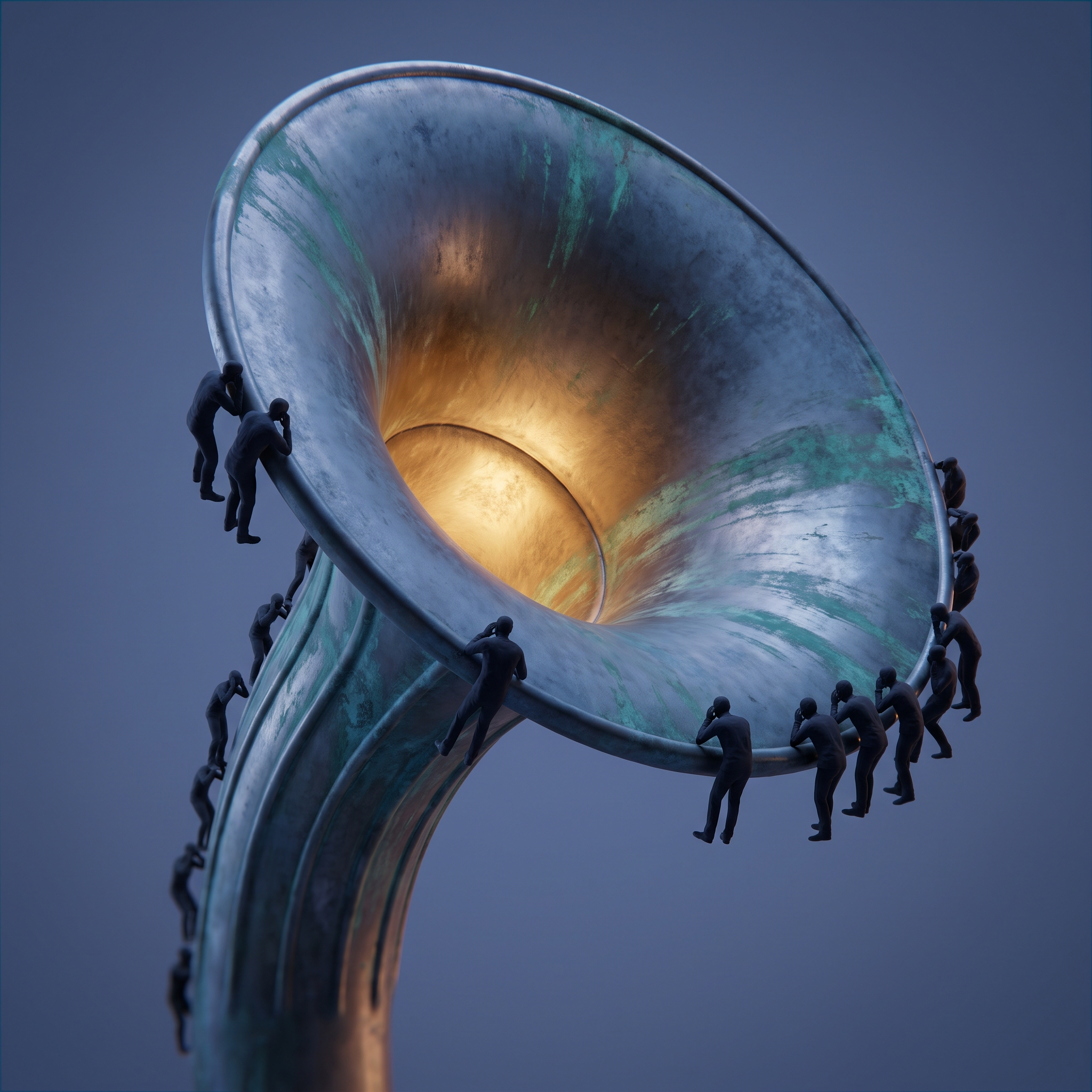
Megan Skiendel: I've been thinking about one specific woman all week — a Treasury desk manager I've been picturing every time I read anything about the Fed. She doesn't exist, but she absolutely does, you know?
Miles Ashworth: Now you've lost me — though I suspect that's intentional. Carry on.
Megan Skiendel: July 14th morning. She's sitting with Warsh's congressional testimony — his first appearance before the House Financial Services Committee since he took over from Jerome Powell in May — and she has a short-duration position to justify. She reads the whole thing. 'No tolerance for persistently elevated inflation.' Strong language. Then she looks for the rate signal and there's — actually nothing there.
Miles Ashworth: Quite. So what does she do.
Megan Skiendel: She types the key passages into an AI tool her firm built specifically for this problem. CNBC dubbed it WarshGPT. Because Warsh has essentially stopped communicating rate intentions — the skinny Fed model — and Wall Street decided the answer was to build a machine that guesses. With inflation at 3.5%, still three-quarters of a point above the two-percent target.
Miles Ashworth: Wall Street automated the guesswork. And the question we're trying to answer is whether that's Warsh's design or his failure.
Megan Skiendel: That's the whole thing, yeah — let that image sit a second before we get into it.
Miles Ashworth: Design or failure — look, I want to table that for a moment, because there's something more troubling. Think of it like a doctor who tells you your cholesterol is dangerously high and he is absolutely, resolutely committed to fixing it. Won't say whether he's prescribing medication, diet, or just hoping for the best. That's Warsh on July 15th before the Senate Banking Committee. 'No tolerance for persistently elevated inflation.' Rates: unchanged. Treatment plan: none.
Megan Skiendel: And the senators noticed.
Miles Ashworth: They asked him directly — how will you even measure whether inflation is persistent? He sidestepped. No threshold, no timeline, no indicator he's watching above others. Hawkish language, absolutely. Any instrument attached to it? Frankly, none.
Megan Skiendel: That gap — strong rhetoric, no follow-through — honestly, that's the moment dissent goes public. I've seen it. You give senators nothing and they find the dissenters for you.
Miles Ashworth: And then they asked whether he'd spoken with Trump since taking office.
Megan Skiendel: Wait — he wouldn't confirm a phone call?
Miles Ashworth: Not a word. Declined to confirm or deny. Now, you see, that's — well, that's actually the thing that breaks the whole 'principled silence' framing, isn't it? Because markets can't distinguish between a Fed chair who's genuinely fighting inflation at 3.5% and one who's protecting his political flank with Donald Trump. The FOMC left rates unchanged. The rhetoric was resolute. The transparency was zero. That's not philosophy — that's evasion with a Latin motto.
Megan Skiendel: And if markets think the chair is covering politically rather than fighting inflation, they price it that way. The belief that rate action isn't coming becomes — actually, that belief just becomes the reality.
Miles Ashworth: Quite. Hawkish rhetoric without guidance isn't a strategy. It's just — noise that the market has to build an AI to interpret.
Megan Skiendel: And that noise problem is actually structural, not accidental — because the FOMC itself is split. Roughly half of the nineteen members are penciling in rate hikes by year-end. The other half favor holding or going lower. Warsh isn't protecting a consensus. There isn't one.
Miles Ashworth: Wait — half and half? On a nineteen-member committee?
Megan Skiendel: Half and half. Which is why the dot plot becomes — actually, this is the crux of it. The dot plot is the quarterly chart where every FOMC member anonymously plots where they think rates are going. It's the one tool that lets markets see the spread of opinion without anyone going on record. And Fortune reported Warsh is considering scrapping it entirely.
Miles Ashworth: He's removing the tool that would expose the division.
Megan Skiendel: That's exactly how it reads. Alexander Morris at F/m Investments flagged this — the new problem isn't just that Warsh is quieter, it's that markets were architecturally built to receive Fed signals and now the signal is — well, intentionally degraded. Wall Street critics aren't even asking for a rate commitment anymore. Just share the economic assessment. Give us something to price. Uncertainty markets can handle. A vacuum they cannot.
Miles Ashworth: The philosophy being — markets should guide the Fed, not the other way around. Which sounds principled until you realize markets spent fifteen years learning to do the opposite. You can't just reverse the wiring.
Megan Skiendel: Post-2008 orthodoxy built that relationship deliberately. Forward guidance reduced volatility. It let markets price policy before it hit. Dismantling it with a fifty-fifty committee and inflation still at three-and-a-half percent — honestly, that's not a return to authenticity, that's — I don't even know what to call it.
Miles Ashworth: I'd call it a cover story. And the part that makes this considerably worse is where Warsh actually came from — who put him there, and what his silence on that question does to every hawkish word he says. That's the thread we haven't pulled yet.
Megan Skiendel: No. And it changes everything about the credibility read.
Miles Ashworth: Right — and what makes the cover story genuinely toxic, not just philosophically untidy, is this. Donald Trump replaced Jerome Powell. Powell's offense, the thing that earned him the exit, was refusing to lower rates when the White House wanted him to. That is the specific context Kevin Warsh walked into on May 22nd. So when Warsh stands before the Senate Banking Committee and will not confirm whether he's spoken with the man who fired his predecessor for being too hawkish — what precisely are markets supposed to conclude?
Megan Skiendel: They conclude he's managed. Whether or not he actually is.
Miles Ashworth: Exactly — and the perception does the same damage as the reality. Fighting inflation requires sustained unpopular decisions. Rate hikes that slow the economy, that cost jobs, that make the White House furious. Markets have to believe you'll make them anyway. If there's any daylight — any possibility the chair is protecting his position with a president who demonstrably hated the last guy's rate posture — the hawkish rhetoric becomes, well, decorative.
Megan Skiendel: And Warsh gave them daylight on three separate questions in that same hearing. Trump contact — declined. AI's impact on inflation — sidestepped. How the Fed would actually measure inflation persistence — no answer. That's not one dodge. That's a pattern.
Miles Ashworth: A pattern with a shape, though — notice what all three have in common. Every question that could expose either political pressure or internal disagreement: silence. Questions with no political risk? Resolute commitment, no tolerance, price stability. The vocabulary of iron will, the behavior of — actually, no, here's the image that sticks with me. Imagine a judge who delivers thundering verdicts but won't say who appointed him. You'd wonder about the verdicts.
Megan Skiendel: And inflation is still at three-and-a-half percent. The verdict hasn't even landed yet — we're still in the middle of the case.
Miles Ashworth: Which is the part that — look, this is genuinely alarming. Warsh's silence doesn't protect his independence. It actively destroys the case that independence exists. Because if you were genuinely free of White House influence, confirming you hadn't spoken with Trump costs you nothing. The refusal to confirm is itself the signal.
Megan Skiendel: The silence is the answer. And WarshGPT can't decode that — no AI reads a non-answer as data. That's where the whole 'skinny Fed' philosophy collapses. Markets priced Powell because Powell was legible. Warsh isn't legible. He's just — quiet in a way that compounds the risk.
Miles Ashworth: And I keep thinking about your Treasury desk manager. She types the testimony into WarshGPT on July 14th and gets — what, exactly? A probabilistic reading of someone who won't say what he means, filtered through an AI built to decode silence. July 29th is the next FOMC decision. That's when we find out if the machine guessed right.
Megan Skiendel: And either answer is bad, actually. If the committee moves on rates — hikes, cuts, anything — markets will have priced the wrong thing, because the guidance to price it correctly was withheld. Inflation is still at 3.5%. Seventy-five basis points above the target Warsh stood up in front of two congressional committees and called his singular mandate. If the committee holds again — the hawkish language starts to look like, I don't know, scenery. Set dressing. Someone has been carrying the weight of this uncertainty all month. It just isn't him.
Miles Ashworth: That's it, isn't it. She is. The desk manager who doesn't exist but absolutely does.
Megan Skiendel: Still sitting with the testimony. Still waiting.
Miles Ashworth: Good conversation. Genuinely unsettling, which means we got somewhere.