Brian Reed: Eliza, okay — two summits, one year. May 20th in Beijing, then again in Bishkek at the SCO meeting. That's a lot of face time between Putin and Xi.
Eliza Ward: More than twenty documents signed out of Beijing alone. Which — honestly, that's the number that keeps stopping me. Not because it's impressive. Because it might be the opposite.
Brian Reed: How do you mean?
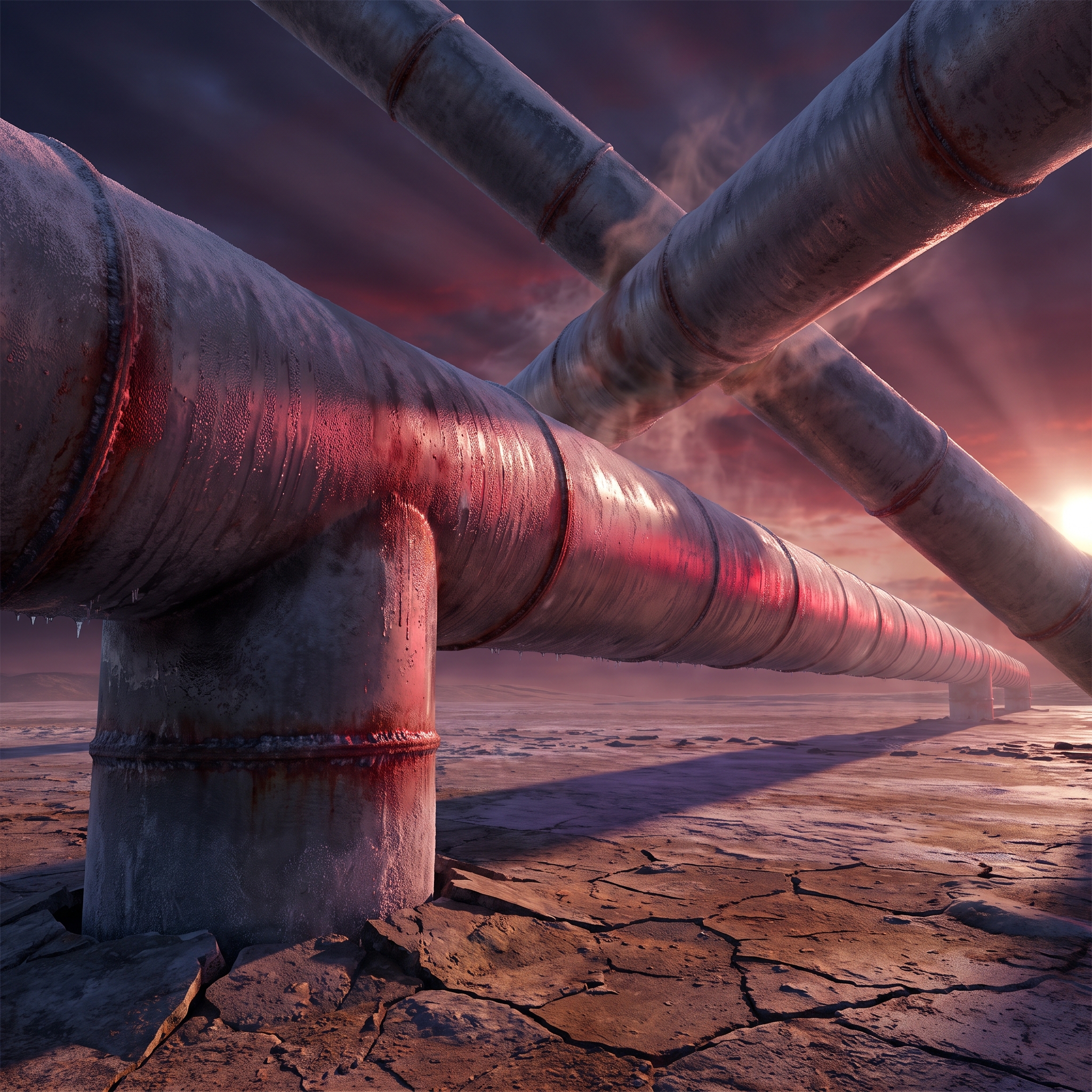
Eliza Ward: Well — if the big deal was actually done, you wouldn't need twenty documents around it. The Power of Siberia 2 pipeline, the one that would actually lock in a long-term energy relationship, that's not signed. At Bishkek it was described as a discussion topic. A topic.
Brian Reed: So the gap between the ceremony and the actual deliverable is — yeah, that's the story. And then you look at the trade context: China-Central Asia hit $106 billion last year, record figure. But that's the whole region, not Russia. Which is, I think, the part that reframes everything else.
Eliza Ward: Beijing isn't betting on Moscow. It's building around it.
Brian Reed: Right — and that's actually the harder question underneath all the summit optics. When coordination looks this deliberate, how do you tell what's real alignment versus what's just... both sides needing a good photo?
Eliza Ward: That's what we're trying to work out — and I don't think the documents give us the answer.
Brian Reed: And that's the part that actually trips people up — because twenty documents sounds like a lot happened. But it's, let me think about this — it's like a landlord and a prospective tenant signing a letter of intent. It signals serious interest. It is not a lease.
Eliza Ward: That's exactly the distinction. The Foundation for Defense of Democracies ran their analysis after the May summit and explicitly said it failed to land major breakthroughs. Those twenty-plus documents — largely symbolic, their word.
Brian Reed: Largely symbolic. From people whose job is to watch this closely.
Eliza Ward: And then at Bishkek, Putin and Xi reaffirm coordination across the UN, BRICS, G20, ASEAN — that whole multilateral front. Which sounds like progress, but wait — reaffirming is not doing. That's the same letter of intent, bigger font.
Brian Reed: What would a real deliverable actually look like? Power of Siberia 2 is the test case — if that pricing got resolved, we'd see it. There'd be a number. There's no number.
Eliza Ward: The silence on the pricing is — actually, no, the silence is the signal. China's still negotiating from strength because Russia has, genuinely, nowhere else to send that gas. So Beijing can just... wait.
Brian Reed: Right — but the part that doesn't fit neatly is, who does that serve in the short run? Because Russia keeps showing up to these summits and signing things. They need the optics too.
Eliza Ward: Both sides need the photo. The sourcing we have doesn't tell us what's behind it — so we should probably hold that conclusion loosely. What it does tell us is the stall on Power of Siberia 2 after two summits isn't a detail. It's the read.
Brian Reed: And the stall on Power of Siberia 2 actually leads straight to the thing underneath all of this — like, why is Russia at the table at all? Because post-2022, Western markets closed for Russian crude, almost overnight. Russia had to send that oil somewhere. And the somewhere was China. Not because Putin wanted a client relationship, I think — but because, let me think about this — because there was no alternative at scale.
Eliza Ward: That's the forced turn. And the payment side is just as locked in — Russia's been expanding RMB-based trade, building alternative payment infrastructure, essentially because the dollar rails got cut off.
Brian Reed: Right — but here's where I want to be careful, because Putin was talking about a 'turn to the East' as far back as 2012. So is this sanctions forcing a shotgun marriage, or did 2022 just... move up a wedding that was already planned?
Eliza Ward: Both, probably. The direction was there. The pace — that's the sanctions.
Brian Reed: That distinction matters a lot, actually. Because if it's acceleration not invention, then the dependency might be deeper than sanctions alone can explain.
Eliza Ward: Wait — and you can see the bind most clearly when you look at what Lavrov said August 31st. He's at the podium calling NATO's Arctic Sentry activity a direct security threat to Russia. Same period Moscow is out there promoting Arctic shipping routes and resource projects with China and India. So — the framing is containment, the behavior is hedging.
Brian Reed: Hold on. A Russian energy official in Murmansk watches an Arctic Sentry overflight, gets a call from Moscow that same day Lavrov's at the podium — and the policy response is to deepen the China tie on Arctic routes. That's not a contradiction, right? That's the logic of someone who knows they can't push back militarily and needs the economic alternative fast.
Eliza Ward: That's the dependency in motion. And we should say — the exact scale of how much Chinese crude absorption is genuinely contested. The numbers floating around have no clean sourcing. What isn't contested is the direction.
Brian Reed: And it gets more uncomfortable the longer you look at it — whether China actually wants a partner or is just accumulating leverage. That's where Alice Ekman's framing and what Wu Dahui calls 'hot politics, cold economics' start to complicate the whole picture. We'll get there.
Eliza Ward: Alice Ekman's framing is the one that actually breaks the clean version. She's research director at EUISS, and her argument is that Beijing isn't looking for an alliance — it's building what she calls 'circles of friends.' Fluid networks. No binding commitments. Which means China is deliberately engineering optionality into a relationship Russia needs to be permanent.
Brian Reed: So Moscow is trying to lock in a partner and Beijing is structurally, like — resisting the lock.
Eliza Ward: That's the asymmetry. And Wu Dahui — he's deputy director at the Russia Institute — he names it directly. 'Hot politics, cold economics.' Warm signals at the summit, persistent friction underneath.
Brian Reed: The part I want to sit with is — what does 'cold economics' actually mean when you're looking at the military side? Because The Insider reported in July 2025 that in 2023 and 2024, China purchased a Russian automated command system for secure tactical communications. And signed a contract for PLA airborne troop training. That's not ceremonial. That's technical. That's real.
Eliza Ward: Wait — that's the thing that complicates Wu Dahui's phrase. Because that procurement is economic and military simultaneously, and it went Beijing's direction. China bought the system. Russia's Pacific Fleet runs joint exercises near Taiwan. Analysts are calling it a historic peak in military cooperation. But Beijing still won't commit publicly.
Brian Reed: So China gets the technology transfer and the training, and Russia gets... a joint naval patrol and no alliance guarantee.
Eliza Ward: That's — actually, yeah. That's leverage accumulation with extra steps. And the Power of Siberia 2 stalemate runs the same logic. China doesn't need to close that deal. Sitting on it is the power move.
Brian Reed: So at what point does 'circles of friends' just become abandonment on a slow timer? Like — does Russia see it?
Eliza Ward: Honestly? The sourcing doesn't get us there. That's analyst interpretation territory. What we can say is the structure favors Beijing at every pressure point — energy pricing, military tech, payment rails. Whether Moscow has accepted that or is still waiting for parity — that's the open question.
Brian Reed: The thing I keep sitting with — and I don't have a clean answer for this — is what actually holds it together if the acute pressure goes away. Like, if sanctions eased tomorrow, or a U.S. administration just... deprioritized Russia containment. Does the relationship have its own gravity at that point, or does it start to drift?
Eliza Ward: That's — honestly, that's the question the summits didn't answer. Either of them. The SCO frame at Bishkek, BRICS as a reaffirmed coordination forum — both sides are clearly building institutional scaffolding. But scaffolding isn't a structure. It holds the thing up while you're building. It doesn't tell you what the building is.
Brian Reed: And Russia needs that forum — the SCO — way more than China does. Xi can use it for the multipolar Eurasian agenda. Putin needs it to not be isolated.
Eliza Ward: That asymmetry doesn't resolve. And we haven't gotten an answer from either summit on whether Russia has actually accepted a client-state role, or whether they're still waiting for something to shift back. That's — I don't think we're close to knowing.
Brian Reed: No. And I think that's probably the honest place we land — genuinely unresolved. The scaffolding is real. The structure underneath it, we can't confirm.
Eliza Ward: The most interesting signal won't come from the next summit. It'll come from what China quietly stops showing up for.