Topic · 45 episodes
World
World affairs in these Onpode episodes center on a rapidly shifting Iran crisis with direct consequences for Israel and the Middle East. Trump and Iran electronically signed a peace deal with the Strait of Hormuz set to reopen Friday. Yet the settlement may force Israel back to Lebanon's Yellow Line — without IDF consultation — while Netanyahu's confrontational approach drew criticism for weakening Israel and strengthening Tehran rather than the reverse.
Frequently asked
What is the Trump-Iran peace deal?
Trump and Iran electronically signed a peace deal, with the Strait of Hormuz set to reopen Friday. The agreement marks a significant diplomatic shift, though its regional implications — particularly for Israel — remain contested and have drawn sharp criticism from those who argue it strengthens Iran's position.
How does the Iran deal affect Israel and Lebanon?
The Iran peace deal may force Israel back to Lebanon's Yellow Line, a significant strategic concession. Notably, the IDF was reportedly not consulted during negotiations, raising concerns inside Israel about being sidelined in a settlement that directly affects its northern security posture.
Did Netanyahu's Iran confrontation strategy work?
Critics say Netanyahu's confrontational approach backfired badly. Rather than weakening Iran, the strategy is assessed to have strengthened Tehran while leaving Israel in a more exposed position — a reversal that has fueled domestic and international criticism of his handling of the Iran standoff.
What does the Strait of Hormuz reopening signal?
The Strait of Hormuz reopening Friday, tied to the Trump-Iran peace deal, signals a meaningful de-escalation in one of the world's most strategically sensitive waterways. It marks a concrete, immediate outcome of the agreement, though broader regional stability questions remain unresolved.
Episodes
 The resource curse: why oil-rich states often have weaker institutions than resource-poor neighborsNigeria extracted over $500 billion in oil revenue yet suffered governance collapse, while Botswana averaged 7.8% annual growth from diamonds. The difference is institutional: states that don't tax citizens have no incentive to build accountability. The resource curse is conditional — but the escape route typically closes once extraction begins.
 How a blacklisted Chinese tech giant kept buying Nvidia's best AI chips despite US sanctionsAivres Systems Inc., a Silicon Valley subsidiary of Chinese military-blacklisted Inspur Group, moved $5.6 billion worth of Nvidia Blackwell-generation AI chips to Southeast Asia between April 2024 and February 2026 — exploiting a legal gap where the U.S. Entity List named the parent company but not its American-incorporated subsidiary.
 Von der Leyen is in Greenland right now, strengthening EU control over Arctic resourcesEU Commission President Ursula von der Leyen arrived in Nuuk on September 6 to sign a partnership declaration with Greenland, countering U.S. annexation pressure with a reported €530 million investment package — unconfirmed by von der Leyen herself — targeting critical minerals, satellites, and renewables for a territory of 56,000 people.
 China just cracked seawater uranium extraction—8 times better than US methodsChina's Qingdao Institute published a material called PhosCage that absorbs 50.4 mg of uranium per gram from seawater — roughly eight times the US DOE's 6 mg/g benchmark. But that benchmark dates to 2016, no cost-per-gram figure has been published, and all testing occurred in lab tanks, not open ocean.
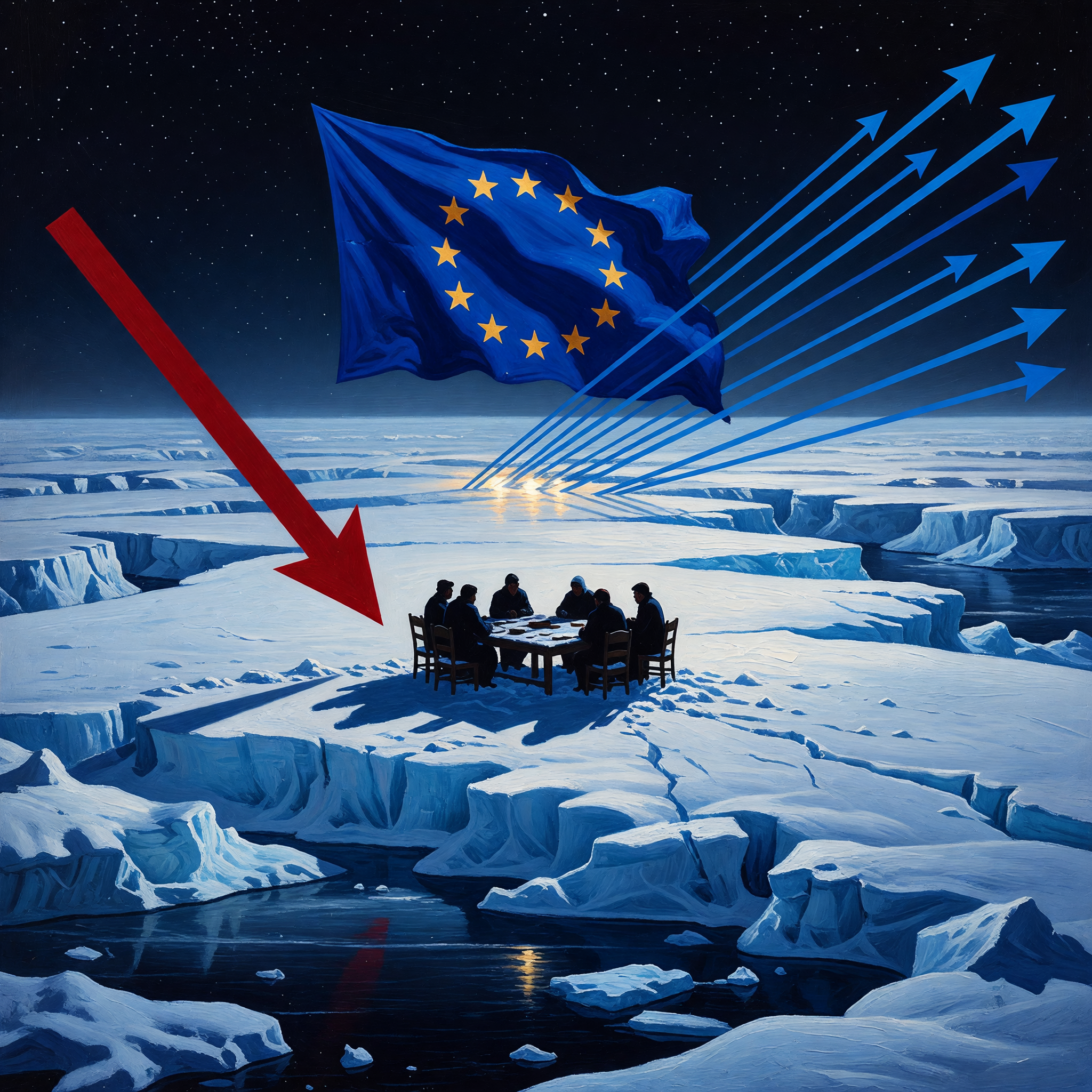 As Trump demands Greenland, the EU is racing to invest and bind it closerEU Commission President Ursula von der Leyen visited Greenland on September 6–7, 2026, pledging investment in critical minerals, satellite comms, and renewables as a counter to Trump's demands for US control. Specific euro figures remained unconfirmed at publication, and a 2026 European Parliament study concluded the EU cannot substitute US Arctic military presence.
 Why oil priced in dollars gives the US structural asymmetry in global financeOil priced in dollars forces every oil-importing nation to hold dollar reserves, recycling surpluses into U.S. Treasuries — a loop engineered in a 1974 U.S.-Saudi deal that gives the U.S. structural borrowing advantages economists call 'exorbitant privilege,' regardless of American economic performance.
 First US strike on Iranian forces in a month heightens escalation risk and tests US grip on Strait of HormuzOn August 30, the U.S. struck two IRGC rocket launchers on Larak Island — the first confirmed American kinetic action against Iranian targets in roughly a month — because CENTCOM observed them preparing to deploy sea mines into the Strait of Hormuz, through which 20% of global oil trade passes. Iran responded with eight Kheibar Shekan ballistic missiles at U.S. bases in Jordan; all eight were intercepted.
 Moscow and Beijing's SCO summit shows how sanctions and proxy conflicts are binding them closer on energy and defenseAfter two Putin-Xi summits — May in Beijing and then Bishkek at the SCO — the Power of Siberia 2 pipeline deal remains unsigned, with no pricing agreed. Beijing has leverage Russia lacks: China can simply wait, while Russia has no alternative market for its gas at scale.
 While conflict rages, Putin and the Iranian president coordinate with Beijing and New Delhi at SCO summitAt the SCO's 25th-anniversary Bishkek summit, Xi Jinping told Putin ties were 'more solid' and Putin said cooperation was 'developing on all fronts' — but India's simultaneous Western partnerships and the SCO charter's own 'not an alliance' language expose the bloc as too fractured to function as a unified anti-Western front.
 Xi, Modi, and Putin just met in Kyrgyzstan to counter U.S. influence and promote a multipolar worldAt the Bishkek SCO summit — the bloc's 26th, marking its 25th anniversary — Xi, Putin, Modi, and Iran's Pezeshkian met in the same room, yet the most concrete outcomes were bilateral: Putin offered China a permanent visa-free regime. The Bishkek Declaration and three proposed financial institutions remained unconfirmed as signed agreements.
 Why states that control rare earth elements or energy leverage that control as foreign policyStates controlling concentrated, hard-to-substitute resources — rare earths, oil, grain — can weaponize that control against importers who lack short-term alternatives. China's October 2025 mineral export controls, Russia's post-2022 Black Sea grain disruption, and OPEC's 1973 oil embargo all share the same three-part logic: concentrated supply, inelastic demand, and high adjustment costs.
 How military or economic alliances between unequal powers breed resentment and driftIn asymmetric alliances, the weaker client partner often holds more leverage than raw power predicts, because strategic indispensability — a unique base, chokepoint, or intelligence asset — converts geographic luck into recurring side payments: arms, cash, and diplomatic cover the patron keeps delivering to avoid losing access it thought it already owned.
 How the nation-state system conflicts with supply chains and climate that cross bordersThe Westphalian nation-state system, designed in 1648 to govern bordered territories, cannot govern semiconductor supply chains or climate change that cross borders by design. NBER data shows China's share of U.S. imports fell from 21.6% to 16.5% between 2017 and 2022 — but dependency relocated to Vietnam and Mexico, not eliminated.
 The structural gap between sanctions intent and sanctions impact — why embargoes often backfireEconomic sanctions against Russia fail to concentrate pressure because India imports 1.5–2 million barrels of Russian crude daily and China absorbs redirected trade — a substitution margin that existed since 2014. When comprehensive sanctions close every Western door, sanctioned states build permanent alternative infrastructure, making future sanctions structurally less effective.
 Why oil priced in dollars gives the US structural leverage over global capital flowsThe petrodollar system, built around a 1974 US-Saudi arrangement, requires every oil-importing nation to hold dollars — recycling surplus revenues into US Treasuries and letting Washington finance debt cheaply. ECB research suggests oil denomination does less independent work than assumed; US shale exports and decarbonization quietly erode the architecture without any rival currency needing to win.
 How the 1648 Peace of Westphalia locked in territorial sovereignty as the only legitimate source of powerThe 1648 Peace of Westphalia did not actually establish territorial sovereignty as a universal norm — that principle was retroactively attributed by 20th-century scholars who needed a founding moment. The one concrete act: Spain recognized the Dutch Republic as independent. The broader norm accumulated over centuries through state practice, not a single treaty.
 Washington plans nuclear merchant vessels to challenge Beijing's shipbuilding advantage and secure supply chainsThe U.S. holds just 0.11% of global commercial shipbuilding while China controls 53%. An August 24 MARAD agreement with Core Power addresses nuclear-powered merchant vessels, but it is preliminary and non-binding — no ships, no budget, no timeline. The deeper obstacle is regulatory and ecosystem failure, not reactor technology.
 Britain's PM just vowed continued Ukraine support from Kyiv, sparking escalation-versus-peace debateUK Prime Minister Andy Burnham visited Kyiv on Ukraine's 35th Independence Day — his first foreign trip after taking office on 20 July — and pledged £25 billion in support while transferring long-range missile manufacturing blueprints to Ukraine, a move Russia's embassy in London formally condemned as 'deliberate escalation.'
 Washington's 'economic D-Day' against Iran directly targets China's top oil source, risking US-China trade warIran's oil exports have collapsed from 1.57 million barrels per day in February to 534,000 in August — a drop driven primarily by a US naval blockade, not Treasury sanctions. No major Chinese bank has been formally designated, leaving 'Operation Economic Outcast' dependent on a military mechanism its own announcements don't acknowledge.
 Why oil pricing in dollars gives the US structural leverage over global financeThe petrodollar system forces every oil-importing nation to acquire US dollars before buying crude, creating automatic, structural dollar demand — no treaty required. The dollar's share of global reserves has fallen from 71% in 2000 to roughly 59% today, but no alternative payment infrastructure exists at comparable scale.
 As Moscow relies on Beijing, analysts warn the 'no limits' alliance risks asymmetric economic controlChina now supplies 90% of Russia's imports of Western-controlled goods and absorbs roughly 30% of Russian exports — up from 15% in 2021. That structural shift, accelerated by post-2022 sanctions, gives Beijing unilateral pricing power over both what Russia buys and what Russia earns.
 Two US senators just met Zelenskyy in Kyiv to push bipartisan Iran and Russia sanctionsSenators Blumenthal (D-CT) and Lankford (R-OK) met Zelenskyy in Kyiv on August 23, 2026 — three days after Russia killed at least 16 people in a major strike — to push the Lindsey Graham Sanctioning Russia and Iran Act. That bill is unenacted, its Senate architect is dead, and Russia is already exploiting Ukraine's Patriot interceptor shortage.
 Zelenskiy warns Putin will draft 300,000 troops after September elections—escalating manpower shiftUkrainian President Zelenskiy claimed on August 23 that Putin plans to draft roughly 300,000 troops after State Duma elections on September 18–20, targeting remote Russian regions to avoid a repeat of the 2022 border-flight crisis. The Kremlin has not confirmed or denied the claim, and no independent verification exists.
 Zelenskiy says holding elections now would destroy Ukraine—but democratic pressure mountsVolodymyr Zelenskyy, whose presidential term expired in May 2024, says wartime elections would be 'a tsunami that will split Ukraine' — but over two years later he has never named a concrete condition for when they could happen, leaving martial law, continuous since February 2022, with no defined off-switch.
 Why the nation-state system still governs international conflict despite globalizationThe 'Westphalian system' — supposedly founded by the 1648 Treaties of Münster and Osnabrück — was never universal: the original documents codified rights for German princes inside one empire, not sovereign equality for all states. Yet that myth became binding UN Charter law, making a historical fiction the load-bearing architecture of international order.
 The US has burned through 'virtually all' ATACMS and Precision Strike Missiles fighting IranThe U.S. burned through virtually all of its ATACMS and PrSM long-range precision missiles during five months of the Iran war, per three sources cited by Reuters on August 4, 2026. CSIS estimates fewer than 278 THAAD interceptors remain globally — draining both offensive strike capacity and the defensive shield.
 Iran's war attacks exposed the limits of US guarantees—the Gulf is building its own securityIran's 2026 barrage hit Gulf energy infrastructure — not US bases — because GCC states were targeted as host nations for a conflict Washington and Israel initiated. The Gulf's 14-nation security coalition has no integrated command, Hormuz shipping ran at 31% of pre-war traffic, and Oman, not the coalition, is brokering the actual ceasefire talks.
 Tehran hit 650 times in the war—50,000 homes damaged, the worst toll of any Iranian provinceTehran sustained 650 documented strikes during Operation Epic Fury, leaving 50,849 residential units damaged — more than any other Iranian province. A municipal report presented August 4, 2026 put direct economic losses at $280 billion, explicitly a floor that excludes the Hormuz blockade, follow-on operations, and psychological damages.
 Trump warns Iran to open Hormuz or face military action as Tehran exploits war leverageBefore February 28, 2026, ships transited the Strait of Hormuz without paying Iran a cent. After the U.S.-Israeli air campaign that killed Khamenei, Iran imposed IRGC-backed transit fees and mined the waterway — and the only deal on the table now institutionalizes that fee structure permanently, trading free passage for Iranian economic sovereignty over the strait.
 Why controlling territory, taxing citizens, and monopolizing force reinforce each other structurallyTerritory, taxation, and military force form a self-reinforcing loop at the core of state formation: consolidated territory enables tax collection, taxes fund institutions, and institutions defend territory. Charles Tilly's data shows the loop works only for victors — losers like post-1870 Paraguay lost sixty percent of their population and their entire extractive apparatus.
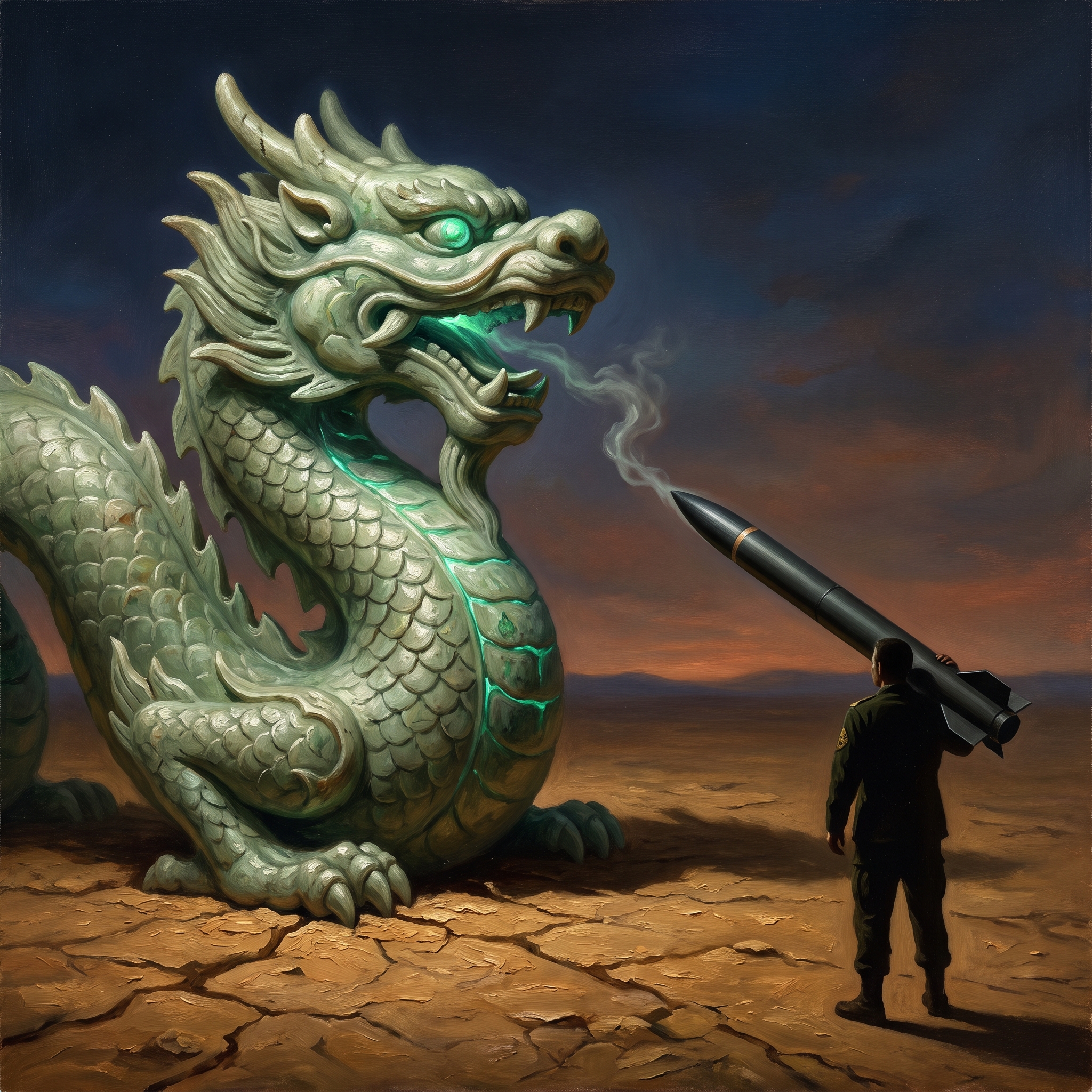 Iran is getting Chinese shoulder-launched missiles within weeks—here's what that meansIran is reportedly receiving 300 to 400 Chinese QW-12 and FN-16 shoulder-launched missiles in a deal worth $60–70 million, routed through Pakistan via a Hong Kong-linked company. China denied the report as 'completely groundless'; Iran's foreign ministry did not respond — a silence one analyst reads as consistent with the deal being real.
 Netanyahu says his Trump meeting on Iran was a triumph—despite keeping it low-profileOn July 28, Netanyahu entered the White House through a side entrance, held a 90-minute closed meeting with Trump, received no joint press conference, and was folded into a one-sentence readout shared with Zelensky — yet called it 'one of the best we've ever had,' a claim targeted at Israeli voters three months from an election.
 Zelenskyy just detailed a full-spectrum authoritarian alliance: North Korea, Iran, and China backing Russia's warZelenskyy stated on July 28, 2026 that Russia is staging 30,000 additional North Korean troops in Voronezh, receiving Chinese satellite and guidance technology, and coordinating with Iran on drone strikes — while Ukraine struck four Russian and Iranian-linked vessels in the Caspian Sea on July 24–25, confirming a real arms supply corridor.
 Iran just launched multiple ballistic missiles at US troops—all intercepted by CENTCOMIran's IRGC fired at least four ballistic missiles at a U.S. base in Jordan on July 29, 2026 — all intercepted by CENTCOM with zero U.S. casualties. But CSIS warned that same day that Patriot and THAAD interceptor stockpiles were already depleted after 30-plus drone attacks in the prior 72 hours, and cannot be rapidly replenished.
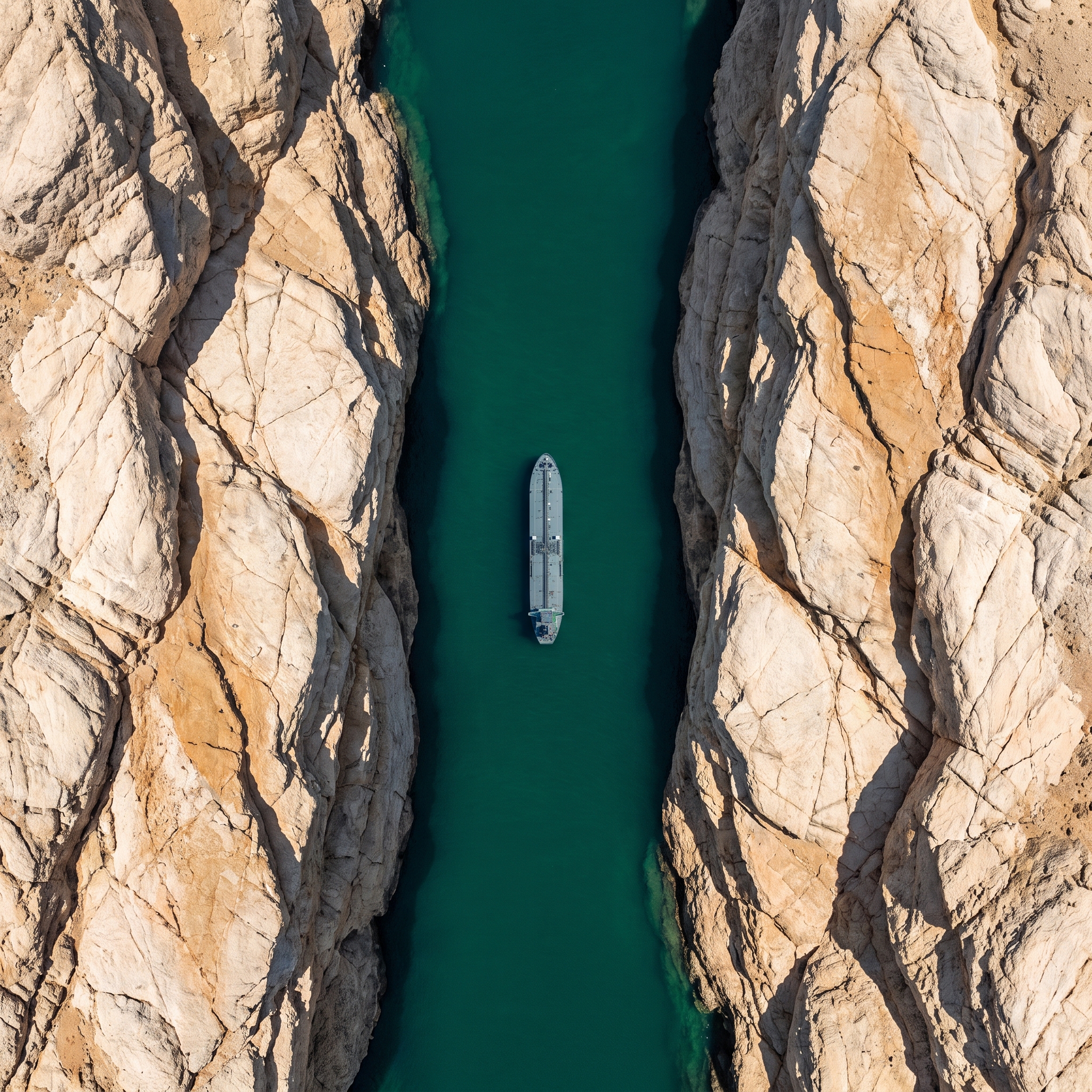 Secretary of State Rubio names Strait of Hormuz control as the key sticking point with IranIran's IRGC has operated a tollbooth system in the Strait of Hormuz since Mojtaba Khamenei took power, blocking non-Iranian and non-Chinese vessels from roughly 25% of global seaborne oil. After eleven consecutive nights of U.S. airstrikes, the IRGC has not budged — and Secretary of State Rubio calls Iran's control demands a 'very dangerous precedent.'
 Ukraine's president just appointed a new military commander amid ongoing war with RussiaOn July 21, 2026, Volodymyr Zelensky fired Commander-in-Chief Oleksandr Syrskyi and appointed Mykhailo Drapatyi after six days of mass protests in Kyiv — but dismissed Defense Minister Mykhailo Fedorov, the architect of Ukraine's drone modernization agenda, was not reinstated, leaving the reform program without a single authoritative owner inside the defense chain.
 The US intensified strikes on Iran's nuclear and military sites over 11 consecutive nightsThe U.S. conducted 11 consecutive nights of strikes on Iran's nuclear and military sites through July 22, 2026, yet 30-plus commercial vessels were still attacked in the Strait of Hormuz during the same period. Trump publicly threatened Pickaxe Mountain, an underground nuclear enrichment site near Natanz — a move analysts say removes every face-saving exit for Iran.
 Defense Secretary claims Iran's military is destroyed—but five months in, the war costs $37.5BFive months into the U.S. war with Iran, Defense Secretary Pete Hegseth disclosed $37.5 billion in war costs to the Senate on July 21, 2026 — despite declaring Iran's military 'destroyed and combat ineffective' in March. The figure excludes U.S. base repair costs, and the White House has separately requested $87.6 billion more.
 How territorial control, tax collection, and monopoly on force reinforce each otherEurope's 500-plus statelets of 1500 shrank to a handful of nation-states by 1800 because territorial control, tax revenue, and military force form a self-reinforcing loop: each element funds the next. Besley and Persson show fiscal capacity today is measurably higher in countries that fought more wars historically — meaning state strength is largely inherited pressure.
 Why some nations project power globally and others cannot — the structural mechanismsGlobal defence spending hit $2.46 trillion in 2024, yet more spending does not guarantee more power. The decisive mechanism is a military-economic feedback loop: military capacity secures trade routes, trade generates wealth, wealth funds military development. Whether that circuit closes — or breaks — determines which nations project power and which cannot.
 China and Russia just completed their 11th joint bomber patrol near Japan—challenging US air dominanceChina and Russia completed their 11th joint strategic bomber patrol on June 27, 2026, deploying H-6K and Tu-95MS nuclear-capable aircraft near Japan alongside a YY-20 tanker and KJ-500A airborne command aircraft — the most operationally complex iteration since the program began in 2019, prompting jet scrambles from Japan and South Korea.
 Israel and Lebanon signed a deal—but disarming Hezbollah may be the hardest partIsrael and Lebanon signed a framework deal in late June requiring Hezbollah's full disarmament — but Hezbollah wasn't at the table, called the deal 'null,' and warned disarming could spark civil war. Israeli withdrawal from the 20% of southern Lebanon it holds is gated to verified disarmament, a condition most analysts treat as baseline-unlikely.
 The Iran deal may force Israel back to Lebanon's Yellow Line—and the IDF wasn't consulted
 Trump and Iran just electronically signed a peace deal—the strait opens Friday
 Netanyahu's Iran confrontation backfired—critics say it weakened Israel and strengthened Iran