Hope Sterling: Tell me you've been watching this Strait of Hormuz situation, because I need someone to explain to me how we got here.
Juniper Vale: February 28th. The U.S. and Israel launched an air war against Iran and killed Supreme Leader Ali Khamenei. That's where we got here.
Hope Sterling: And then his son — Mojtaba Khamenei — takes over, and almost immediately Iran's IRGC shuts down the Strait of Hormuz. Or — okay, not fully shuts down, it's weirder than that, they set up a tollbooth system, ships have to get Iranian permission—
Juniper Vale: Only Iranian- or Chinese-linked vessels getting through.
Hope Sterling: Which is — that is a quarter of the world's oil supply being held hostage, basically. And what's the U.S. doing? Eleven consecutive nights of CENTCOM airstrikes AND Marco Rubio at the ASEAN Foreign Ministers' Meeting in Manila on July 22nd going, 'we want diplomacy.' I genuinely cannot square that.
Juniper Vale: What I can't stop sitting with is that the strikes haven't worked. Eleven nights, and the IRGC hasn't budged. So either the military pressure theory is wrong, or — and this is the part that worries me — Washington knows it's not working and is doing it anyway.
Hope Sterling: Okay that second option is — wait, why would they keep going if they know it's not working?
Juniper Vale: That's the whole episode. Rubio is saying Iran 'demands the right' to control traffic through the strait — a right the U.S. says sets a 'very dangerous precedent' for every contested waterway on earth. But demanding and bombing and negotiating all at once? That's not strategy, that's stuck.
Hope Sterling: But like — if being stuck is the whole problem, what does the law even say? Because I keep seeing UNCLOS thrown around and I genuinely don't know if that's a real argument or just something people say.
Juniper Vale: The legal case is actually airtight. Under UNCLOS transit passage rules, no country has the right to control or toll an international strait. Full stop. Iran has zero legal basis for what they're doing.
Hope Sterling: Then why is it — wait, so the law is clear and they're just doing it anyway?
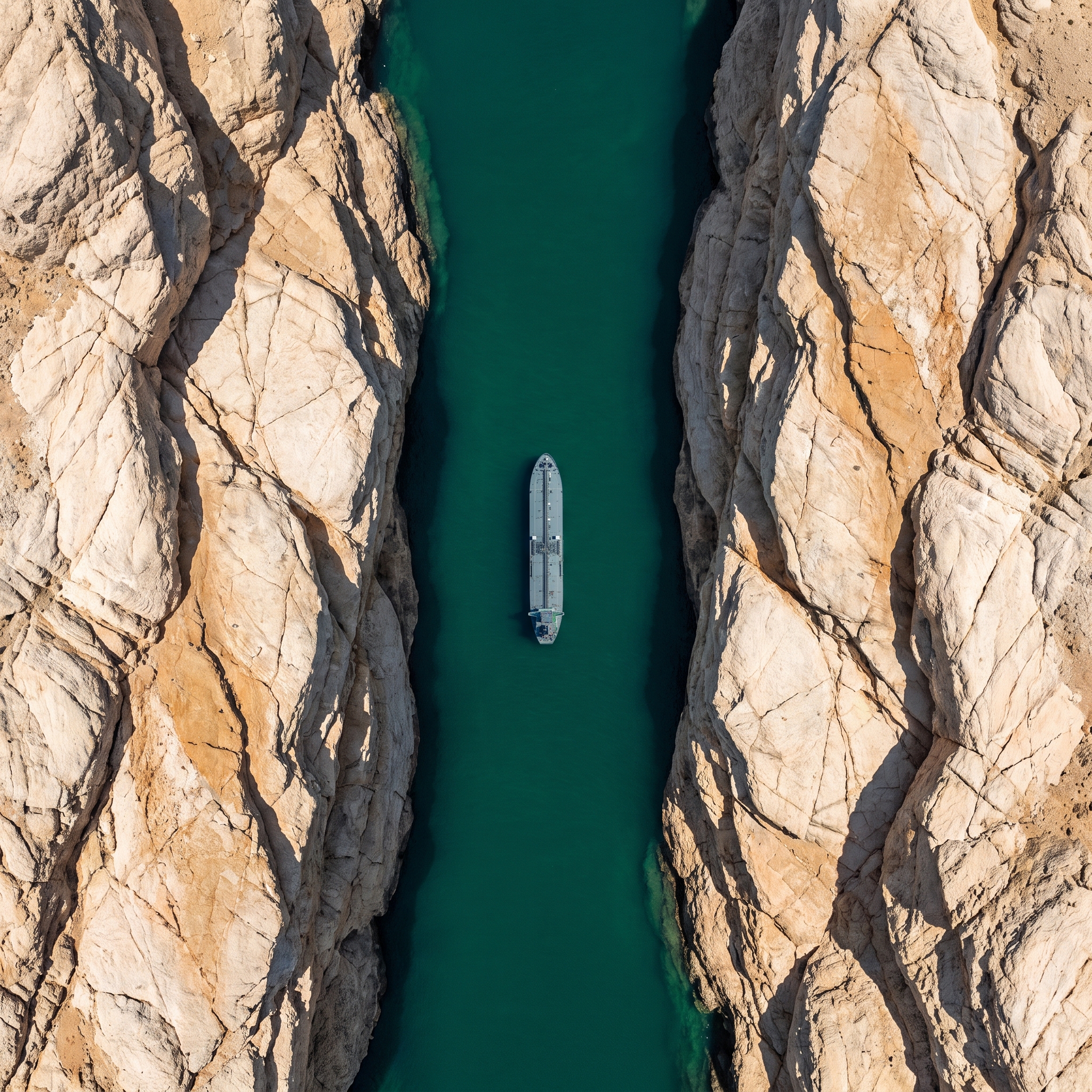
Juniper Vale: Think of it like this. Your neighbor declares they own the road in front of their house because it borders their property. Everyone on the block knows that's wrong. But your neighbor has a gun, and there's no sheriff coming. Being right doesn't move the gun. That's the Strait of Hormuz right now — 24 to 60 miles wide, Iran on one side, Oman on the other, and the IRGC deciding who gets through.
Hope Sterling: No because that analogy is actually — okay that actually broke my brain a little. But then CENTCOM has been bombing for eleven straight nights specifically to move the gun, and the IRGC's position is — it just hasn't moved. Like, at all.
Juniper Vale: Not at all. The IRGC said they'll keep the strait closed as long as U.S. — quote — 'wrongdoing in the region' continues. They framed it as national defense, not a bargaining chip. That's — I mean, that's not someone who's about to negotiate. That's someone who's dug in on principle.
Hope Sterling: Which — okay, so the legal argument is right, the military pressure isn't working, and the IRGC is framing this as defending Iran. Rubio is saying it sets a dangerous precedent for every waterway on earth, which, fine, he's probably right about that too. But what does any of that matter if the strait is still closed?
Juniper Vale: That is exactly the gap. The legal case and the military campaign exist in completely different worlds right now — one says Iran is wrong, the other is supposed to make Iran feel that wrongness. And after eleven nights it hasn't. So you've got this strait carrying twenty percent of global LNG on top of the oil, a watertight legal argument, and a military operation that hasn't changed a single thing Iran has said out loud. That's not a legal problem anymore.
Hope Sterling: But — wait, okay, that's the part I keep snagging on. Because it's not just that the military pressure isn't working. It's WHY it can't work. Like, Mojtaba Khamenei's dad was killed on February 28th. Assassinated. And now his son is Supreme Leader and everyone's watching to see if he folds. If he backs down on Hormuz, that's not a concession — that's, like, proving the assassination worked.
Juniper Vale: That's it exactly. Capitulating to the thing that killed your father is — that's not a negotiating position. That's an identity.
Hope Sterling: Right — but the part that doesn't fit is, they DID try to negotiate! There was a tentative deal! It got reached and then it just... collapsed. Pakistan's mediating, Arab mediators are at the table, an Iranian official literally flew to meet mediators in Pakistan on day ten of the airstrikes—
Juniper Vale: Day ten. And still nothing held.
Hope Sterling: Nothing held! So what is — I mean, what does a deal even look like when backing down reads as your regime losing to the people who murdered your predecessor?
Juniper Vale: And then Trump threatens to hit Natanz — the underground nuclear site, 'Pickaxe Mountain' — and Iran fires back with reprisal warnings. Explosions across Tehran, Tabriz, Chabahar, Konarak, Bushehr. Bushehr, which is Iran's only nuclear power plant. That's not degrading capability at the margins, that's hitting the architecture of the state. And historically — I mean, bombing regime-critical infrastructure does not break political will. It hardens it.
Hope Sterling: No, I don't buy that it just keeps hardening forever though.
Juniper Vale: The tollbooth is still running. That's your answer. The IRGC built a functional permission system — that's not a regime that's cracking under pressure.
Hope Sterling: Okay — yeah, that's — ugh, that is a real point. But like, at some point the economic pain has to matter, right? Because there's something coming in how you actually get out of this that I don't think we've hit yet.
Juniper Vale: Actually — that's where I land differently than you. The economic catastrophe of a prolonged closure might be the one thing that opens a face-saving door, and that's worth sitting with. We'll get there.
Hope Sterling: But the economic pain — like, I want to agree with you that it creates a face-saving door, but I can't get past this: Iran is letting Chinese-linked vessels through. So the pressure the market thinks is crushing Iran... it's not fully landing on Iran.
Juniper Vale: That's — yeah, that's the part I have to concede. The tollbooth isn't neutral. Iranian- or Chinese-linked ships move, everyone else doesn't. So China has warm heating oil and Europe doesn't.
Hope Sterling: Which means Iran has a partial economic lifeline that makes the pressure — like, less total than it looks.
Juniper Vale: Fine. I'll give you that. But — wait, that's not the whole picture either. Picture Wednesday morning, a shipping manager in Rotterdam. Tanker sitting forty miles outside the Strait of Hormuz, no Iranian clearance, heating oil for Northern Europe on board, seventy-two hours in. She has to call her client. What does she say? There's no timeline. That's already happening — Iran struck a tanker in the strait, so the threat isn't hypothetical anymore. Twenty to twenty-five percent of global seaborne oil, twenty percent of global LNG. China getting through doesn't fix that number.
Hope Sterling: No, that's — stop, okay, that Rotterdam scenario actually breaks something in my brain.
Juniper Vale: And markets are pricing in a fast resolution. They're not pricing in six more months of that shipping manager making that call every week.
Hope Sterling: I hear you on the scale, I do. But if China has a partial lifeline through the IRGC's tollbooth, doesn't that actually complicate U.S. pressure? Like, how do you squeeze Iran when their biggest trading partner is exempt by design?
Juniper Vale: That's the asymmetry — and you're right, it's real. I'm not saying the economics force a clean resolution. I'm saying the cost of pure stalemate is so structurally enormous that both sides eventually have to find something that looks like a win. Neither side can hold 'no war, no peace' forever when twenty-five percent of global oil is sitting outside a sixty-mile corridor.
Hope Sterling: Eleven nights of airstrikes, one deal that collapsed before it held, and Mojtaba Khamenei — like, his whole claim to power is that he's not going to be the guy who lost what his father died defending. Rubio's at an ASEAN meeting in Manila talking about dangerous precedents. I mean — the precedent isn't coming. It's already here.
Juniper Vale: And the strait is still closed. That's — I mean, that's where we started. Two people asking how we got here. And that's still the answer.
Hope Sterling: Yeah. No resolution. Just — that.