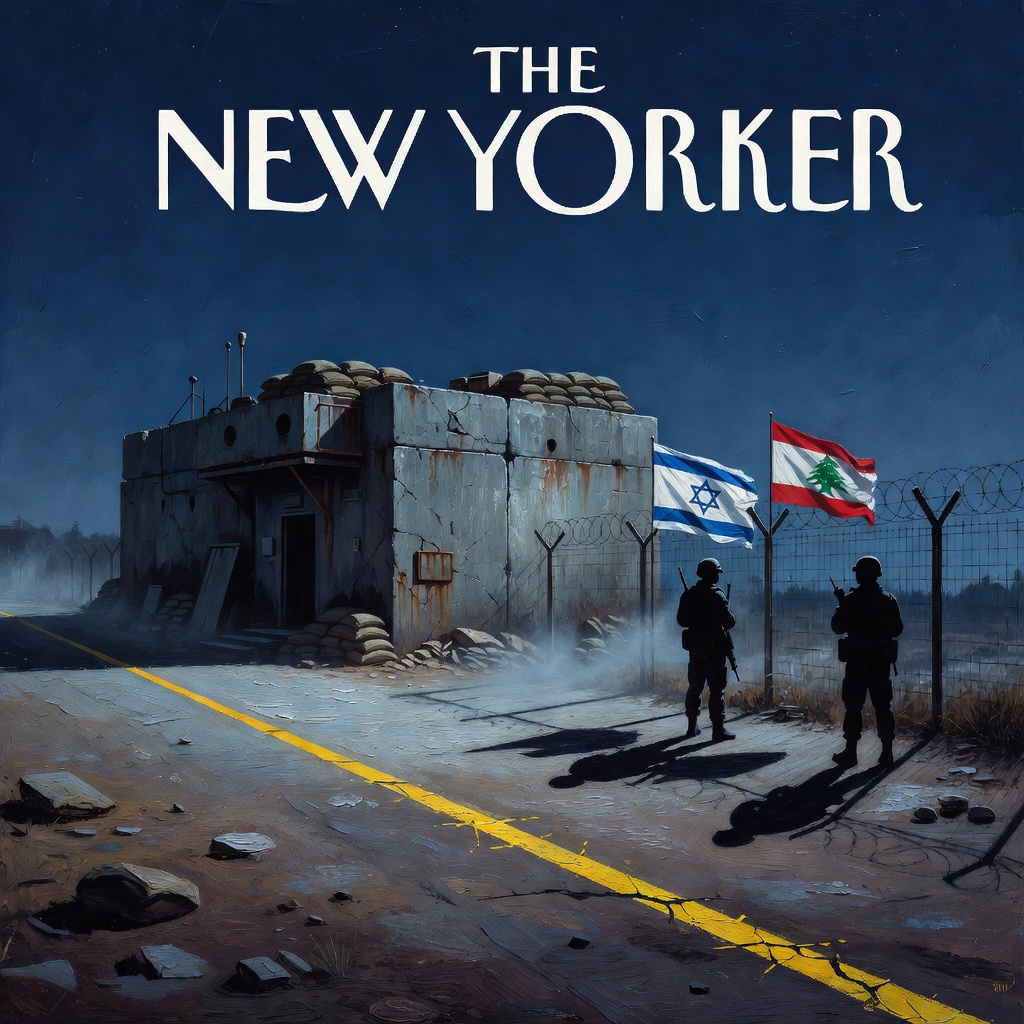
Ben Okonkwo: Two things are true simultaneously and I'm not sure how. Netanyahu tells Trump directly — Israel will not leave southern Lebanon. Defense Minister Katz confirms it on June 15th. No time limit, full stop. And separately — IDF commanders are reported to lack clarity on rules of engagement for the very zone they're holding.
Jonathan Ingles: That's not a contradiction. That's the tell.
Ben Okonkwo: Hm — walk me through that.
Jonathan Ingles: The Yellow Line — Adraee puts the map out April 19th, days after the ceasefire — it's a political asset before it's a military one. You don't need your commanders to know the rules of engagement if the line exists to be traded, not held.
Ben Okonkwo: Now that's — okay, that's a strong claim. The zone is five to ten kilometers inside Lebanese territory, Mediterranean to the Syrian frontier. Specifically designed around keeping Radwan units away from Israeli communities. The security logic is real, isn't it?
Jonathan Ingles: Lebanon calls it an illegal occupation. No UN authorization. That political exposure is only a problem if you plan to stay.
Jonathan Ingles: Which brings us to the MoU. The Mehr News Agency draft — fourteen points — and one of them is an immediate, permanent halt to the war on all fronts. Including Lebanon. Araghchi goes on IRIB June 13th and says this explicitly. The conflict began February 28th, and he's calling this the formal end. All fronts.
Ben Okonkwo: 'All fronts' is — I mean, that phrase is doing enormous work. Does that mean no new Israeli strikes? Does it mean IDF withdrawal to pre-October lines? Does it mean Hezbollah disarms? Those are wildly different things operationally.
Jonathan Ingles: And we don't know. The full U.S. text hasn't been released.
Ben Okonkwo: Right — so the political claim is 'this deal ends Israel's Lebanon operation.' But that claim rests entirely on assuming the text is specific and enforceable. And we can't verify either of those things yet.
Jonathan Ingles: Which — wait, actually that vagueness might not be accidental. If you're brokering between the U.S. and Iran, with Pakistan and Qatar in the room, and you leave 'all fronts' undefined... that's not a drafting error. That's everyone getting an exit ramp.
Ben Okonkwo: And there's a second assumption buried under that — that reducing Iranian resources actually translates into reduced Hezbollah capability. That's the proxy force constraint problem, and it's genuinely unsettled empirically. The causal chain just isn't established.
Ben Okonkwo: Now Trump at G7 — June 16th, France — he calls the Lebanon war 'minor,' criticizes Netanyahu, and then just... names Ahmed al-Sharaa as someone who 'would want to help' with Hezbollah. Israeli defense sources are described as surprised. Not annoyed. Surprised.
Jonathan Ingles: Surprised means it wasn't coordinated. That's not a diplomatic signal, that's a trial balloon floated publicly before anyone checked if Damascus would catch it.
Ben Okonkwo: And Syria said no within days. A presidential adviser, publicly — Damascus supports Lebanese state authority, will not take a military role. Full stop.
Jonathan Ingles: Right, but — wait, why does Trump float al-Sharaa specifically without locking down Damascus first? That's either careless or it's a message to Netanyahu dressed as a policy proposal.
Ben Okonkwo: Hm. And then there's the maritime piece, which — I mean, this is the part that actually stopped me. The Yellow Line doesn't just run to the Syrian frontier. Analysts, Al Jazeera — it extends into Mediterranean waters.
Jonathan Ingles: Hold on. Into the water.
Ben Okonkwo: Into the water. Which means — actually, no, the question isn't whether Radwan units operate offshore. They don't. So if the buffer extends there, the security justification for that specific segment... I can't construct it. Lebanon has potential offshore oil and gas reserves, and Israel is sitting on top of that boundary right now.
Jonathan Ingles: And that's — look, that's the thing I can't get past. If the full MoU text lands and it actually does constrain IDF operations in Lebanon — not vaguely, but specifically — Netanyahu has already told Trump he won't comply. Katz has said it publicly, June 15th, no time limit, Syria, Gaza, Lebanon. That's not a negotiating position you can quietly walk back. So the choice becomes: fracture the U.S.-Israel relationship, or let the vow collapse and blame the deal. And frankly — both of those outcomes have already been prepared for. Publicly.
Ben Okonkwo: Hm. And there's the second thing buried under that — a deal that relieves sanctions on Iran means resources flowing again. To Hezbollah. Which means the security logic the Yellow Line was built on starts dissolving even if the IDF physically stays. The line holds the ground but not the threat.
Jonathan Ingles: That's the question the next sixty days answers.