Dr. Nathan Hayes: I have to tell you — I came in skeptical today and I'm already more skeptical having read the prep.
Maya Chen: Oh good, that's — that's exactly where I wanted you. What's the first snag?
Dr. Nathan Hayes: The framing of 'official history.' Nintendo maintains an internal timeline document — reportedly before 2003 — keeps it confidential, then publishes it in 2011 as Hyrule Historia through Shogakukan. Releases it precisely at the franchise's 25th anniversary. And I want to ask: who decided that document gets to be called history?
Maya Chen: Nintendo did — that's sort of the whole interesting part though, right?
Dr. Nathan Hayes: Right, but — here's what I mean. Players spent a quarter century building their own understanding of these games. No official map. And then a book appears and retroactively tells them where they were standing the whole time.
Maya Chen: And the book — Hyrule Historia, the Dark Horse English edition came out 2013 — it's designed to look like an in-universe document. Like you found it, not like Nintendo wrote it. So there's this whole question of... how does the presentation shape what authority it actually has? And then Eiji Aonuma, who's been overseeing this timeline publicly, says the thing is flexible. Almost the moment it lands.
Dr. Nathan Hayes: Which is — wait, flexible how? Flexible meaning it can be revised, or flexible meaning it was never quite firm?
Maya Chen: That is exactly the tension. And I think that question is what makes the Zelda timeline so strange as an object — it's canon that came with a built-in escape hatch. That's what we're here to figure out.
Dr. Nathan Hayes: That escape hatch is actually the tell. Here's the plain version: imagine a family writes letters to each other for twenty-five years — independently, no master plan. Then one grandchild collects them all, arranges them into a family history book, and says this was always the design. That's Ocarina of Time becoming the entire canon's central branching point. Not because the 1998 game shipped with that role — but because someone decided, after the fact, it would hold that weight.
Maya Chen: But wait — Nintendo did have an internal document before 2003. Doesn't that mean it was actually planned?
Dr. Nathan Hayes: Right — and this is where the distinction matters. Having a confidential document you never share, never use visibly to steer new games... that's not architectural planning. That's record-keeping after the structure already formed. If it were genuine blueprint, you'd expect it to surface in sequels, in spin-off briefs, in something.
Maya Chen: Mm. So the document existing doesn't prove it was directing anything.
Dr. Nathan Hayes: Exactly — and authority over that document was concentrated in Aonuma's producer role, not distributed among the original game designers. The people who made the early games weren't working from it. So when Hyrule Historia arrives, presented as a discovered historical text rather than an authored framework, what you're actually seeing is one producer's office retroactively claiming jurisdiction over twenty-five years of independent creative work.
Maya Chen: That framing — discovered, not authored — that's doing so much work. Because it changes what players feel they're holding.
Dr. Nathan Hayes: It does. Think about a kid who buys Hyrule Historia in 2013 — the Dark Horse English edition — and they're flipping through it thinking they're reading recovered lore. They're not reading recovered lore. They're reading a taxonomy someone built to contain games that were never designed to fit together.
Maya Chen: Which — okay, and this is the thing — doesn't necessarily make it false. Sort of. I mean, the pieces fit well enough that Nintendo could build the thing at all. Doesn't that suggest something was happening in the design even if nobody was consciously... wait, no, that's maybe too generous.
Dr. Nathan Hayes: That's the seductive version. But Ocarina of Time becoming the structural pivot — three timelines branching from one game — wasn't decided before it shipped. It was decided when someone needed to solve the problem of where the earlier 8-bit games fit. The history was constructed to answer a question the games themselves never asked.
Maya Chen: And that's what makes the Fallen Hero Timeline the most — I mean, it's the most revealing seam in the whole structure. Because Ocarina of Time splits into three branches: Child, Adult, and then this third one where Link just... loses. Ganon wins. That's canon. And A Link to the Past, the original NES Legend of Zelda — those games live in that branch. The defeat branch.
Dr. Nathan Hayes: Which are also — conveniently — the games that didn't fit the other two branches.
Maya Chen: That's — yeah, exactly, that's the tension I can't resolve. Because on one hand it's genuinely bold? Nintendo canonically said the hero failed. That's not a victory lap. But on the other hand... those 8-bit games had nowhere else to go. So is the Fallen Hero Timeline a creative statement or an editorial drawer where you put the things that didn't fit?
Dr. Nathan Hayes: Both, probably. That's what makes it hard to argue against — it does two jobs at once.
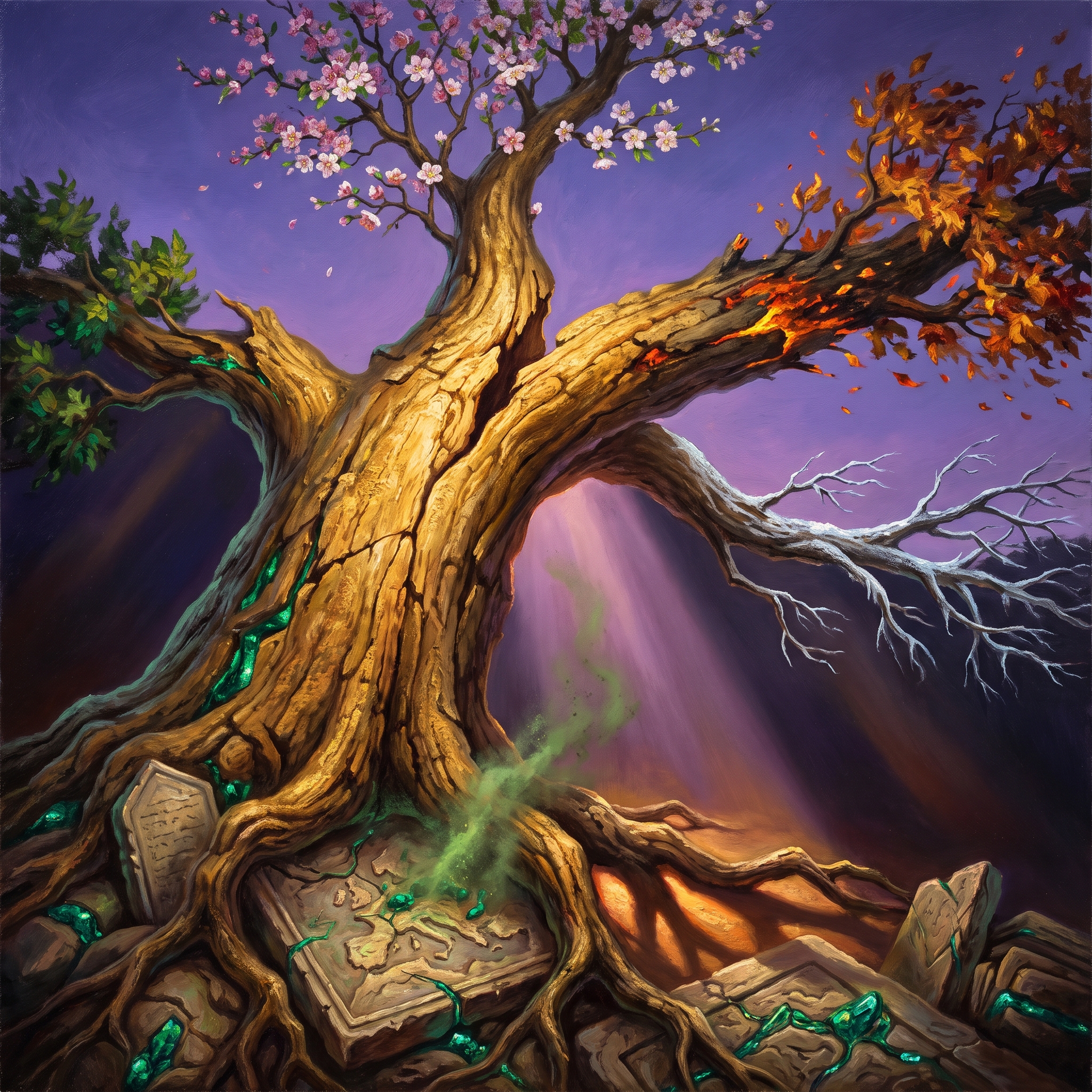
Maya Chen: Okay, so picture this — a teenager in 2013, Hyrule Historia just dropped from Dark Horse, they boot up A Link to the Past for the first time. Those crumbling ruins, that broken Hyrule. And now they know — canonically know — those ruins exist because the hero lost. Ganon won. The world they're walking through is the consequence of Link's failure in Ocarina of Time. That's... I mean, that hits differently than just 'ancient ruins, spooky.'
Dr. Nathan Hayes: It hits differently. But were the ruins less evocative before 2013?
Maya Chen: No — no, they weren't. And that's actually what I'm sitting with. The ruins did that work for twenty-five years without the canonical explanation. So the Fallen Hero Timeline isn't creating the feeling, it's... arriving to name something players were already feeling. Which is either profound or it's just — wait, is that just good branding?
Dr. Nathan Hayes: The mechanism is: the canonical frame retroactively recruits existing emotional responses. The ruins were doing the work. Hyrule Historia just claimed authorship of that work after the fact.
Maya Chen: And what's wild is Nintendo's newest games — Breath of the Wild, Tears of the Kingdom — deliberately float outside this whole structure. Intentionally vague. Which tells you something about what the timeline actually is — and we'll get there, because that ambiguity is where the whole permission-structure argument breaks open.
Dr. Nathan Hayes: That ambiguity with Breath of the Wild and Tears of the Kingdom — that's not an accident of scale, it's the tell. Nintendo places their two most commercially successful recent games in a 'distant future' with no precise canonical address. No branch assignment. If the timeline were a genuine historical system, your biggest entries would need a falsifiable placement.
Maya Chen: Wait — deliberately no placement? Like they just... left it open?
Dr. Nathan Hayes: Deliberately. The framework that existed to contain the older games is suspended exactly where it would constrain new design. That's not historiography — that's a permission structure. Applied selectively.
Maya Chen: And yet Breath of the Wild still has the Master Sword. The Triforce. The name Link. So players feel the continuity even though the canonical scaffolding is just... gone. It's doing the emotional work of a timeline without actually being inside one.
Dr. Nathan Hayes: Right — and that's the mechanism. Those recurring artifacts function the way monuments do in real history. You don't need to know the administrative chain of custody to feel that something endured. The Master Sword carries weight across every branch, which means Nintendo can lift a game out of the canonical structure and still collect the emotional dividend.
Maya Chen: Which is — mm, I keep thinking about someone on Zelda Wiki at two in the morning, building a placement theory for Tears of the Kingdom, mapping Zonai ruins onto the three branches. Nintendo has never endorsed that interpretation. Never refuted it either.
Dr. Nathan Hayes: Now that's what a selectively complete archive does. It generates an interpretive community — the Zelda Wiki contributors, the fan scholars — and then withholds the answer that would dissolve the community. Final authority stays with Nintendo. The theorizing never ends because Nintendo never closes it.
Maya Chen: So the canon is authoritative enough that people build on it, but flexible enough — Aonuma's own word — that Nintendo never has to be wrong.
Dr. Nathan Hayes: Unaccountable authority with emotional legitimacy. That's the actual structure. Hyrule Historia gave it a cover.
Maya Chen: That's the thing that settled for me just now — Hyrule Historia gets to be authoritative for A Link to the Past, for the Fallen Hero branch, for all the legacy titles. And simultaneously suspended, optional, for Breath of the Wild. Both stances, same book, same Aonuma sign-off. That's not a contradiction they're trying to hide.
Dr. Nathan Hayes: They're not hiding it — that's the correct read. The timeline is a permission structure, and permission structures don't need to be consistent. They need to be useful.
Maya Chen: Mm. An archive that reserves the right to look away. I don't know whether that's cynical or just... honest about what franchises are.