Cleo Rios: Long week — but I found the thing that made it worth it, so I'm good.
June Hadley: Now I'm curious. What was the thing?
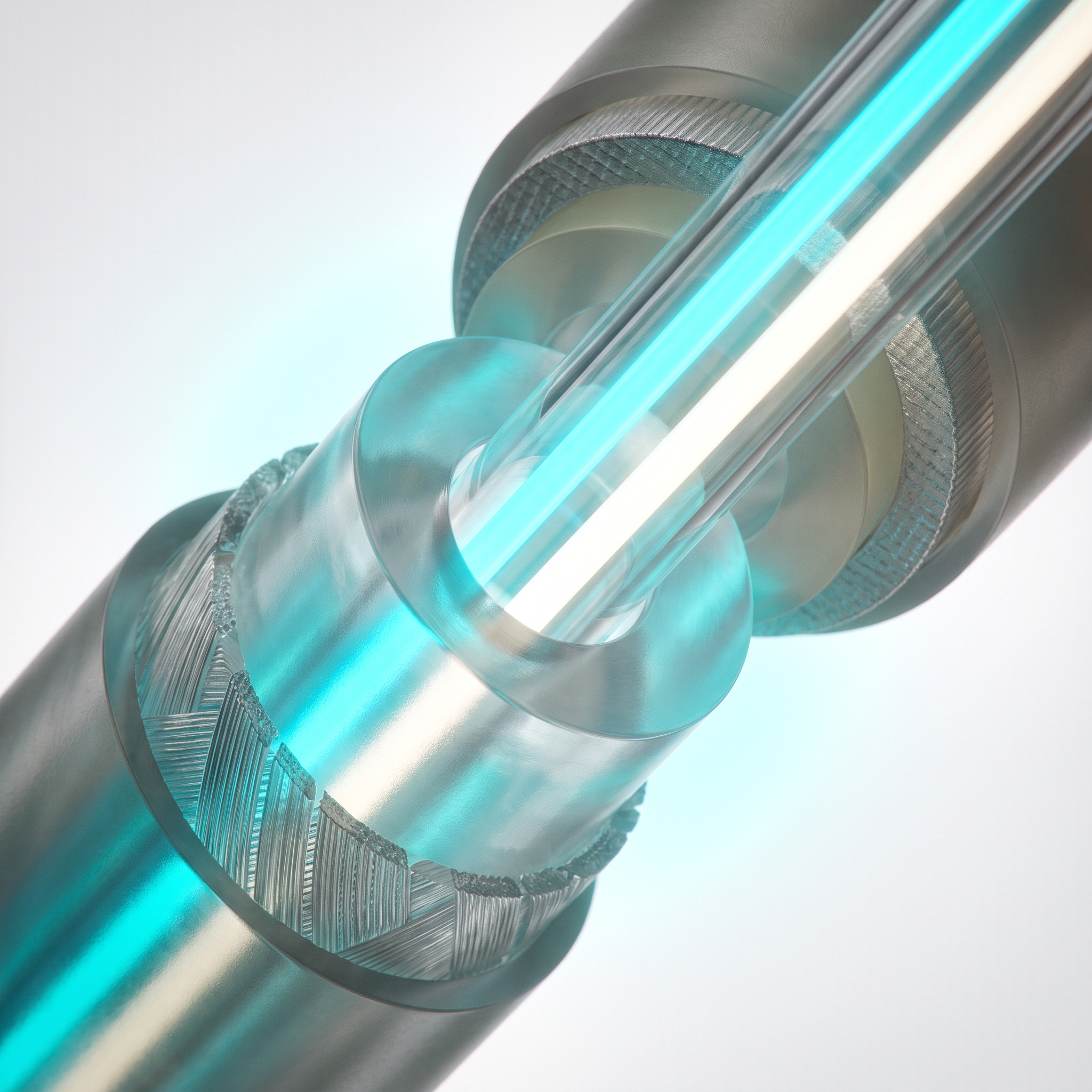
Cleo Rios: Optica Quantum, July 20, 2026 — a paper by Prem Kumar and Gina Talcott at Northwestern's McCormick School of Engineering. They took entangled photon pairs — quantum entanglement, the two-photons-correlated-across-any-distance thing — and they put them into fiber cable that was already carrying two simultaneous 800-gigabit-per-second data streams. We're talking 1.6 terabits per second of live internet traffic. Not a test environment. Real cable, under actual Chicago streets, from Evanston to the StarLight facility downtown. Twenty-four point four kilometers.
June Hadley: Hold on — the same physical cable?
Cleo Rios: Same cable. And the quantum state fidelity came out above 94%. I'm sorry — that should not work. Classical data is light pulses slamming through glass. Quantum entanglement is notoriously the most fragile thing you can try to preserve. The noise from the classical traffic generates this broadband optical interference — spontaneous Raman scattering — that was basically assumed to make shared fiber impossible for quantum signals.
June Hadley: So the central puzzle isn't just that they did it — it's that the field assumed for years it couldn't be done on live fiber at all.
Cleo Rios: Right — and that gap is what I need to understand. Because if it was theoretically impossible until it suddenly wasn't, something had to change. And I don't think it was just the photons.
June Hadley: That's the question. How did entangled photons survive 24.4 kilometers of live commercial chaos — and what does it take to actually build around that?
Cleo Rios: Think of it this way — two people trying to whisper a secret in a room where a rock concert is playing. You can't stop the concert. What you do is find the exact frequency gap between songs where the noise dips for half a second, and you whisper precisely there. That's what they did with the wavelength bands. They didn't silence the classical traffic. They found the quiet pocket inside it.
June Hadley: Okay — so the noise has a shape. It's not uniform.
Cleo Rios: Exactly — that's what spontaneous Raman scattering actually does. The classical light pulses don't just carry their own signal, they spray broadband optical noise in all directions along the fiber. But that noise has peaks and valleys across the spectrum. And four-wave mixing adds a second layer — harmonics generated by the classical channels bleeding into new frequencies. The Northwestern team routed the entangled photon pairs through wavelength bands where both those noise floors were lowest, then stacked advanced filtering on top to suppress what remained.
June Hadley: Wait — and this noise problem, Raman scattering specifically, that wasn't new when they started.
Cleo Rios: Documented since at least 2014. More than a decade of people going 'yes, this is why shared fiber is basically impossible for quantum states.' So the physics was understood. What apparently wasn't — or wasn't proven — was whether you could actually engineer around it on real deployed cable at real distances.
June Hadley: That twelve-year gap is — I mean, that's the thing that sits with me. Understanding the barrier and clearing it are not the same move.
Cleo Rios: And the piece that actually made me stop reading — the White Rabbit synchronizer. It's a precision timing system they used to coordinate the quantum and classical channels. Because even if you've found the right wavelength pocket, if your timing drifts even slightly, the classical pulses trample the entangled photons. White Rabbit kept them coherent. That's not in most of the coverage at all.
June Hadley: Hold on — superconducting nanowire single-photon detectors as well, right? Those are detecting individual photons that survived that whole gauntlet.
Cleo Rios: Right — you need detectors sensitive enough to catch a single photon after 24.4 kilometers of classical chaos. Superconducting nanowire detectors are basically the most sensitive photon-catching technology that exists. So the toolkit is: quieter wavelength bands, advanced filtering, White Rabbit timing, and detectors that can catch a whisper through a wall. Each one of those had to work together on real fiber under real Chicago streets before any of this meant anything outside a lab.
June Hadley: But that toolkit working on one specific route — I mean, that's the thing I keep snagging on. Picture a network infrastructure planner at a Chicago hospital system, late 2026. She's looking at this result, she calls her telecom vendor, and she says: our nodes are 200 miles apart, our fiber quality varies wildly by segment, and we need this to work on a Saturday night when the network is saturated. Does the Northwestern result answer her question?
Cleo Rios: No. It doesn't. At all. The 24.4 km link is one well-characterized route — Evanston campus to StarLight downtown — two known endpoints, fiber they could study in advance. Whether 94% fidelity holds across varying fiber quality, longer distances, actual messy network topologies — that's completely undemonstrated.
June Hadley: So it's more like — they proved the concept is physically survivable, not that it's deployable.
Cleo Rios: And look — the genuine implication is real, I want to be clear. Eliminating the need for dedicated dark fiber? That dramatically lowers the economic barrier. You're not laying new cable. That matters. But 'lowers the barrier' is not the same sentence as 'bottleneck solved.'
June Hadley: Right — but the part that doesn't fit is that the international work is moving anyway, as if it IS solved.
Cleo Rios: Deutsche Telekom's T-Labs partnered with Qunnect — a quantum networking firm — and ran a quantum teleportation test over a live commercial network in Berlin. February 2026. And then the European Commission turned around and selected Deutsche Telekom to coordinate EuroQCI, the whole pan-European quantum communication infrastructure build. AIT Austrian Institute of Technology is running a complementary project called HarmoniQCI. So there's deployment momentum — but it's momentum toward infrastructure before the physical layer questions are actually answered at scale.
June Hadley: And the October 2025 preprint — the multinational team modeling classical-quantum coexistence — plus the February 2026 tutorial on Raman scattering at scale — those confirm the noise is managed, not eliminated.
Cleo Rios: Managed on one metropolitan testbed. Not modeled across a real heterogeneous network. And — I'll just say it — who decides what 'good enough' fidelity actually is for, I don't know, a hospital or a bank? Because this is genuinely uncomfortable, and we'll get to it: the G7 and Jay Shambaugh are already institutionalizing standards around this technology before that question has an answer.
June Hadley: That's the thread I want to pull. The policy is moving faster than the physics.
Cleo Rios: And what makes it genuinely alarming is the timeline. Ten days before the Northwestern paper even published in Optica Quantum — ten days — G7 finance ministers and security officials sat down in Turin and agreed on a quantum key distribution interoperability standard. July 10th. The paper drops July 20th. The standard was already done.
June Hadley: Hold on. They set the standard first?
Cleo Rios: Toshiba, ID Quantique, IBM hardware — cross-border payment testbeds targeted by 2028. That's the actual text. And Jay Shambaugh, U.S. Treasury Undersecretary, says post-quantum migration cannot rely on software algorithms alone for the highest-sensitivity links. So now fidelity is a national security question, not just a physics benchmark.
June Hadley: Now — I want to flag something carefully here, because I think it's easy to blur. QKD — quantum key distribution — and what Northwestern actually demonstrated are related but not the same thing. QKD is a specific cryptographic method. Northwestern distributed entangled photon pairs. Those address overlapping but genuinely distinct problems.
Cleo Rios: Which means the G7 standard is built around QKD, but the proof that shared fiber can even carry quantum signals — that's the Northwestern result. They're being treated as one continuous story when they're actually... I mean, adjacent chapters.
June Hadley: And the 2026 modeling of secret key rate limits confirms Raman scattering and four-wave mixing still impose real performance penalties — noise is managed, not gone. So who decides 94% clears the bar for a cross-border payment system?
Cleo Rios: That's the part nobody's naming. Picture a standards committee staffer in Turin, November 2028, certifying that an ID Quantique device meets the interoperability threshold — and the threshold itself was written before anyone proved shared-fiber delivery worked outside one Chicago testbed.
June Hadley: The permissions — the institutional agreements — hardened faster than the physics could follow. That's the actual shape of what happened here.
Cleo Rios: And once you've written the standard, the standard becomes the reality. The testbed stops being a question and starts being evidence. Even if the evidence is — honestly — still pretty thin at scale.
June Hadley: The thing that actually changed isn't whether quantum networks are ready. It's that the economic argument for trying got real. You don't have to lay new cable. Eliminating dedicated dark fiber as a requirement, that's the genuine implication of what Prem Kumar and Gina Talcott showed.
Cleo Rios: That's it. That's the actual sentence. The 24.4 km between Evanston and StarLight doesn't prove a metropolitan quantum network works — but it means the cost argument for attempting one collapsed. Which is a different, quieter kind of breakthrough.
June Hadley: And the question that's left — I mean, it's just sitting there — is which applications actually clear 94% fidelity as a threshold. Because one 15-mile link between two known endpoints is not 500 miles of heterogeneous fiber.
Cleo Rios: Nobody's answered that. Not yet.
June Hadley: We started with you saying it was the thing that made the week worth it. I think what I'm taking from it is — it was worth it and it's unfinished. Both are true.