Eliza Ward: Hey. Good to be back.
Brian Reed: Yeah, likewise. You see the Firmus thing this morning?
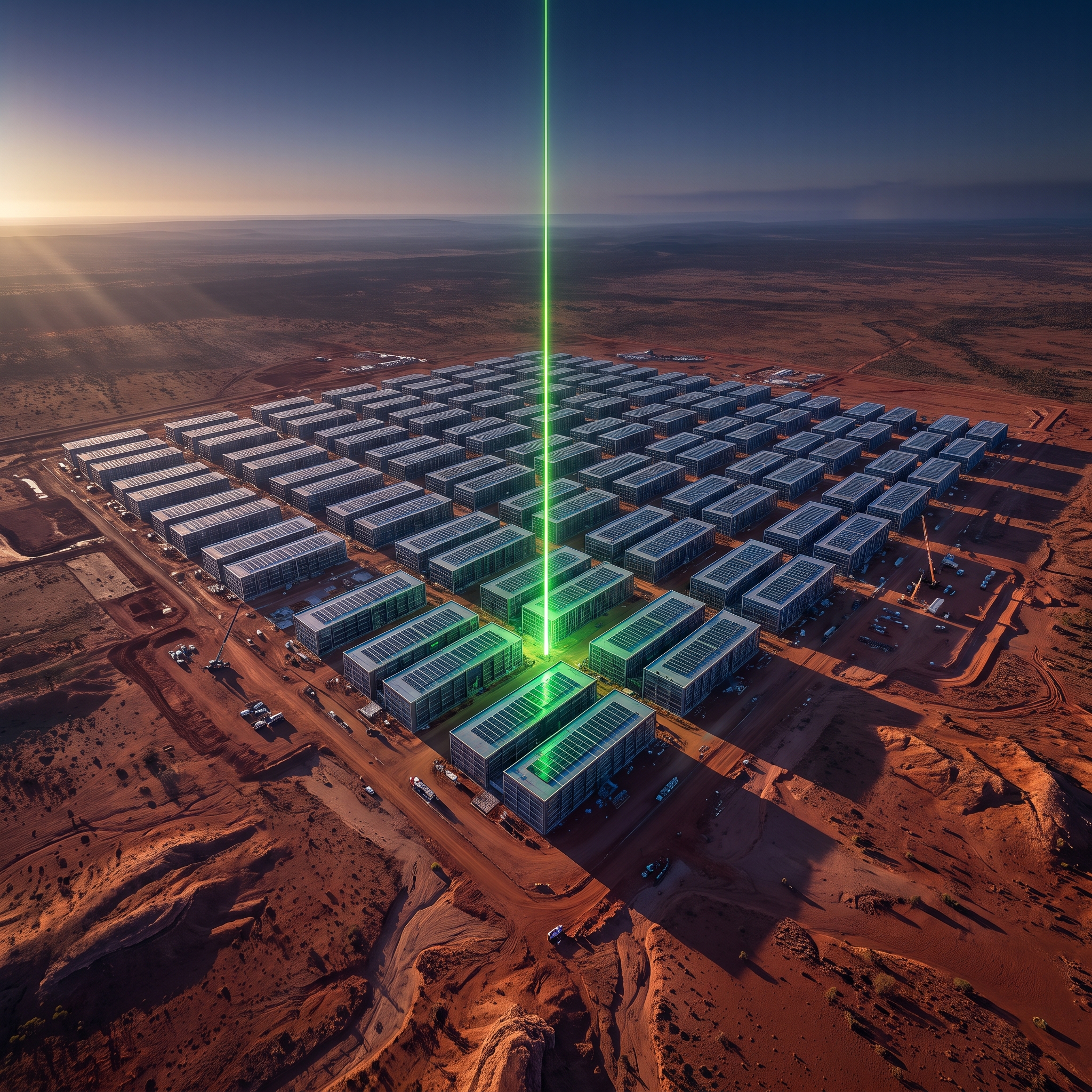
Eliza Ward: That's exactly where I want to start. So — August 7th, today, Firmus announces a two-billion-dollar equity round. Nvidia is in it. Coatue is back in it. And then Blackstone and Jane Street come in as new names. Valuation clears ten-point-five billion.
Brian Reed: Hang on — Jane Street?
Eliza Ward: Jane Street. Yeah. Which is — I mean, that's not a name you expect next to Blackstone in a data center round.
Brian Reed: The part I don't get — Nvidia is a chip company. It designs and sells GPUs. So why is it writing equity checks into the infrastructure that exists, basically, to buy its own chips?
Eliza Ward: Right, and that's the thing — Nvidia didn't build Firmus's data centers. Doesn't own them. Won't operate them. It's just... in the cap table.
Brian Reed: Which is a genuinely strange sentence to say out loud.
Eliza Ward: Strange sentence, but not a new one — that's actually the part the headline is kind of burying. Nvidia did this already. January 26th, two billion into CoreWeave, became their second-largest shareholder. That's six months ago.
Brian Reed: So the 'Nvidia is suddenly a bank' framing is wrong.
Eliza Ward: It's — yeah, it's off. This Firmus check is a follow-on. Nvidia was already in at the April round when Firmus was valued at five-point-five billion. What's new is the pattern is now undeniable, not the pattern itself.
Brian Reed: Walk me through — what is actually the new information here, if the investment relationship existed before?
Eliza Ward: The scale of the bet is undeniable now. And Jensen Huang has said this out loud — full-stack strategy, equity across the whole AI value chain. That's not inferred, he's stated it. What we don't have is Nvidia's actual slice of this two billion. 'Follow-on participation' is all we've got. Could be fifty million, could be five hundred.
Brian Reed: That number matters a lot for what this actually means.
Eliza Ward: It really does. And — wait, let me try to make this concrete because I think there's a cleaner way to say what Nvidia is actually doing. Think of a landlord who also manufactures every piece of furniture every tenant is required to buy. At some point that landlord starts financing the tenants' furniture purchases — not because they love real estate, but because they need the furniture to keep moving off the floor.
Brian Reed: That's — yeah, that actually lands. SemiAnalysis frames it as the bottleneck shifting from manufacturing to financing. Nvidia's not struggling to make chips, the customers — these neoclouds, CoreWeave, Firmus — they're the ones who can't fund the buildout fast enough to absorb them.
Eliza Ward: Right. Neocloud is the category — not AWS, not Azure, these are the GPU-specialized operators in between. And Nvidia financing them isn't charity, it's demand engineering. The furniture has to keep moving.
Brian Reed: But that framing is exactly what I want to push back on — the version circulating right now that says Firmus nearly doubled in valuation because the business got better. Five-point-five billion in April, ten-point-five on August 7th. Four months. What actually changed in the underlying business in four months?
Eliza Ward: That's the wrong take. That's the one I'd flag. We don't have evidence GPU utilization rates moved, we don't have confirmed new customer contracts — nothing disclosed that explains a near-doubling on fundamentals.
Brian Reed: So what actually moved?
Eliza Ward: Nvidia showed up again. That's — I mean, that's the honest read. Nvidia was already in at five-point-five. It follows on. And every other investor in the room recalculates, because now the chip supplier is also a committed stakeholder. That reshuffles the risk math without the business changing at all.
Brian Reed: Which is — wait, isn't that circular? The company is valuable because Nvidia invested. Nvidia invested because the company needs to be valuable enough to keep buying Nvidia chips.
Eliza Ward: Yes. And I don't think anyone's saying that out loud yet. That's the thing worth watching — not whether Firmus's margins improved.
Brian Reed: And then Blackstone and Jane Street walk in — Blackstone Tactical Opportunities specifically, John Watson on record calling this a foundational driver of global growth. These are not venture tourists. When capital from completely different asset classes converges at the same valuation, that's either real validation or it's the last stage before a correction. And I genuinely don't know which one this is.
Eliza Ward: And the opacity doesn't help — one source is citing two-point-eight-five billion raised, not two billion. That gap might be debt tranches, might be something else, but it's not confirmed. The deal structure itself is unclear.
Brian Reed: Right — and the number that might make all of this look small is coming. There's an allegation about Nvidia's exposure that goes way beyond equity stakes, and that's the thing I want to get to.
Eliza Ward: The allegation is — Wedbush flagged it in August, called it 'alleged,' not confirmed — that Nvidia may be providing a credit backstop of up to two hundred and fifty billion dollars for OpenAI's planned Ohio data center. That's not equity. That's absorbing downside debt risk.
Brian Reed: Two hundred and fifty billion.
Eliza Ward: And no official Nvidia statement confirming it. None. So we're holding that at arm's length — but the distinction Wedbush is drawing actually matters regardless of whether the number is right.
Brian Reed: Because equity and credit backstopping are — I mean, they're not even close to the same thing. If Nvidia takes equity in Firmus and Firmus craters, Nvidia loses the investment. That's venture risk. But if Nvidia is guaranteeing debt for OpenAI's Ohio facility, and that facility doesn't hit utilization — Nvidia absorbs the liability. That's a completely different animal.
Eliza Ward: Right. And that changes the concrete picture for something like — okay, imagine a startup in Jakarta trying to train a model in 2027. AWS is oversubscribed. So they negotiate access through a Firmus data center in Indonesia — which Firmus announced early-stage steps toward on August 7th, their words, 'early steps.' That facility only gets built if Firmus can actually deploy this capital across Asia-Pacific. So whether Nvidia is backstopping credit or just taking equity isn't abstract — it's whether that server rack in Jakarta exists.
Brian Reed: And the Asia-Pacific piece isn't a side note — that's actually, wait, that's where the capital is pointed. Firmus is an Australian company. Project Southgate was the prior Nvidia partnership for renewable-energy data centers in Australia. The Indonesia move is the next ring outward.
Eliza Ward: And then you stack what Nvidia has committed since March 2026 — at least six-point-five billion into silicon photonics. Lumentum, Coherent, Marvell, Corning, Ayar Labs. That's the networking layer underneath all of it. So equity in Firmus, alleged credit backstop for OpenAI, six-point-five billion into photonics — that's not one move, that's actually — I mean, it's the whole stack.
Brian Reed: Which is what Jensen Huang means by full-stack. But the thing I'd flag — the Ohio allegation, if it's confirmed, that's not Jensen Huang building a portfolio. That's Nvidia becoming the shadow balance sheet for the entire buildout. And we genuinely don't know if that's what happened.
Eliza Ward: We don't. The signal to watch is whether Nvidia files anything that discloses a credit facility at that scale — because two-fifty billion doesn't stay invisible in a disclosure regime. If it's real, it surfaces. That's the concrete thing. Watch for the filing.
Brian Reed: And that's what strikes me. CoreWeave and Firmus — both Nvidia-backed neoclouds — their valuations right now are pricing in utilization rates and margins that haven't materialized yet. Like, that's just... that's the math. If those numbers don't come in, Nvidia isn't just holding a bad investment. It's holding exposure in the customers who are supposed to be buying its chips.
Eliza Ward: And we can't actually answer whether they will — because Nvidia's slice of this two-billion round isn't disclosed. We don't know if it's a conviction bet or a signal placement. That's not inferred, that's just — that's confirmed missing information.
Brian Reed: Right — and same on the credit backstop. Wedbush said alleged. Full stop. So the question of whether Nvidia is taking venture risk or actually absorbing debt liability for something like the Ohio facility — genuinely open.
Eliza Ward: Okay, so — what I think is confirmed: October 2024, Nvidia backs OpenAI, hundred million, part of the six-point-six billion round. January 2026, two billion into CoreWeave. August 7th, follow-on into Firmus. The direction is not ambiguous. Whether it's building a moat or concentrating risk it can't offload — that's the question that doesn't have an answer yet.
Brian Reed: Moat or dependency. I mean — I don't know which one wins. Neither do you.