Company · 50 episodes
Nvidia
Nvidia is navigating three simultaneous pressure points: a hardware marketing push with RTX Spark promising 1 petaflop AI compute in laptops, a geopolitical supply chain rupture after China blocked H200 GPU imports days after U.S. approval, and the next-generation Rubin GPU stack entering TSMC fabrication with CoreWeave already bringing up the first NVL72 rack. Together, these developments reveal a company pushing performance ceilings while exposed to regulatory and trade fragility.
Frequently asked
What is Nvidia RTX Spark?
Nvidia RTX Spark is a laptop platform unveiled June 1 at Computex, pairing the N1X superchip with 128 GB unified memory to deliver 1 petaflop of FP4 compute. Six OEMs including Microsoft's Surface Laptop Ultra have committed, but no independent benchmarks exist and laptops don't ship until Q4 2026.
Is Nvidia RTX Spark actually new silicon?
Not entirely. The underlying chip in Nvidia RTX Spark has already shipped inside the Lenovo ThinkStation PGX for 18 months. RTX Spark is a new laptop-focused packaging and branding of that silicon, not a ground-up new design, which raises questions about the novelty of the announcement.
Why did China block Nvidia H200 GPU imports?
China blocked Nvidia H200 imports in January 2026, just four days after the U.S. Commerce Department formally approved sales. The move left Nvidia with zero cleared revenue from those shipments, stranded TSMC production capacity, and over a million cancelled orders from Chinese clients.
How does Nvidia's H200 supply chain exposure affect its business?
The H200 block exposed a structural vulnerability: Nvidia can secure U.S. export approval and still lose an entire market overnight. Stranded TSMC capacity and over a million cancelled Chinese orders represent sunk production costs with no immediate path to recovery or alternative buyer for that specific inventory.
What is Nvidia's Rubin GPU and when does it launch?
Nvidia's Rubin is a next-generation GPU stack comprising seven chips, including the Vera CPU, CX9 Super NIC, and NVLink 144 switch. It entered TSMC fabrication in 2026, with CoreWeave bringing up the first Vera Rubin NVL72 rack on June 1. All three HBM4 suppliers reached volume simultaneously — a first for any Nvidia generation.
Episodes
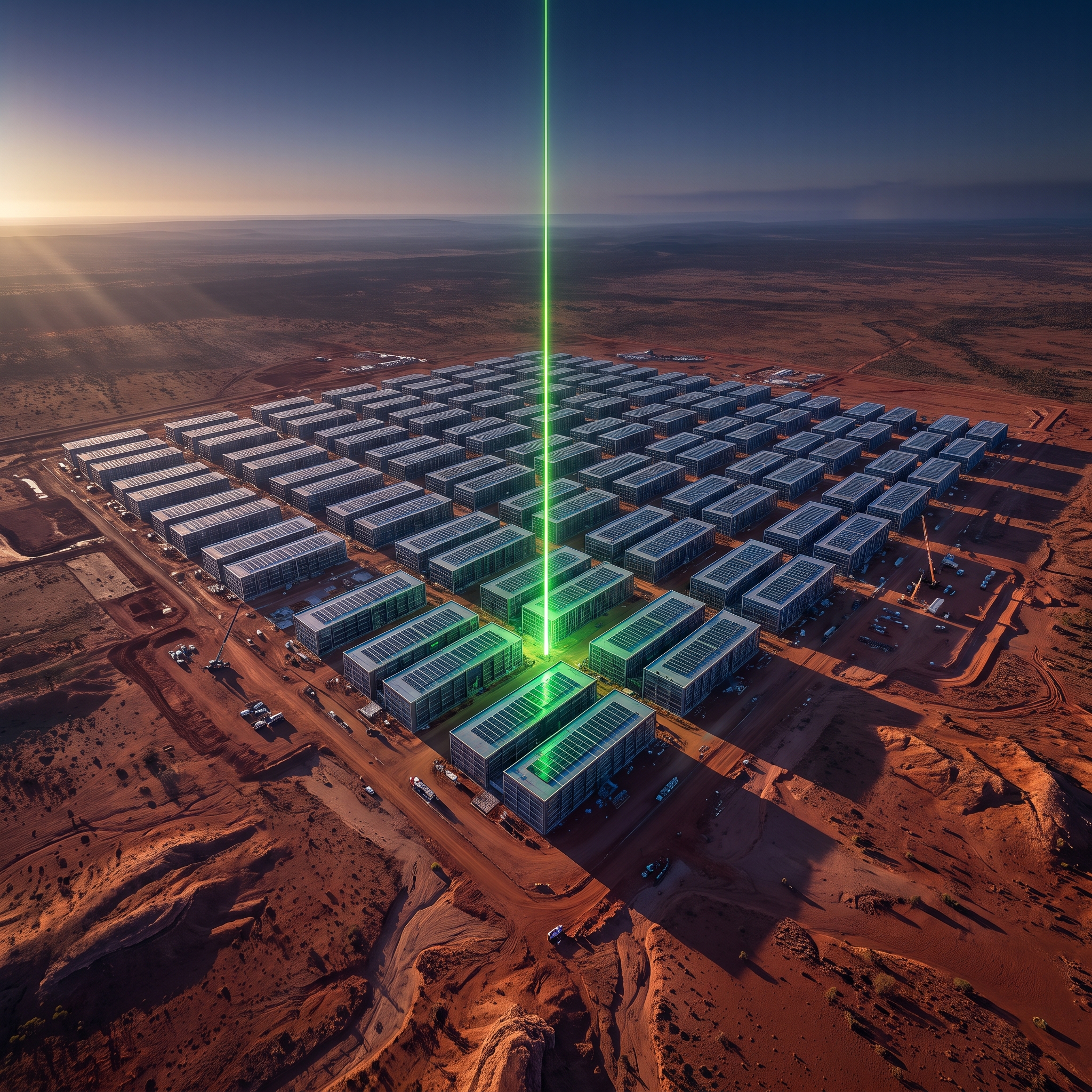 Nvidia just committed $2 billion to Firmus—now it's financing, not just building, AI infrastructureFirmus, an Australian AI infrastructure company, raised $2 billion on August 7, 2026, with investors including Nvidia, Blackstone Tactical Opportunities, Coatue, and Jane Street, reaching a $10.5 billion valuation — nearly double its April 2026 figure. Nvidia's participation continues a pattern of equity stakes in GPU-dependent neoclouds, raising questions about demand engineering versus concentrated risk.
 AMD just raised the bar on AI chips—Nvidia faces real competition for the first timeAMD posted $11.5 billion in Q2 2026 revenue, beat earnings estimates, and hosted a major AI hardware event—yet its stock fell roughly 7%. The drop reflects investor doubt that strong hardware and the Taalas acquisition can convert into durable market share against Nvidia's deeply entrenched CUDA software ecosystem and proprietary rack infrastructure.
 Nvidia claims 92% share in sovereign AI models—cementing dominance even as geopolitical pressure mountsCounterpoint Research's August 2026 Sovereign AI LLM Index found 92.4% of sovereign large language models run on Nvidia hardware — including Japan's new Noetra consortium, which opened its ¥387.3 billion independence program by ordering 27,500 Nvidia Rubin chips. The one country that moved the needle, China, required state procurement mandates and accepted performance penalties no democracy has matched.
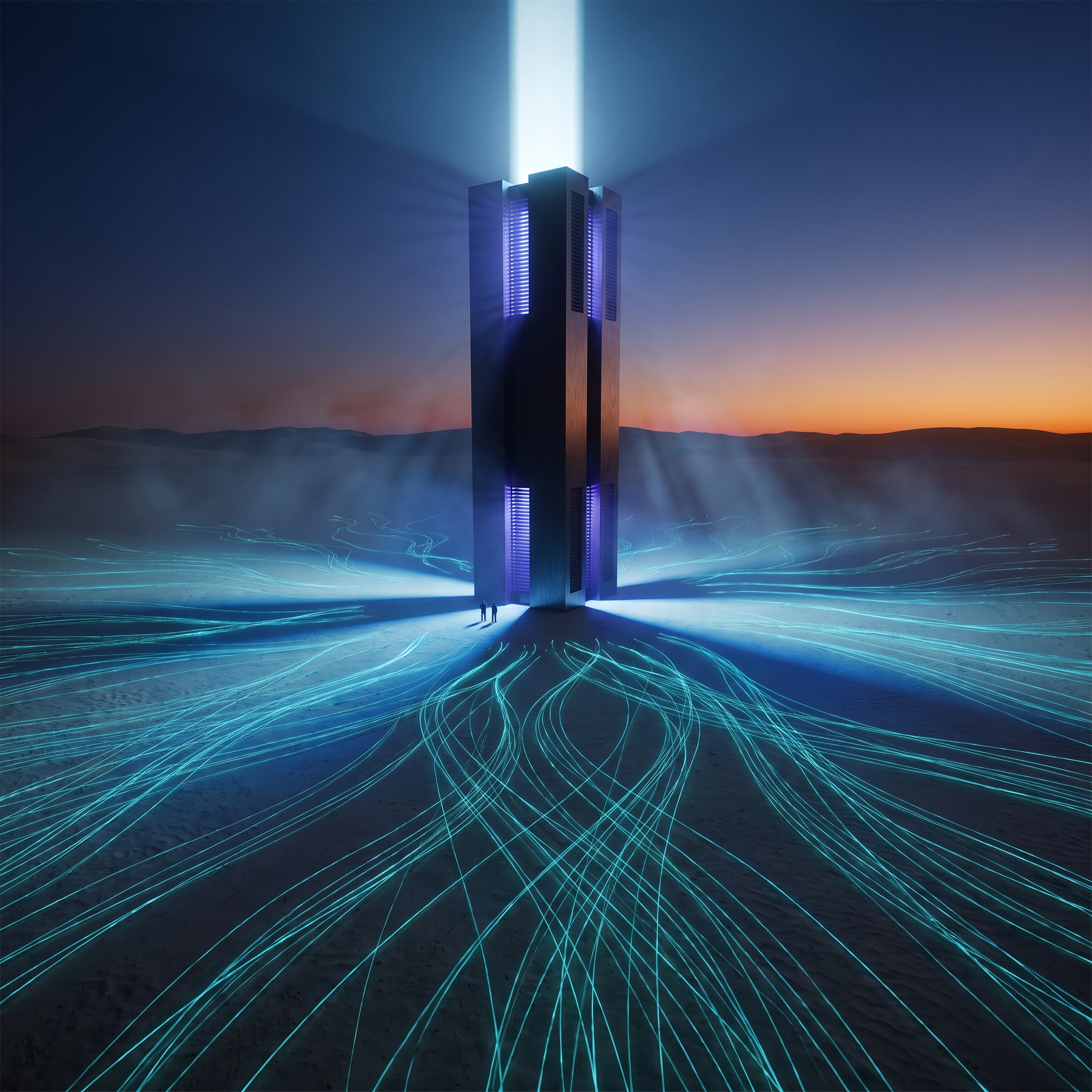 Ooredoo, Nokia, and Nvidia just launched a full-stack AI infrastructure platform targeting Southeast AsiaZankore by Indosat — a joint venture between Indosat Ooredoo Hutchison, Ooredoo Group, Nokia, and NVIDIA — targets one gigawatt of AI compute capacity in Indonesia, but only 200 megawatts has a confirmed delivery date: H1 2027. Ooredoo Group is committing $800 million over five years for a 49% founding stake.
 Michael Burry is shorting Nvidia while Musk's SpaceX deal lifts the stock—a high-stakes bet collisionOn August 5, 2026 — the S&P 500's first record close since June — Michael Burry held active short positions and put options against Nvidia while Elon Musk simultaneously announced SpaceX would build exclusively on Nvidia's Vera Rubin architecture. The same data point reads as both bullish confirmation and concentrated-demand risk.
 Nvidia just released Alpamayo 2 Super—its frontier model for autonomous vehicles and robotaxis—for commercial deploymentNvidia released Alpamayo 2 Super—a 34-billion-parameter open reasoning model for autonomous vehicles—for commercial use on August 4, 2026, posting weights on Hugging Face under the permissive OpenMDW-1.1 license. The Alpamayo model family had already exceeded 500,000 downloads before the commercial gate opened, but no mandatory third-party validation requirement exists for derivatives.
 Nvidia faces 12-to-1 demand-to-supply ratio—production can't keep pace with ordersNvidia's GPU demand-to-supply ratio—cited as 12-to-1 by Wedbush analyst Dan Ives—may measure fear of allocation more than true end-use demand, as hyperscalers over-order to secure chips. The real bottleneck is TSMC's CoWoS packaging, fully booked through mid-2027, with Nvidia holding roughly 60% of that capacity.
 Nvidia just closed a recursive loop—its Vera CPU is now designing Nvidia chipsNvidia's Vera CPU — 88 custom Olympus cores, up to 1.5 TB LPDDR5X memory — is now running Cadence Jasper and Synopsys VCS inside Nvidia's own chip design workflows, producing up to 1.5x performance gains in internal testing. Independent benchmarking has not yet confirmed that figure.
 AI itself is rewriting the software that made Nvidia untouchable—CUDA faces its first real threatAMD's MI300X delivers hardware roughly on par with Nvidia GPUs, yet AMD's data-center GPU revenue is still one-tenth of Nvidia's — proof that CUDA, not the chip, is the real moat. AI coding agents can now compress multi-year software porting work to hours, but Nvidia is using the same agents to deepen CUDA faster.
 Demand for Nvidia chips is crushing supply at a 12-to-1 ratio—what this means for the stockNvidia's AI chip demand outpaces supply at a 12-to-1 ratio, per Wedbush analyst Dan Ives — a figure that revised upward 25% in six days, signaling sentiment more than hard data. The real supply ceiling sits with TSMC's CoWoS packaging and HBM memory suppliers, not Nvidia's chip design.
 Nvidia just teamed up with Kawasaki to build AI-powered robots for Japanese shipbuildingOn July 16, 2026, Nvidia and Kawasaki Heavy Industries announced a co-developed AI-powered digital shipyard at Sakaide Works in Kagawa Prefecture, Japan. Nvidia is deploying its full physical AI stack — Cosmos, Omniverse, Isaac, Metropolis, and Jetson — to automate welding, painting, inspection, and material handling amid Japan's structural skilled-labor shortage.
 Nvidia is moving away from selling chips individually—now it's all about AI racksNvidia's GB300 NVL72 rack delivers 1,648 teraflops per GPU on DeepSeek-V3 pre-training — a benchmark only possible because NVLink and 130 TB/s bandwidth are co-designed into the rack. Meanwhile, custom ASICs are growing 44.6% year-over-year versus 16.1% for GPUs, signaling inference volume is already moving away from Nvidia.
 Nvidia's new Vera CPU with Olympus cores just launched—here's what changesNvidia's Vera CPU, built on 88 in-house-designed Olympus cores on a single TSMC 3nm die, is Nvidia's first fully custom CPU core — not licensed Arm IP. It claims 80% faster sandbox performance for agentic AI workloads, but that figure is vendor-stated and awaits independent validation ahead of fall 2026 shipments.
 Moonshot acquired 20,000 Nvidia chips through Alibaba to build an AI rival to US labsChinese AI startup Moonshot AI trained its Kimi K3 model — 2.8 trillion parameters, ranked #1 on Arena.AI above Anthropic — using a cluster of roughly 20,000 Nvidia GPUs accessed through a confidential computing deal with Alibaba, which also holds a 36% stake in Moonshot, raising questions about whether US export controls accelerate Chinese AI consolidation rather than block it.
 Apple just passed Nvidia as the world's largest company—but analysts say it won't lastApple briefly surpassed Nvidia as the world's most valuable company intraday on July 31, reaching roughly $4.93 trillion versus Nvidia's $4.77–$4.92 trillion — but Apple's post-earnings drop of 7% that same session, driven by China slowdown and memory constraint disclosures, erased the lead within hours.
 The memory wall: why bandwidth matters more than raw compute for AI workloadsFor AI inference workloads, memory bandwidth — not peak FLOPS — sets the speed limit. Every generated token requires pulling the full model weight set through memory. Token generation speed equals roughly memory bandwidth divided by bytes-per-token. Doubling a GPU's FLOPS while holding bandwidth constant produces nearly identical inference latency, often at higher power cost.
 Why CUDA's library ecosystem creates switching costs deeper than silicon speedNVIDIA holds 86–92% of the data center GPU market not because of chip speed but because of 6 million CUDA developers and 400 optimized libraries built over 19 years. Switching GPUs means abandoning cuDNN, TensorRT-LLM, NCCL, and a generation of engineers who learned only CUDA — a cost most organizations cannot pay.
 Nvidia's CEO urges DC to avoid strict limits on open-weight AI—even as China's Moonshot gains groundNvidia CEO Jensen Huang lobbied Congress in late July 2025 — visiting Warner, Schiff, Cruz, and Commerce Secretary Lutnick — to oppose restrictions on open-weight AI models, leading a 50-company coalition letter. Nvidia is reportedly pursuing AI deals worth over $750 billion, giving Huang a direct financial stake in the outcome.
 Nvidia backstops $250B OpenAI and $500B SK Hynix deals—but analysts worry the structure masks real demandNvidia is reportedly backstopping $250 billion in debt so OpenAI can anchor-tenant a SoftBank-built 10-gigawatt data center in Pike County, Ohio — despite OpenAI carrying a non-investment-grade credit rating at an $852 billion valuation. Analysts including Michael Burry warn the structure makes Nvidia's own customer demand unreadable as independent evidence.
 Taiwan detained an Nvidia employee today over alleged illegal Super Micro AI server exports to ChinaOn July 28, 2026, Taiwan's Keelung District Prosecutors Office detained a senior Nvidia business-development manager named Chang, the first Nvidia employee ever legally detained in a chip diversion case. He allegedly falsified KYC and end-user documents to route approximately 50 Super Micro servers loaded with restricted Nvidia AI accelerators to China.
 Nvidia's credit default swaps are spiking today—Wall Street is questioning AI demand durabilityNvidia's five-year credit default swaps hit a record 82 basis points — on a contract with only eight months of trading history — as Wall Street questions whether Nvidia is financing its own customers through OpenAI guarantees and the $500 billion SK Group buildout, while Nvidia stock fell roughly 5% and the South Korean Kospi briefly halted trading.
 Naver and Nvidia announced a joint 200 megawatt AI factory partnership—execution by 2028Nvidia acquired a 4.5% stake in South Korea's Naver — 7.2 million shares at roughly 204,500 won each — while committing to a 200-megawatt AI factory at GAK Sejong by 2028. But Brookfield's $9 billion in financing is still marked 'proposed,' and the facility is explicitly designed to serve both Korean and U.S.-based developers.
 Nvidia's A100 and H100 chips designed for AI ended up in PLA procurement despite restrictionsApproximately one in five of Nvidia's authorized China partners were supplying U.S.-blacklisted entities tied to the People's Liberation Army, according to Wire China. Moonshot AI allegedly routed banned Blackwell GB300 servers through Thailand to train Kimi K3, a 2.8-trillion-parameter model — yet Nvidia's stock rose 3.26% the day the White House accused them.
 Jensen Huang warns HBM shortages and power limits will cap AI revenue growth to doubling yearlySK Hynix's CEO forecasts 2027 will bring the worst-ever HBM memory shortage, with demand outstripping supply past 2030. Jensen Huang's warning that AI revenue growth is capped at roughly doubling per year is confirmed independently by Micron and Michael Dell — but NVIDIA, which pre-secured long-term HBM supply agreements, is the least exposed to the constraint it is describing.
 Nvidia just locked a $500 billion-plus partnership with SK Group across AI factories and memoryNvidia and SK Group announced a $500 billion-plus AI partnership covering HBM4 memory co-development and a 2-gigawatt SK Telecom AI Factory, but the figure rests on letters of intent — not signed contracts — and a conflated $950 billion headline bundles in Samsung's separate $200 billion Broadcom deal.
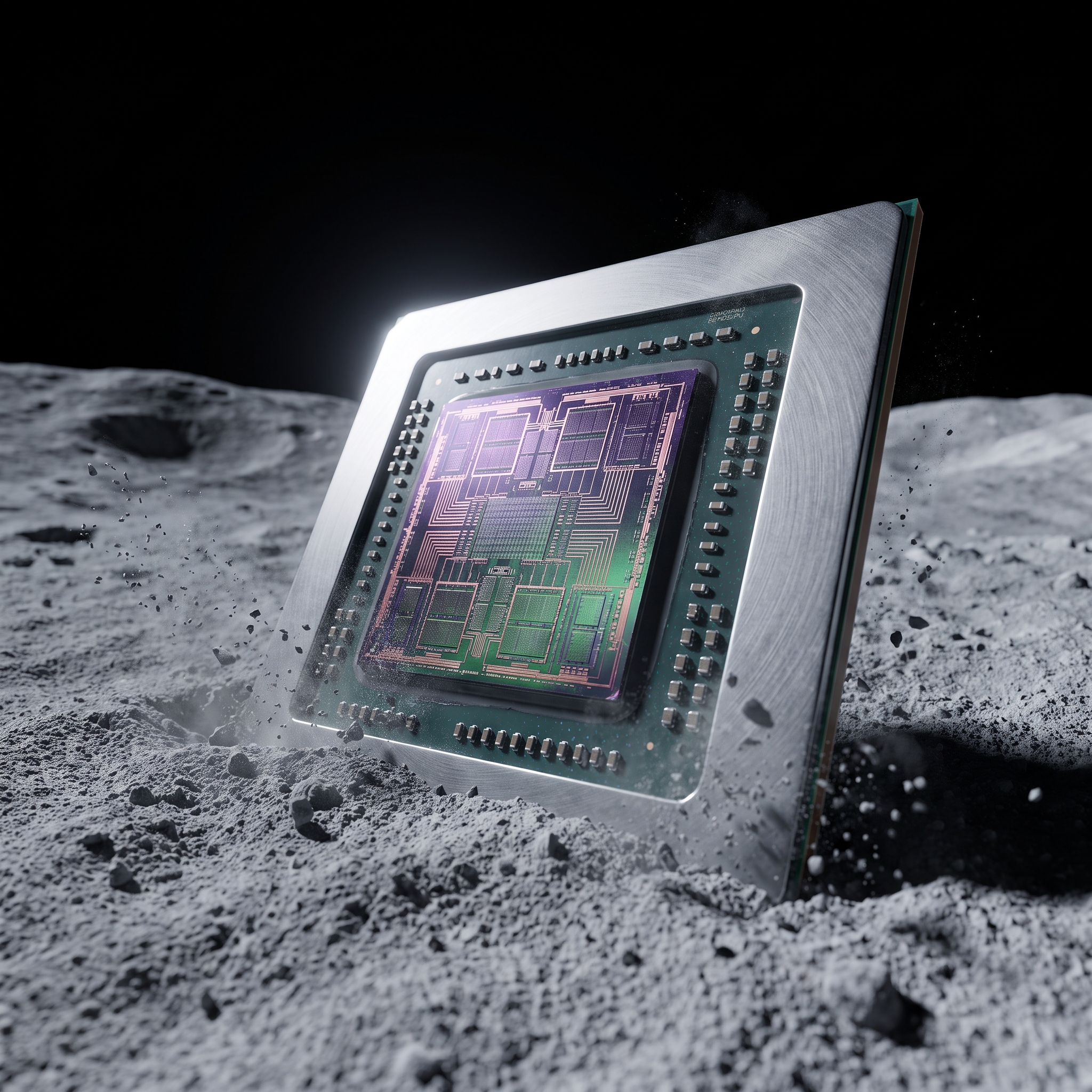 Lunar Outpost is flying Nvidia chips to the moon—expanding AI compute beyond Earth orbitLunar Outpost is flying an Nvidia Jetson chip to the lunar surface on its MAPP rover in 2026, calling it 'likely' the first GPU there — but the specific Jetson model, thermal-vacuum test results, and radiation tolerance data have not been published, leaving the hardware's qualification unverified.
 Wistron just opened its first U.S. factory to mass-produce Nvidia's GB300 Grace Blackwell superchips in Fort WorthWistron's $700 million, 324,000-square-foot D1 facility in Fort Worth is the first U.S. site to assemble Nvidia GB300 Grace Blackwell Ultra Superchips — but it is a system integration plant, not a wafer fab. TSMC still fabricates the silicon and advanced CoWoS packaging still happens in Asia, leaving the core supply-chain risk upstream.
 Nvidia just handed its most powerful supercomputer to the U.S. military—the first direct donation of top-end servers to American defenseOn July 22, 2026, Nvidia donated a DGX GB300 supercomputer — 72 Blackwell Ultra GPUs in one liquid-cooled rack, estimated at $15 million — to the Naval Postgraduate School, marking the first direct donation of top-end servers to American defense. The transfer routed through the NPS Foundation, bypassing standard defense procurement oversight.
 AMD is directly competing with Nvidia for the humanoid robot chip market—a new battleground beyond data centersAMD is competing with Nvidia for humanoid robot chips, but the real contest is over platform lock-in, not 2026 revenue. Foundation Future Industries' Phantom robots use AMD Ryzen AI Embedded X100 chips and claim 2.5x faster inference over Nvidia — but Nvidia's Jetson Thor delivers 865 teraflops purpose-built for humanoid deployment.
 Nvidia's Vera Rubin combines CPUs and GPUs into one platform—a direct challenge to AMD and Intel's hold on the CPU sideNvidia's Vera Rubin NVL72 — 72 Rubin GPUs and 36 Vera CPUs fused via NVLink-C2C into one rack-scale system — claims 5x the inference performance of Blackwell at 10x lower cost per token. But Nvidia never published AMD EPYC 9755's raw benchmark scores, and Anthropic's 2-gigawatt AMD commitment signals real lock-in anxiety.
 Nvidia just detailed Vera, its next-generation AI CPU setting up direct competition with AMD and IntelNvidia's Vera CPU, detailed publicly on July 21 2026, features 88 Olympus ARM v9.2 cores and 1.2 TB/s memory bandwidth — claiming 40× lower latency than AMD EPYC Turin at high utilization. But early buyers (OpenAI, Anthropic, SpaceX) are GPU-native shops, not x86 switchers, raising questions about whether Vera displaces AMD and Intel or simply deepens Nvidia's rack bundle.
 Nvidia just plowed nearly $4 billion into Nebius, increasing its stake 18-fold in a neocloud reshapeNvidia's nearly $4 billion Nebius stake is 95% unexercised warrants — not real equity. Of 22.26 million disclosed shares, 21.07 million don't exist yet. Nebius shareholders absorb the $775 million debt and 5-gigawatt buildout risk; Nvidia holds structured upside and can simply walk if demand softens.
 Bristol Myers Squibb is building the life sciences industry's most powerful AI factory on Nvidia's newest Vera Rubin chipsBristol Myers Squibb announced a second NVIDIA DGX SuperPOD built on eight Vera Rubin NVL72 systems, claiming 3.6 exaFLOPS per rack and 10x energy efficiency over its predecessor — but three years after deploying its first SuperPOD, BMS has published zero pipeline benchmarks linking the hardware to actual drug discovery outcomes.
 Apple's stock surge signals the AI trade is shifting away from Nvidia's hardware-centric gripOn July 17, Apple's market cap briefly surpassed Nvidia's — both near $4.90 trillion — after Nvidia fell 3.5%. Apple had gained roughly 1% over the prior twelve months while Nvidia gained 40%, making the headline a story of mean reversion and a China H200 ban, not a confirmed AI rotation.
 Jensen Huang is banking on 'Made in Japan' AI robots to tackle one of the country's biggest problemsJapan has committed $65 billion in public-private investment toward deploying 10 million AI robots by 2040, with Nvidia supplying 27,500 Rubin GPUs for a government-backed AI factory drawing 140 megawatts. The deal addresses a real demographic crisis but embeds Japan inside Nvidia's proprietary hardware ecosystem while calling the arrangement sovereign AI.
 Toyota, Fujitsu, Hitachi, and Fanuc are building real robots with Nvidia's new physical AI chips right nowNvidia's Jensen Huang visited Tokyo and triggered a cascade of physical AI commitments: 22 companies joined the Cosmos Coalition, Japan launched Noetra with 44 companies and one trillion yen in government backing, and Nvidia is supplying 27,500 Rubin GPUs exclusively — making Japan's sovereign AI infrastructure entirely dependent on American silicon.
 Nvidia could solve the energy crisis its own chips created — municipalities are banning data centersData centers consumed 1.2 billion gallons of water in Columbus in one year, and in July 2026, U.S. Energy Secretary Chris Wright authorized PJM Interconnection to cut data centers off the grid during a heat wave. Nvidia's closed-loop cooling addresses municipal water use but leaves upstream power-plant water demand — and a projected 240 TWh U.S. increase — untouched.
 Japan just launched a 27,500-GPU AI factory with Nvidia's Vera Rubin chips — targeting 30% of global robotics by 2040Japan's Noetra consortium — a 44-company group including SoftBank, Sony, and Honda — launched the world's first national AI infrastructure on July 16th: a 140MW factory housing 27,500 Nvidia Vera Rubin GPUs, backed by $2.34 billion through METI and NEDO, targeting 10 million robots and 30% of global robotics by 2040.
 Apple just reclaimed the crown from Nvidia — what the valuation shift signals about AI market leadershipOn July 17, 2026, Apple reclaimed the title of world's most valuable company at $4.88 trillion, overtaking Nvidia by just $20 billion. Nvidia fell 3.5% in a single session — a $173 billion one-day drop — while Apple rose 22% year-to-date versus Nvidia's 7%, signaling a broad investor rotation from AI infrastructure toward AI application.
 Jensen Huang just told Tokyo that Vera Rubin AI chips are already in production with 'giant amounts' incomingJensen Huang confirmed Nvidia's Vera Rubin NVL72 is in full production — 350-plus factories, 30 countries — while SemiAnalysis reported delays to a different product: the Kyber NVL144 rack for Rubin Ultra. Both claims can be true simultaneously because they describe two distinct hardware generations.
 NVIDIA Cosmos and Jetson Thor are moving Japanese robots from labs into real factoriesJapan's industrial robotics giants — FANUC, Yaskawa Electric, Kawasaki Heavy Industries, Fujitsu, SoftBank, and Toyota — have committed to NVIDIA's Cosmos and Jetson Thor architecture, trading strategic autonomy for speed-to-capability. NVIDIA captures GPU sales, software licensing, and ecosystem lock-in; Japan, by its own logic, leased a robotics future rather than built one.
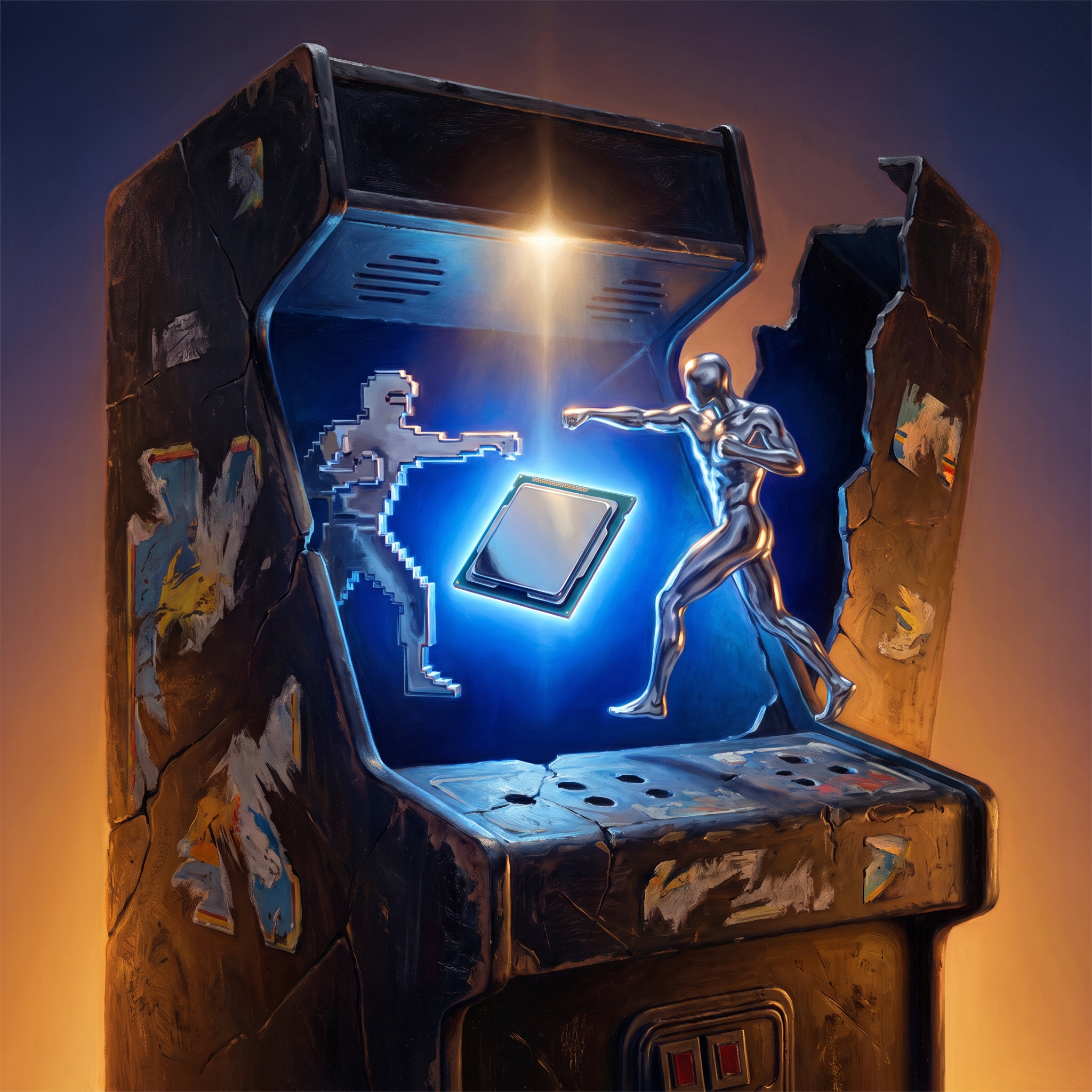 Nvidia and Sega team up on RTX Spark AI games — 30 years after their first GPU partnershipNvidia and Sega announced an RTX Spark gaming partnership in Akihabara on July 15, 2025 — exactly 30 years after Sega's Shoichiro Irimajiri invested $5 million to keep Nvidia alive. The flagship title, Virtua Fighter Crossroads, will support DLSS, but whether it runs natively on RTX Spark's Arm architecture remains unconfirmed.
 Jensen Huang still steps in to settle internal fights over Nvidia's scarce AI chipsJensen Huang personally arbitrates internal GPU allocation fights at Nvidia — sometimes nearly weekly — because even Nvidia's own automotive division competes for scarce chips against OpenAI, Meta, and Microsoft. The criteria Huang uses are, by his team's own admission, 'all of the above': a principled process that is effectively unauditable from outside the room.
 Nvidia's next-gen Kyber NVL144 AI rack delayed to 2028 — circuit-board manufacturing issues open door for AMD and GoogleNvidia's Kyber NVL144 AI rack has reportedly slipped from 2027 to 2028 because its 78-layer PCB midplane — described by SemiAnalysis as one of the most complex commercial circuit boards ever attempted — cannot yet be manufactured at acceptable yield. Suppliers Ibiden, Samsung Electro-Mechanics, and Zhejiang Union Holding fell 10–18% on the news.
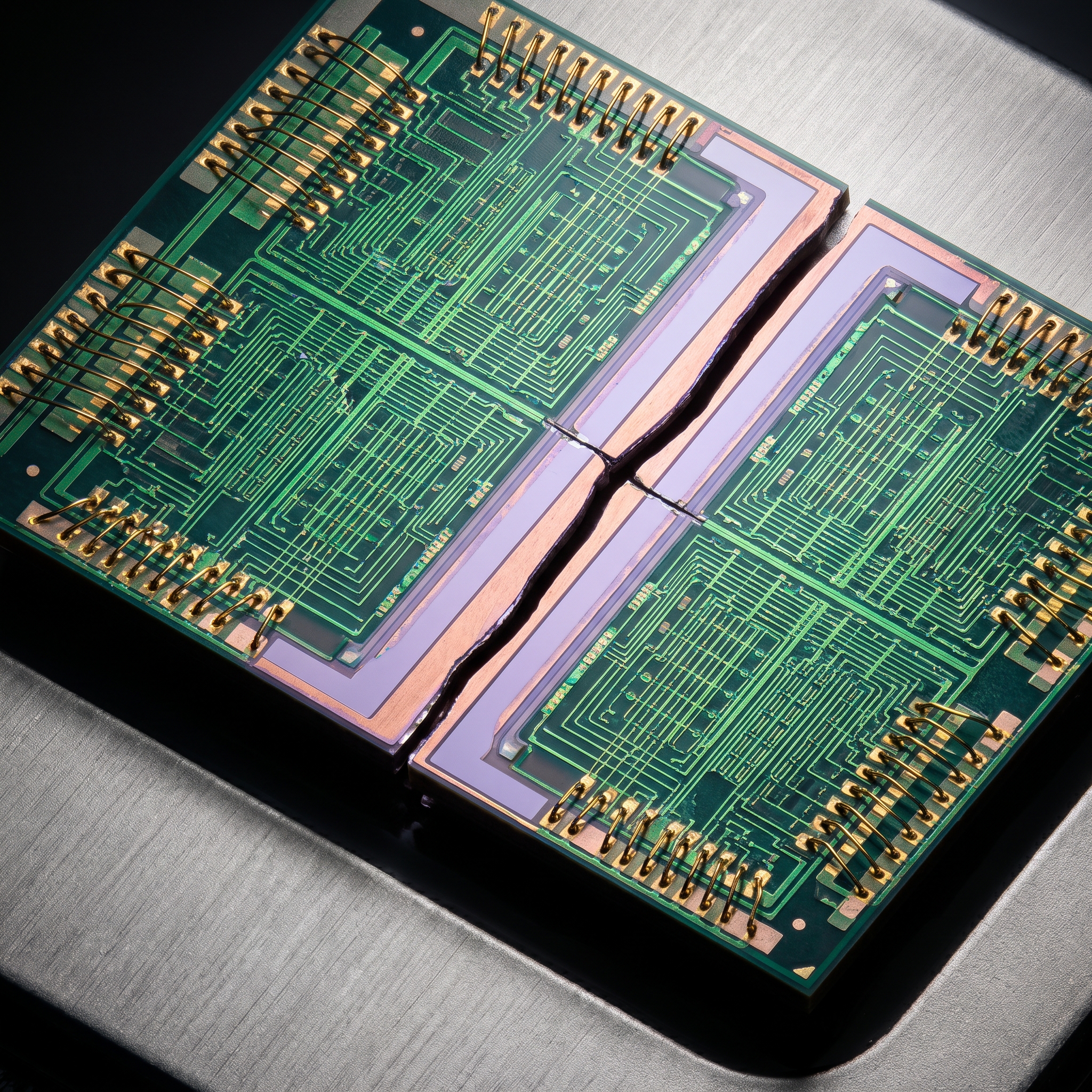 Nvidia just halved its Asian AI chip customers due to tightened U.S. export controls targeting ChinaNvidia cut more than half its approved Asian AI chip buyers in 2026, concentrating Blackwell GPU access among large hyperscalers like Alibaba and ByteDance while pushing smaller operators out. The result: a survey of 60 Chinese executives shows a 16-point budget swing toward Huawei — accelerating exactly the domestic chip capability U.S. export controls were designed to prevent.
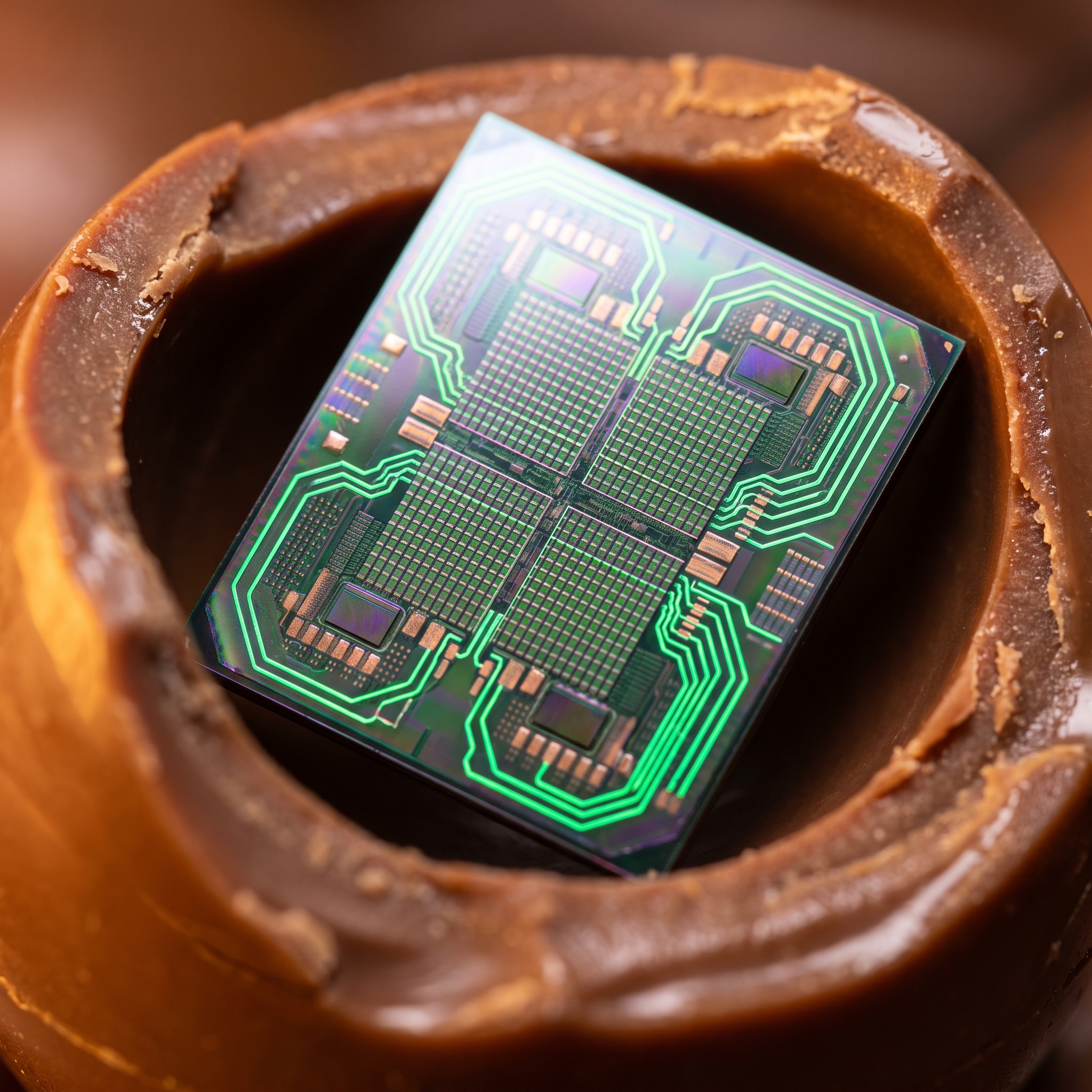 Nvidia is the world's most valuable company, yet trades cheaper than Hershey on key metricsNvidia trades at 18–22 times forward earnings — below Hershey's 31 times trailing earnings — despite posting $49 billion in free cash flow in a single quarter at a 74.9% gross margin. Nvidia's earnings grew faster than its stock price, compressing its multiple to its lowest level since early 2019, before the AI boom.
 Why CUDA's software moat outlasts any single chip generationCUDA's software moat — not chip speed — explains NVIDIA's $115 billion in data center revenue. Launched in 2006, CUDA compounded through a single 2012 breakthrough when AlexNet won ImageNet running on CUDA, locking 6 million developers and 400 optimized libraries into a four-layer stack that competitors cannot replicate by building faster hardware.
 Nvidia just demoed RTX Spark — turning personal laptops into 1 petaflop AI workstations at ComputexNvidia's RTX Spark, unveiled June 1 at Computex, pairs the N1X superchip with 128 GB unified memory to deliver 1 petaflop FP4 compute in a laptop — but the underlying silicon has shipped in the Lenovo ThinkStation PGX for 18 months. Six OEMs including Microsoft's Surface Laptop Ultra committed; no independent benchmarks exist and laptops don't ship until Q4 2026.
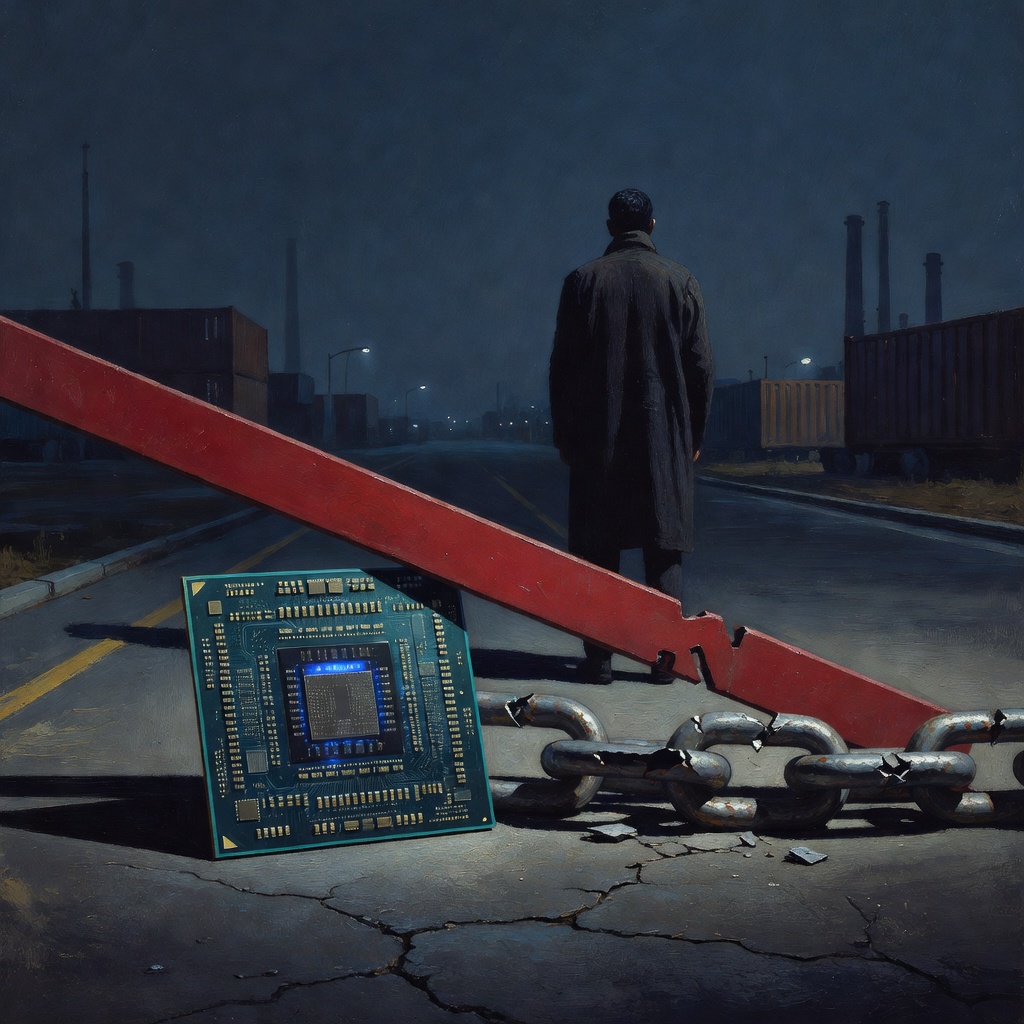 China Blocks Nvidia's H200: Supply Chain CrisisChina blocked H200 GPU imports in January 2026 — just four days after the U.S. Commerce Department formally approved sales — leaving Nvidia with zero cleared revenue, stranded TSMC production capacity, and over a million cancelled orders from Chinese clients, exposing a fundamental supply chain vulnerability.
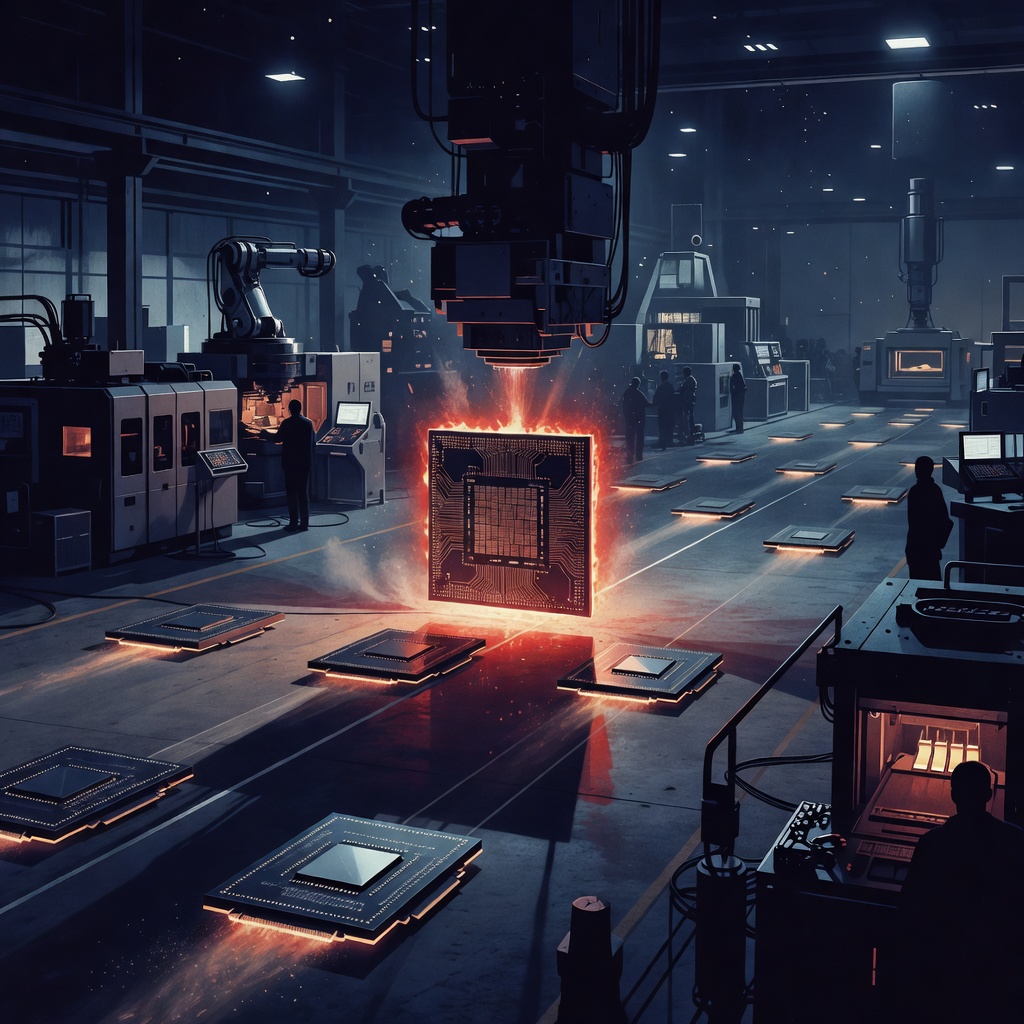 Nvidia's next-gen Rubin AI chip just entered fab — here's what it means for the GPU raceNvidia's Rubin GPU stack — seven chips including the Vera CPU, CX9 Super NIC, and NVLink 144 switch — entered TSMC fabrication in 2026. CoreWeave brought up the first Vera Rubin NVL72 rack on June 1st. All three HBM4 suppliers hit volume simultaneously, a first for any Nvidia generation.