Brian Reed: Hi. I want to ask you something before we get into the numbers.
Brian Reed: When you saw Slovakia broke its all-time temperature record — 42°C in Dolné Plachtince, August 6th — was your first reaction the number, or something else?
Eliza Ward: Honestly? Austria at the same time. 41.2°C, Bad Deutsch-Altenburg. Two all-time nationals — not monthly, not seasonal — the absolute records, in the same event.
Brian Reed: That's — yeah. That's what stopped me.
Eliza Ward: And the Czech Republic already went earlier this summer. So this isn't week one of something — it's week whatever of something that's been escalating.
Brian Reed: Which is why the Budapest overnight figure hits differently. 28°C as a minimum temperature — that's the low, the coolest it got — in a city without widespread air conditioning.
Eliza Ward: Right — and that's not just uncomfortable. A tropical night above 20°C means the body doesn't recover from the day. 28 is eight degrees past that threshold.
Brian Reed: But here's where it breaks from just being a heat story — the body not recovering is one thing, but the grid not recovering is another thing entirely. Poland shut down Kozienice and Połaniec. Both of them. Same week.
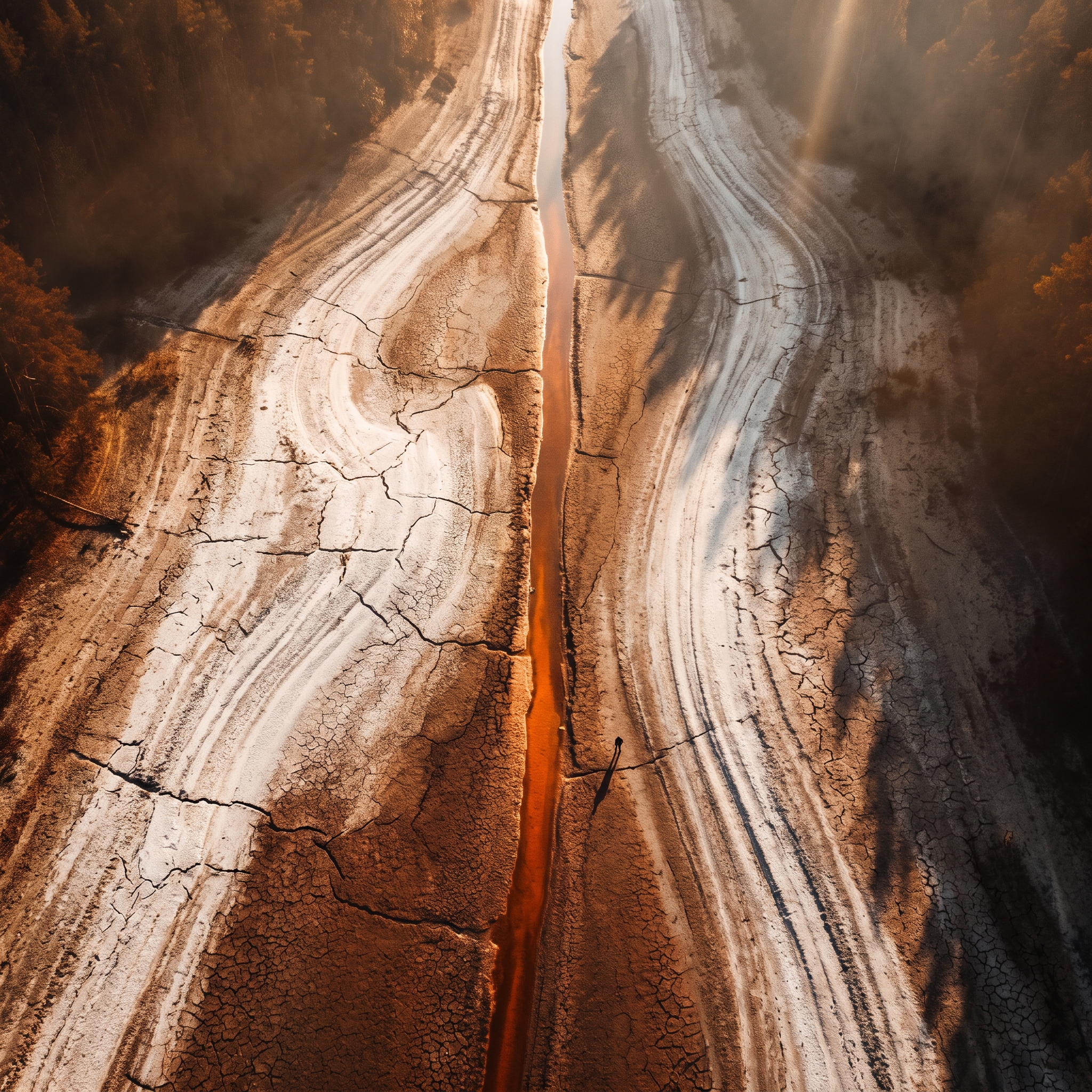
Eliza Ward: 1.3 gigawatts offline. Because the Vistula dropped.
Brian Reed: And I want to make sure I'm understanding the mechanism correctly — is it basically like a car engine needing coolant? The plant needs the river the way an engine needs coolant, river drops, plant overheats, you shut it down?
Eliza Ward: That's exactly it. You pull river water in, you use it to cool the system, you discharge it. The river drops too low, you can't pull enough in, the plant slows or stops. Same physics, much bigger consequences.
Brian Reed: And this is the part that I — wait, actually, let me ask it differently. Is this one event hitting three countries, or three separate events that happened to overlap?
Eliza Ward: One event, three countries — because it's the same rivers. The Danube runs through Slovakia and Hungary. Slovakia's only nuclear plant was at 80% capacity, Danube too low. Hungary's PM said Paks nearly shut down entirely — same river, same week. That's the heat-drought energy cascade: heat accelerates evaporation, rivers drop, cooling fails, plants go offline. Not sequentially. Simultaneously.
Brian Reed: Hold on — the PM said 'nearly.' What's the confirmed number on Paks?
Eliza Ward: Right — and I want to be precise here. The confirmed figure is 'nearly forced shutdown,' that's what the prime minister said. I've seen a 10 percent capacity number floating around but I can't pin that to a primary source, so I'm not leading with it. 'Nearly shutdown' is what we have.
Brian Reed: That's — I mean, 'nearly' from a prime minister about his own nuclear plant is still an extraordinary thing to say out loud. Three countries, same drought, same week. That's not a stress test. That's a failure.
Eliza Ward: But 'failure' is still being framed country by country — and that's the take I'd push back on. Every headline I've seen is: Poland's plants, Hungary's plant, Slovakia's plant. Three separate national problems.
Brian Reed: Right — and that framing is wrong, because the Danube doesn't stop at a border.
Eliza Ward: Exactly. One river system failing.
Brian Reed: And it's not just power plants. The freight companies in Germany — when the Danube and the Rhine drop, cargo can't move by ship. It moves by truck. Which is slower and more expensive. So I'm thinking about, let me see — a barge operator who's been running refrigerated cargo down the Danube for years. That route is now four hours longer by road. That cost goes somewhere. It goes to a hospital procurement budget, it goes to a grocery markup.
Eliza Ward: Wait — is the Rhine confirmed in the same pattern right now?
Brian Reed: Yeah, that's confirmed — companies already shifting cargo to road along both the Danube and the Rhine. It's in the Germany reporting. That's not one river. That's the freight spine of Central Europe going soft at the same time.
Eliza Ward: And here's the detail that — actually, this one stopped me. The Danube fell so low in Serbia that sunken ships from a Nazi fleet surfaced. World War II wrecks, just sitting there visible. That's not metaphor. That's a water level marker. We haven't seen this in living memory.
Brian Reed: The last time those ships were exposed — that's your reference point for how far the water dropped. Not a gauge reading. A sunken fleet.
Eliza Ward: One river system, multiple countries, freight costs climbing — and the death toll estimates and what's still bearing down on Skopje over the weekend, that's the part of this story we haven't touched yet.
Brian Reed: And that's where it lands on actual people — the death toll question. Because the Robert Koch Institute figure that's been cited, 11,900 heat-related deaths in Germany this summer — I want to know what 'heat-related' is actually doing in that sentence.
Eliza Ward: Hold on — and I want to flag, we don't have a confirmed dated primary source for that number. It's been cited. I'm not saying it's wrong, I'm saying treat it as indicative.
Brian Reed: Right — but even as indicative, the methodology question matters. Is that people who died of heat stroke directly, or people whose heart condition or kidney failure accelerated because it was 28°C at 3 a.m. and their body never cooled down? Because those are different infrastructure failures.
Eliza Ward: The second one is — I mean, that's actually the larger category, almost certainly. An elderly person in Budapest, no AC, overnight low doesn't drop below 28. The body is working all night just to stay functional. That's the tropical night mechanism. That's what the 28°C minimum confirms.
Brian Reed: And Skopje is next.
Eliza Ward: Forecast — 38°C over the weekend of August 9th and 10th, per the Bulgarian weather service regional data. That's a forecast, not confirmed. But if it holds, the burden doesn't end with the record week.
Brian Reed: And politically — Sadiq Khan published in The Guardian on August 8th, calling climate denial not just delusional but deadly. That's the political conversation starting, and it's starting before the death figures are even settled.
Eliza Ward: Which is — wait, actually that's the thing to watch. Not whether he's right about attribution, that's still live. It's whether governments in Poland, Hungary, Slovakia move from 'emergency measures' to naming a cause publicly. That's the signal. Do they?
Brian Reed: We don't know yet. And honestly I think that's the honest place to leave it — 11,900 is unverified, Skopje is a forecast, and the attribution argument is just starting. But Budapest's 28°C overnight minimum is confirmed, and that number alone tells you what the next week looks like for anyone without air conditioning in that region.
Eliza Ward: And that's — I mean, that's where I genuinely don't have an answer. Slovakia at 80% nuclear capacity, Hungary's PM saying Paks nearly went, Poland already offline. Those aren't contingency scenarios anymore. That's the operating reality right now. But whether the fix is building cooling infrastructure that doesn't depend on the Danube staying high, or getting dramatically better at rationing before the next ridge hits — I don't know. I don't think anyone's published that answer yet.
Brian Reed: Who decides which one? Because rationing buys you weeks. Infrastructure takes years. And those are not the same choice.
Eliza Ward: Right — and the Vistula and the Danube have no confirmed recovery timeline. That's not me speculating, that's just what the current reporting says. No timeline.
Brian Reed: So Skopje hits 38°C this weekend, the Danube stays low — Slovakia, Hungary, and Poland are all still managing reduced capacity from the same event — at what point does emergency management stop being the answer? That's the question I'm watching. Not in years. Potentially in weeks.
Eliza Ward: Yeah. And we don't have that answer today.