Mark Delaney: Juniper, real quick before we get into it — you know how sometimes a headline is technically accurate and completely misleading at the same time?
Juniper Vale: Oh, that's most headlines. What's the specific one?
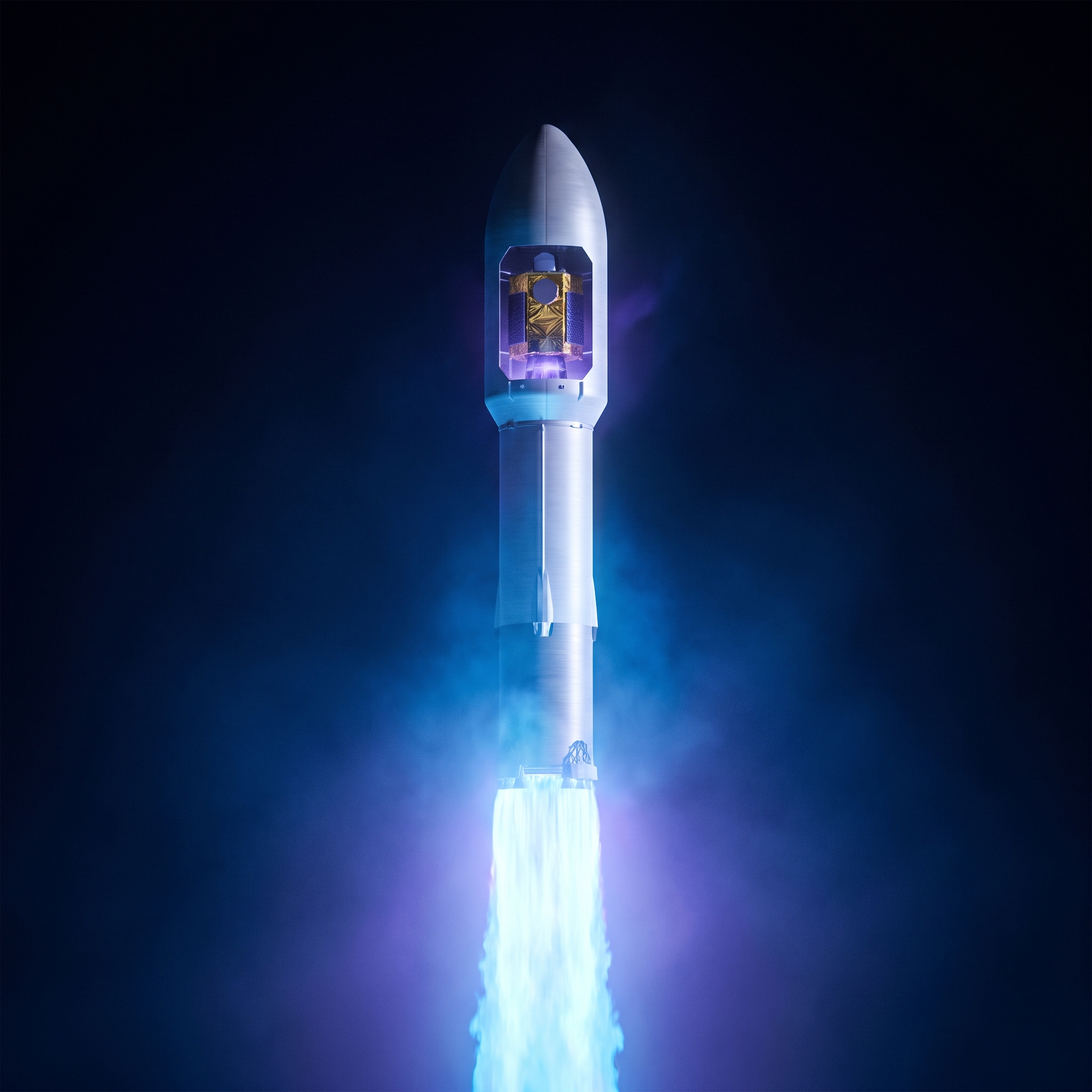
Mark Delaney: "World's First Nuclear-Powered Satellite Launched." Which ran everywhere after July 7th, when SpaceX put Transporter-17 up from Vandenberg on a Falcon 9, and — yeah, BOHR was on it, the City Labs CubeSat, and okay, fine, that's all true. But.
Juniper Vale: The satellite runs on solar panels.
Mark Delaney: The satellite runs on solar panels! The nuclear piece — City Labs' NanoTritium betavoltaic technology — that's a demonstration payload. One component. And Peter Cabauy, the CEO, comes out and says the real milestone is regulatory. Not the technology. The permission.
Juniper Vale: Okay, so the question this whole episode is trying to answer is: if the technology isn't new — and governments have been using nuclear power in space for decades — why did it take until 2026 for a commercial company to get the green light?
Mark Delaney: And why does it matter that they did, because — uh, I mean, BOHR went up as one of eighty-one payloads on Transporter-17, the 79th Falcon 9 launch of the year. It's almost routine at this point. Except it isn't.
Juniper Vale: It isn't. Not even close. That's what we're getting into.
Mark Delaney: But wait — I keep tripping on something. Like, what is NanoTritium actually doing up there? Because 'nuclear battery' still sounds scary to me.
Juniper Vale: Okay, here's the plain version: it's like a solar panel that works in the dark. Tritium — a radioactive hydrogen isotope — releases tiny particles as it decays. A semiconductor catches those particles and converts them directly into electricity. No reactor. No coolant loop. No chain reaction.
Mark Delaney: That's... genuinely it? That's the whole thing?
Juniper Vale: That's genuinely it. And tritium isn't exotic — it's the same isotope that's been making watch dials glow in the dark for seventy years. You've probably worn it on your wrist.
Mark Delaney: Huh. So the scary part is, uh — basically the word 'nuclear.' Not the actual physics.
Juniper Vale: Mostly, yeah. Now — and this is the part I want to be really precise about — BOHR's main bus is still running on conventional solar arrays. City Labs' NanoTritium payload is powering one demonstration component. So technically accurate to call it a nuclear satellite, but what's actually flying is a solar satellite with a nuclear battery tucked inside proving the concept works in orbit.
Mark Delaney: So we're not even at 'the satellite runs on nuclear power' yet. We're at 'we proved you can put one in space without anything going wrong.'
Juniper Vale: Which is not nothing — that's actually what Peter Cabauy meant when he called it historic. Not that the physics surprised anyone, but that a commercial entity finally got to do it. The milestone is that the door opened, not that we've walked all the way through.
Mark Delaney: And that door being closed — it wasn't closed because nobody had the idea. NASA's been strapping radioisotope generators onto deep-space probes since, what, the Cold War? The military ran fission reactors on satellites. Government programs, exclusively, for sixty-plus years.
Juniper Vale: Every single one. No commercial company had ever navigated the U.S. nuclear licensing framework and gotten permission to fly a nuclear payload. City Labs is the first.
Mark Delaney: Wait, actually that's the part that's wild to me. Think about what that means for a regular company. Like, picture an engineer at a GPS provider in 2024. They've got a satellite that needs continuous power over the Arctic Circle. Solar fails for six months up there. This engineer knows — knows — a radioisotope generator would solve the problem. NASA proved it works. But they literally cannot use one. Not won't. Can't.
Juniper Vale: They either overengineer with batteries or they just don't go there.
Mark Delaney: Sixty years of that. The solution is sitting on the shelf, government-approved, government-tested, and a commercial engineer cannot legally reach for it.
Juniper Vale: And Peter Cabauy knew exactly what he was saying when he called this historic specifically for the regulatory breakthrough. That's not PR spin — that's the precise thing that changed.
Mark Delaney: Which also — uh, none of this happens without SpaceX making it cheap enough to even try. Eighty-one payloads on Transporter-17, right? That's the 1,800th payload across the whole rideshare program. A Miami startup doesn't run this experiment if they're paying full dedicated-launch prices.
Juniper Vale: The infrastructure story and the regulatory story arrive at the same moment. That's the actual convergence.
Mark Delaney: So yeah — I'll take the partial win. The regulatory wall was real. City Labs walked through it first. But the part I'm still chewing on is what comes next — who actually lines up behind them, and whether permission turns into a real commercial market. That's a different question.
Juniper Vale: That question — whether permission turns into momentum — is actually the one I can't answer cleanly. And I want to be honest about that. Because there's a ladder here that's getting collapsed in every headline, and until you see the rungs, you can't even ask the right question about commercial demand.
Mark Delaney: A ladder. Okay, walk me through it.
Juniper Vale: Rung one: betavoltaics. That's BOHR — tiny, continuous, low-power, proven in orbit now. Rung two: nuclear propulsion. NASA has pledged to test a propulsion system by end of 2028. That's a completely different physics problem — you're using nuclear energy to move a spacecraft, not just power a battery. Rung three: fission reactors. The White House issued a challenge to land a surface fission reactor on the Moon by 2030. That's a power plant. Those three things keep getting mentioned in the same breath as BOHR, and they are not the same breath.
Mark Delaney: Wait — 2030? For a lunar fission reactor? That's, uh — that's four years from now. That seems fast.
Juniper Vale: It does. And Lockheed Martin is one of the companies working on a fission surface power concept for exactly that. Whether 2030 is real or aspirational — I genuinely don't know. But here's what makes it feel less optional: China announced plans in April 2025 to build a nuclear power plant on the Moon by 2035. That's not a technology story anymore, that's a flag-planting story. And that changes the calculation for what counts as urgent.
Mark Delaney: China's 2035 lunar power plant — yeah, that reframes all of it. That's not a research agenda, that's a deadline.
Juniper Vale: Right — but the part that doesn't fit is that BOHR doesn't automatically accelerate any of that. BOHR is rung one. It proved you can commercially license and fly a betavoltaic payload without incident. That matters for polar orbit operators, deep space missions, lunar surface gear — places where solar just fails. Whether enough paying customers exist with those specific problems to justify the licensing cost every single time? That's the unresolved part. The research doesn't answer it.
Mark Delaney: So the calibrated version is — the door opened, the geopolitical pressure is real, the ladder exists. But City Labs proved rung one works. Rungs two and three have government names attached. Commercial operators are somewhere in the middle, still doing the math.
Juniper Vale: That's actually where I want to land this — because I think that's the most honest thing we've said all conversation. The commercial operators are doing the math. And the math only works if the mission actually needs nuclear power. Not every mission does. Most don't.
Mark Delaney: Yeah. I mean — okay, I'll say it. I came in ready to call this a nuclear revolution and I think the actual story is... City Labs proved a commercial company can clear the licensing pathway. That's the first domino. Whether domino two exists — that's on whoever shows up next with a mission that genuinely needs what NanoTritium offers.
Juniper Vale: Peter Cabauy put a flag in the ground on July 7th. That's real. But flags don't become infrastructure until someone builds on them. So — yeah. Fascinating footnote, or the start of something. We'll find out which one.
Mark Delaney: Tiny battery on a solar satellite that might change everything. Or might not. That's, uh — honestly? That tracks as a summary.
Juniper Vale: I'll take it. Thanks for chewing through this one with me.