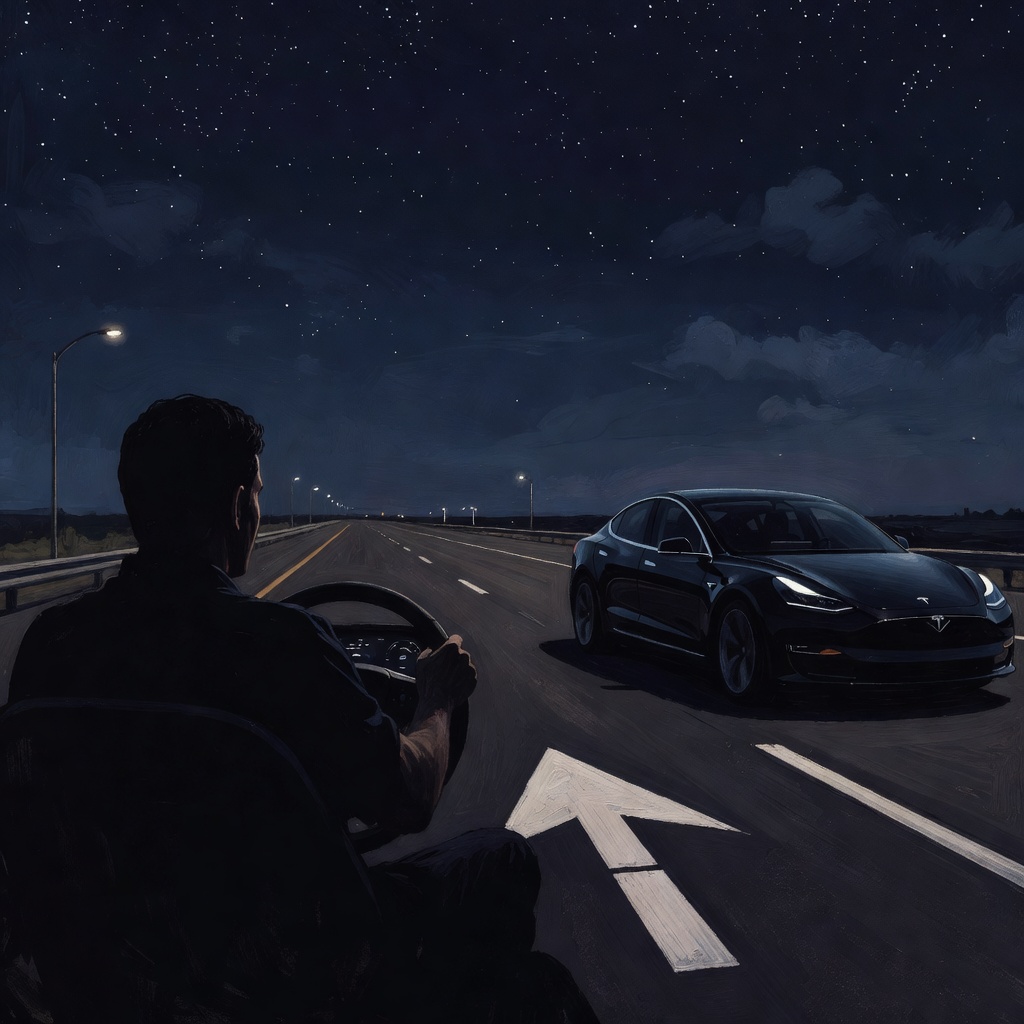
Megan Skiendel: June nineteenth. A Tesla Model 3 goes through the brick front wall of a house in Katy, Texas. Martha Avila — seventy-six years old, inside her own home — gets airlifted to hospital. She doesn't make it.
Miles Ashworth: Good lord.
Megan Skiendel: Michael Butler, the driver, tells Harris County Sheriff's deputies the car was on Autopilot. And honestly, for about twenty-four hours, that's the story — Tesla's Full Self-Driving system kills a grandmother.
Miles Ashworth: And then Ashok Elluswamy gets on X.
Megan Skiendel: Right. Tesla's VP of AI Software posts internal telemetry — claims Butler manually overrode FSD, pressed the accelerator to a hundred percent, hit seventy-three miles per hour at impact. The pedal was still floored after the crash. Think of it like cruise control: you can set it, but if you stomp the gas, you're driving. That's the Tesla argument in one sentence.
Miles Ashworth: Which is convenient, frankly, given that NHTSA is now demanding the underlying data independently — because Tesla controls every byte of it.
Megan Skiendel: And Elon Musk had already posted that the FSD-blame framing 'makes no sense' — before Elluswamy published a single number. Which, look, that sequencing is the whole story.
Miles Ashworth: That sequencing is the tell, isn't it. Musk posts 'makes no sense' — no data, no telemetry, nothing from Elluswamy yet — and the defense is already filed. In what other industry does the defendant hold the only evidence of their own innocence and also get to announce the verdict first?
Megan Skiendel: None. Zero.
Miles Ashworth: And look — Elluswamy posting on X, social media first, ahead of NHTSA, ahead of any raw data release — that isn't transparency. That's framing. Those are different things.
Megan Skiendel: I've watched a CEO's public statement actually narrow the company's legal exposure before an investigation concluded. The instinct is: get your version out first, and let regulators chase a narrative that's already set. Tesla went to X, not to a press conference, not to a filing. That's a deliberate sequencing choice — and NHTSA is now left demanding the underlying data independently, which means the public is currently choosing between Michael Butler's word and Tesla's word with nothing in between.
Miles Ashworth: No third-party verification whatsoever. Which — well, Elluswamy characterized what the data shows. He has not actually released the data source. Those are, quite, two entirely different claims.
Megan Skiendel: And that's the headline's problem, isn't it — Business Insider reported the crash, Tesla disputed it loudly on X, and now the story feels resolved. It isn't. The conclusion landed before the evidence did.
Megan Skiendel: And that's the wrong take circulating right now — that because Butler floored it, Tesla is off the hook. Full stop. That's not right. The driver pressed the accelerator to a hundred percent at seventy-three miles per hour in a residential zone, and FSD did nothing. No resistance, no cutout, nothing. Which means the system worked exactly as designed. That's the problem.
Miles Ashworth: Well — but what's Tesla supposed to do, physically fight the foot? If the driver stomps the accelerator, at some point that is the driver stomping the accelerator.
Megan Skiendel: Right, but — okay, actually this is exactly the gap. Tesla markets FSD to three-point-two million vehicles as Full Self-Driving. Not 'you're still driving.' Full. Self. And then the moment something goes catastrophically wrong, the legal position flips to 'the human was always responsible.' That expectation gap isn't an accident. That's the design.
Miles Ashworth: Mm. The marketing is doing an enormous amount of work there, isn't it.
Megan Skiendel: And here's what actually settles it for me — a federal jury in 2019, twelve people, heard the evidence on Autopilot in a fatal pedestrian crash and awarded two hundred and forty-three million dollars against Tesla on system liability. Not settled. Jury-decided. That precedent is live right now while NHTSA investigates this.
Miles Ashworth: Twelve jurors already said the design shares the blame. So the override claim — technically true, probably. Still misses the point entirely.
Miles Ashworth: And even if NHTSA confirms it — even if they go through every byte of Elluswamy's telemetry and say yes, Butler floored it, yes the override is real — what actually changes? Three point two million vehicles are still running the same override logic. The system that permitted seventy-three miles per hour in a residential zone is still shipping. NHTSA has opened dozens of these probes since 2016 and Tesla has kept selling FSD through every single one. So confirmation isn't resolution. It's just... well, it tells you who presses charges. It doesn't tell you whether the design gets changed.
Megan Skiendel: That's the part that doesn't go away. Honestly. Because the sequencing problem doesn't disappear either — Musk called it on X before the data landed, Elluswamy characterized the telemetry without releasing the source file. If NHTSA confirms the override using data Tesla still controls, can that confirmation actually be trusted? Or does the company that writes the data also write the exoneration?
Miles Ashworth: That is the question, isn't it. Can a company ever credibly publish its own exculpatory evidence when it's the only party that has ever held a copy of it?